
Florida voters approved state Amendment 3 by a 62% margin – surpassing the required 60% threshold for state constitutional amendments to become law. The law itself will take effect on January 1, 2027 & will affect property tax assessments going forward. Local & county governments, as well as the state’s public transit agencies, are now bracing for the worst & my biggest fear now – is that Florida will experience the so-called transit death spiral, where transit services become so unreliable & ineffective due to draconian service cuts & brutal fare hikes that droves of customers are forced to leave the system & drive instead – significantly increasing roadway congestion & decreasing the quality of life for many who see public transit as a viable alternative to getting around.
I’m not going to sugarcoat anything here, what lies on the horizon come 2027 is going to be downright horrible & I am in direct contact with the folks at Transit Now Tampa Bay – one of the region’s grassroots transit advocacy groups (the main one I personally would say to be honest) to assess what approach transit riders, supporters, & other transit advocates need to take to address to state legislators & Governor Ron DeSantis to save as much public transit as possible. Given the current political climate & the general attitude of many state leaders against supporting public transit however, this is going to most definitely be an uphill battle.
One possible path to help cushion the blow that Amendment 3’s property tax revenue reductions will cause on the state’s public transit systems that will very likely be raised to state legislators, is to allow Florida cities to hold their own sales tax referendums to dedicate a portion of local sales tax revenues to help fund transit services. Currently under Florida law, only the counties have the ability to initiate such measures & this has hurt many urban areas – including Hillsborough & Pinellas Counties – because there has generally been broad support within city limits for increasing the sales tax rate while support has generally waned significantly in unincorporated sections of the counties.
I personally will support any push to allow local sales taxes to be increased as necessary (& responsibly) to help sustain as many transit services within the area as possible. Yes, there will still be significant service cuts – especially in unincorporated sections of the counties. But where transit ridership demand remains high – residents & visitors alike will still be able to get where they need to go without having to drive or use ride share services. Such a move may also stave off the prospect for some agencies to significantly raise fares to levels seen by many as being unaffordable.
I mentioned a moment ago that this is going to be an uphill battle. This article by FOX 13/WTVT explains that Governor DeSantis is planning to call upon a special legislative session to attempt to get state legislators to pass bills that would supposedly help local & county governments cushion the financial blow that Amendment 3 would have on essential services such as law enforcement, fire rescue, libraries, & critical infrastructure (i.e. water systems & road maintenance). However, no mention is made about public transit & the governor specifically mentions that he is aiming to limit what cities & counties can do in terms of offsetting the lost property tax revenues. This tells me that the governor & at least some state legislators are very likely going to push for privatization of transit services instead.
Shoving public transit to the private sector with solely on-demand sedan/van-based operations is absolutely not sustainable – especially in larger metro regions like Orlando & Miami. You can’t just eliminate over 100 fixed bus routes & replace them with microtransit zones & ride share vouchers. Last year, Seminole County government opted to shift its resources towards funding a contracted microtransit service called Scout in lieu of paying the Central Florida Regional Transportation Authority (which conducts business publicly as LYNX) for a broader network of fixed bus routes & smaller flex van zones (known as NeighborLink – which is also operated by LYNX). The county reduced its funding commitments to LYNX – which resulted in many bus routes being eliminated (core routes such as Route 436N still operate but with basic 30-to-60-minute headways) – & launched the Scout service throughout the county.
When Scout was initially planned, the county claimed that they would be able to save a significant amount of money compared to when they provided funding to LYNX to sustain their broader fixed route bus network. However, an article put out by FOX 35/WOFL back in July of this year stated that overall costs to sustain the remaining LYNX routes have risen – as the agency has had to deal with increased expenses & higher fuel prices. Additionally, wait times for Scout vehicles have also increased as service has expanded to more areas of the county. Using Scout across multiple trips can also add up to be more costly for the customer versus using LYNX routes. LYNX currently charges $4.50 for an all-day pass while Scout trips can range between $4.00 & 14.00 – depending on distance (though rides to & from SunRail stations are subsidized by the county). While the county has been able to offset long wait times on Scout by getting the contractor to purchase more vehicles, this is not enough in my opinion. The county is currently considering whether or not to retain funding for its remaining LYNX-operated routes & we should learn more as we enter 2027.
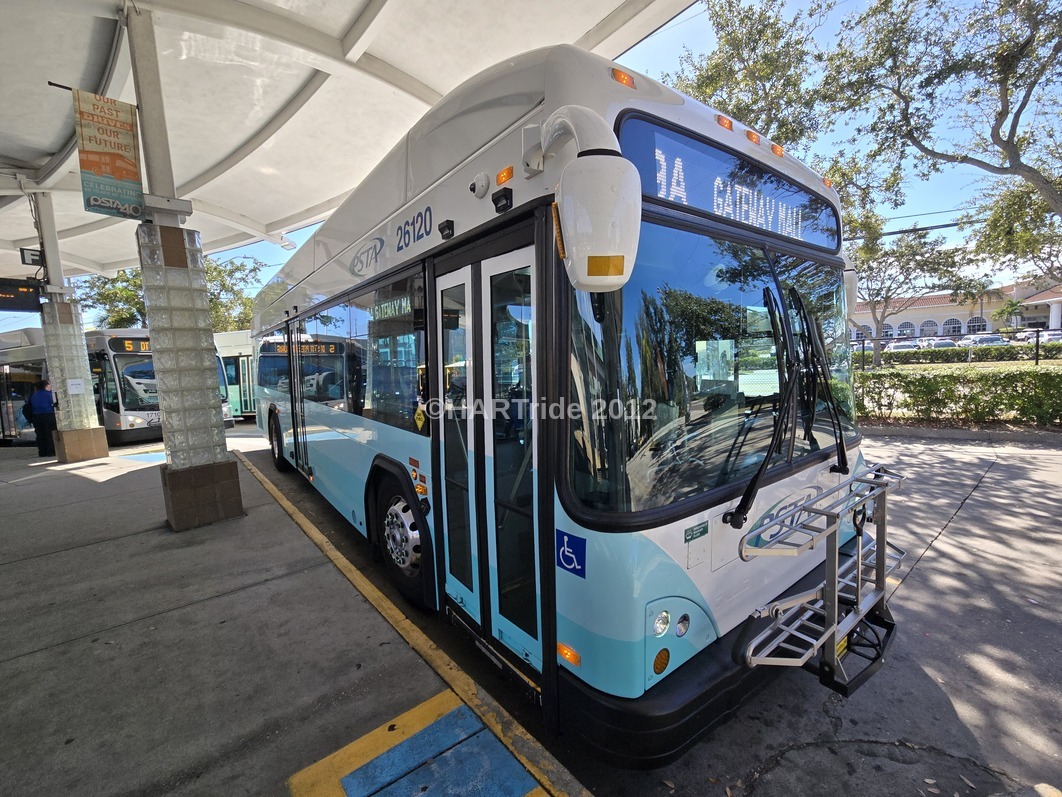
It is very important to factor in that Seminole County is a largely suburban/rural type county. Many communities within the county’s southern section are considered as outer suburbs/exurbs of Orlando & the entire county is considered a part of the broader Metro Orlando region. In St. Pete Beach, that municipality several years ago significantly reduced its contribution to the Pinellas Suncoast Transit Authority (PSTA) & redirected resources towards funding another microtransit venture (which happened to be handled by the same contractor that helps run Scout). Citing the need to direct its own resources to other needs – St. Pete Beach opted to end the microtransit service earlier this year. Aside from the PSTA SunRunner BRT & the Suncoast Beach Trolley (the latter of which might be eliminated due to the passing of Amendment 3), St. Pete Beach has no public transit service.
Now, can you imagine a large city like Miami having to eliminate 2/3 of its fixed route bus network & reduce frequencies on its remaining routes to 30-to-60-minute headways? Can you imagine the Miami Metrorail (elevated heavy rail) service being reduced to 30-minute service all day? Can you imagine the Metromover (people mover) permanently closing? All within a city comprising of a population of over 450,000 – with the broader Miami-Dade County population being over 2.5 million? Microtransit zones & ride share services cannot handle the load that the loss of traditional transit services will cause.
In short, on-demand microtransit may work okay in suburban & outskirt regions where it’s difficult to run a standard transit bus through (such as cookie-cutter sprawled neighborhoods) but in my view, it will not work in broad urbanized areas where having multiple transportation options is critical. The amount of scaling that a company would have to do in urban regions just to effectively serve the basic needs to riders would be far too great as opposed to a suburban/rural type county like Seminole County or a smaller beach municipality like St. Pete Beach.
I will have more on the effects of Amendment 3 on Florida’s public transit networks in the coming weeks & months. In the meantime, I encourage all of the Florida transit riders & supporters to prepare to reach out to our local, county, & state elected officials in keeping our transit agencies from falling into the death spiral.
Connect with the Global Transit Guidebook!
Be sure to bookmark: http://globaltransitguidebook.com

