
Know what you’re voting for
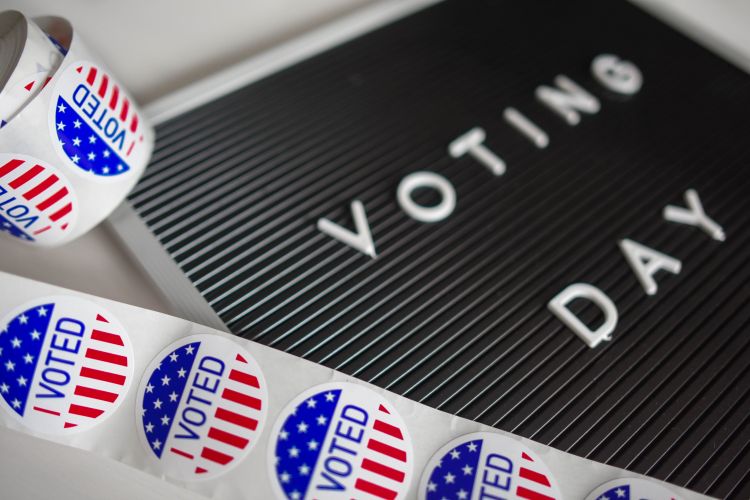
Cover photo credit: Element5 Digital via Pexels.com.
If you reside in the state of Florida & are registered to vote, there’s an extremely important state constitutional amendment that has been placed on the November 2026 general election ballot that sounds great on the surface. However, if you do not properly educate yourself on the ramifications of the amendment – you could be voting “yes” on something that will have dramatic negative effects on the services that you rely on, including public transportation.
What is Amendment 3?
Amendment 3 relates to expanding the state’s property tax homestead exemptions. When a Florida resident purchases a home by which becomes their primary residence – that resident is often able to have a portion of the home’s assessed value exempted from being charged property taxes. In other words, that homeowner will owe less money to the respective county he or she resides in when the annual property tax assessment is made.
While an expansion of the homestead exemption may sound very attractive, on the surface & many people don’t wish to pay exorbitant amounts of taxes each year, revenue from property tax collection helps to fund a variety of county & municipal level services such as:
- Law Enforcement (city police & county sheriffs departments).
- Fire Rescue Services.
- Public Transportation.
- Local & County Infrastructure (city & county-maintained roadways, sidewalks, water systems).
- Public Libraries (& the various programs those libraries offer).
- Local & County Health Services.
The Florida Association of Counties has a helpful portal explaining where exactly property tax revenues go to & what’s at stake if a majority of voters approve the constitutional amendment this November. Ballotpedia provides detailed information regarding the amendment’s language as it will appear on the November ballot, how the state of Florida got to this point, & other provisions that a majority “yes” vote will trigger.
In the state of Florida, state constitutional amendments require a 60% voter approval threshold to be met. This means that the measure must receive at least 60% of “yes” votes in order for it to be added to the state constitution. While this is a high bar & many constitutional amendments have failed to pass because of this threshold – I am deeply worried that misinformed voters may only see what’s on the surface & vote “yes” because they believe they’re getting a bigger break on their property taxes. They may not see the deeper ramifications on local & county-level services until their vote has already been cast.

Generative A.I. photo created by HARTride 2012 using ChatGPT.
What happens to public transit in Florida if Amendment 3 passes?
With nearly every transit agency throughout the United States having spent the last of their Covid-19 era CARES Act funding & many of them facing tremendous challenges in order to balance their budgets without falling off the so-called Fiscal Cliff, passage of Amendment 3 would absolutely send many – if not a majority – of Florida transit agencies into a tailspin. Agencies would be forced to enact draconian measures that would certainly trigger what many call the transit death spiral. This spiral basically occurs when the affected transit agency is forced to cut so much that riders can no longer depend on it to get from A to B – ultimately leading to an outcome where the agency must effectively declare bankruptcy & potentially even cease all services.
If Amendment 3 passes, transit agencies will be forced to:
- Severely cut service across the board:
- Eliminating routes & services outright.
- Reducing span of service (i.e. a route may be forced to operate weekdays only from 6 am until 8 pm instead of operating all week long from 5 am until midnight).
- Reducing route frequencies (i.e. a route may be reduced from having 15 minute headways to having hourly headways).
- Postponing or cancelling the launch of new services (i.e. PSTA’s Tampa Bay Ferry service may be unable to launch).
- Curtailing route lengths (i.e. implementing reroutes to have buses only operate on specific main thoroughfares & having buses short-turn to serve a specific area only).
- Such changes will result in longer wait times, more transfers, & in many cases – no access to transit services at all.
- Brutally hike fares:
- Many transit agencies in Florida currently charge one-way base fares ranging between $1.00 & $3.00. Passage of Amendment 3 may force these agencies to raise fares to as much as $5.00 to $10.00 each way, meaning that $2.00 day pass suddenly becomes $15.00.
- Such increases will effectively shut out lower income residents who can’t otherwise afford to purchase their own vehicles or pay for rideshare. Choice riders would also be priced out & resort to driving or using rideshare instead.
- Impose employee layoffs:
- Thousands of good-paying transit agency jobs are on the line across the state of Florida. Passage of Amendment 3 will result in these employees – including bus & rail operators – to have to find employment elsewhere while causing immense hardship on their families. Many transit agency employees have children – so the loss of employment will really hit these individuals & their families really hard.
- And in an absolute worst-case scenario, especially if overall economic conditions deteriorate further some agencies may have no choice but to cease operations entirely.
What could happen to transit in Pinellas & Hillsborough Counties?
The fallout from the passage of Amendment 3 on transit agencies would be downright disastrous! System cuts & fare increases would likely have to be enacted as early as summer 2027.
Note: What is stated below is purely hypothetical. Different agencies have come up with their own scenarios with respect to what services & routes they will focus on maintaining.
- There could be no cross-county bus service between Pinellas & Hillsborough Counties & the planned Tampa Bay Ferry service would likely be unable to launch. The planned arterial BRT project & the planned TECO Line Streetcar expansion project in Tampa would likely be cancelled outright.
- The cities of Tampa, St. Petersburg, & Clearwater may be left with only bare-bones basic bus service on major corridors (i.e. Florida Ave in Tampa & 4th St in St. Pete) that run each day at 30-minute headways between 6:00 am & 8:00pm only (weekend service might only be available between 8:00 am & 6:00 pm with hourly headways). Suburban & outskirt areas may be left with no transit service at all.
- The TECO Line Streetcar service would likely reduce headways from 15 minutes to 30 minutes, cease morning & late evening runs, & potentially close some stations.
- The PSTA SunRunner & Spark services could reduce headways from 15 minutes to 30 minutes all day, all week, & cease late evening runs.
- The one-way cash fare on HART is currently $2.00 & the one-way cash fare on PSTA is currently $2.25. Those could potentially double or even triple in cost. Monthly ride costs may very well exceed $150.00.
- Dozens of transit employees across both agencies would be laid off.
- Hundreds of thousands of customers would have no transit access. Those with no other transportation would suffer horrible consequences such as loss of employment, income, & would find it difficult to pay expenses, obtain food, & seek necessary services.
See a real scenario
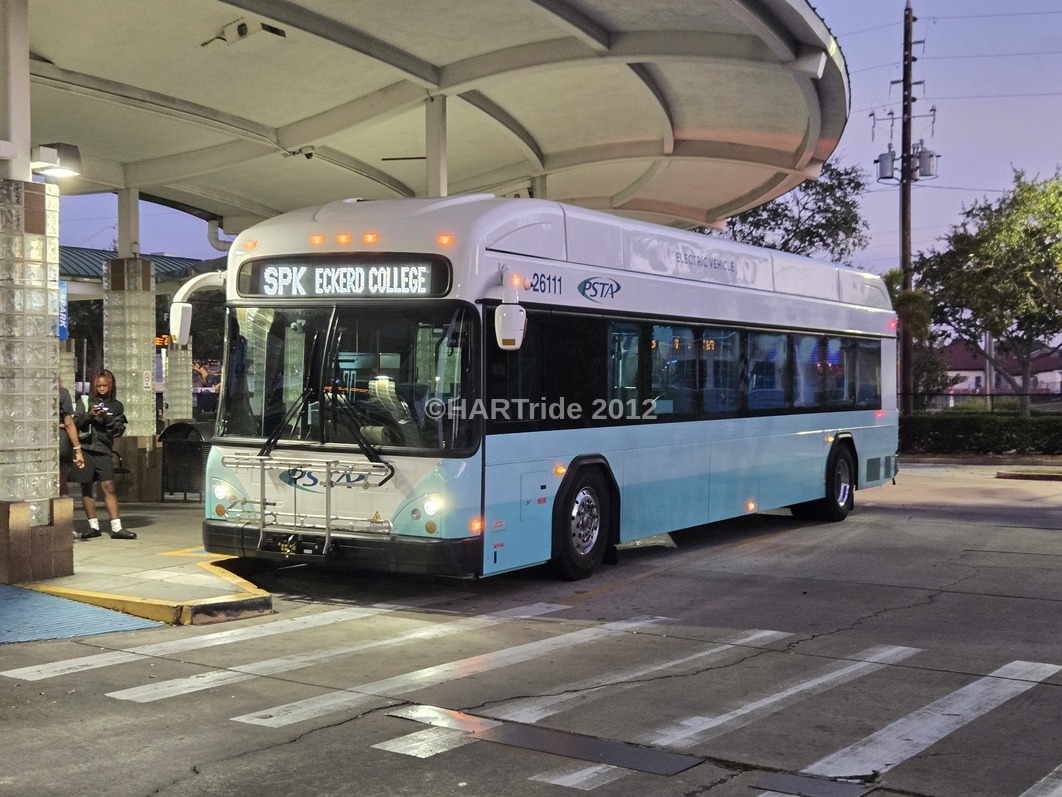
Want to see what the Pinellas Suncoast Transit Authority (PSTA) is facing if Amendment 3 passes? Sometimes, seeing the warning signs directly from the agency will help provide a clearer picture as to what’s at stake. Head over to the PSTA website to learn more.
Please by all means, read up as much as you can on the ramifications of Amendment 3 & vote NO on Tuesday, November 3, 2026.
Connect with the Global Transit Guidebook!
Be sure to bookmark: http://globaltransitguidebook.com

