
Post was last updated on 12/17/2025.
Welcome back to Transit 101, where I talk about everything that you need to know about using public transit. In this episode, I’m going to talk about all things transit fares! Topics will include the following:
- Ways to pay
- Ordering transit fare media online
- Customer Service Centers and Third Party Vendors
- Disclaimer
- Connect with the Global Transit Guidebook!
Ways to pay
Cash & Legacy Media
Cash

Stock Image from Pexels.com, credit to original photographer
Paying for your transit journey with cash is very simple to do – especially if you’re paying for only a one-way trip or a one-day (mag-swipe) pass. However, you’ll need to make sure that you have exact change with you at all times – as transit operators cannot handle change. If you need to make change, I strongly advise that you visit a customer service center, or a grocery store service desk. In some cases, change machines may be provided on-site at a transit center. You’ll want to contact your transit agency or visit their website to view updated fare information so that you’re not boarding the bus or train unprepared, especially as agencies shift towards contactless payment methods.
Magnetic-Swipe (Mag-Swipe) Cards
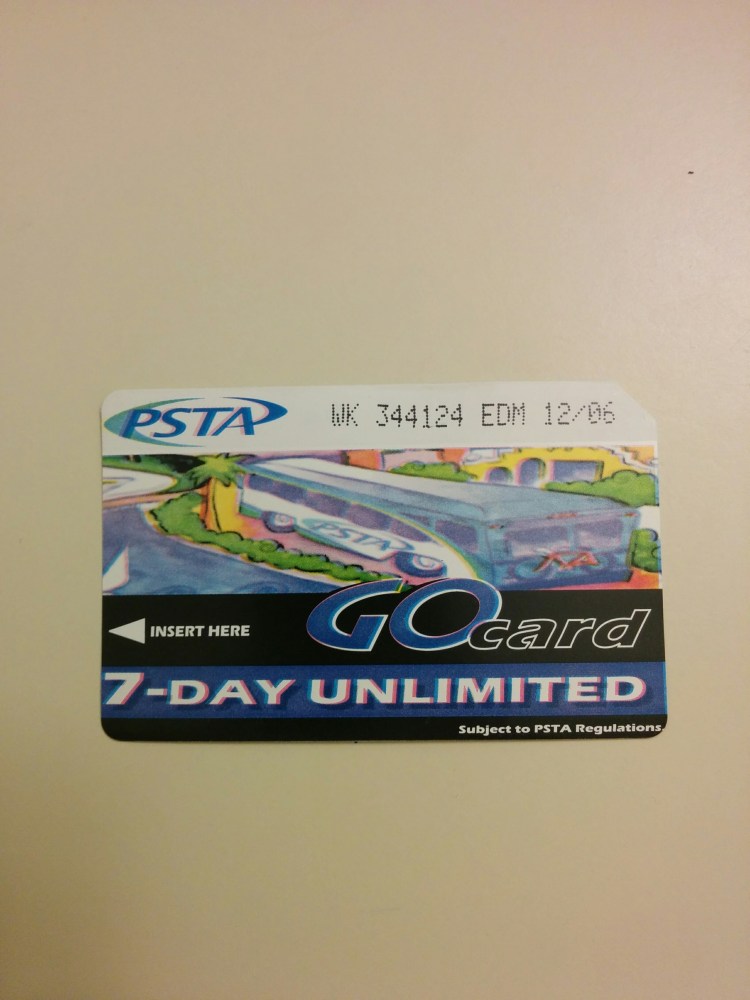
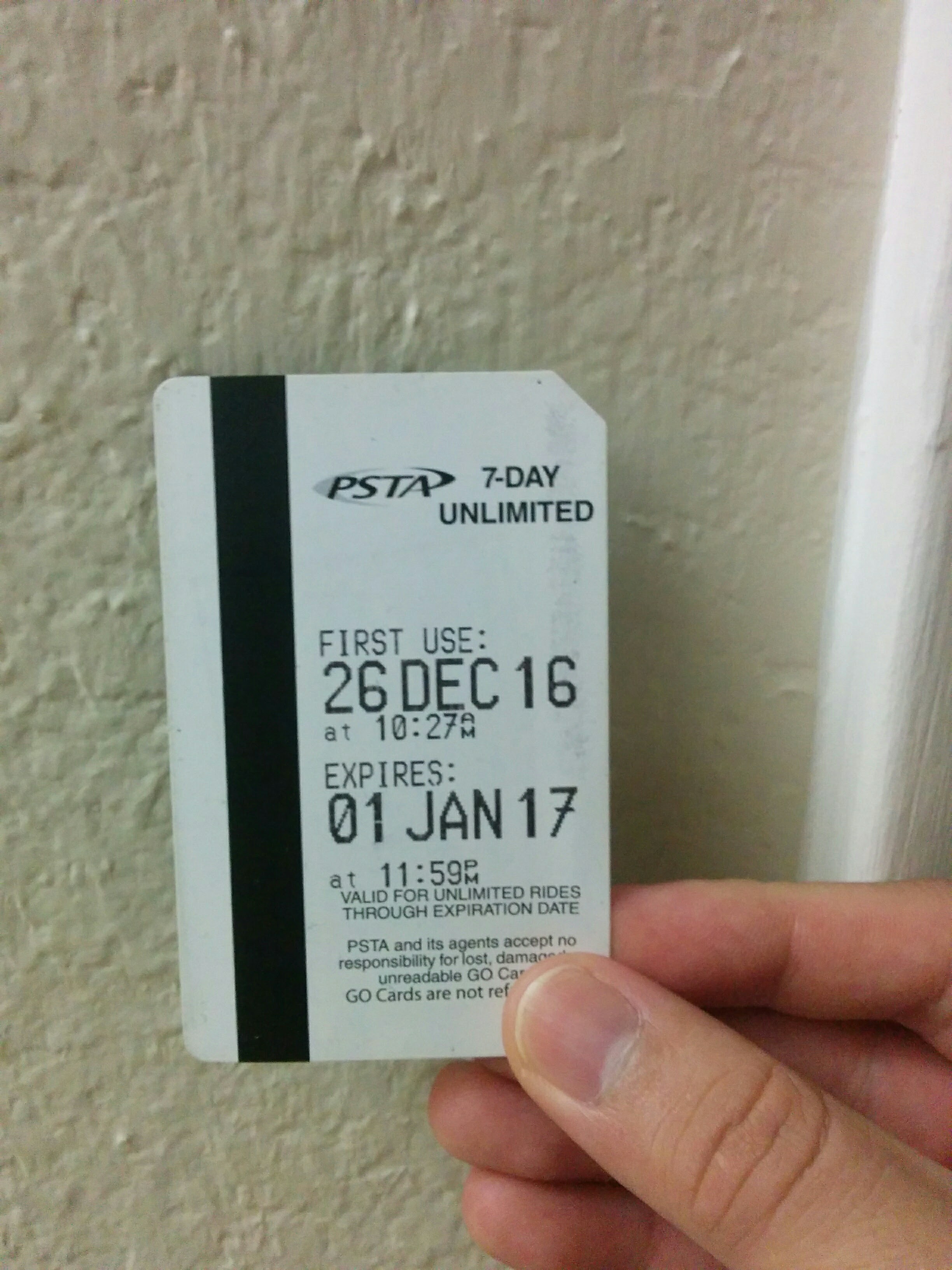
A Pinellas Suncoast Transit Authority (PSTA) GO Card, taken by HARTride 2012.
Many transit agencies produce mag-swipe cards for use as transit passes. These cards come in many forms; but often include One-Day, Three-Day, Five-Day, Seven-Day, Fourteen-Day, and Thirty One-Day categories. Pass categories can vary by transit agency, so please be sure to contact your transit agency or visit their website for a listing of available passes and how much each pass costs.
As of the December, 2025 update to this post, many transit agencies have phased out the use of mag-swipe cards as fare payment due to shifts towards contactless payment options.
Which transit agencies have phased out mag-swipe cards?
While there are too many to count, both the Hillsborough Transit Authority (HART) & the Pinellas Suncoast Transit Authority (PSTA) have phased out use of their prior mag-swipe cards in favor of contactless payment methods. The primary form of payment is a bi-county program called Flamingo Fares, where customers can either download a smartphone app or purchase a physical plastic smart card to pay for their fares. Both agencies also allow for contactless debit & credit cards, as well as mobile wallet apps (like Google Pay & Apple Pay) to pay for fares.
In Chicago, the Chicago Transit Authority began phasing out their legacy fare payment media several years ago when the regional Ventra payment system was introduced. In the San Francisco Bay Area, many transit agencies utilize the regional Clipper payment system – with some eliminating their legacy fare media in recent years. Finally, in the New York City metro region, the New York MTA is on the cusp of phasing out its legacy MetroCard in favor of the OMNY payment system. All three replacement systems utilize similar smartphone apps & physical plastic smart cards as Flamingo Fares.
Will cash ultimately be phased out as a fare payment option?
Yes, but it may take several years at least for many transit agencies to do so – mainly due to equity policies (making sure everyone has access to transit, including those who have limited financial abilities).
What if I’m using cash or a mag-swipe card?
Don’t worry, I’ll show you how to go about making your payment!
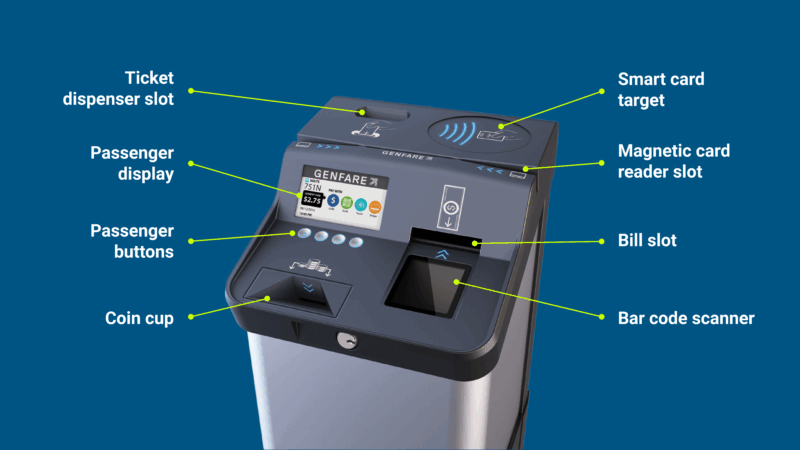
While transit fareboxes may vary in design & manufacturer (Genfare is the manufacturer that many US-based transit agencies have generally used to supply their fareboxes), the principles are quite simple for inserting cash or using mag-swipe cards. With some agencies, smart card usage is integrated within the farebox – depending on the selected fare collection vendor.
Cash payments are handled via a bill receiver slot & a coin cup. As mentioned, transit operators are not allowed to handle change (this is quite universal across many jurisdictions), so you’ll want to make sure you have exact change before boarding.
Mag-swipe cards are handled one of two ways – depending on if you’re using the card for the first time or not. The next few points will go over how to activate & use a mag-swipe card.
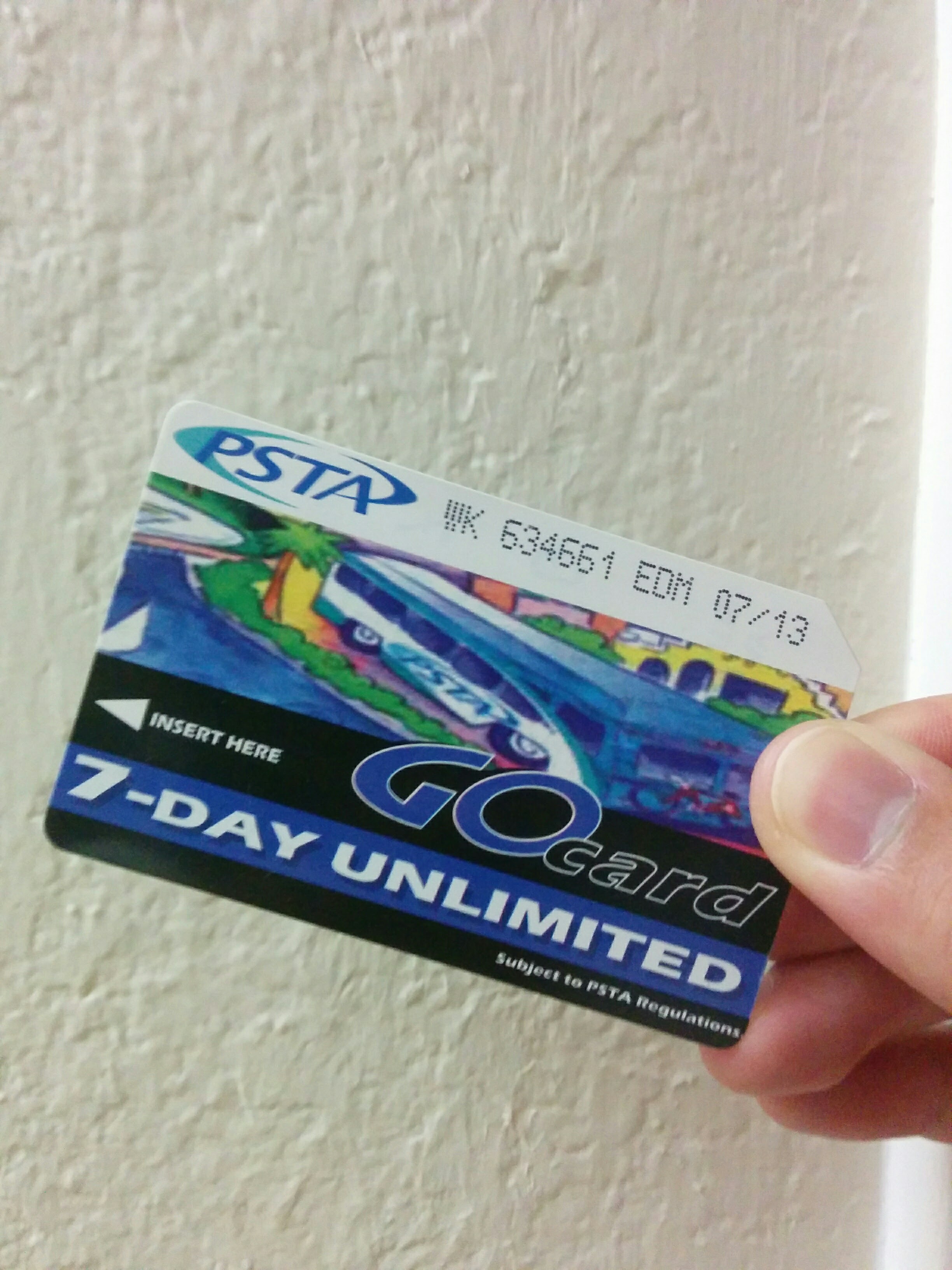
Many transit agencies produce mag-swipe cards for use as transit passes. These cards come in many forms; but often include One-Day, Three-Day, Five-Day, Seven-Day, Fourteen-Day, and Thirty One-Day categories. Pass categories can vary by transit agency, so please be sure to contact your transit agency or visit their website for a listing of available passes and how much each pass costs.
When you first purchase your card, the rear side will be blank (with some agencies printing their logo & basic fare regulations as desired). When activating the card, you’ll need to use the ticket dispenser slot located at the top of the farebox (see the sample illustration above) to allow the farebox to imprint the date of first use & the expiration date. The next image will show what the back of the card should look like once it’s been activated for use.
To purchase a transit pass, you can visit a customer service center or ticket vending machine. Many transit agencies accept both cash and credit/debit cards at their customer service centers and ticket vending machines. Many transit agencies also allow customers to purchase a one-day pass on board buses with cash.
After your pass is activated, all you have to do is swipe the black stripe of the pass along the card swipe reader on the farebox, turnstile, or ticket reader machine.
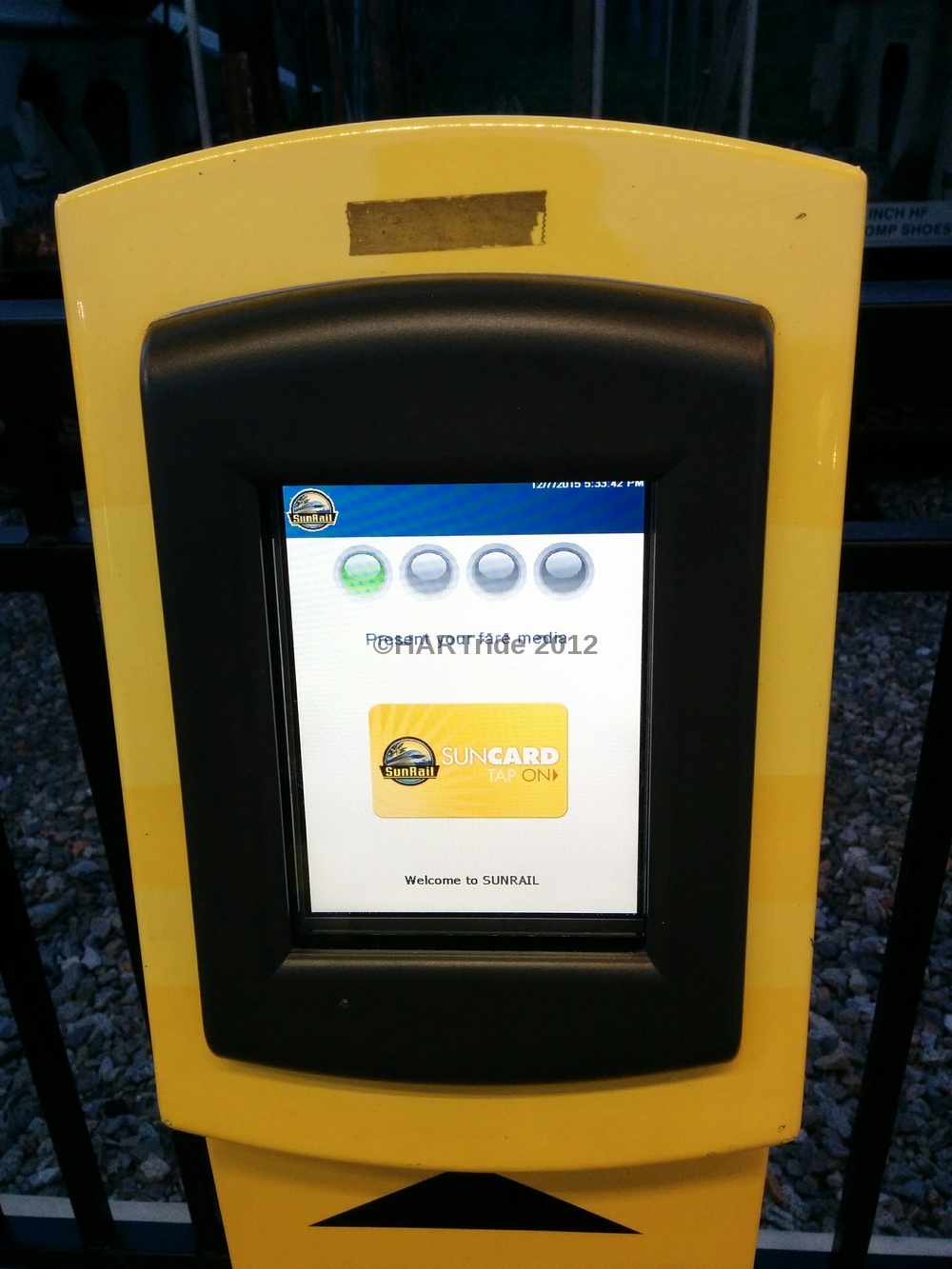
For transit systems that use the “Tap And Go” procedure, simply tap your pass against the ticket validator screen until you receive a message stating that your ticket is valid. This procedure is also done for smart cards (i.e. Chicago’s “Ventra” fare system).
As transit agencies phase out the use of mag-swipe cards, please be aware of alternative fare payment options – which I’ll describe next.
Contactless Payment Methods
Smartphone App

A screenshot of the initial loading screen for the Flamingo Fares app, taken by HARTride 2012
Transit agencies that offer contactless fare payment methods will usually have some form of a smartphone app for customers to use to pay for their fares (though you’ll want to check with your respective agency to see what app is used). Once you’ve located information regarding the app to use, simply go to the designated link that the agency provides – or you can visit your phone’s app store (The Apple App Store for Apple devices & the Google Play store for Android devices).
Once you’ve downloaded the app, be sure to create your account, load the proper amount of funds or purchase a virtual pass option, & look over how to properly ensure that your fare will be honored when you board the bus or train.
Physical Smart Card
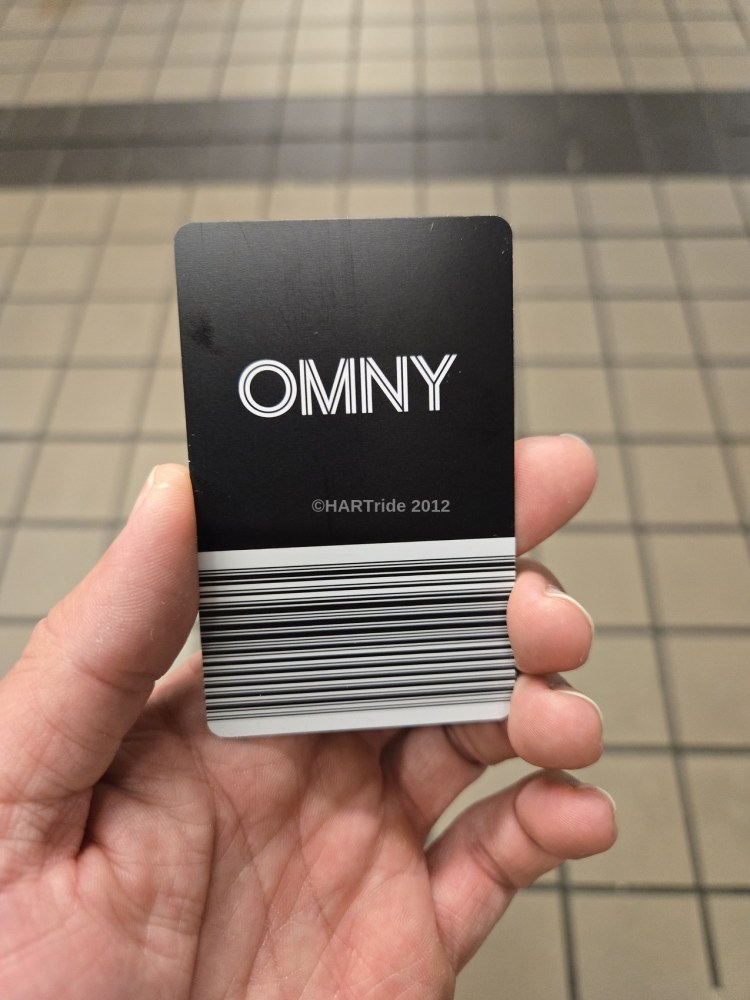
A New York City region OMNY smart card, taken by HARTride 2012
Many transit agencies that offer contactless fare payment options will usually provide a physical smart card for customers to purchase (once again, you’ll want to check with your respective transit agency to ensure that you’re getting the correct information & how to go about purchasing your card). With some agencies like the New York MTA, you can purchase a smart card at any customer service center or at a ticket vending machine.
For most cards, a “new card purchase” fee will be assessed & a minimum balance may be required to keep the card active. Be sure to review any such stipulations before making your purchase. Once you’ve made your initial purchase, you’ll want to make sure that the card has the proper balance &/or virtual pass options before paying for your first bus or train ride. Some agencies may also allow you to “transfer” over to a virtual card via the smartphone app or mobile wallet app for added convenience. However, once such a transfer is completed, your physical card will no longer be valid for use – so be sure to either discard the card or you can keep it as a souvenir later if you’re a transit enthusiast like me.
Additional things to know
- Many transit agencies employ fare inspectors to ensure that customers are in possession of valid are media. Please be sure to have your phone or physical smart card ready for inspection. I will tell you that when I was on board the San Francisco MUNI light rail & the Chicago Metra commuter rail systems, fare inspectors or conductors would routinely check for valid tickets & passes. Most commuter & regional rail systems instruct conductors to enforce fare payment while separate teams may be deployed to enforce fare payment on light rail & subway systems.
- If you experience issues with payment, be sure to notify a transit employee or contact customer service as soon as possible to avoid being penalized.
Ordering transit fare media online

Image created by HARTride 2012 – Created with The Sims 4
Many transit agencies allow you to purchase transit tickets online. Simply visit your transit agency’s website and select the link to purchase your desired fare media. Since the purchasing process for each transit agency varies greatly, I will not be able to provide a step-by-step process. Any detailed questions should be directed to your transit agency’s customer service team.
Customer Service Centers and Third Party Vendors

Many customer service centers, located at major transit hubs and some rail stations, allow you to purchase transit tickets directly from a customer service agent. Cash and checks are accepted at the customer service centers, though restrictions may be placed on the acceptance of checks. For credit and debit card purchases, you may be directed to a ticket vending machine if one is available.
Many transit agencies partner with third party merchants (such as CVS Pharmacy) to sell transit passes. Check with your transit agency to see if such an arrangement is in place and if so, which vendors take part.
Disclaimer
While I do my best to provide the most accurate information regarding fares in this post. Some things may change over time – such as the way that smartphone apps work. This post is designed to provide a general overview on the types of transit fares available and how to purchase fare media. If you have any detailed questions about your particular transit agency’s procedures, please contact their customer service team.
Connect with the Global Transit Guidebook!
Be sure to bookmark: http://globaltransitguidebook.com
 The Global Transit Guidebook
2 thoughts on “Transit 101 – Episode 3 – Transit Fares”