
Originally Posted On 05/20/2013.
Last Updated On 01/24/2026.

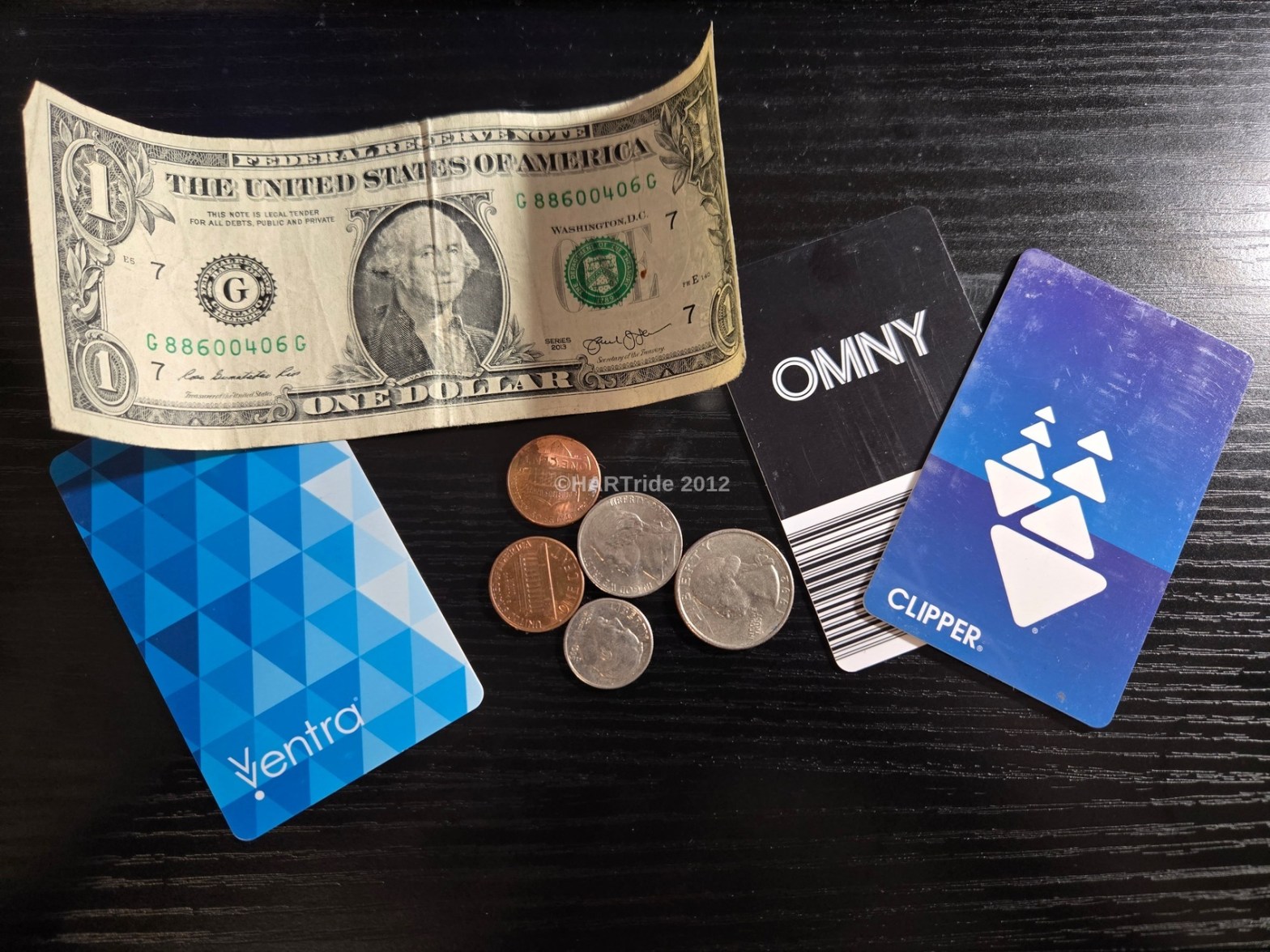
Make sure you properly pay for your transit fare
This post was originally part of a short-lived monthly transit tips blog post segment that I made that would provide helpful tips to transit riders.
Have you ever been aboard a train or bus without paying your fare? Perhaps you’ve jumped a turnstile at a subway station, or have had an expired pass while boarding a bus. While skipping out on required transit fares may sound appealing to some who would rather sneak thorough transit systems than to pay, there are strict penalties for fare evasion. In many countries and transit districts, fare evasion is constituted as theft and therefore entails stiff fines and even jail time. In this post, I will profile all four transit districts that I cover through my Transit Focus Pages, as well as the fare evasion situation in Jakarta, Indonesia. I will also go through how each transit district is combating fare evasion.
Transit Agencies In Florida
Under Florida State Statutes, Chapter 812, Section 015, it is stated that fare evasion constitutes as theft & violators are therefore punishable under that statute.
Though I haven’t heard of any sophisticated operations in Florida to combat fare evasion, don’t think for a moment that it isn’t a problem just because there aren’t too many big headlines. Violators are often arrested and face a fine if caught.
The New York MTA
Many larger cities – including New York City – have dedicated subsets of their police departments that are tasked with providing law enforcement services to transit agencies.
For many years, the New York MTA & the New York City Police Department (NYPD) officially reference their collaborative fare evasion enforcement team as the EAGLE Team, the team was created in 2007 & has been credited with helping to reduce fare evasion across the MTA network & has gradually increased their forces ever since. The team has also worked to reduce incidents involving vandalism on MTA properties & vehicles.
As of 01/01/2025, the MTA imposes a $100.00 initial fine for fare evasion (second offense, the first offense does not incur a fine – only a warning), with subsequent offenses resulting in a fine of at least $150.00. In some cases, subsequent offenses will result in a criminal summons. The MTA posts its Rules of Conduct on its website – which is divided between New York City Transit & the MTA Bus Company (the statutory sub-agency within the MTA that oversees bus operations that were originally handled by private bus operators in Brooklyn & Queens).
New York State Statutes regarding fare evasion.
My own experience with the MTA/NYPD EAGLE Team

During my March, 2025 visit to New York City, I was riding the MTA Bx35 bus from the George Washington Bridge Bus Terminal to the eastbound stop on E. 167th St at River Ave to transfer to the (4) subway line Moshulu Pkwy. When I was preparing to exit the bus at the E. 167th St & River Ave stop, a small group of EAGLE Team members boarded the bus to perform a fare payment inspection. Two customers were pulled off the bus for non-fare payment & were cited accordingly. One of the officers initially thought I didn’t pay my fare, but I calmly explained to him that I had boarded the bus at the stop by the George Washington Bridge Bus Terminal & tapped my OMNY card at the front door reader. The officer ultimately allowed me to go on my way & I was able to catch the (4) Train as planned. However, it is incidents like these where you want to always make sure you’ve properly paid your fare before boarding the bus or train.
What about certain rail systems?
While many light rail & some commuter/regional rail systems often have operated on an “honors system” basis with no closed fare control system like subways & most other heavy rail systems, it is fully expected that customers pay for their fares prior to boarding a train. Most transit agencies employ fare inspectors to check the validity of purchased fares & I’ve encountered fare inspectors on multiple systems in the past – including the San Francisco Municipal Transportation Agency (SFMTA), which operates the MUNI bus, light rail, & cable cars in San Francisco, CA.
Can repeat offenders be banned from a transit agency?
Yes. While exact policies can vary from agency to agency, there often is a point where “enough is enough” & chronic offenders are given a trespass order by law enforcement to either discontinue use of the transit system or face immediate arrest.
What about outside of the U.S.?
While exact policies can vary, a vast majority of transit agencies operating in Europe, Asia, Africa, & Australia, as well as in Canada, Mexico, & South America, all have rules & regulations in place that deal with fare evasion.
Paris, France
When I first wrote this post in 2013, the transit agency operator in Paris, France, the RATP, was imposing a fine of up to €72 (roughly $93.00 USD). The economic loss to the Parisian Metro system however, was at the time estimated to be at €80m [or a whopping $103,760,000.00 ($103 billion) in US funds] each year. That is certainly a lot of money lost to people not paying for their tickets & it’s likely a higher figure today.
Like many countries worldwide, the Paris Metro (subway) is littered with transit inspectors and supervisors, who routinely check to make sure that everyone has a valid ticket. The system is also equipped with surveillance cameras at each turnstile to make sure that no one tries to jump the turnstiles. In addition, the turnstiles themselves have been upgraded over time with full-length gate panels to further deter fare evaders (such turnstiles are now being tested in New York City). Sometimes though, even these measures aren’t enough. So it’s no surprise in a way that Paris came up with an “insurance fund” or mutuelle to help offset the costs of passengers not paying their fares. Members of this “fund” pay anywhere from €5-€7 (roughly $6.50 to $9.10 US) per month (as of 2013, I do not know if this measure still exists today).
Jakarta, Indonesia
Back in 2014, I had heard about an extreme way to deter fare evasion in Jakarta – where non-payment of commuter rail fares was becoming so pervasive that riders were literally riding on top of railcars in order to escape the crowds who sat inside (at the time, the city was suffering from severe overcrowding of trains & vastly outdated rail equipment). This practice created a huge safety hazard & the government ultimately had to take drastic measures such as lowering overhead (catenary) wires & swatting train surfers with brooms covered with goop. These extreme measures had to be enacted because police were met with heavy resistance and often violence from angry passengers when they attempt to apprehend violators.
Summary
No matter which part of the world you use transit, chances are that some form of law and order exists to keep passengers in check when it comes to making sure that everyone is paying appropriate fares. Even though each transit district tends to enforce fare payment differently in some areas of the world, many transit officials will agree that everyone must pay their fare, or face penalties.
In short, PAY YOUR FARE, OR FACE THE PENALTIES!
 The Global Transit Guidebook
One thought on “Fare Evasion – DON’T EVEN TRY IT!”