
Page 2: 2016 – 2020 Models
Page was last updated on 07/19/2025.

The wheels keep turning…
Welcome to the PSTA Active Vehicles page. Here, I will showcase photos of the various vehicles that PSTA currently operates in its fleet. If you’d like to make a contribution, please feel free to contact me.
- Major Updates
- 2016 through 2019 Gillig Low Floor Hybrid
- 2018 Champion Defender
- 2018 & 2020 BYD K9S Battery Electric
- 2020 Hometown Manufacturing Streetcar
Major Updates
As of 07/19/2025
Due to recent fleet retirements, the 2005, 2006, & 2008 Gillig Low Floor Diesel subsections have moved to the Retired Transit Vehicles Page.
Additionally, to better accommodate incoming photos of the 2023, 2024, & 2025 units, I’ve created a new third active fleet page to house photos of buses from the 2021-series SunRunner units & newer. The previously created second page will now only house photos of buses produced between 2016 & 2020 – including the Hometown Manufacturing trolley replicas.

2016 through 2019 Gillig Low Floor Hybrid
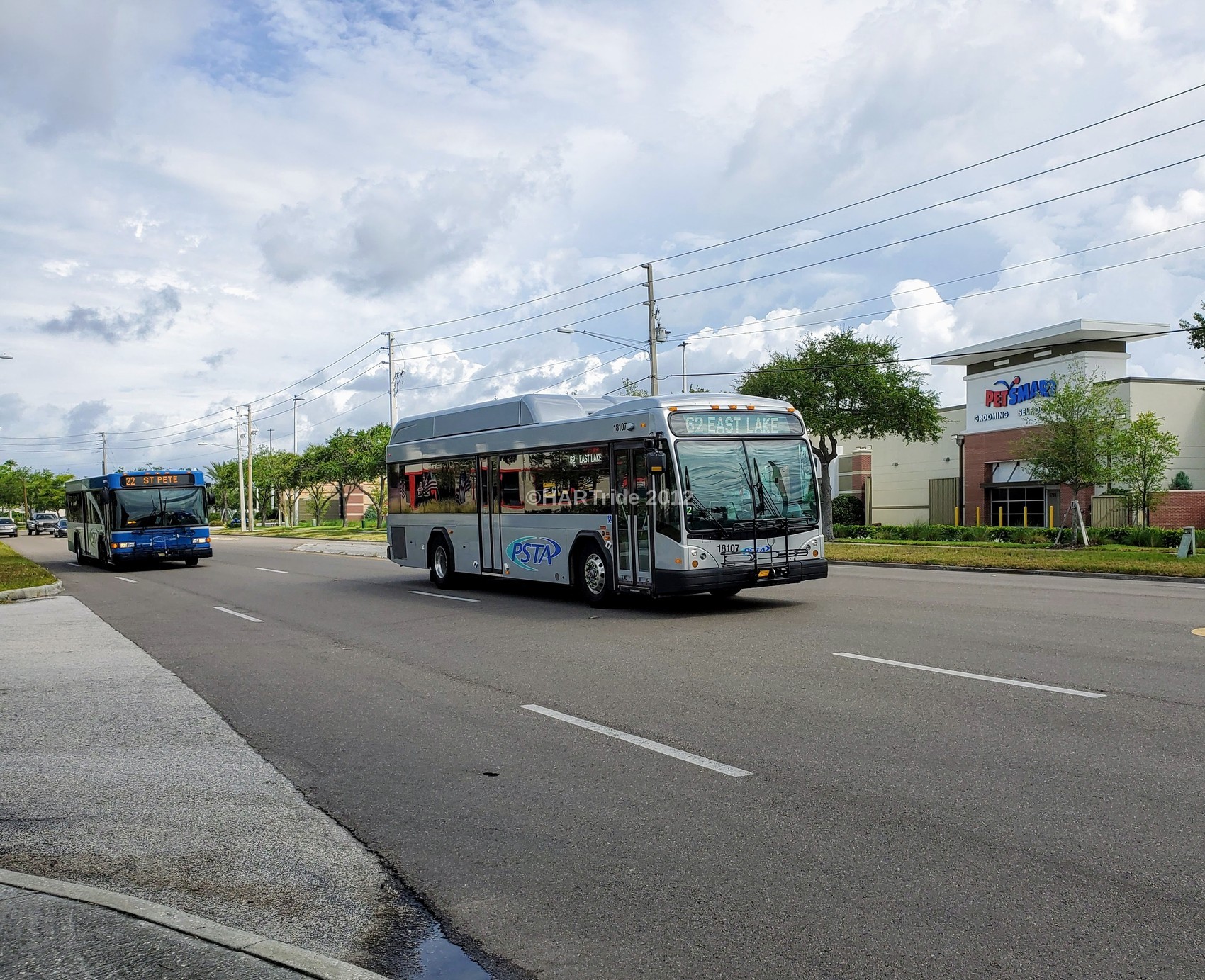
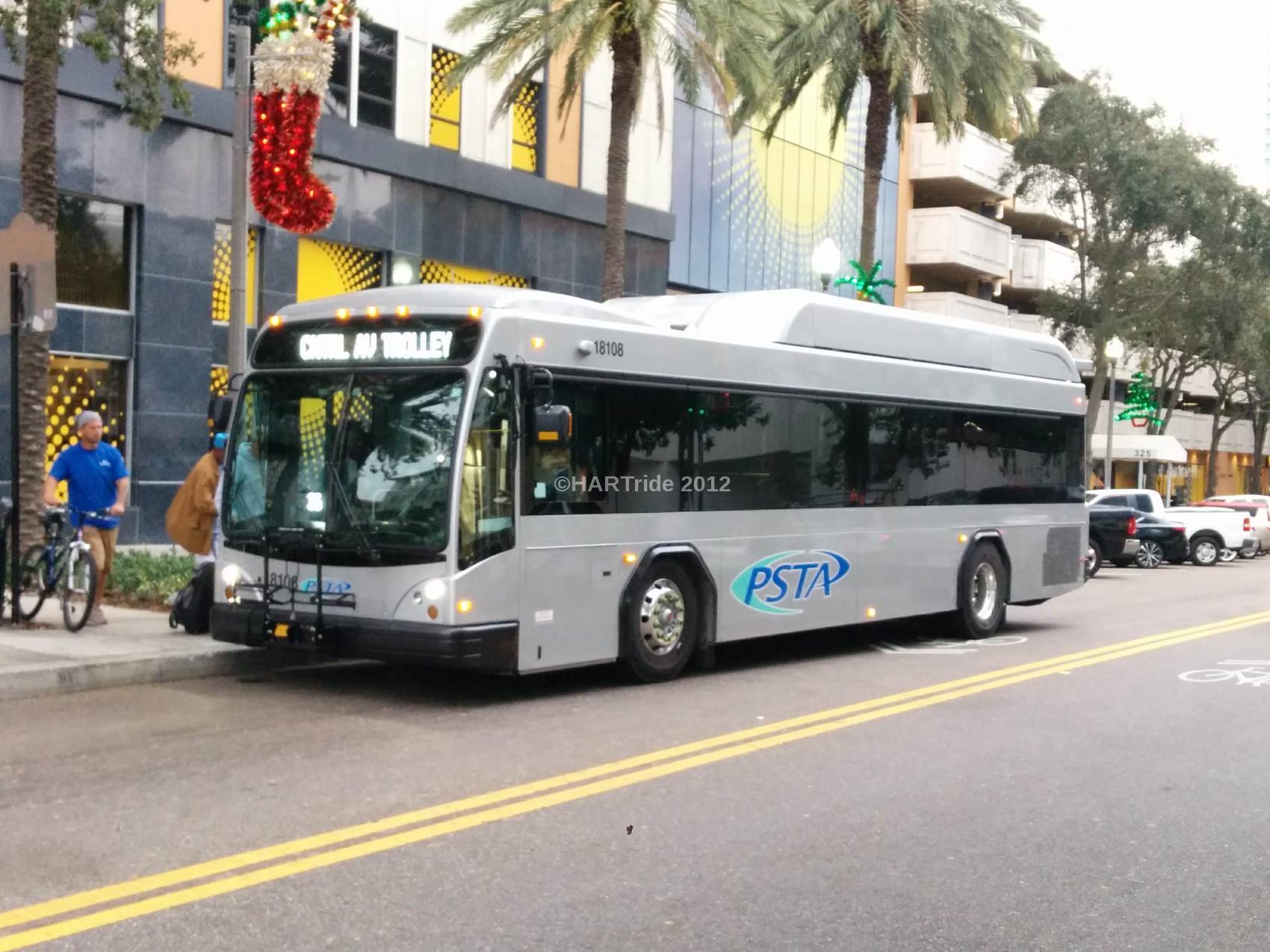
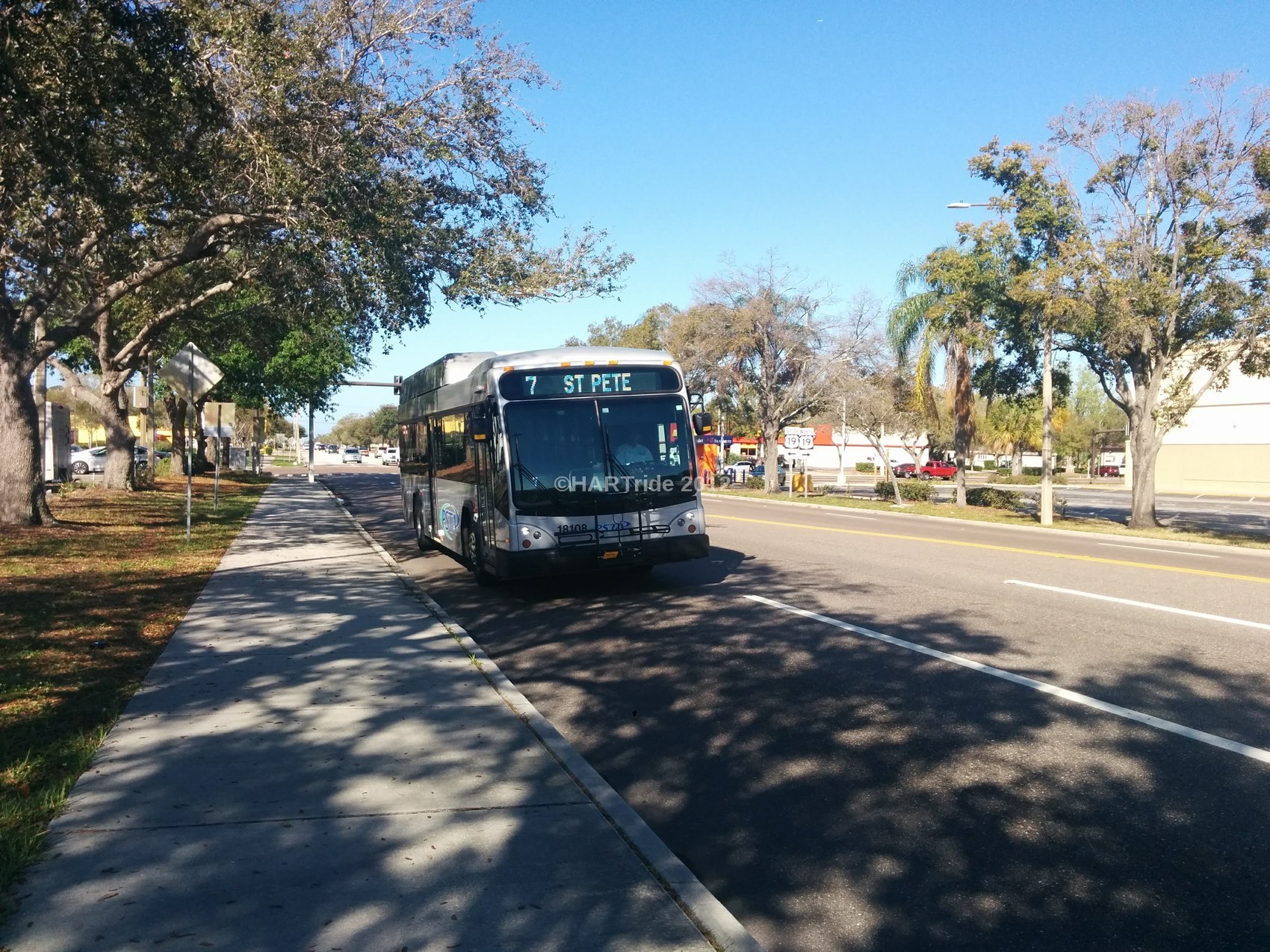
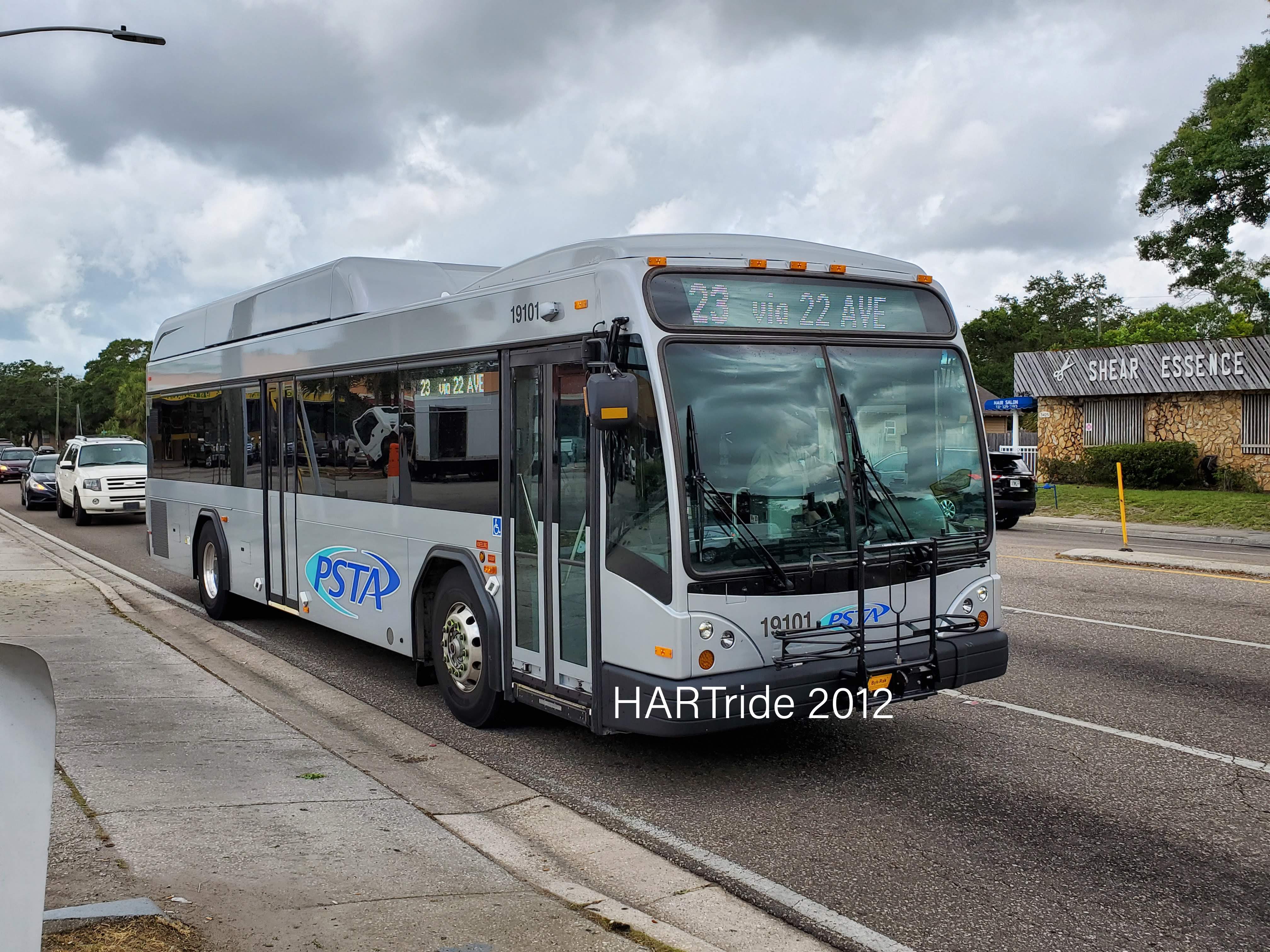
40′ & 35′
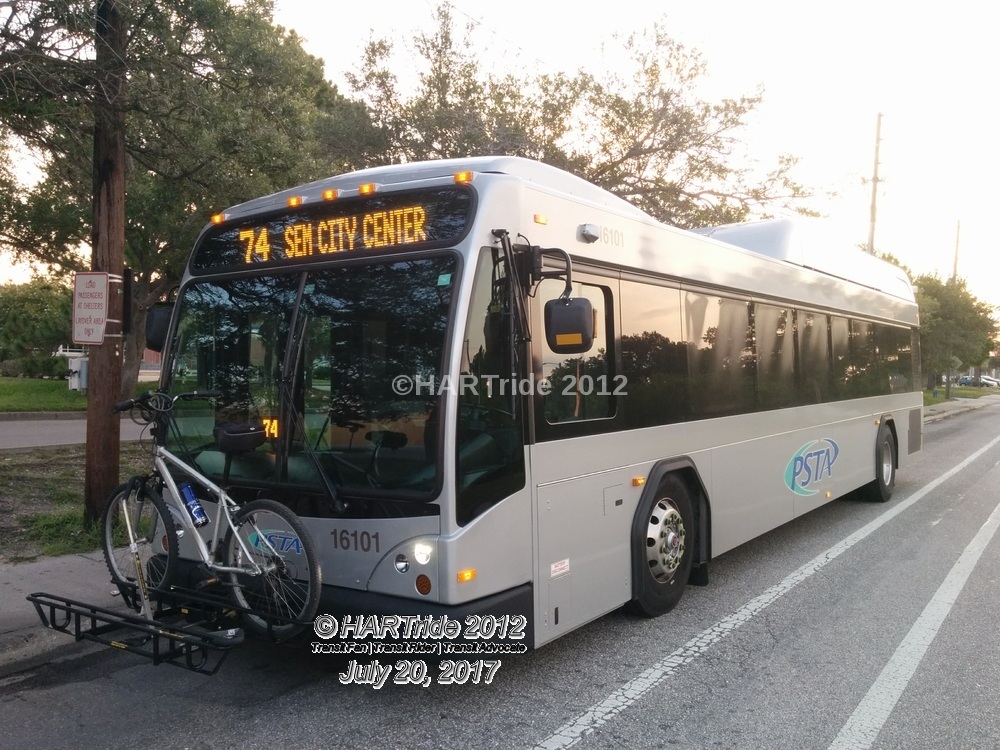
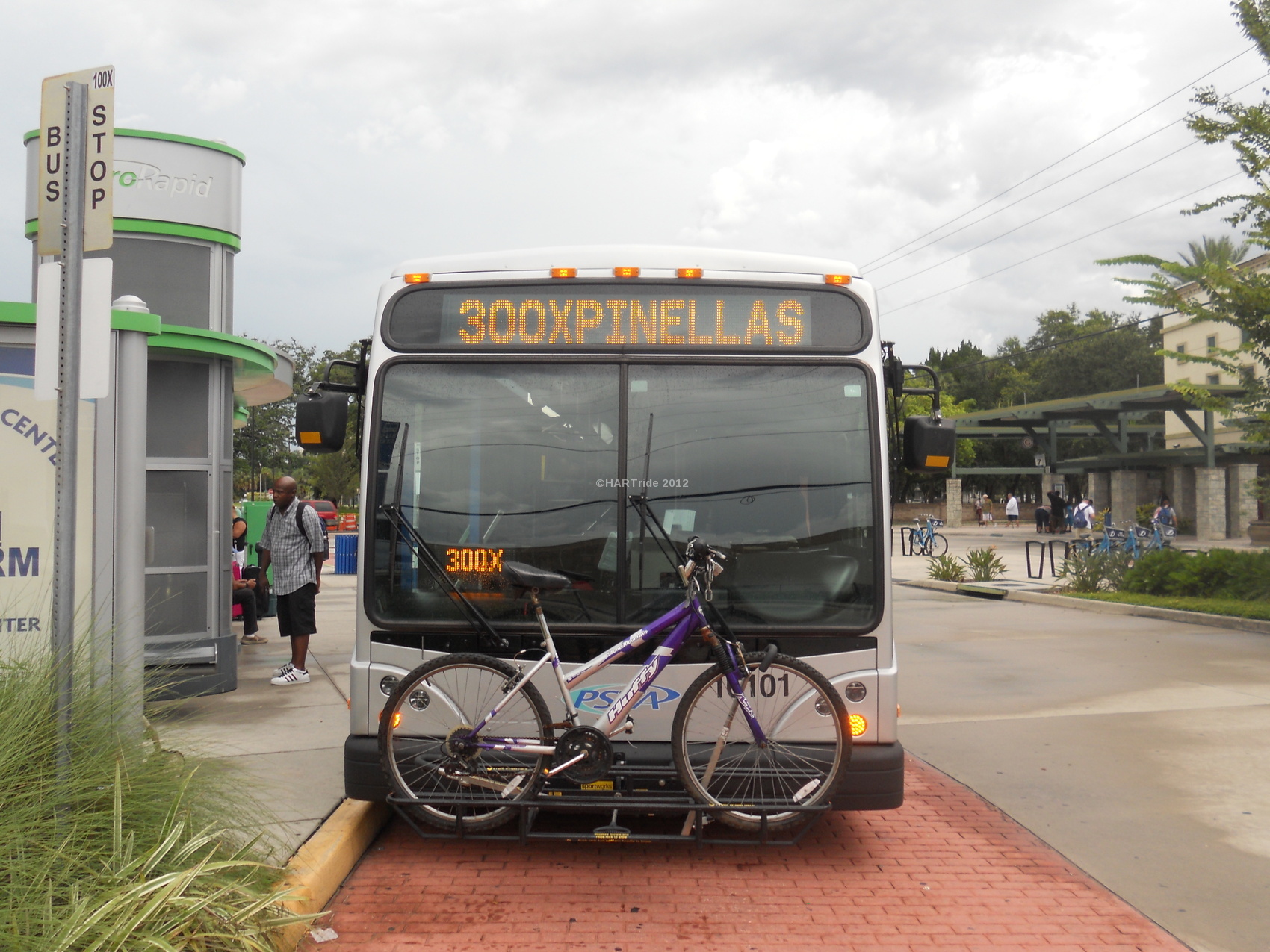
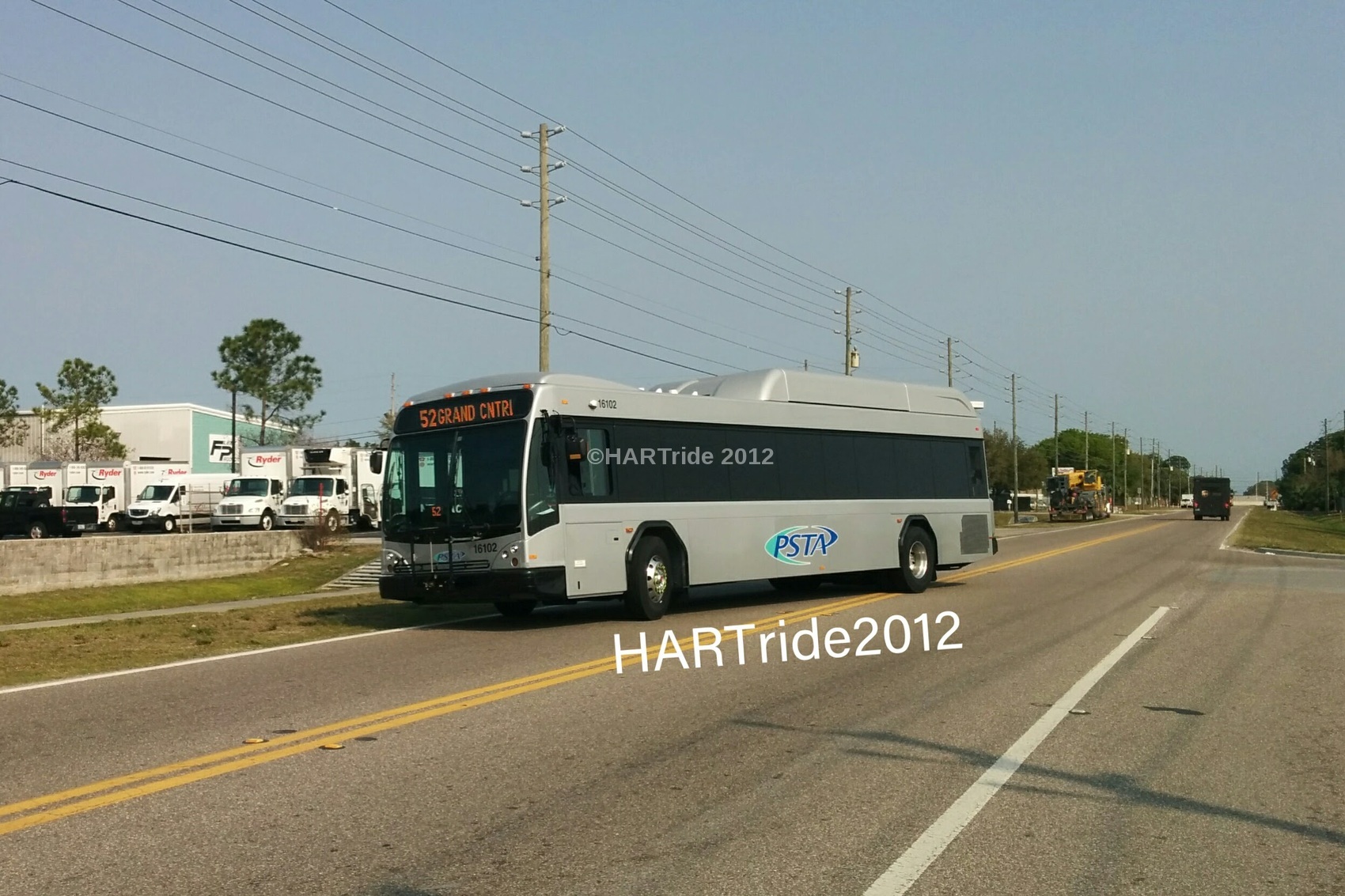
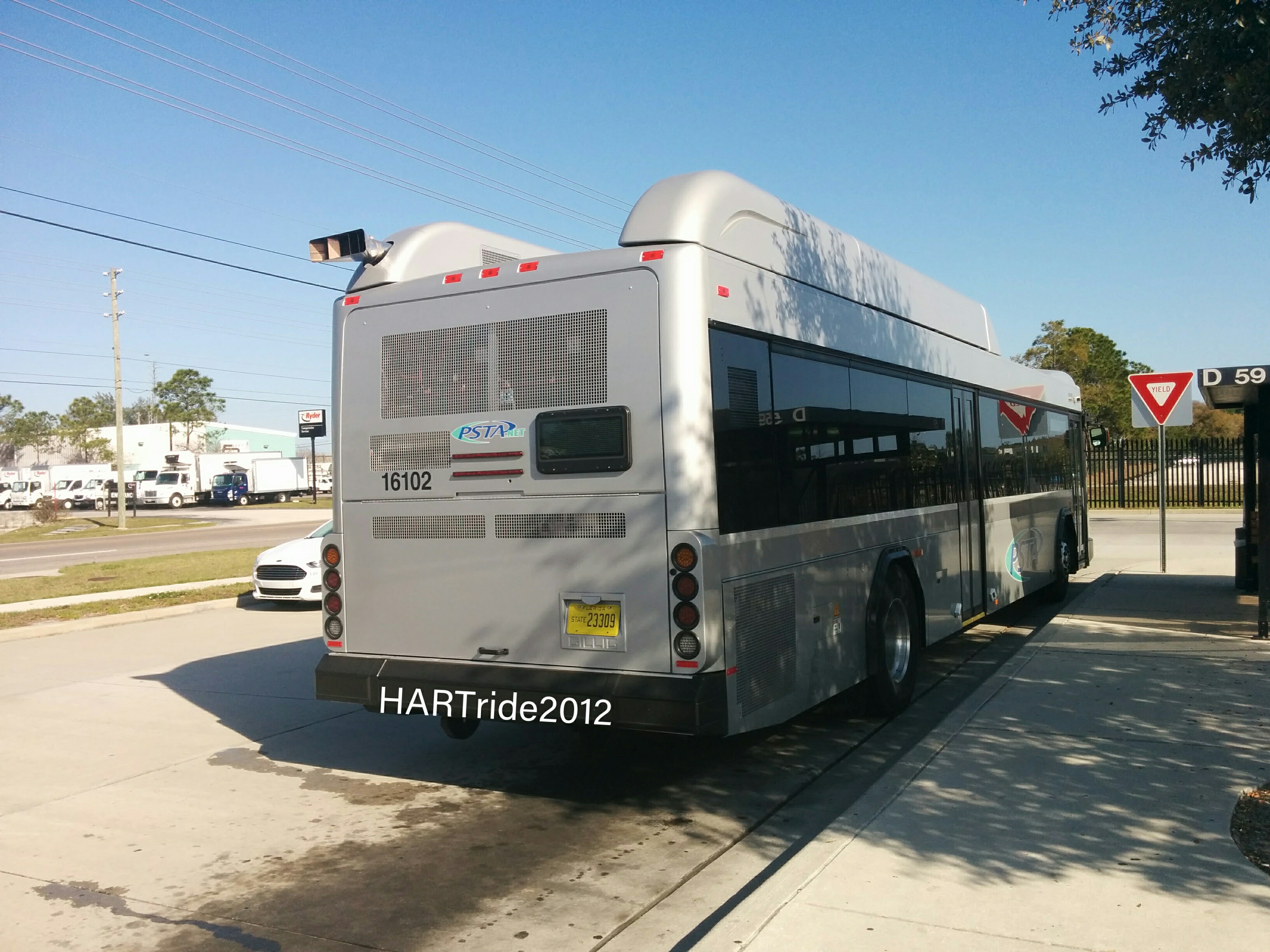
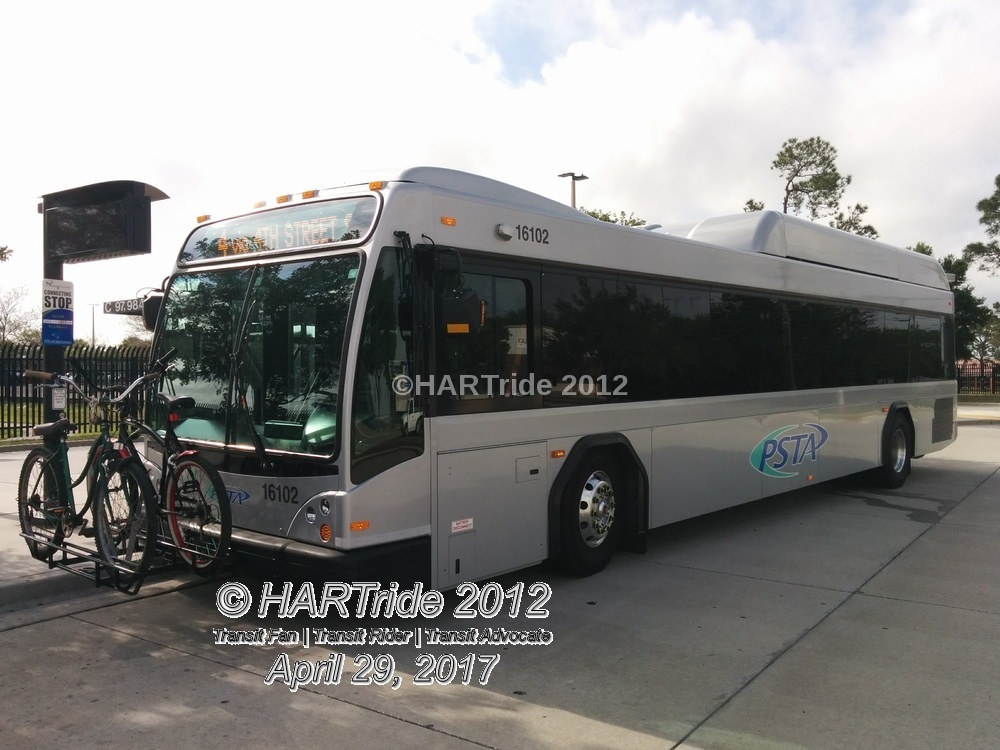
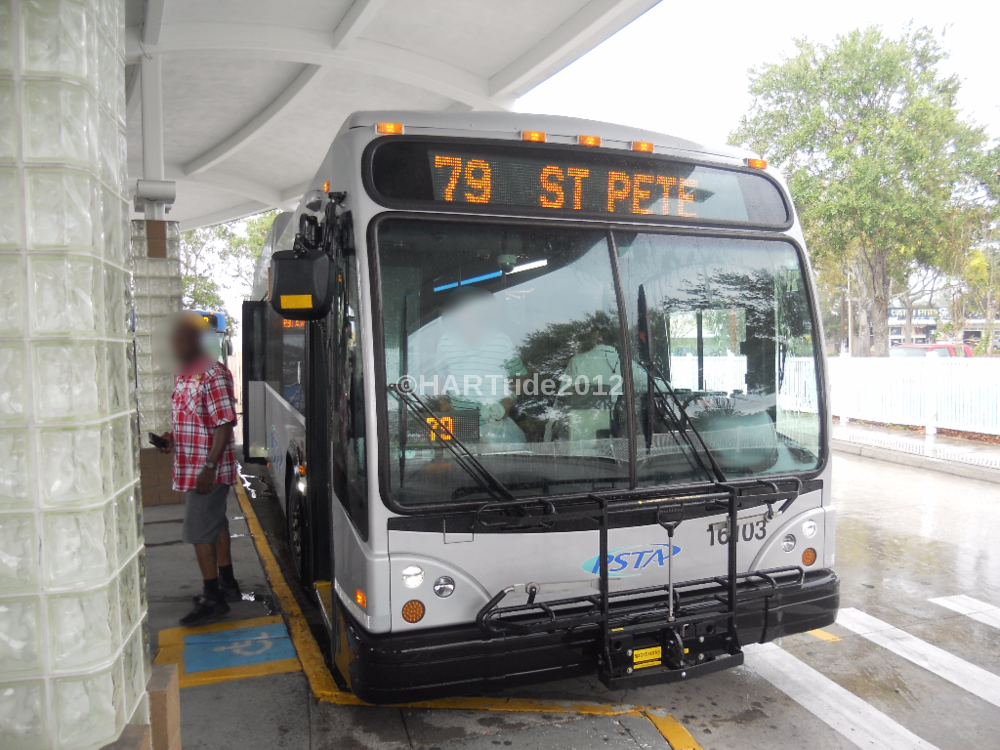
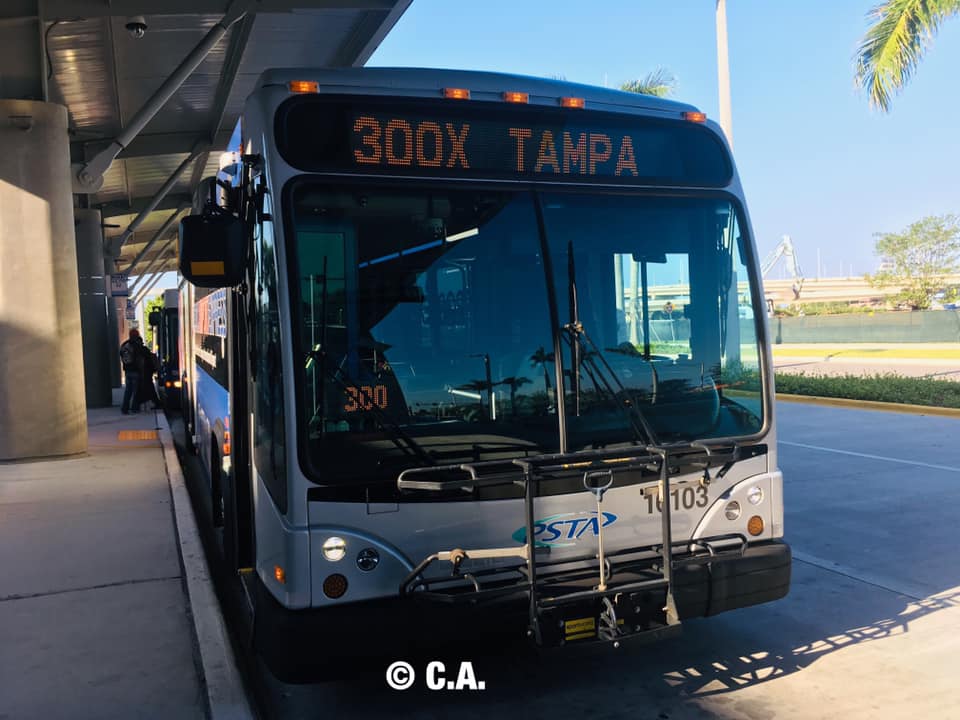
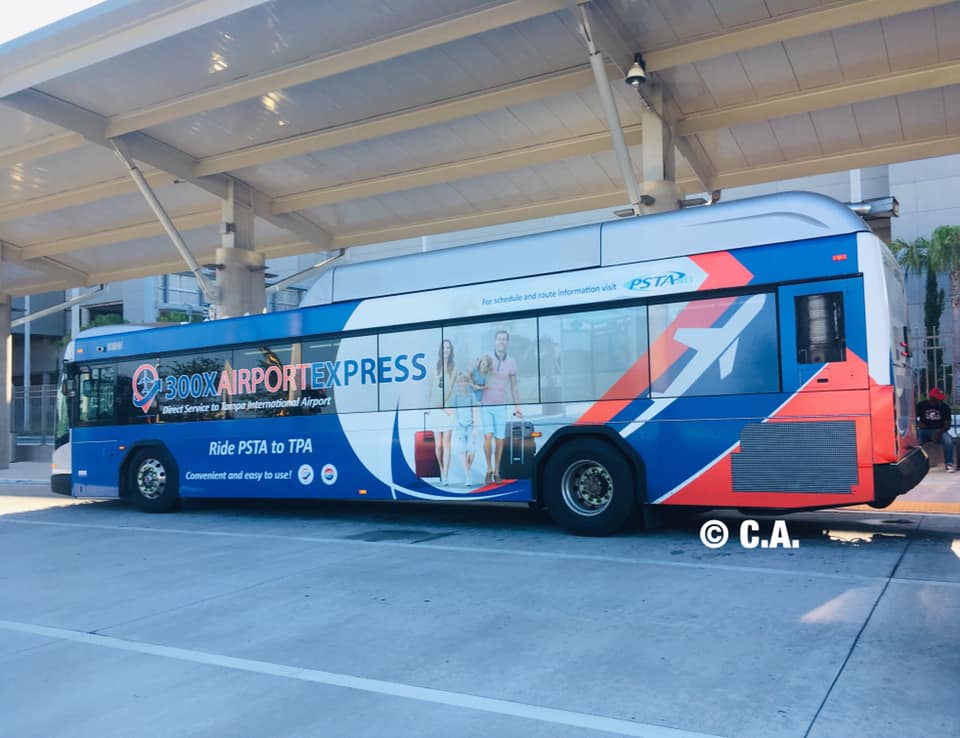
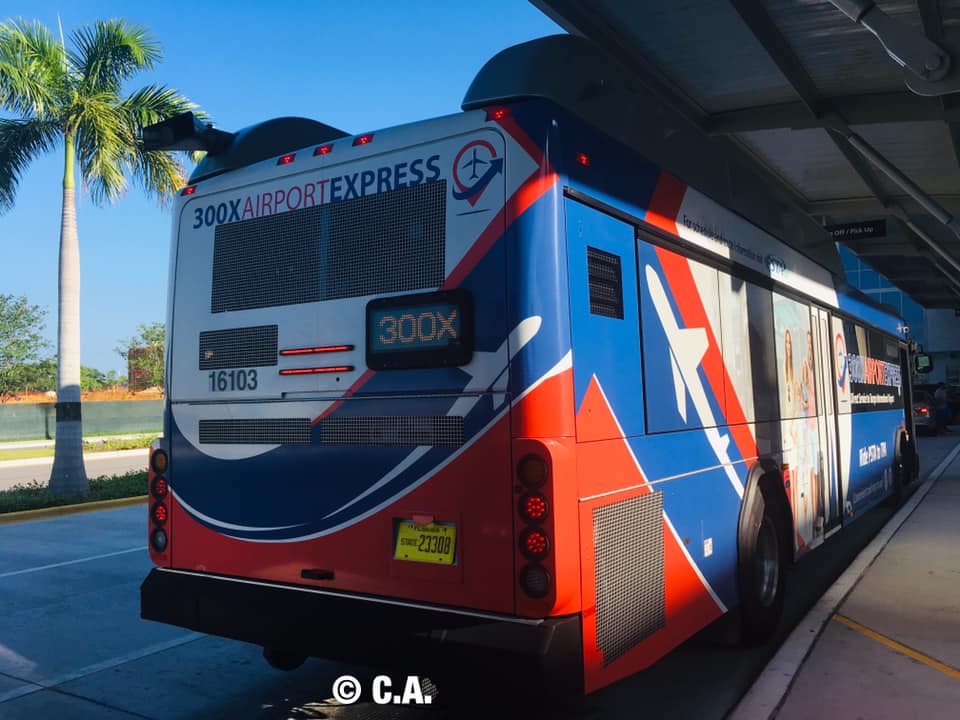
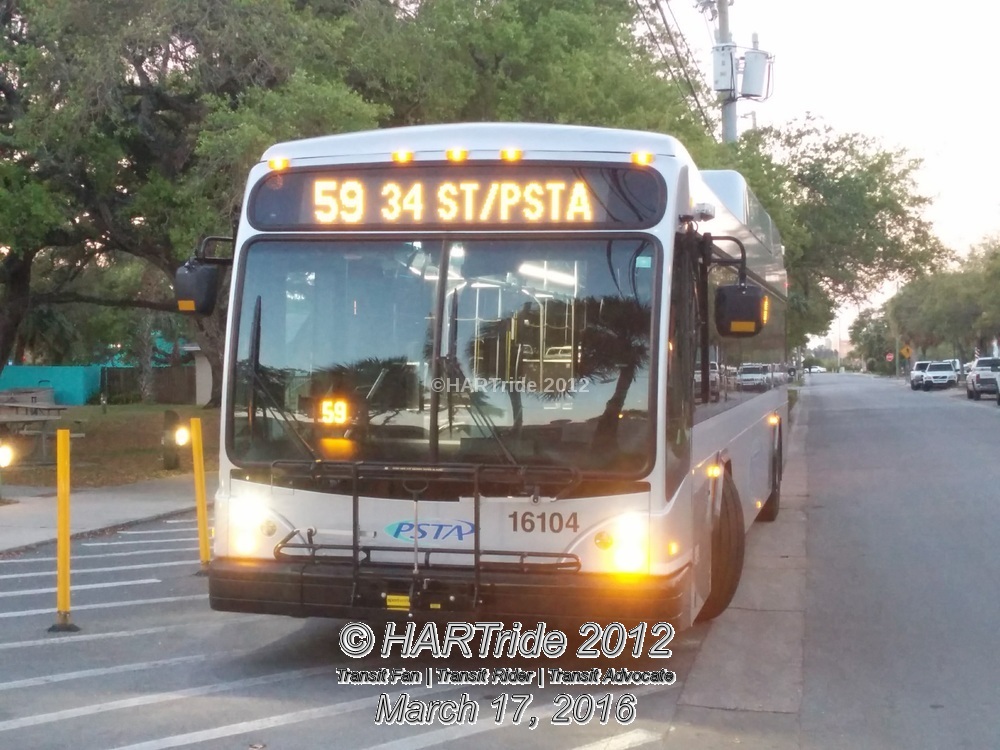
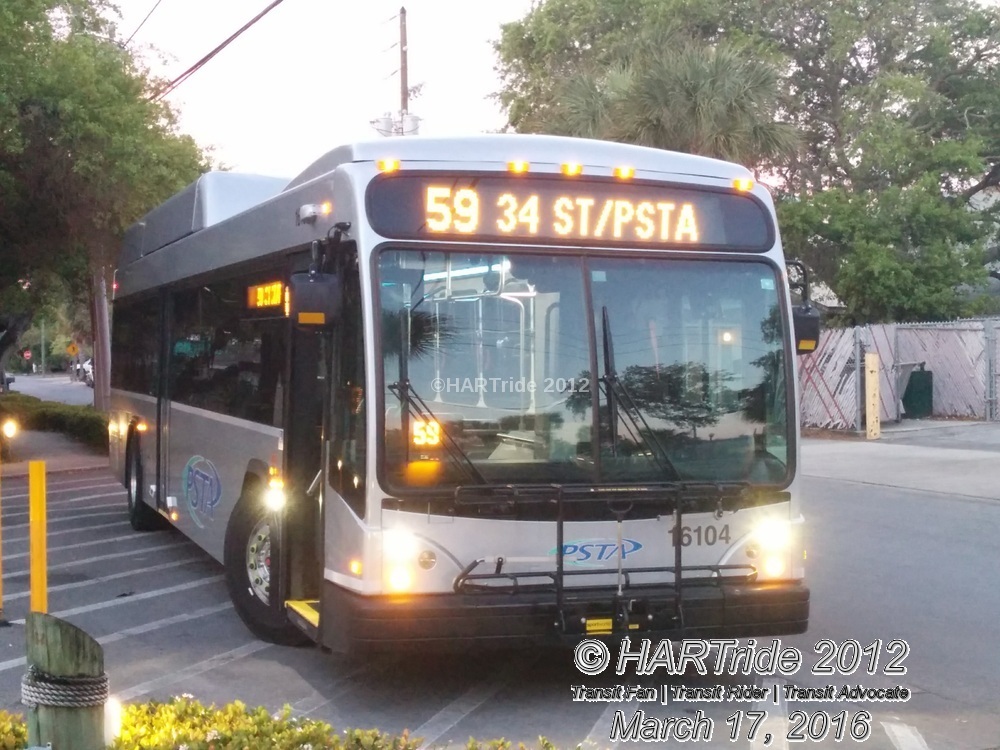
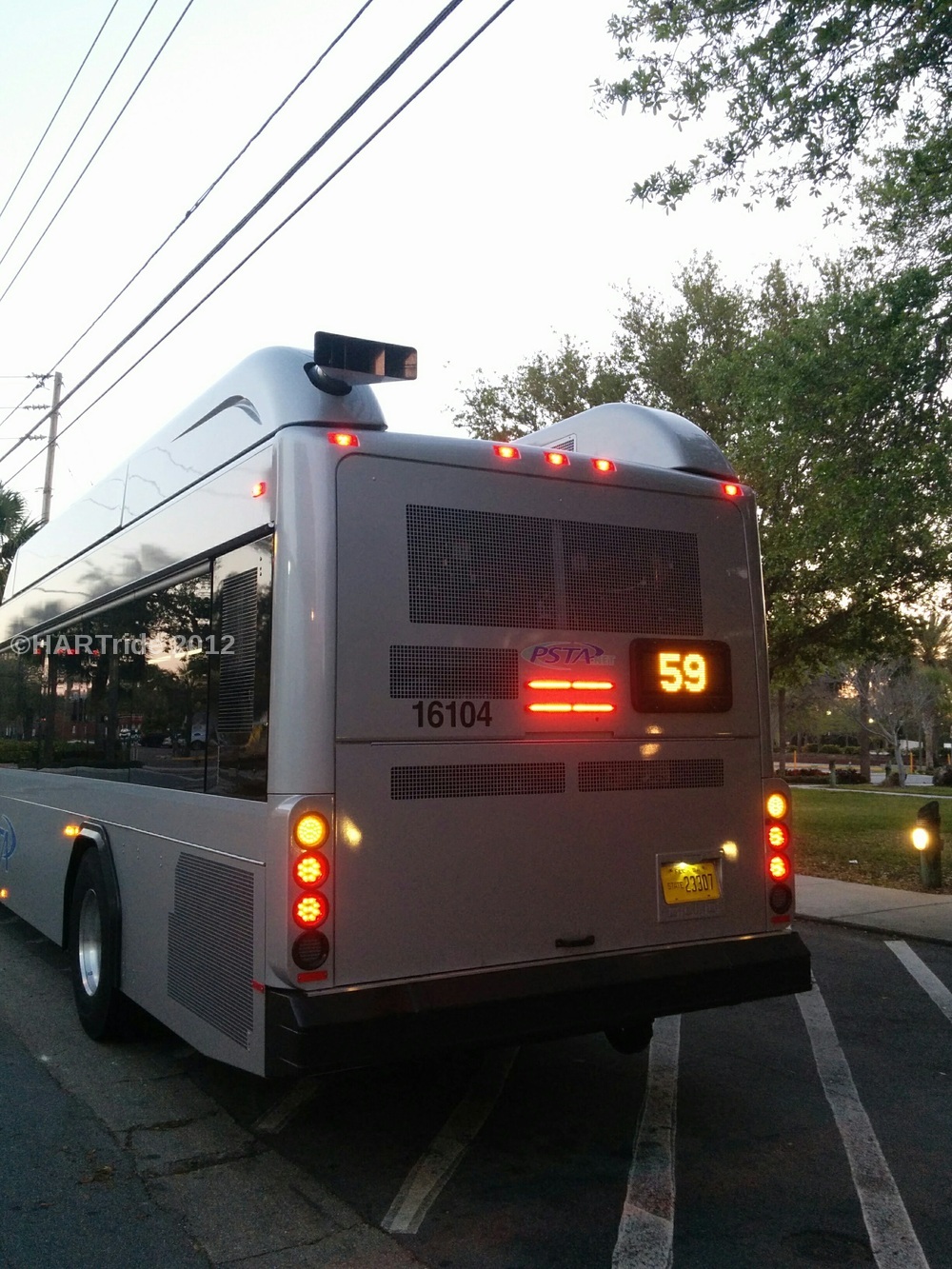
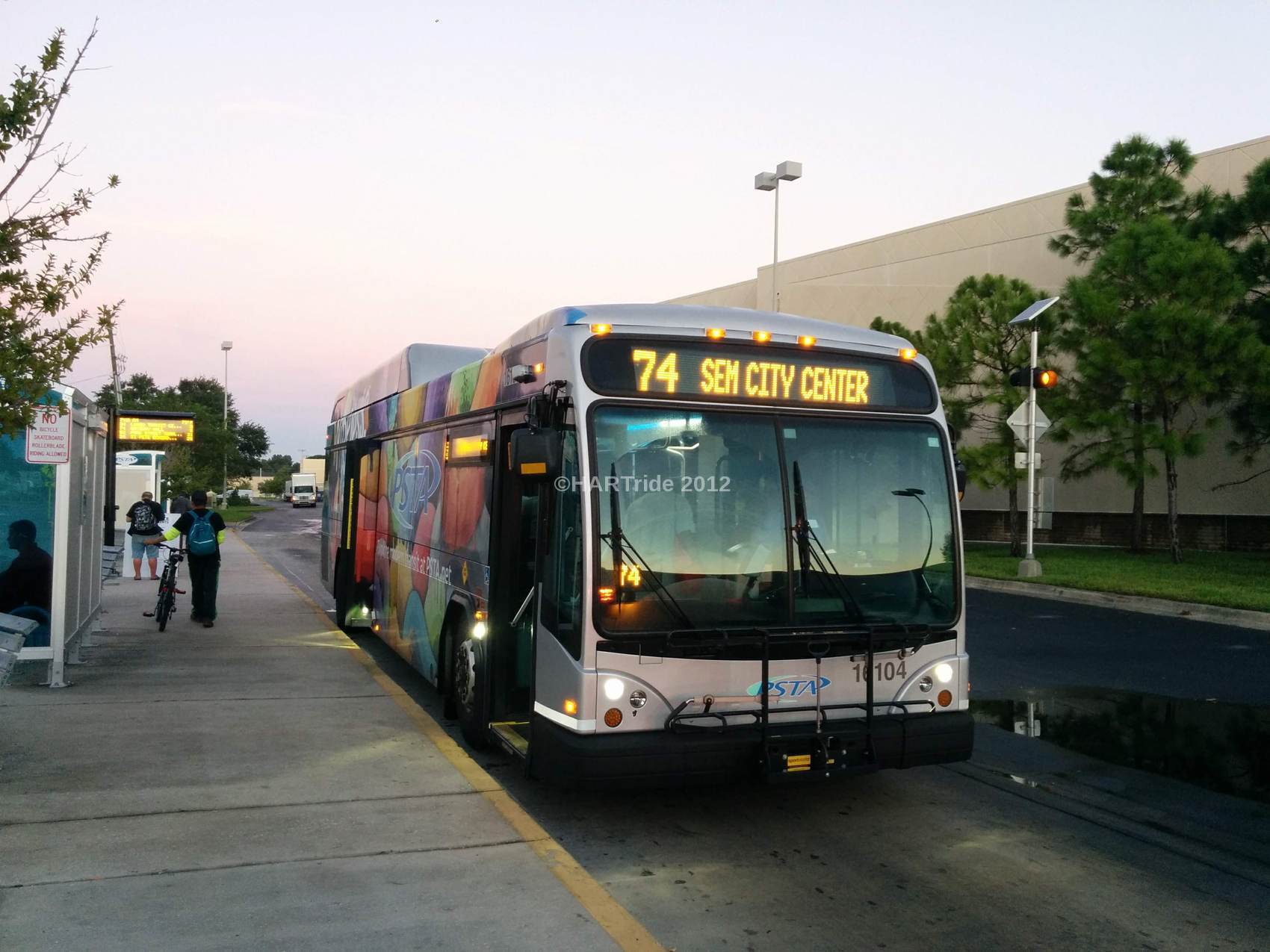
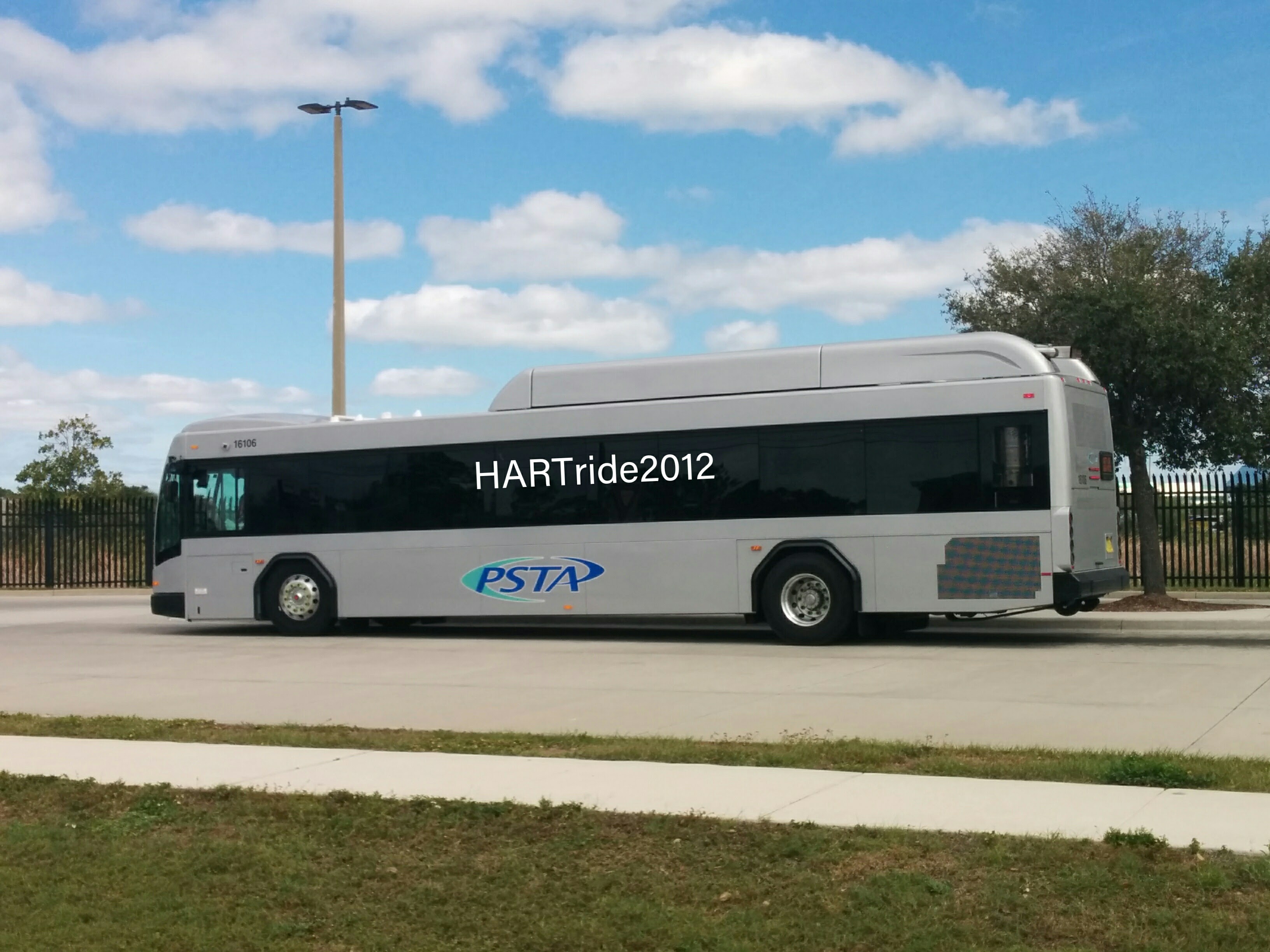
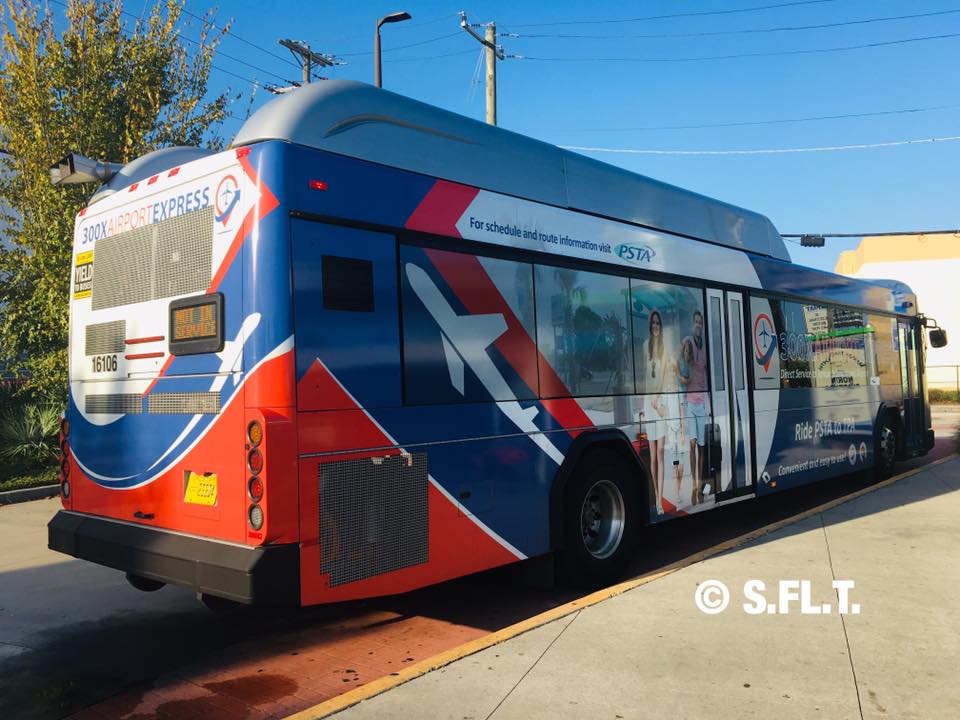
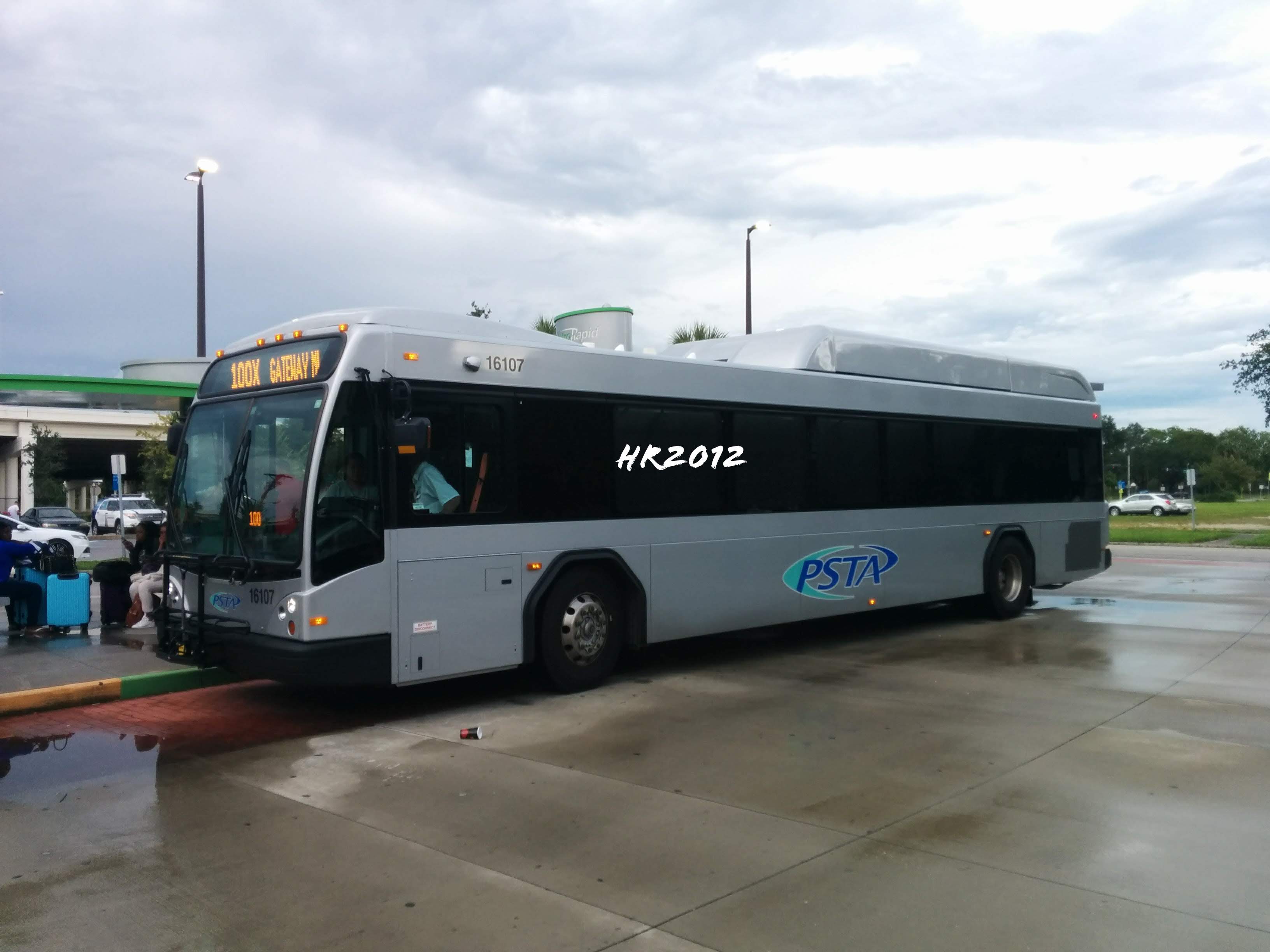
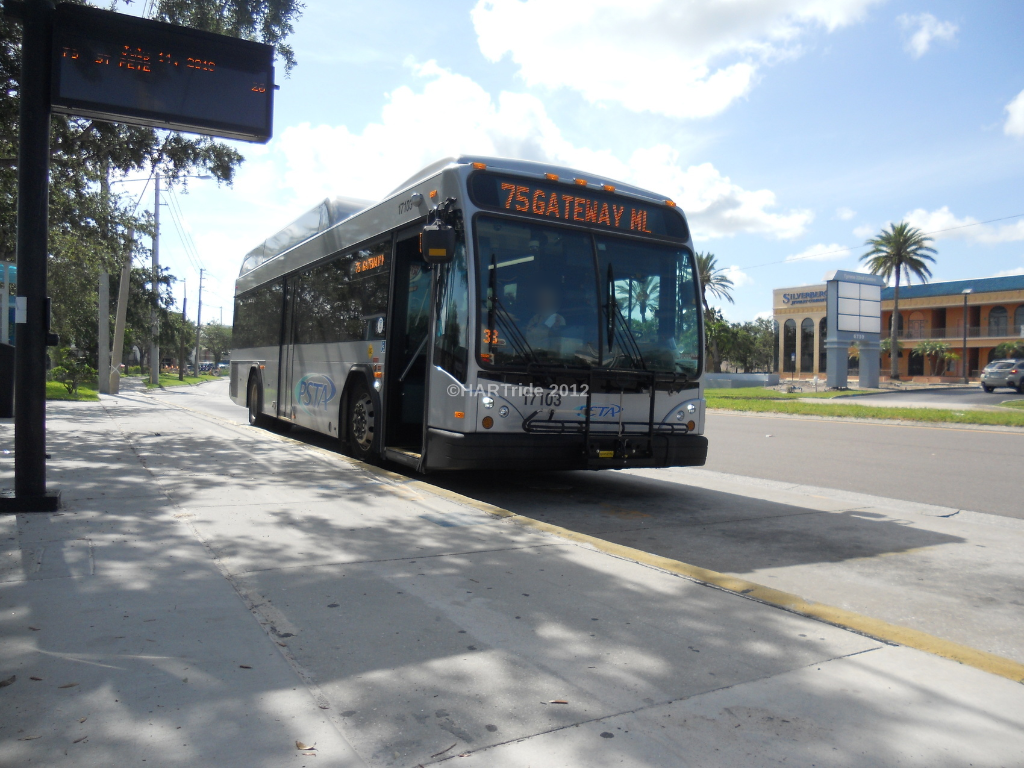
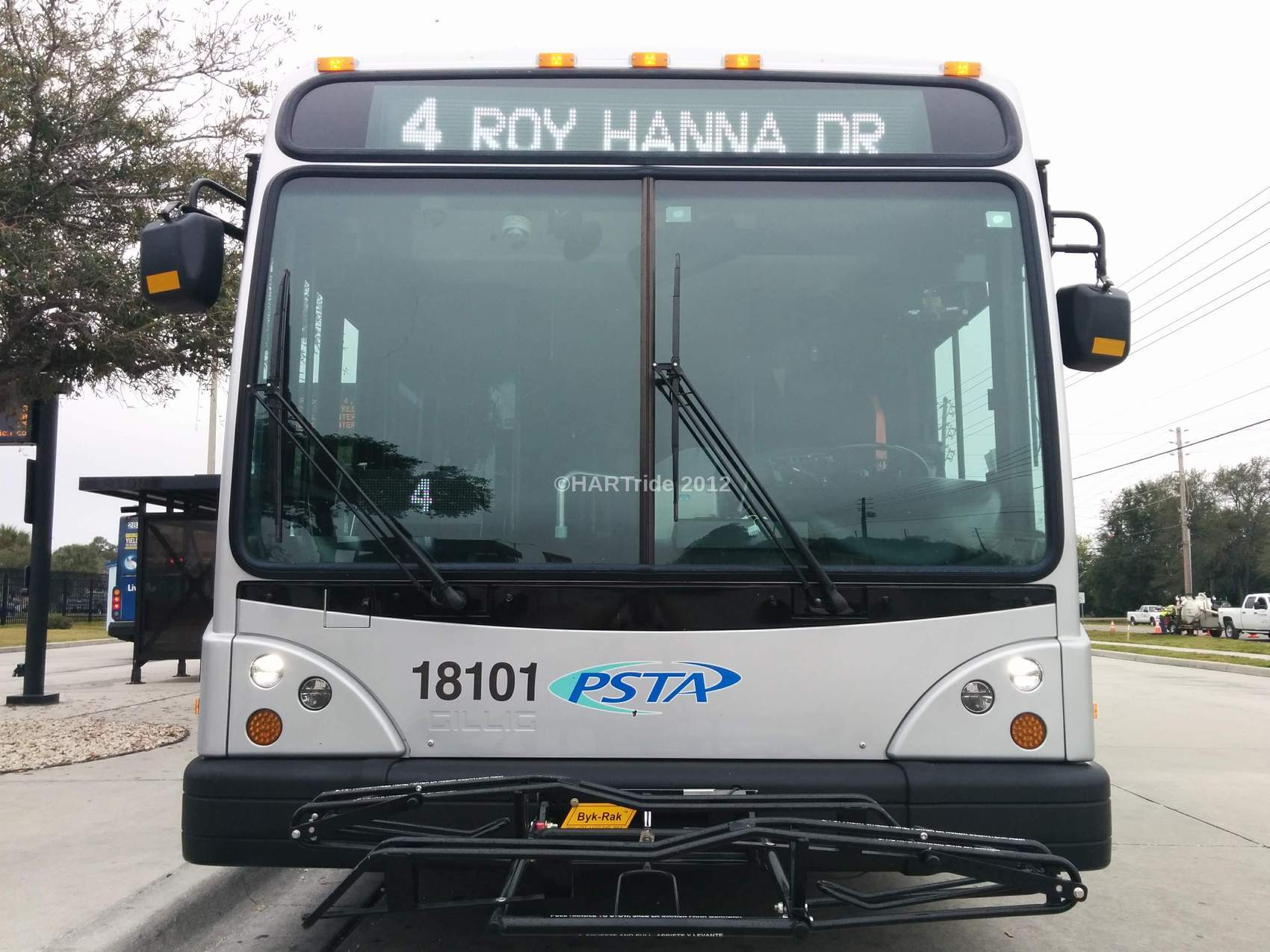
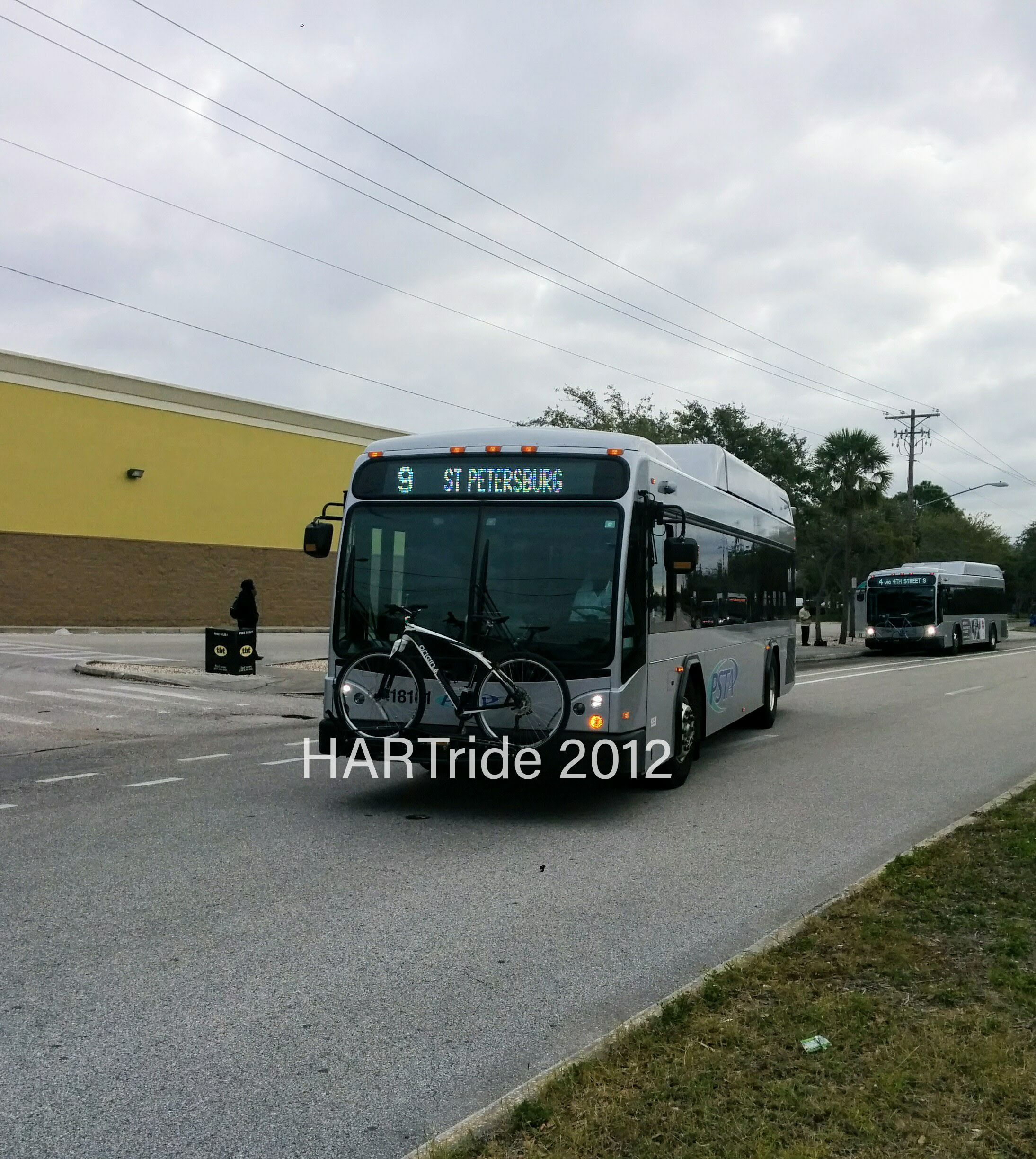
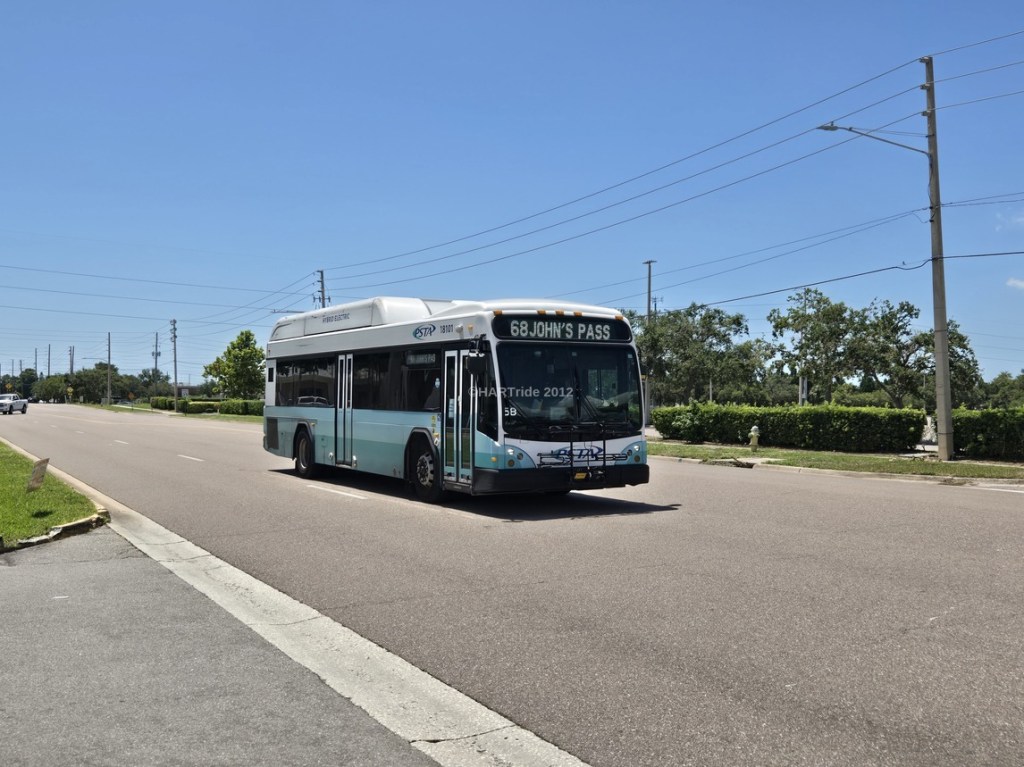
2016 40′ – #’s 16101 through 16107
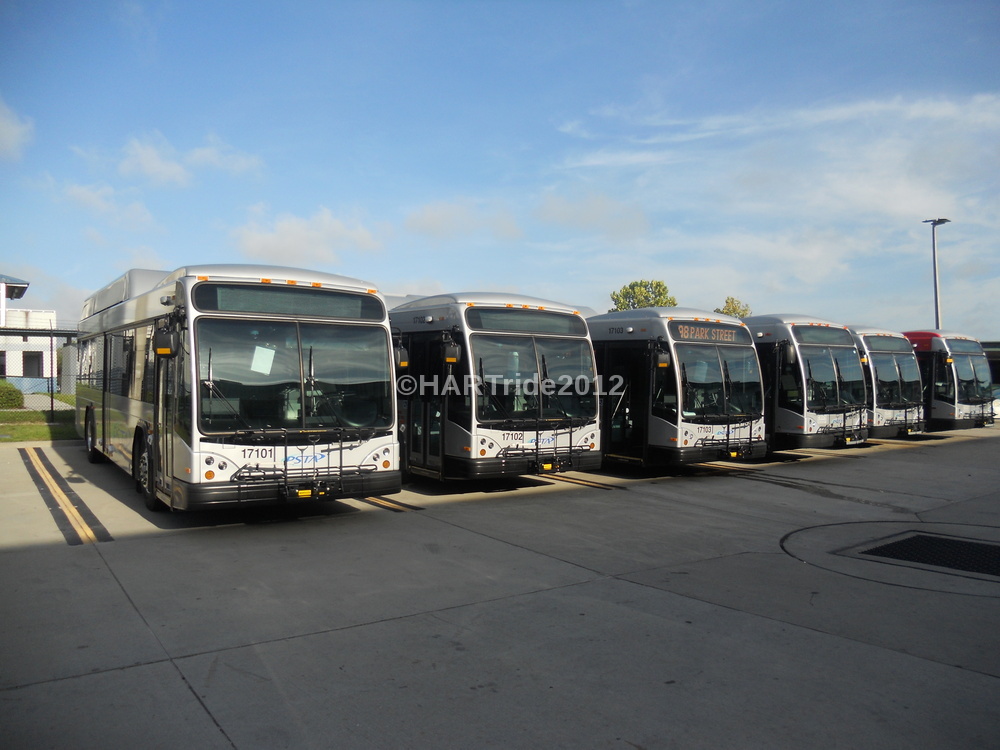
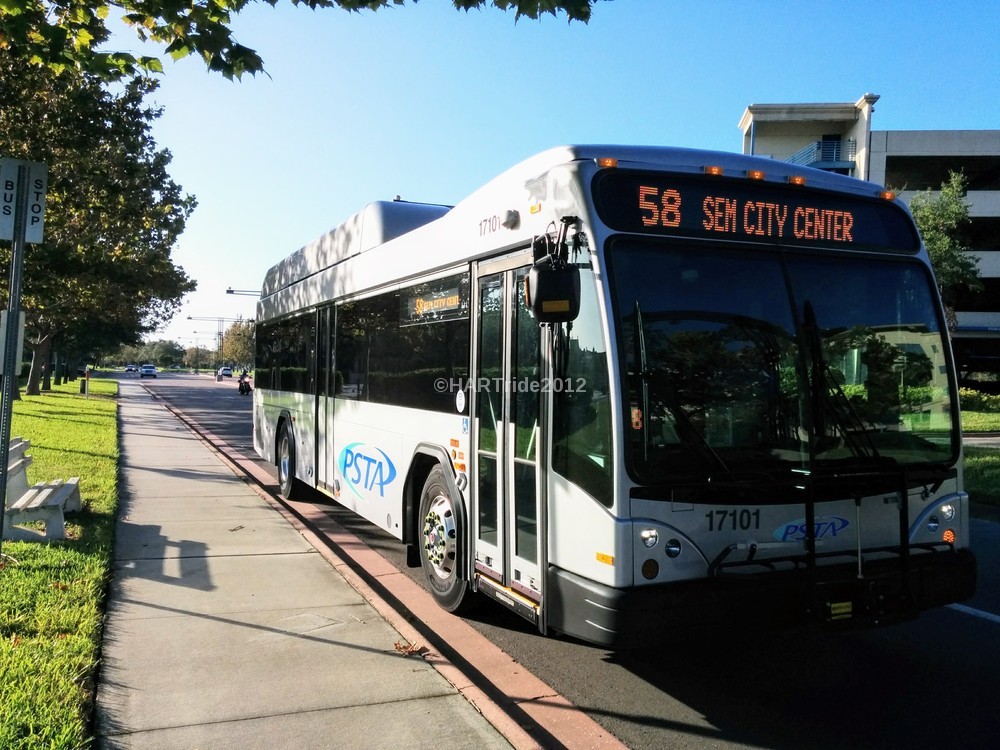
2017 35′ – #’s 17101 through 17103
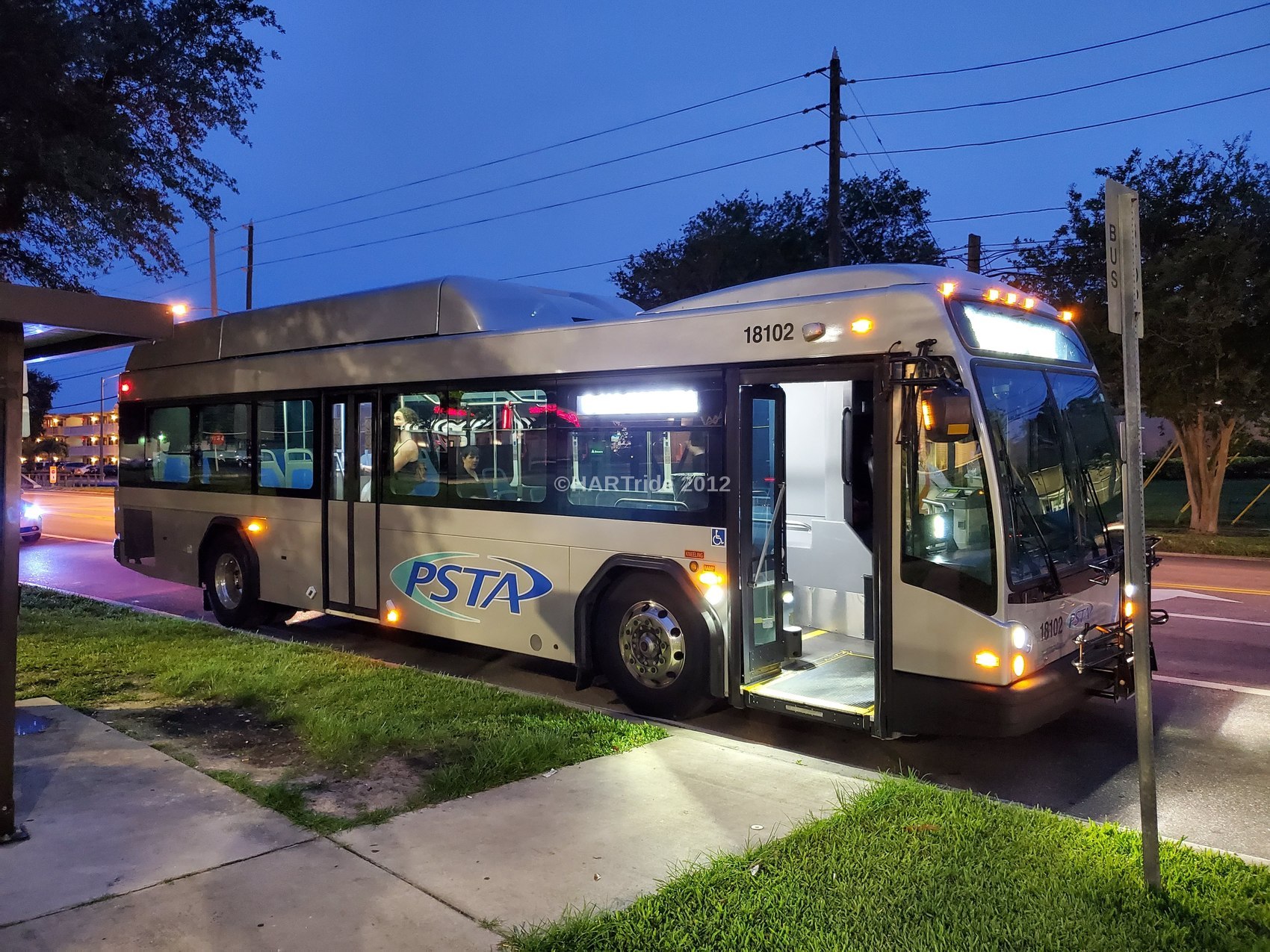
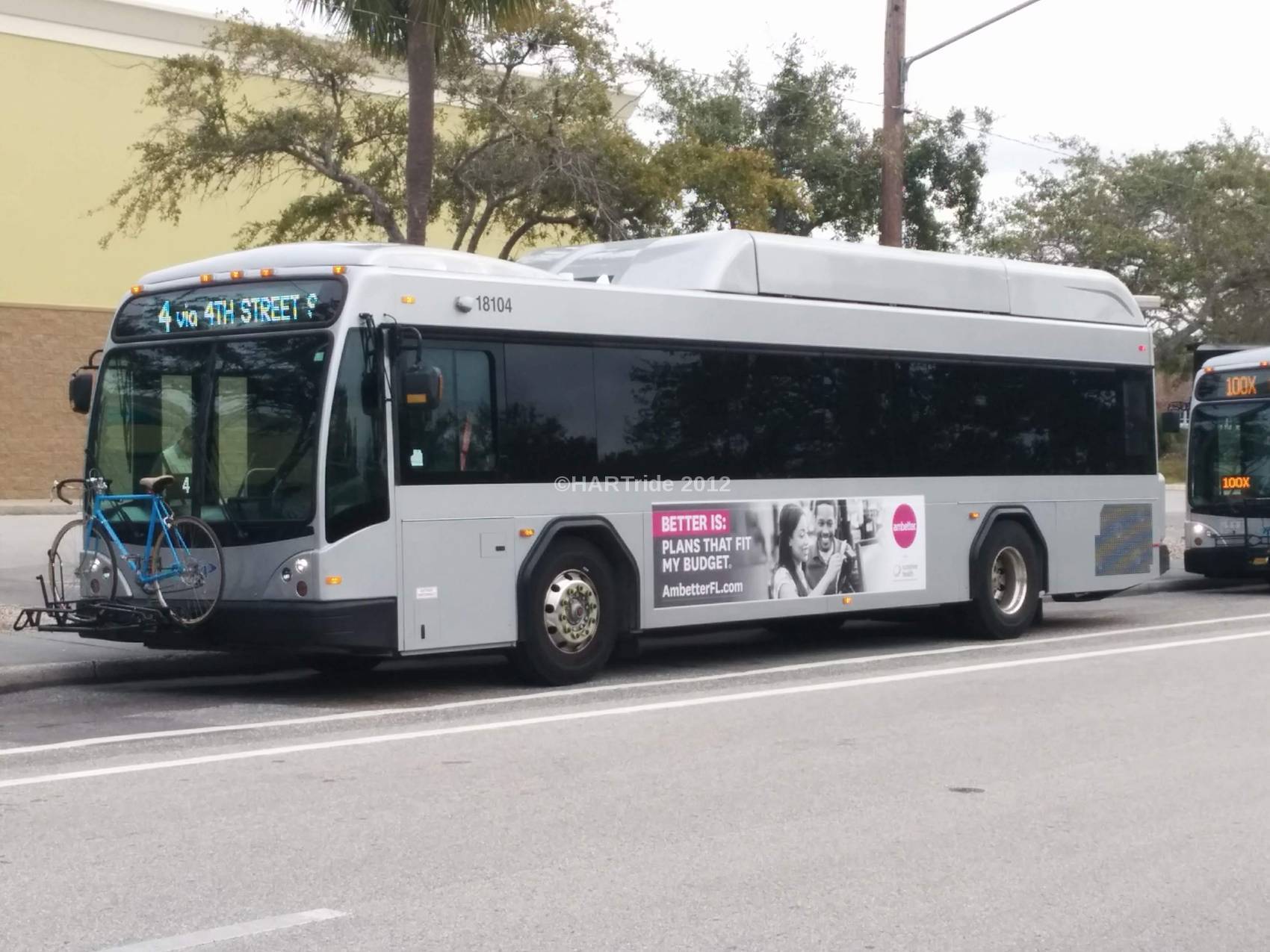
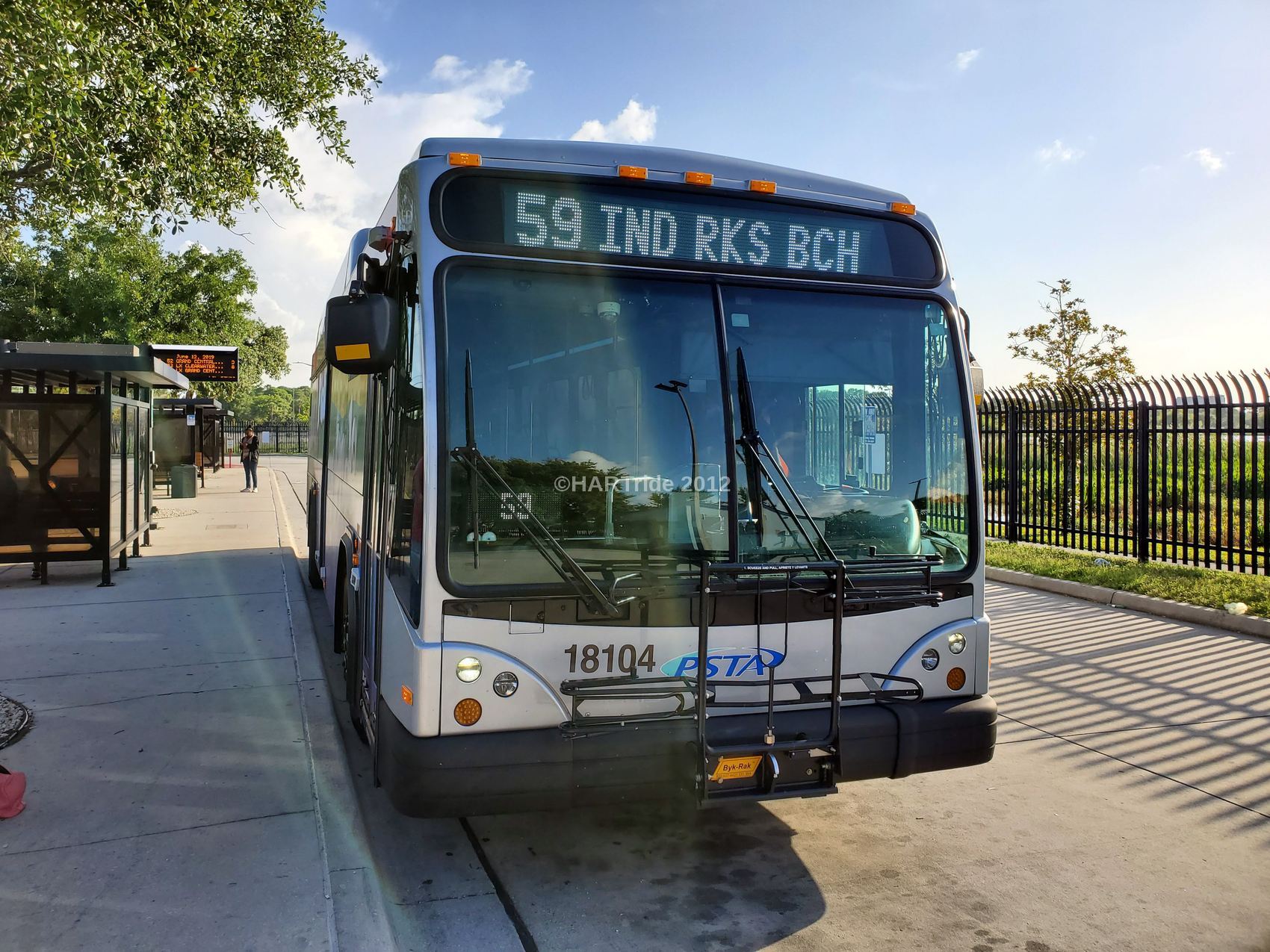
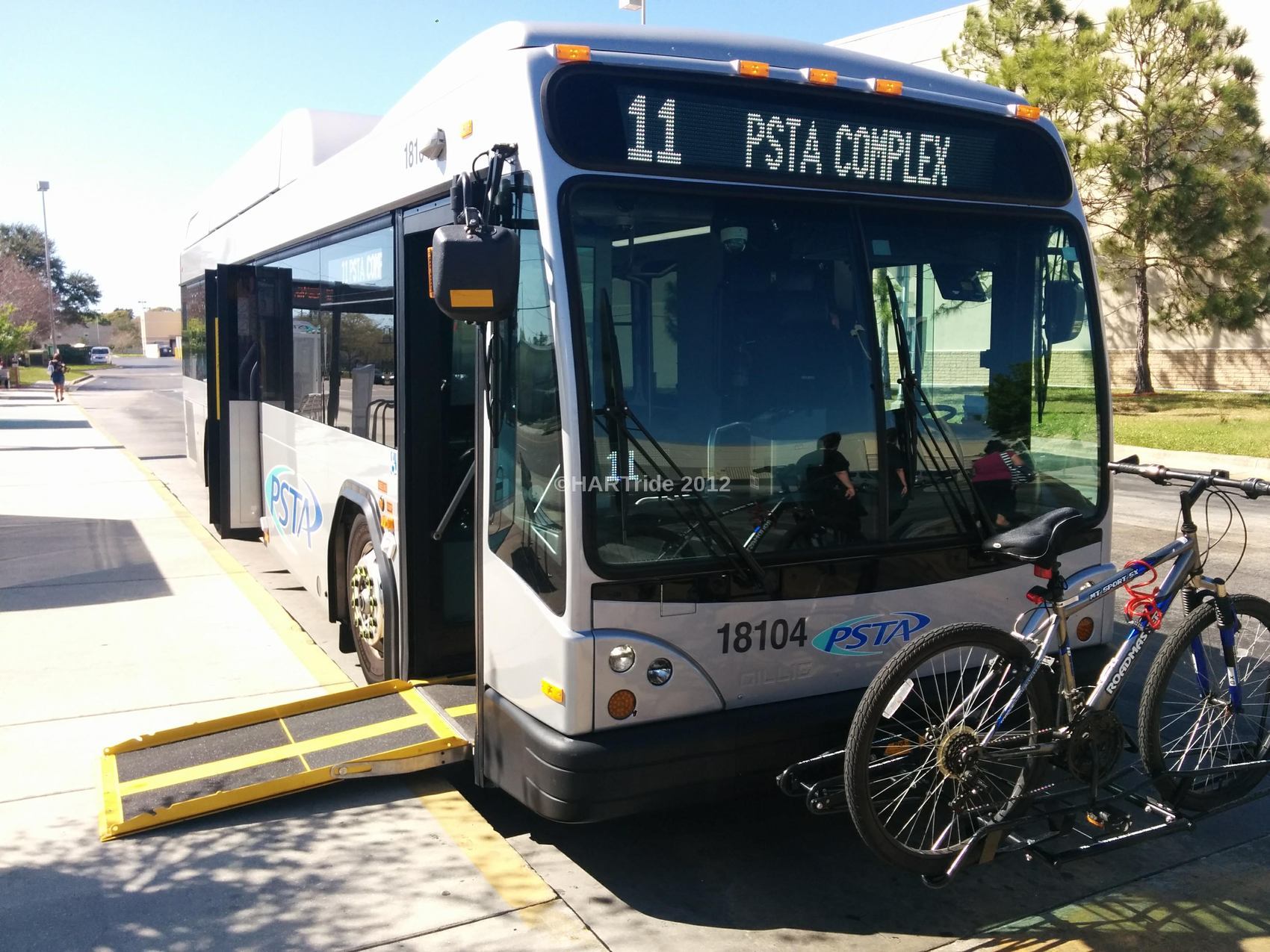
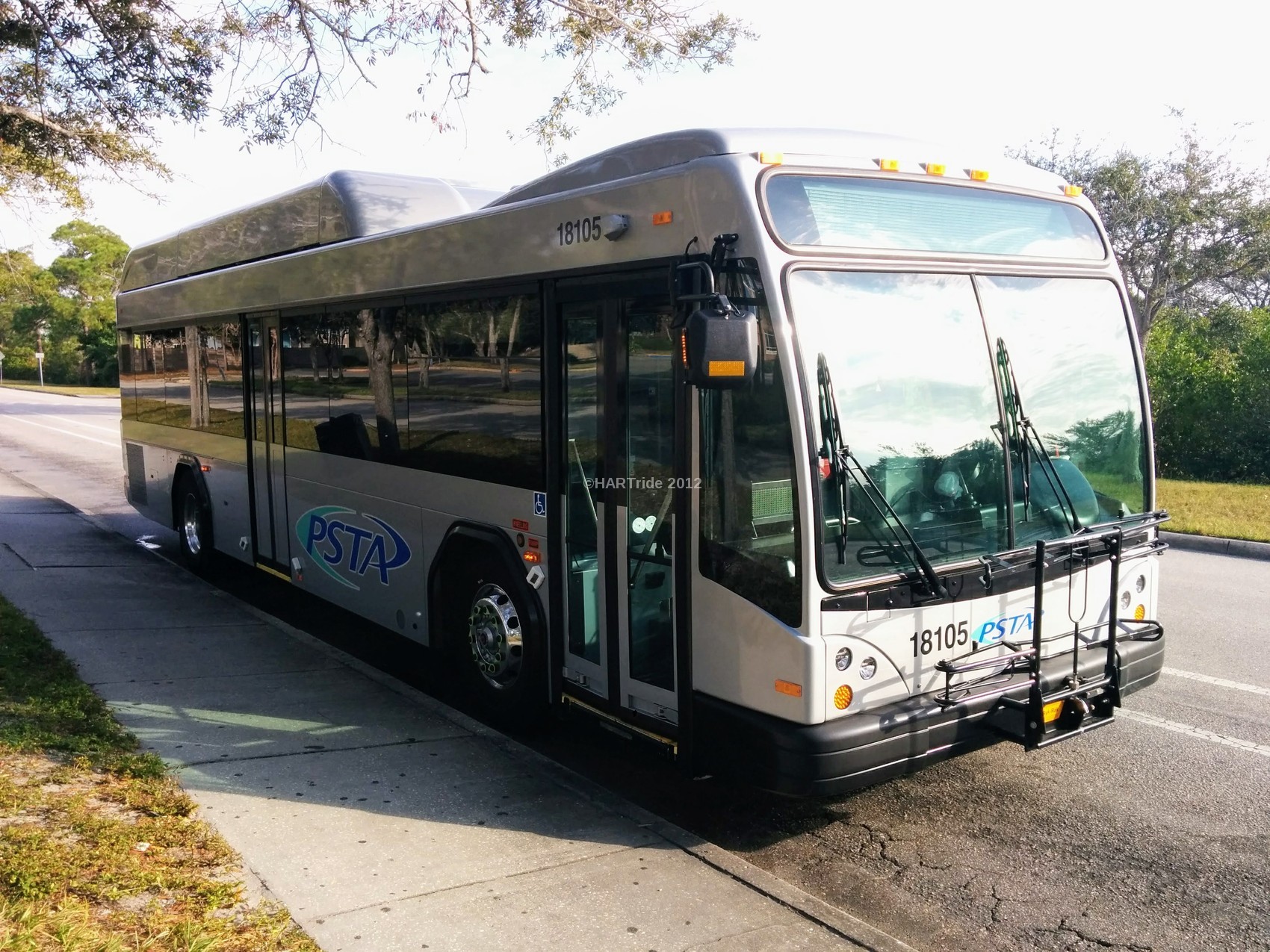
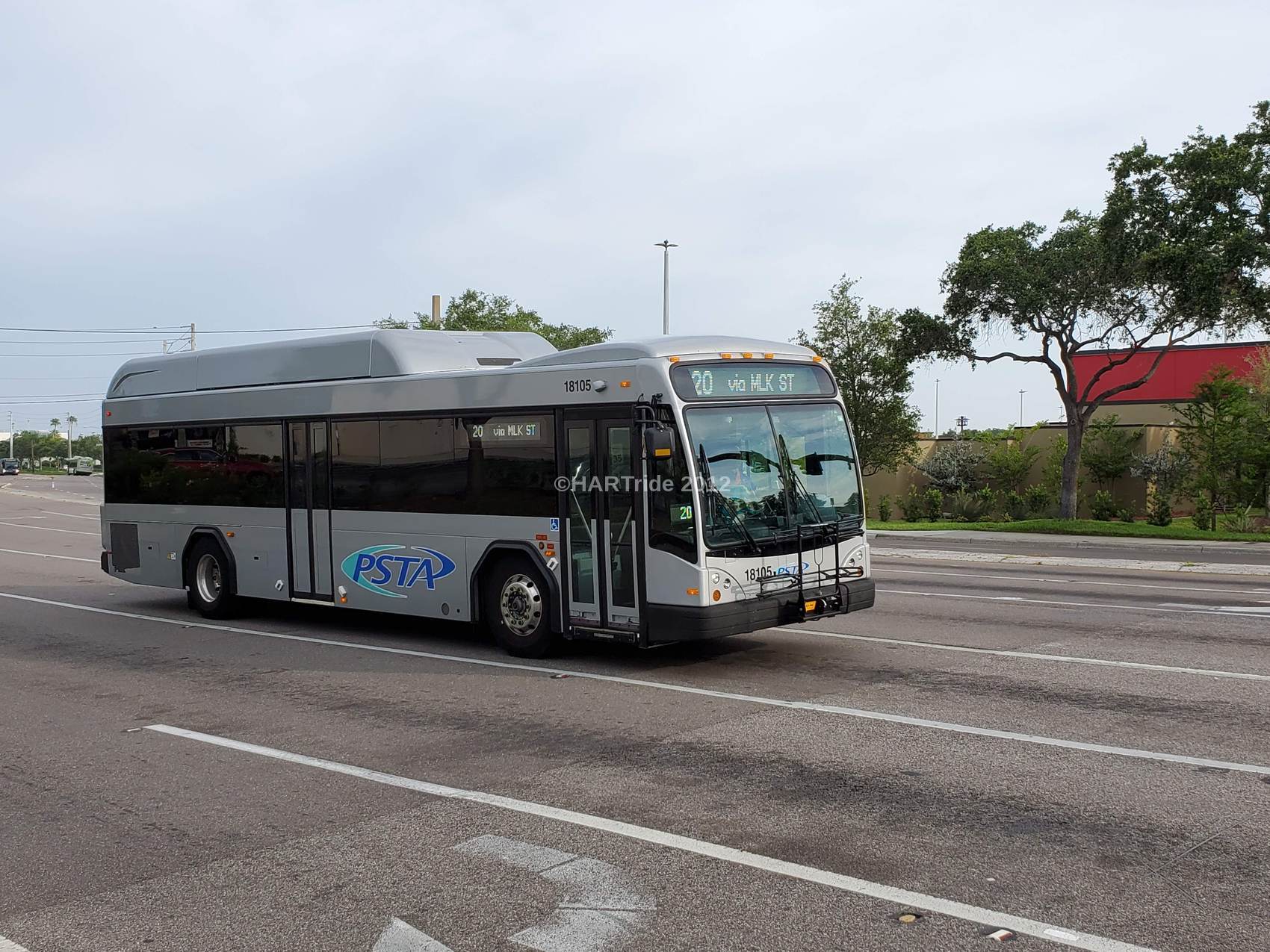
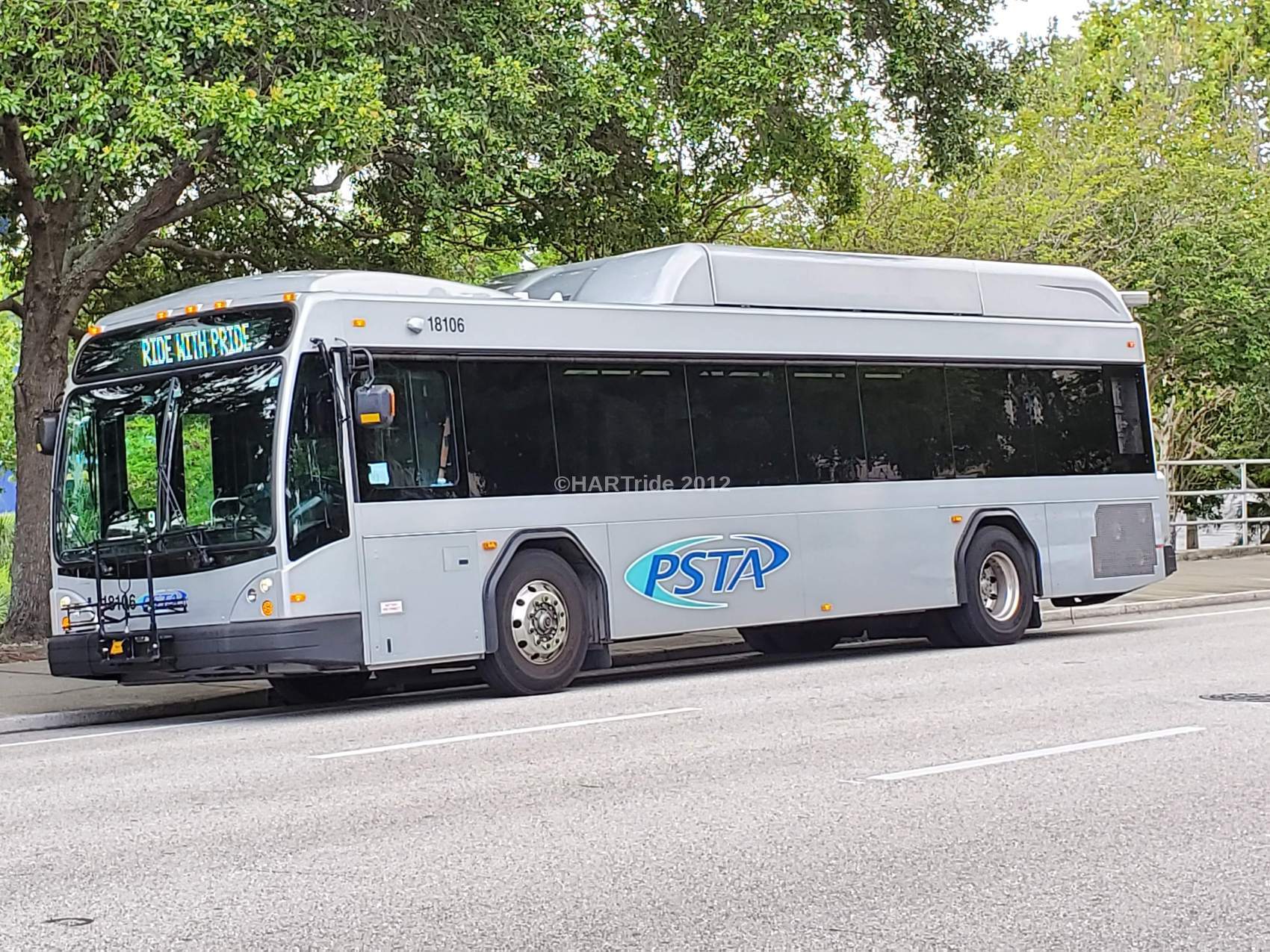
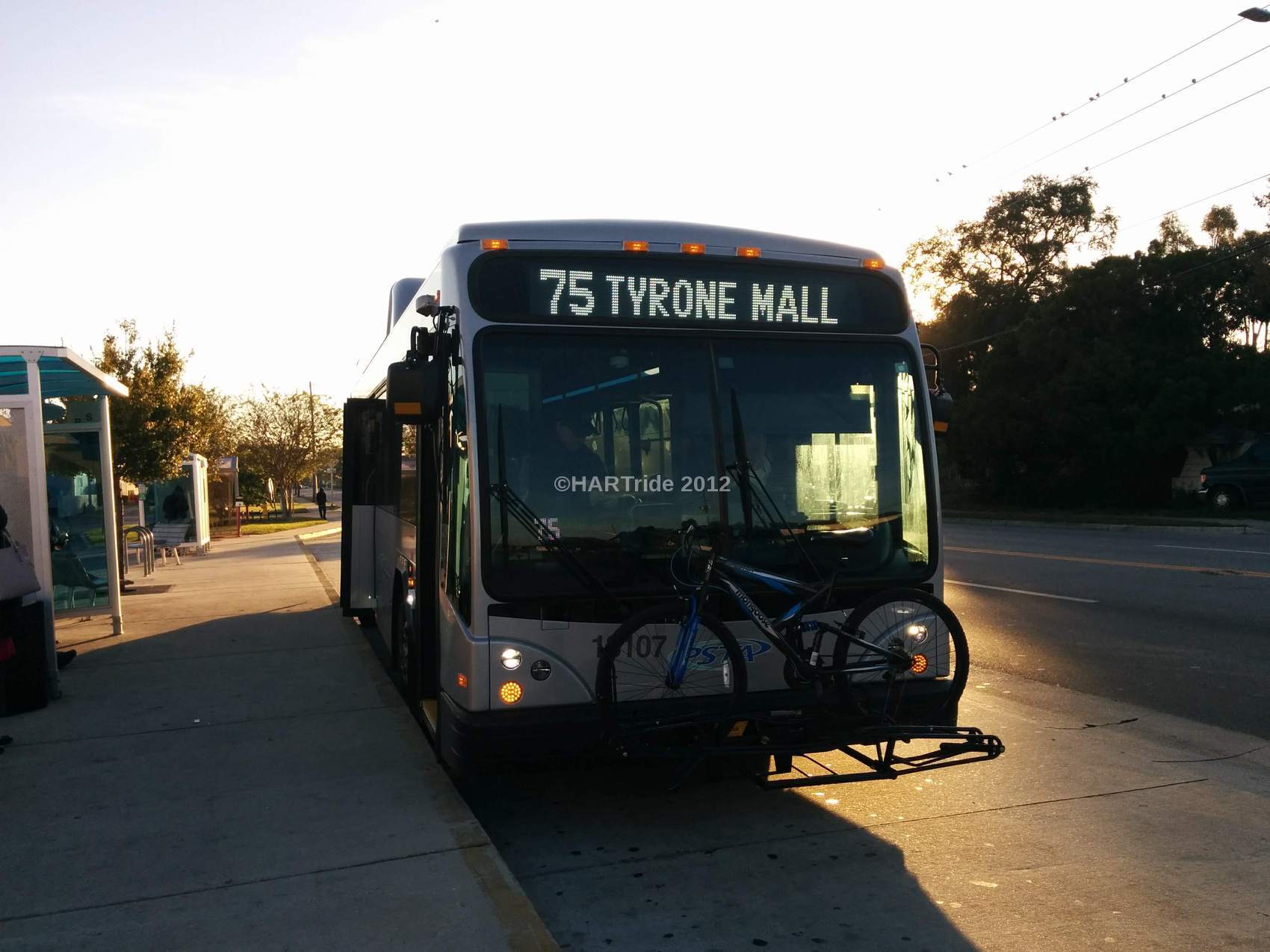
2018 35′ – #’s 18101 through 18109
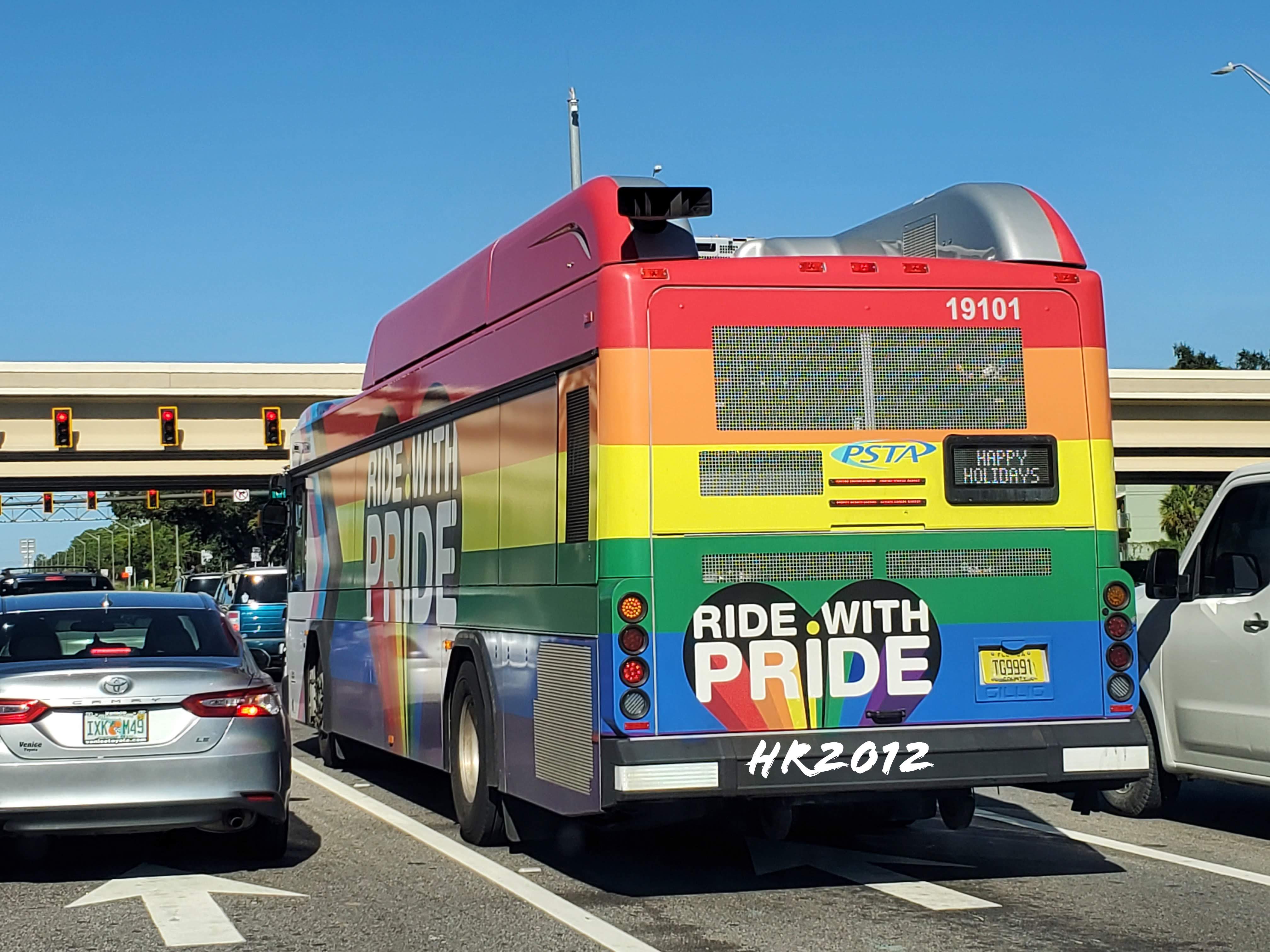
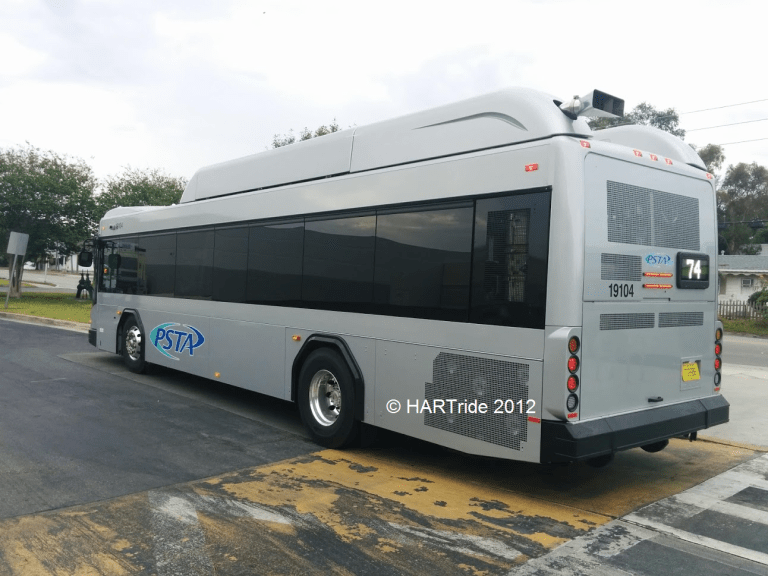
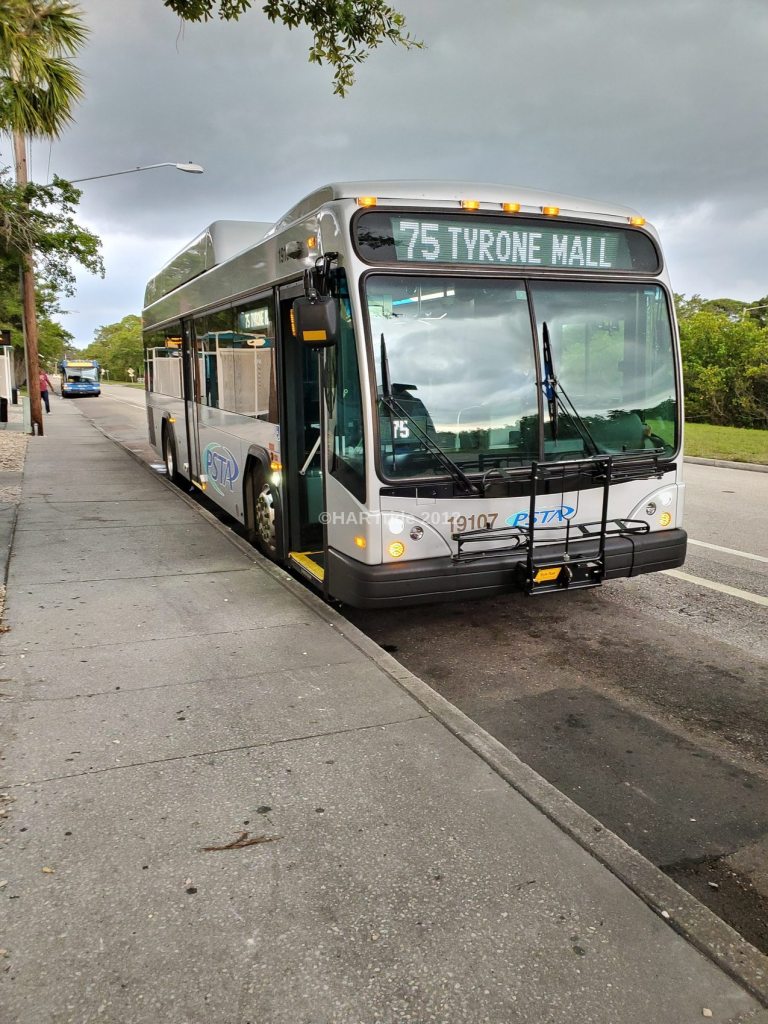
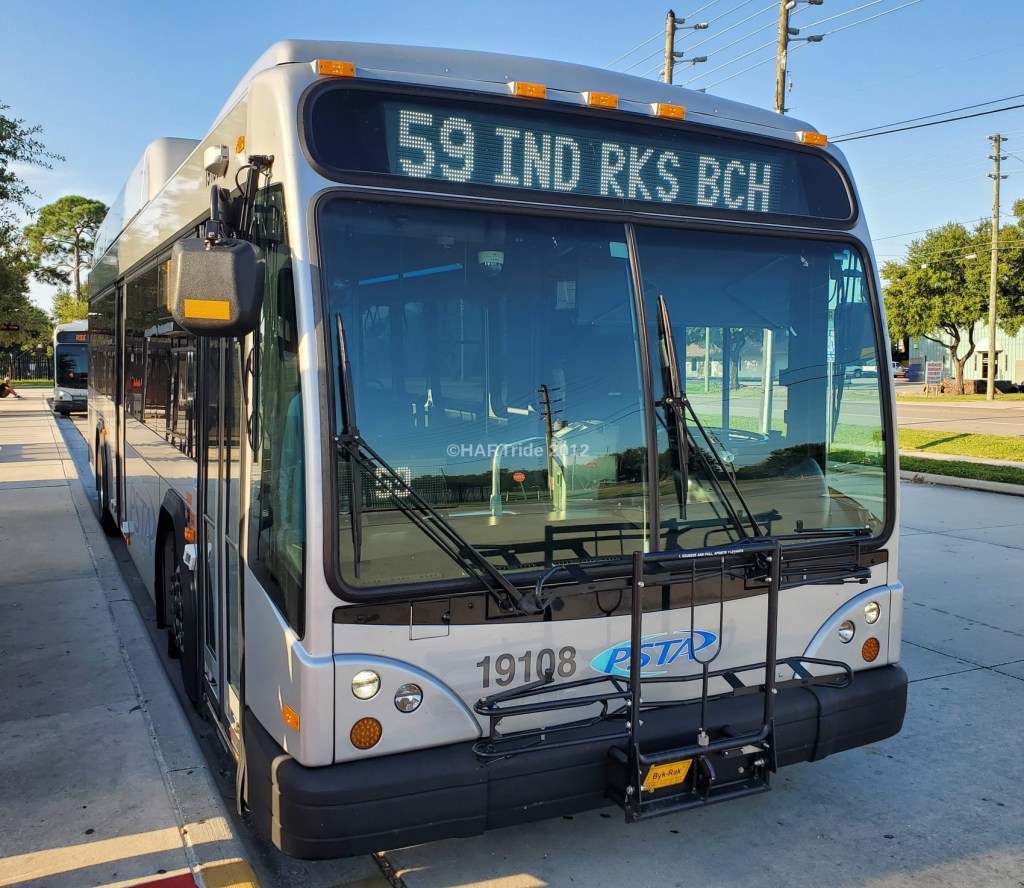
2019 35′ – #’s 19101 through 19109
For the 2016 40′ Gillig Low Floor diesel/electric hybrid order, PSTA made some significant changes from that of the previous hybrid bus orders:
- The hybrid system was changed from Allison to BAE Systems. The buses would therefore employ BAE’s HybriDrive Series E hybrid system – which provides a much smoother & quieter ride than the Allison hybrids do. There are even features available (particularly with BAE’s extended range system) by which the bus essentially runs on battery power until they become low. The small diesel engine, then kicks in to help recharge the batteries.
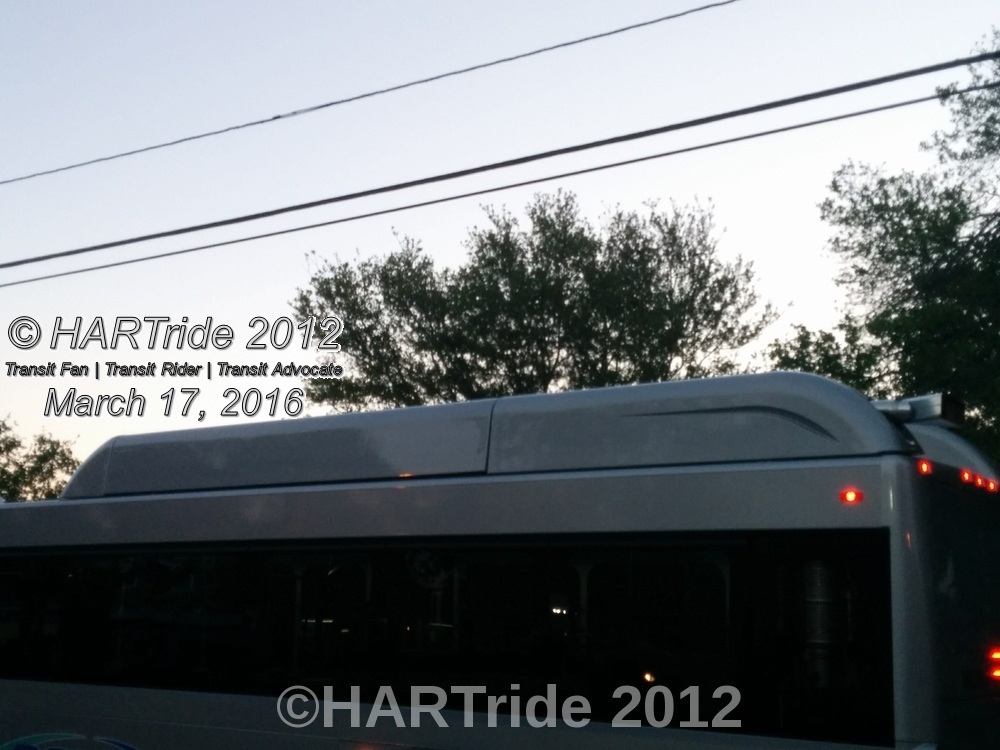
- While PSTA kept the BRT styling intact on the front end of each bus, the standard rear end was chosen instead of the curved BRT style rear. Additionally, the roof faring that helps cover the batteries has also changed.
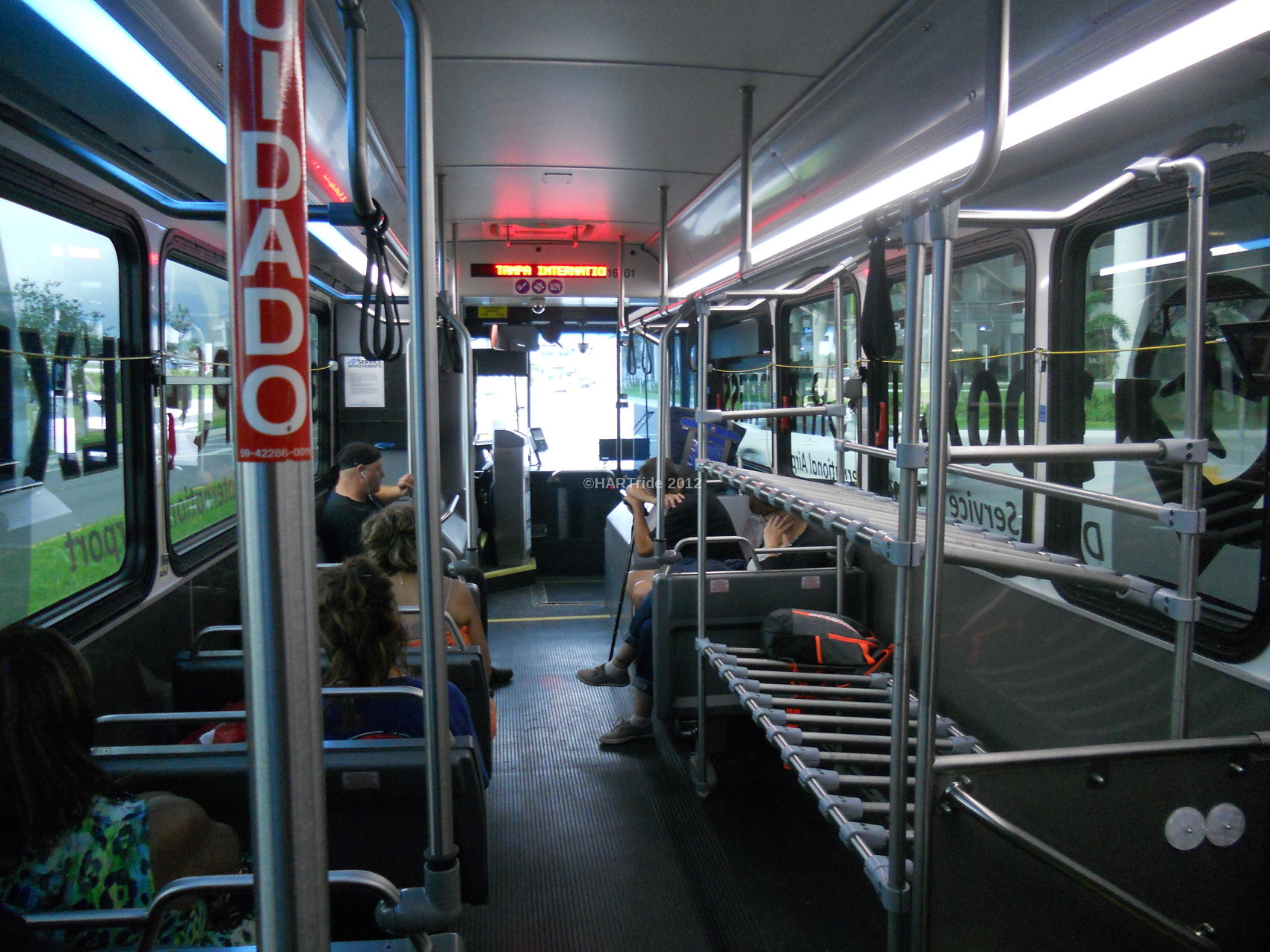
- While the interior seating configuration remains the same as the 2012 through 2015 hybrids, a different seat cushion pattern was chosen. On some buses, some seats were removed to make way for luggage racks so that they could be used on express routes.
The overall design changes listed above would be carried over for the 2017 through 2019 Gillig orders. In terms of seating layout, the 2017 through 2019 orders posses a similar layout to that of the 2009 & 2010 orders. However, the seat type has changed over to American Seating’s InSight Prime product line. These seats provide a sleek, ergonomic alternative to the bucket seats used on the older buses & also allow for easier cleaning since the seat surface is completely plastic. While I did not like all plastic transit seats at first, I’ve since gotten used to them.
The upcoming 2025/26 order of nine 35′ hybrid buses will likely be spec’d similarly to the 2018 & 2019 models.















































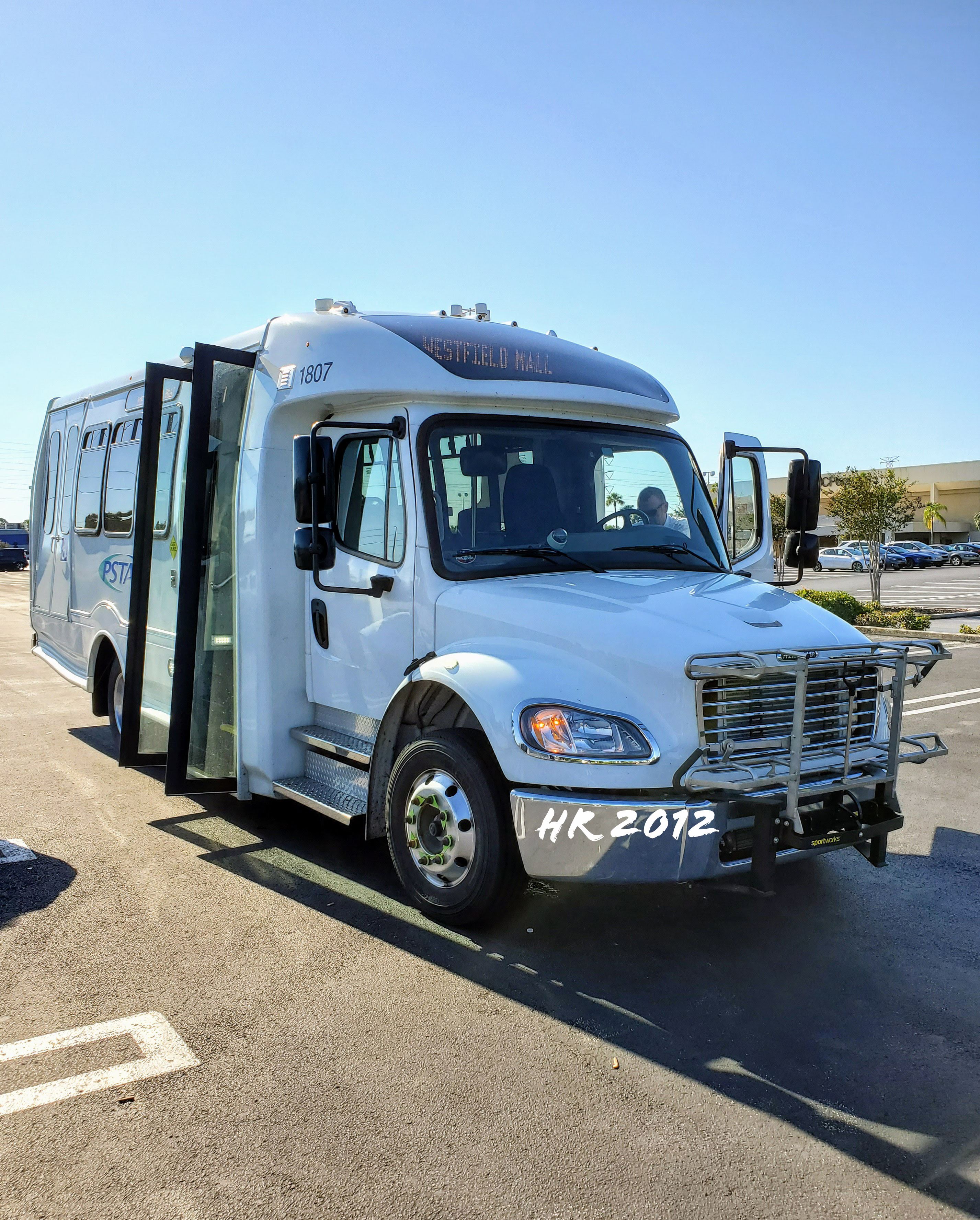
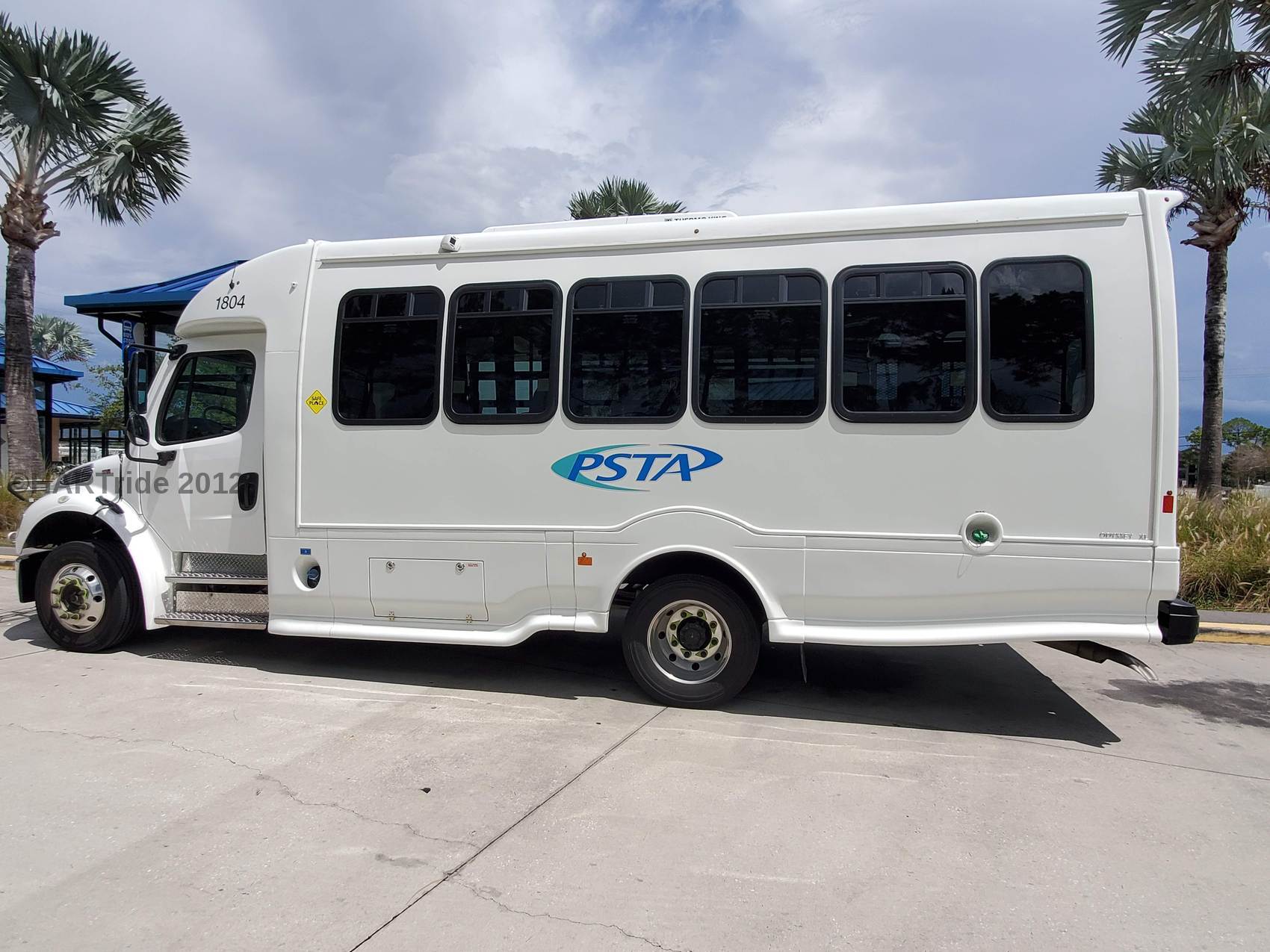
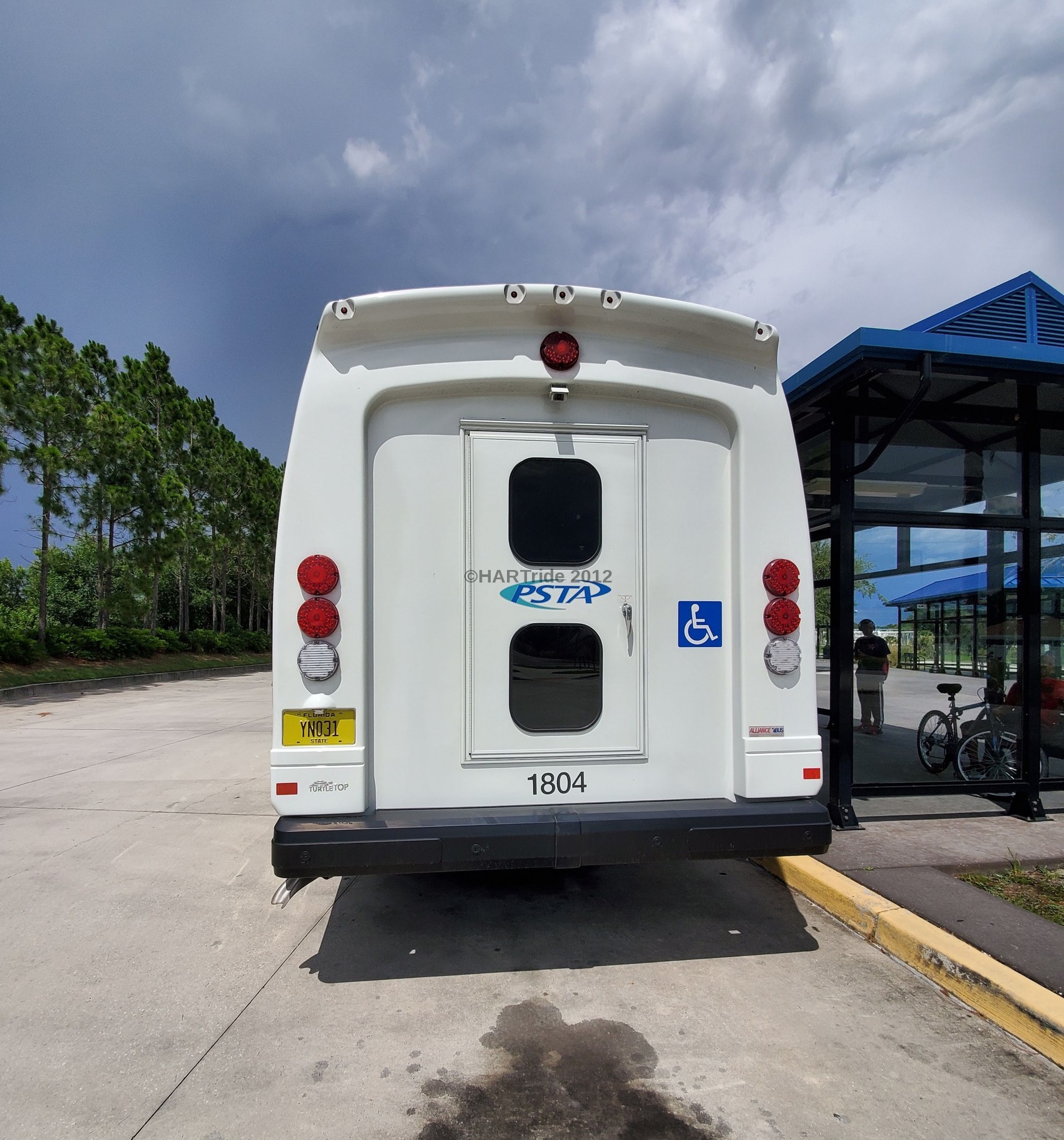
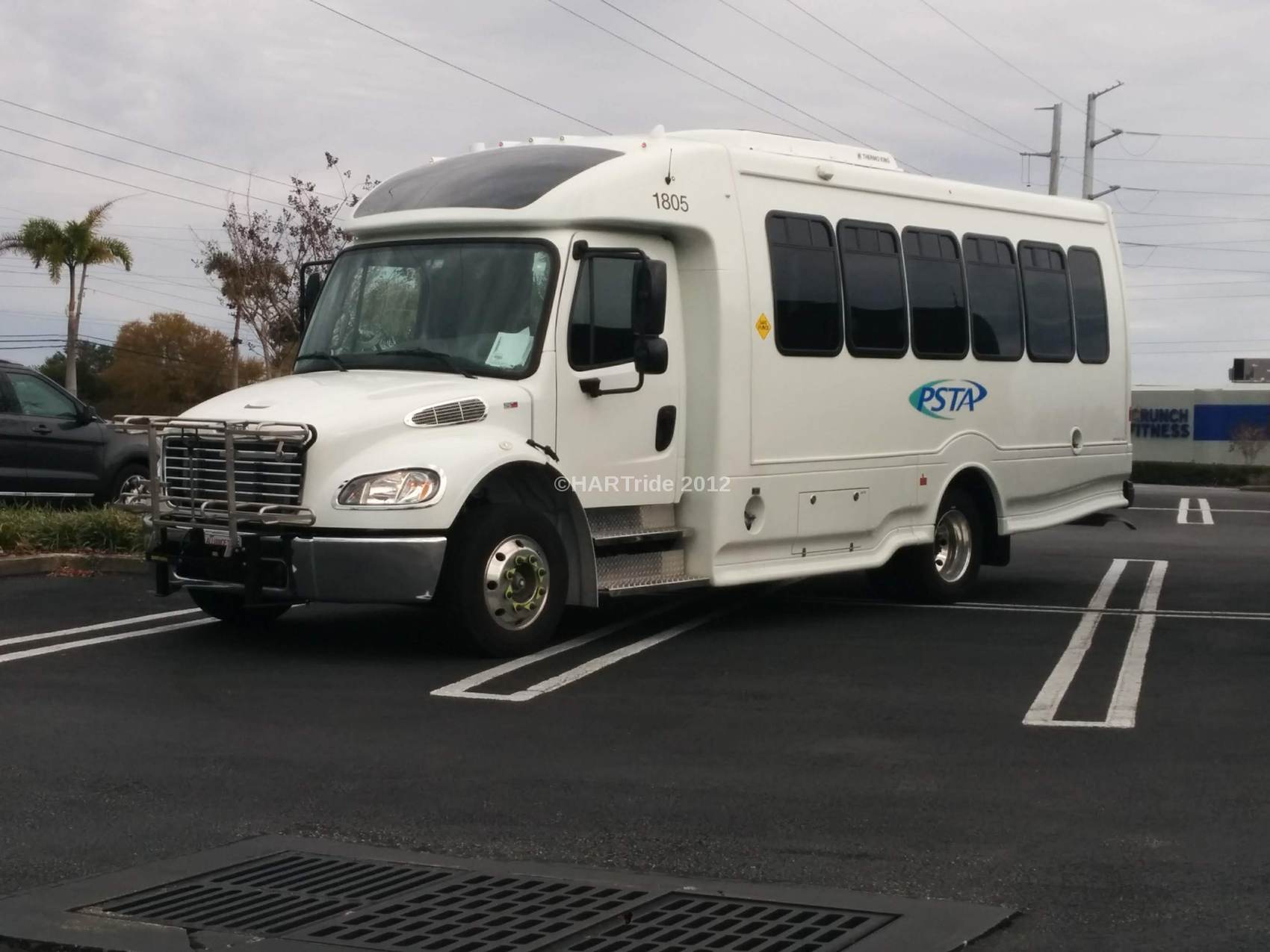
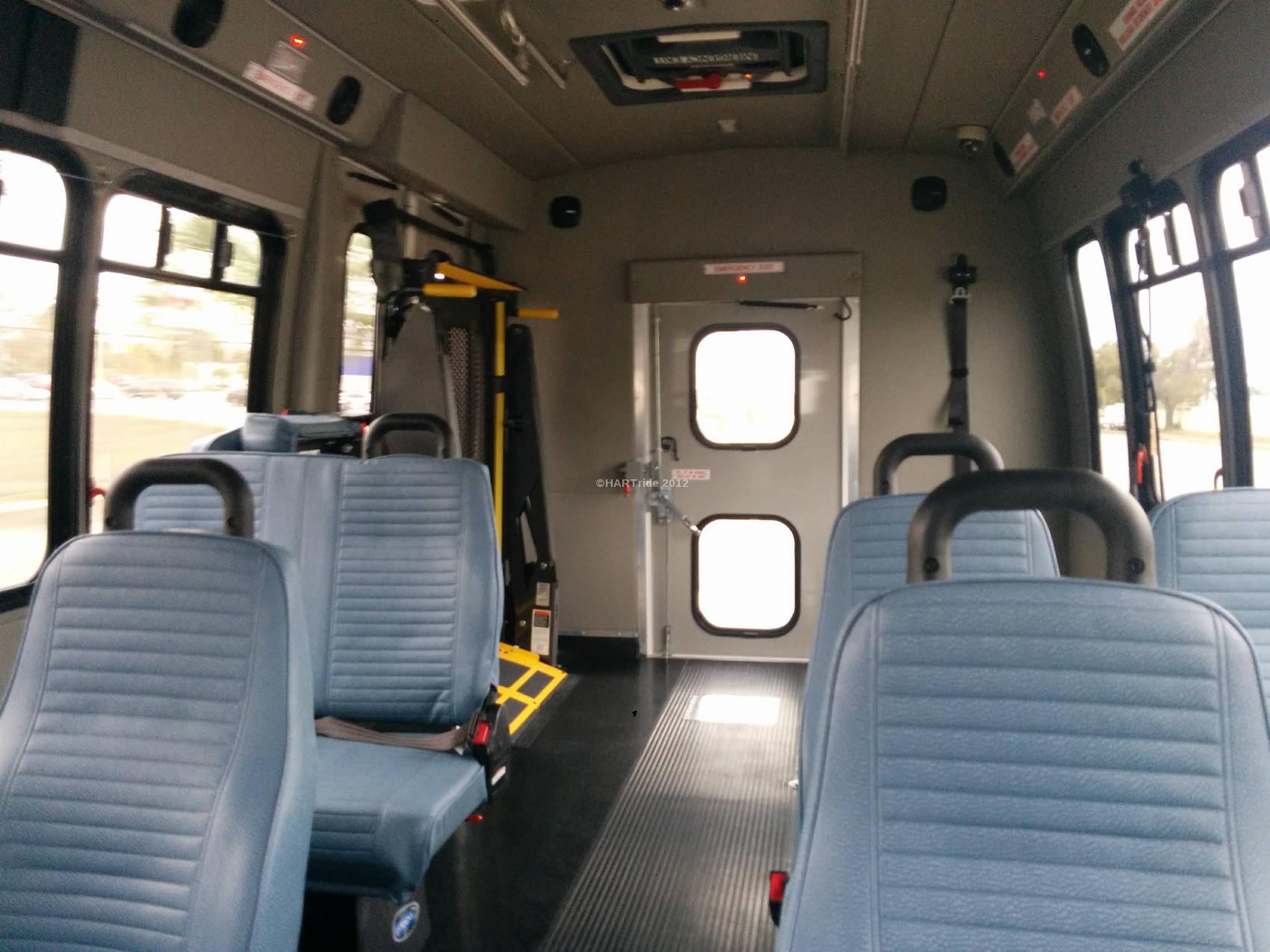
2018 Champion Defender
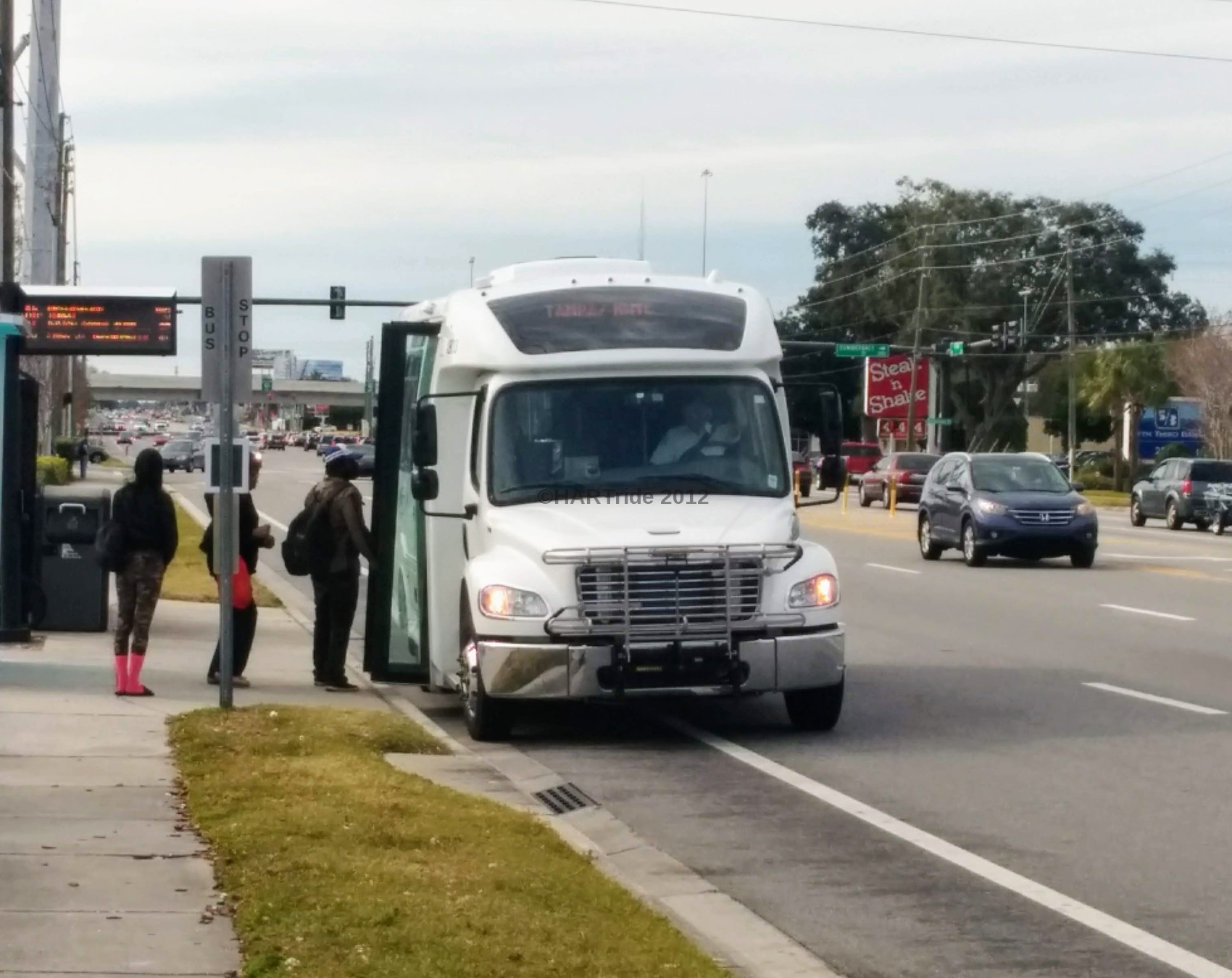
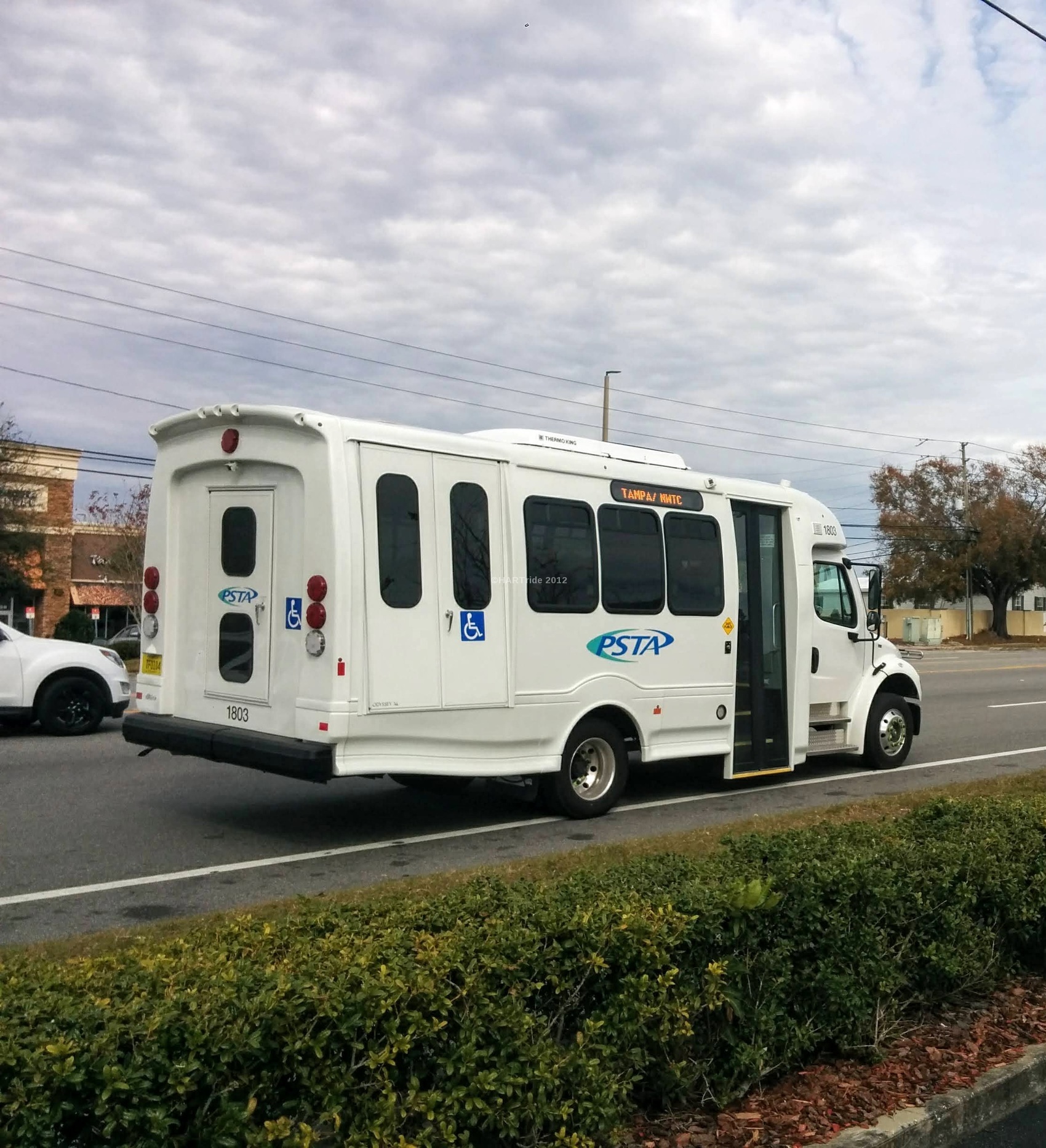
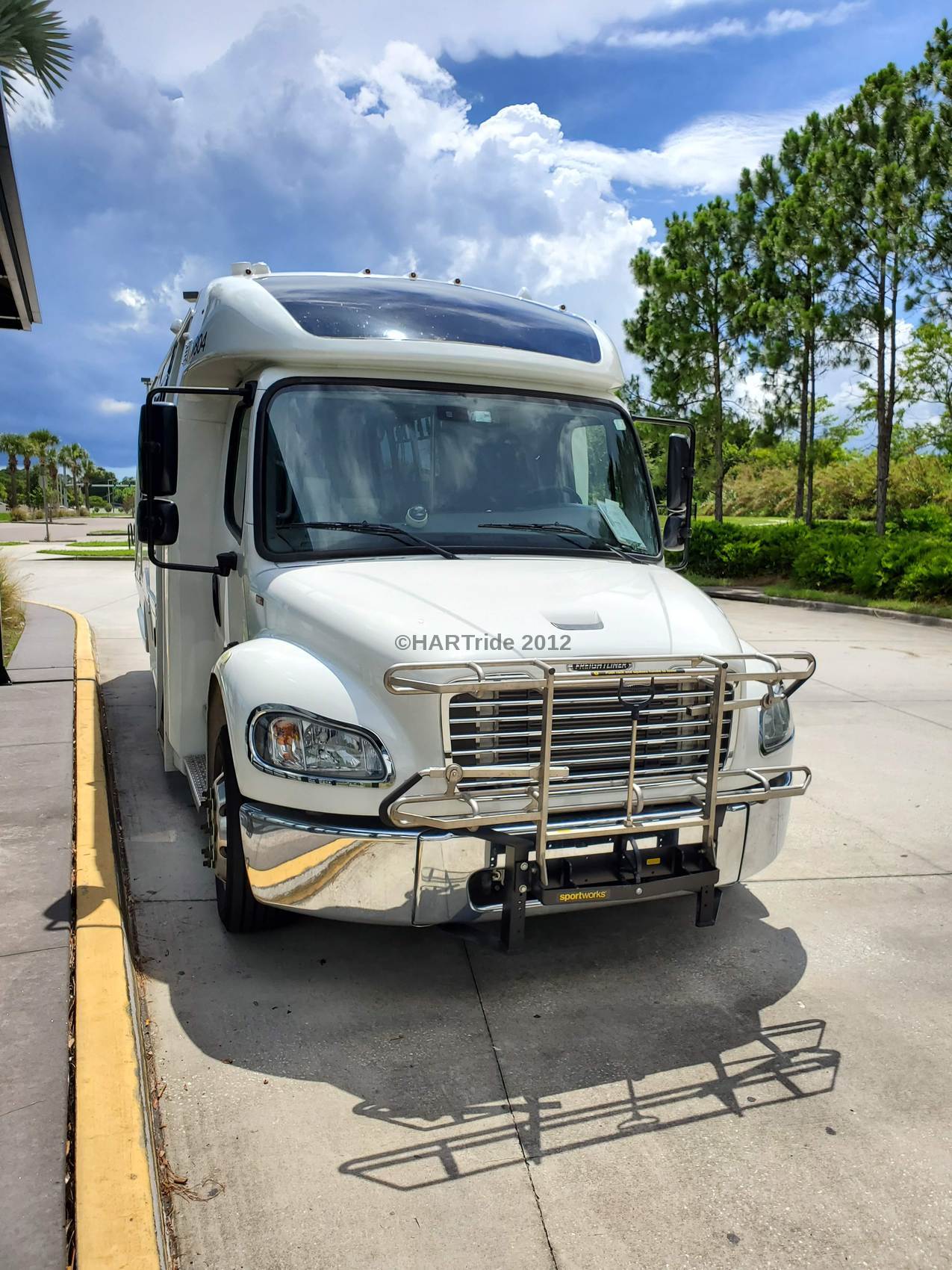
27′ Diesel-powered cutaway van on a Freightliner M2 chassis
#’s 1801 through 1808
In 2017, PSTA ordered eight 27′ Freightliner Defender cutaway vans to replace the 2012 27′ Ford E-450 vans that were retired out of the fleet after only three years of service. The latter was retired early due to manufacturer defects of some sort.
While the new vans are currently used for the 800-series van routes (formerly known as the North County Connector), they aren’t uniquely branded, so they can be used for any other shuttle service or very low ridership route that PSTA desires to use them on if needed. Each van is equipped with the same features that you’d expect to see on a regular transit bus – including the Clever Devices system for real-time vehicle tracking.
To help distinguish the vans from the mainline bus fleet, four-digit fleet numbering is used.







2018 & 2020 BYD K9S Battery Electric
35′
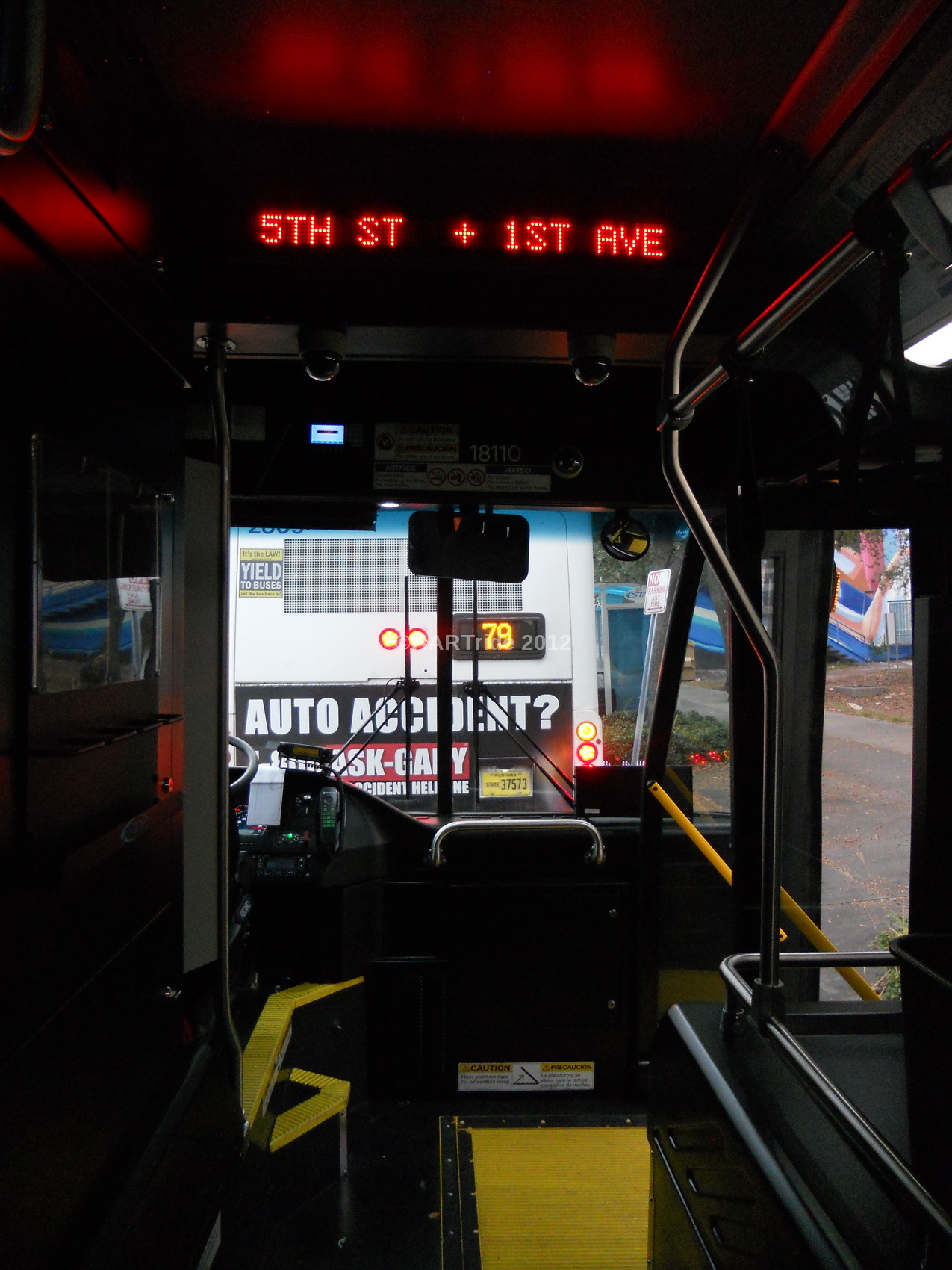
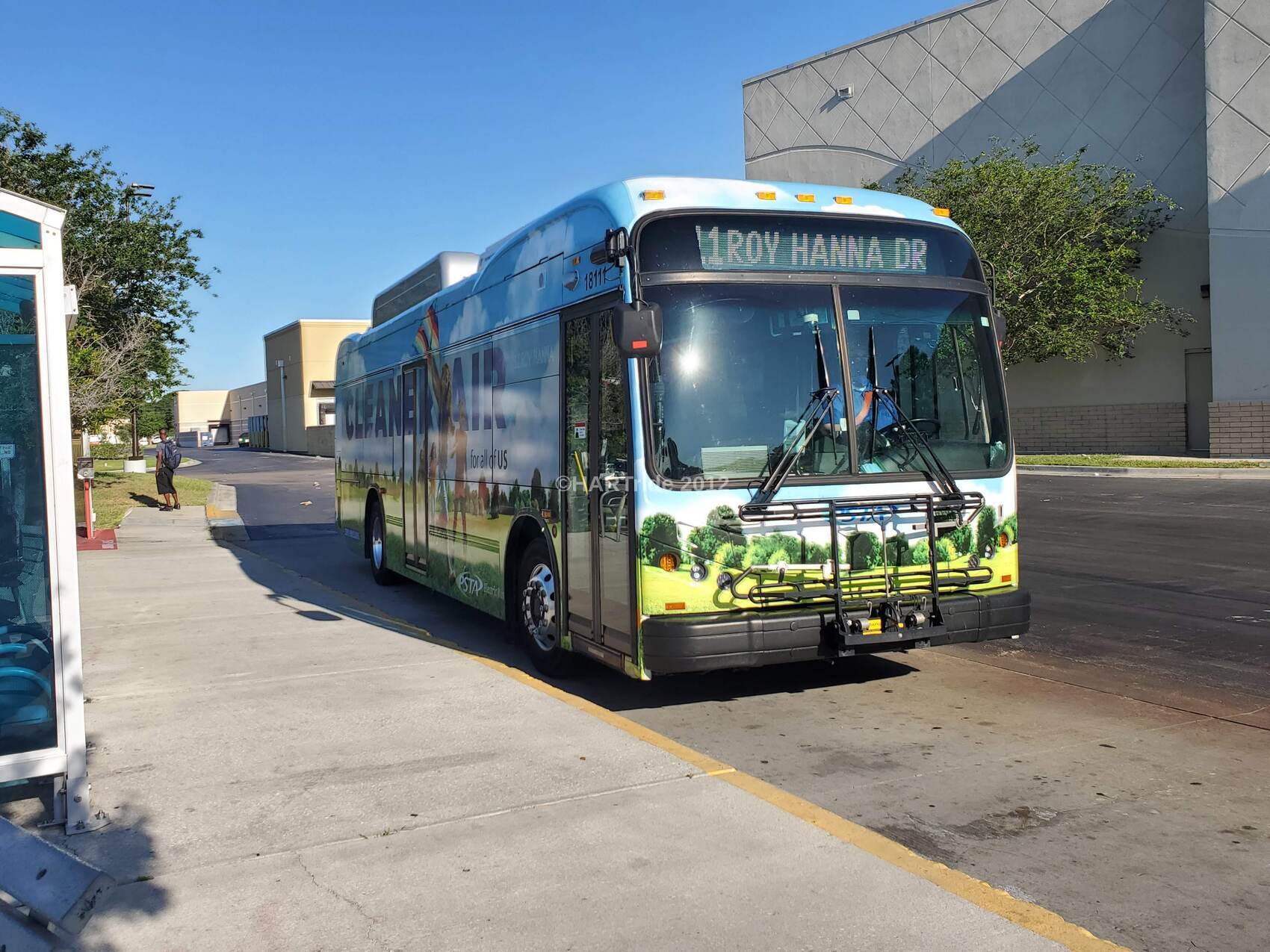
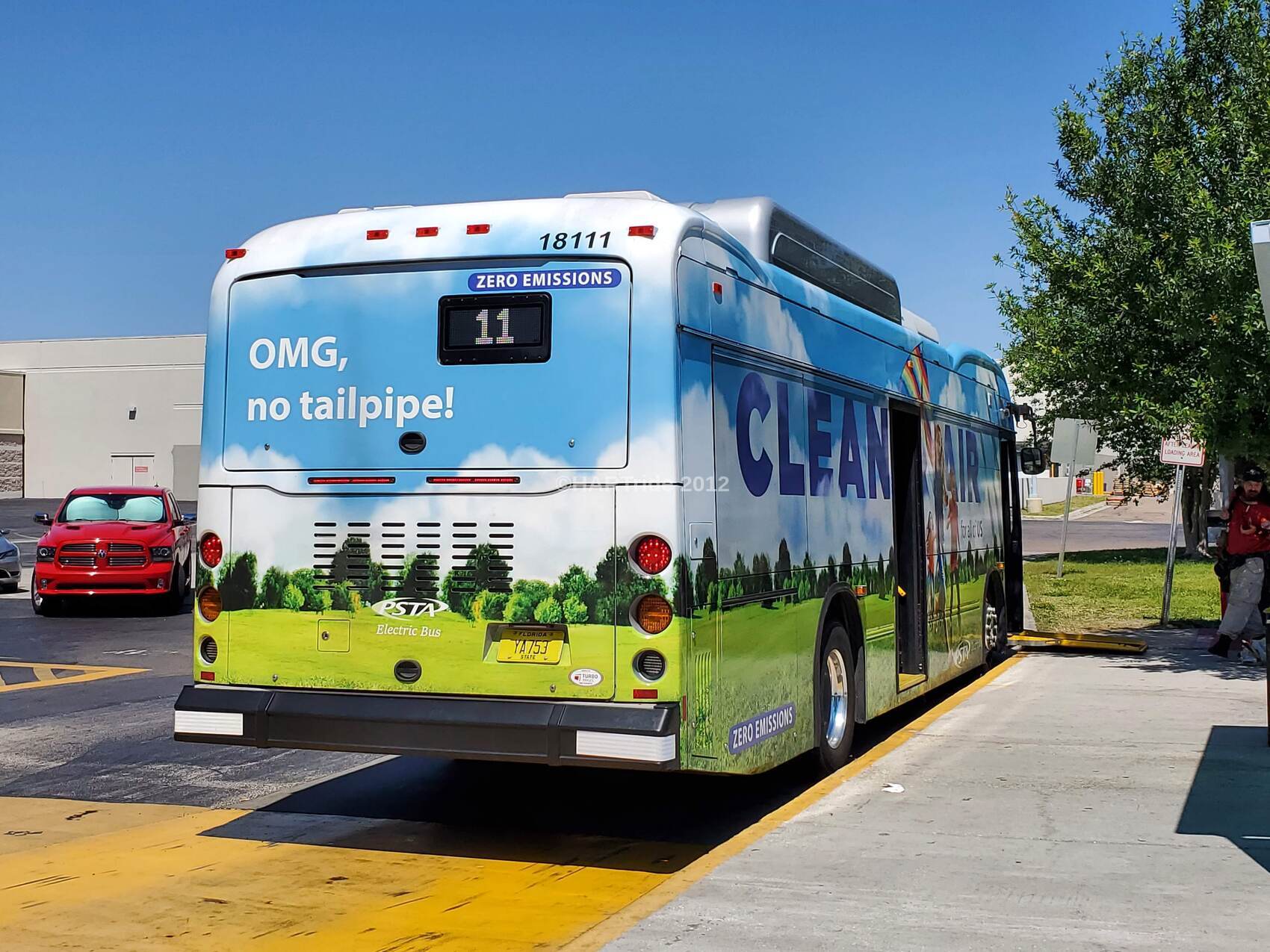
2018 – #’s 18110 & 18111
2020 – #’s 20110 through 20113
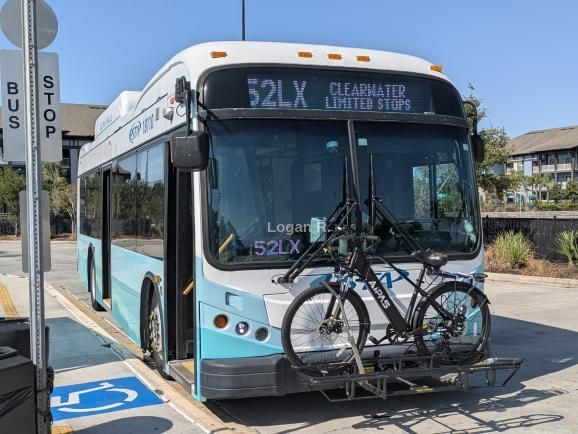
In 2015, PSTA began exploring the possibility of adding battery electric buses to its fleet. After spending two years researching the benefits of battery electric buses, as well as demoing several types – the agency signed a six year contract with Build Your Dreams (BYD). Founded in China, BYD has been quickly expanding its battery electric vehicle business to both the US & Europe, with over a dozen US transit agencies already having buses in revenue service.
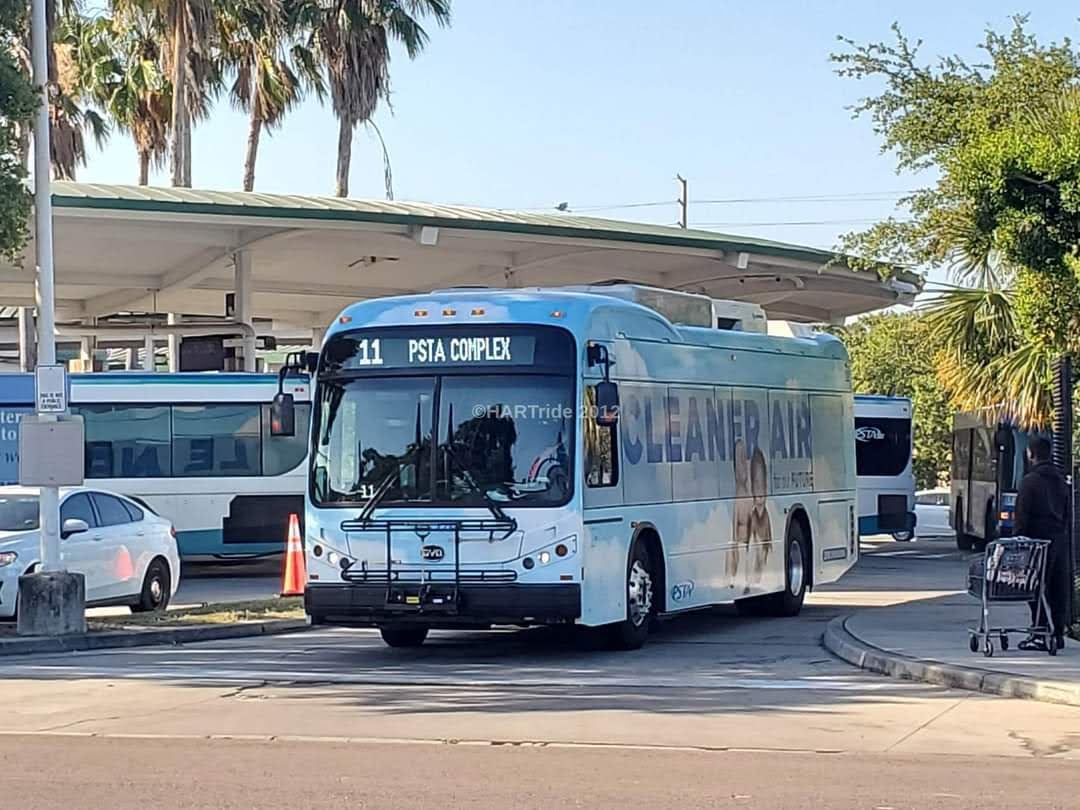
PSTA placed its initial order for two buses in 2017 for trial service on the Downtown St. Petersburg Looper trolley. The buses were manufactured & delivered in 2018, with eLooper service commencing in 2019. While the trial was considered a success, the agency determined that it would be more reliable to keep the Looper service operating with only trolley replica vehicles for the time being. The buses were then re-wrapped & re-deployed to Route 59 for further testing, with occasional assignments to Route 4.
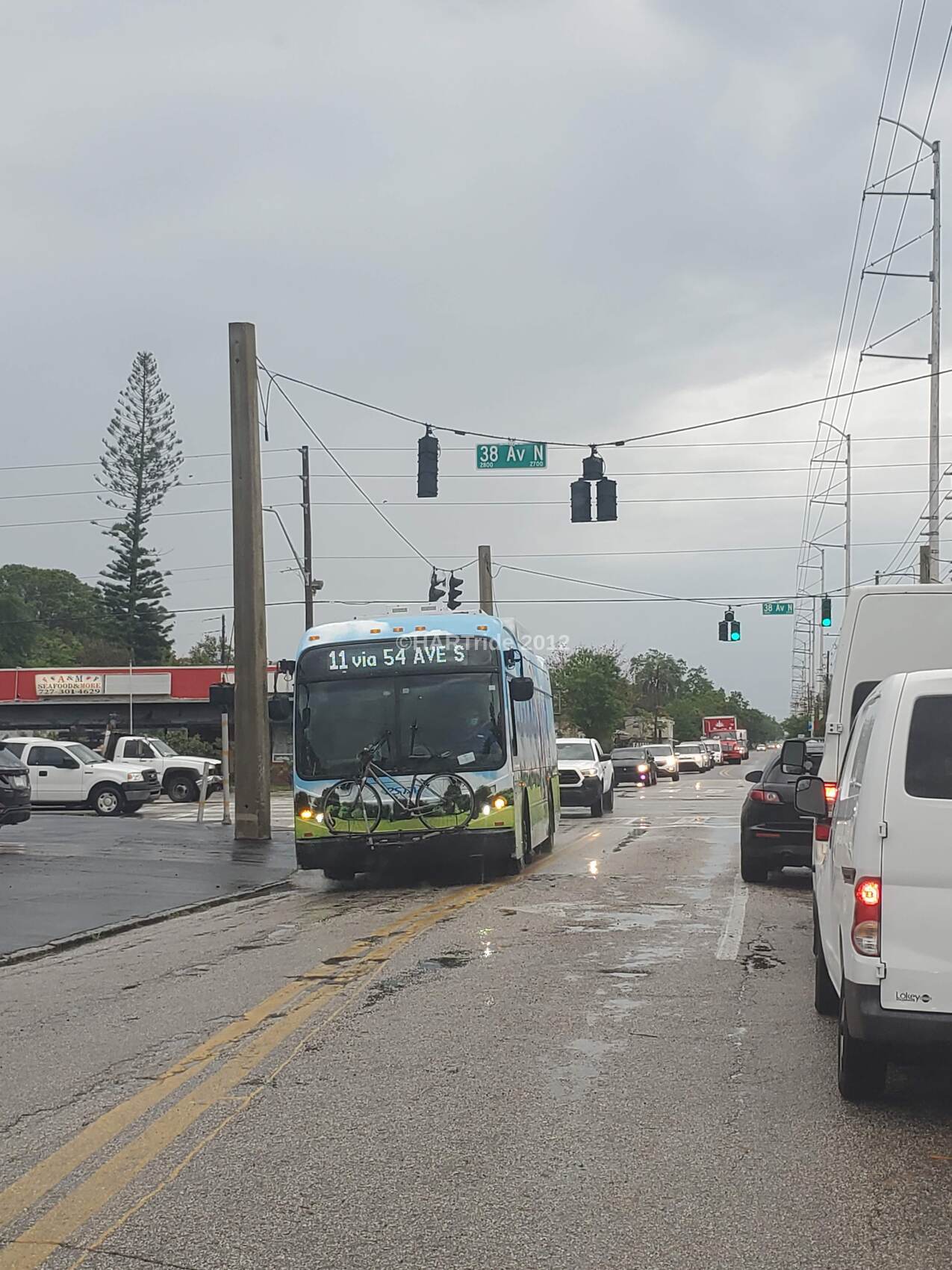
Despite reliability issues with BYD’s 60′ K11M buses in Albuquerque, NM & Indianapolis, IN, PSTA has been largely satisfied with its 35′ K9S vehicles. In 2019, the agency ordered four more K9S buses – which went into service in mid 2021. All six buses today rotate during the week alongside the Gillig diesel & hybrid buses on Route 11 – sporting new wraps. In many circumstances, Route 11 operates all four of its bus slots with the BYDs.
The 2018 BYDs are numbered 18110 & 18111 respectively as a continuation of the mainline bus fleet numbering after Gillig Low Floor Hybrids 18101 through 18109. The 2020 models are numbered 20110 through 20113 & were supposed to continue from the numbering that was to be reserved for the nine Gillig BRT Plus hybrids for the SunRunner BRT line. However, due to Covid-19 related production issues (along with other project related pushbacks), the latter order was delayed to 2021 – prompting a change in its fleet numbering. Despite this, the fleet numbering for the 2020 BYDs remain unchanged.
As of 04/01/2024, # 18110 has been repainted in the 2023 livery. The remainder of the buses will follow as they go in for extensive maintenance cycles.









2020 Hometown Manufacturing Streetcar
35′ Diesel-powered replica trolley
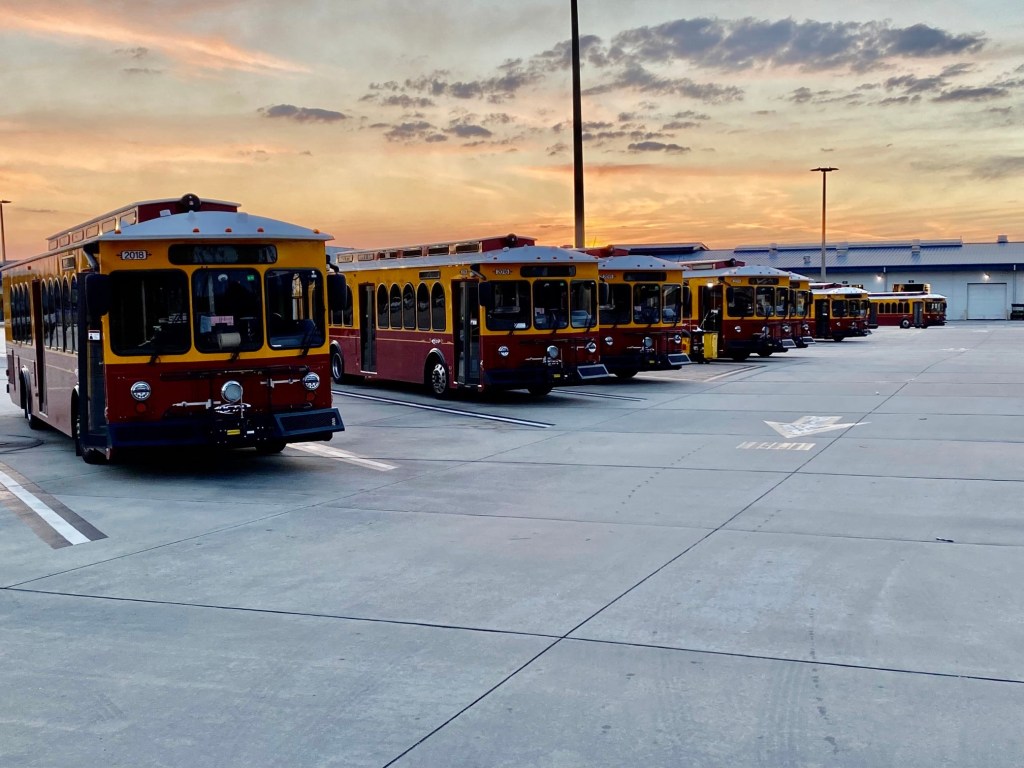
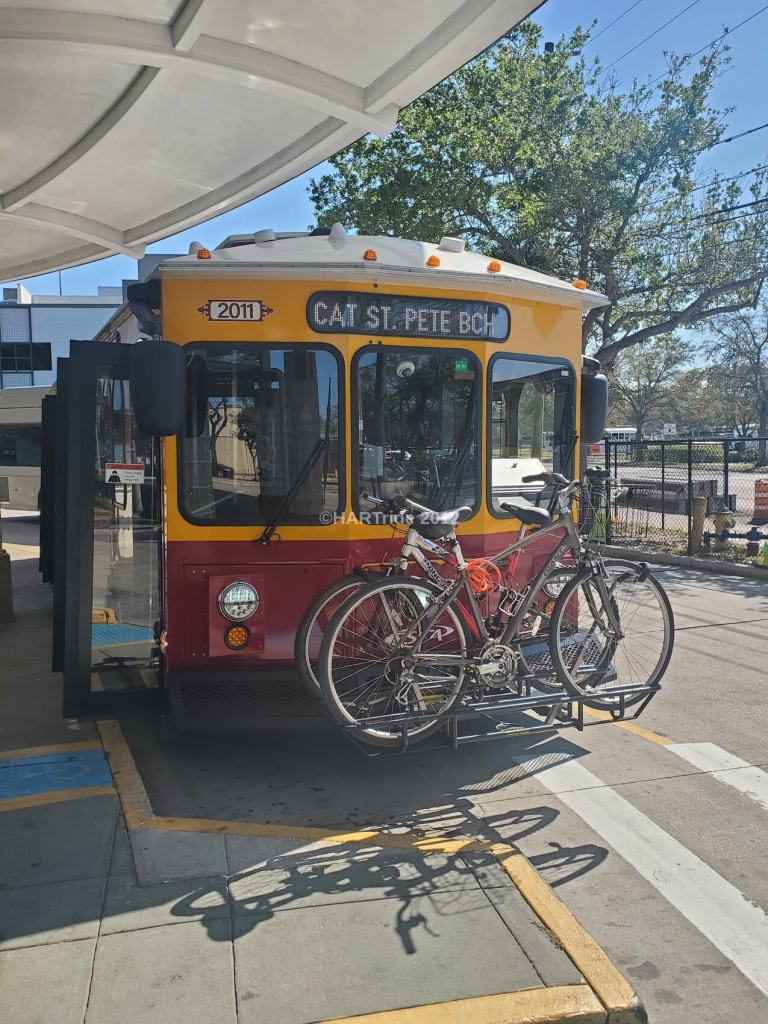
#’s 2001 through 2020
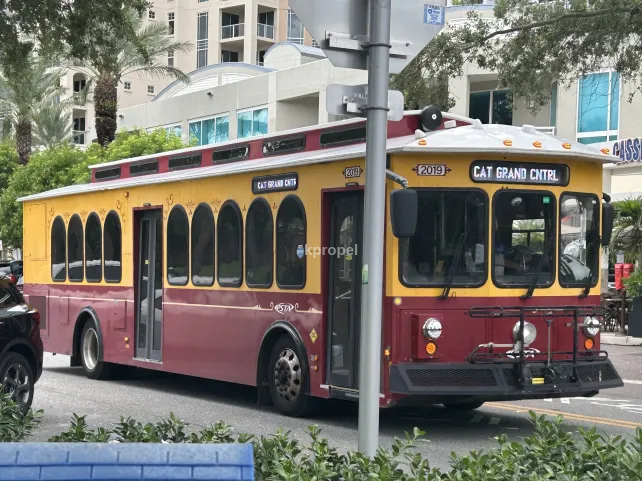
In 2018, PSTA began exploring replacement vehicles for its aging 2007, 2008, & 2009 Gillig Low Floor replica trolleys. Years of wear & tear caused by heavy tourist route usage & road construction have taken their toll on the Gillig vehicles – so much to the point to where mainstay buses often substituted in because there were no able trolley replicas available for service.
Rather than go with another split year order as PSTA did in the past with its trolley replica bus purchases, the agency decided to go with a single order of twenty vehicles to provide replacements to the sixteen Gillig buses & provide for four added spares if needed. The agency also decided to go with a different manufacturer – Hometown Manufacturing. Hometown Manufacturing was founded in 1975 (though its roots go back to the early 1900s) & is currently based in Crandon, WI. While the company has long prided itself on its trolley replica vehicles, the company has embarked on manufacturing modern mainstay transit buses. It is very likely that PSTA went with HM instead of Gillig for this order because the Clearwater Jolley Trolley & the Downtown St. Pete Looper – which PSTA supports – both use similar HM made vehicles (namely the Mainstreet & Villager models).
HM’s replica trolleys are hand-crafted & contain many of the same features that the Gillig replica trolleys posses, though the HM trolley windows are more attuned to what a traditional tram/streetcar would have looked like (similar to how Optima & Supreme Corp vehicles looked). The exteriors contain LED headsigns & lighting, while the interiors contain wooden bench seating & other wooden aesthetics. Interior LCD screens provide customer information, such as next stops.
Like the Gillig replica trolley fleet, the HM replica trolleys are numbered differently from the mainstay bus fleet – using a four-digit sequence (the Gillig trolleys used a three-digit sequence).




 The Global Transit Guidebook