Welcome to the HART Active Vehicles page. Here, I will showcase photos of the various vehicles that HART currently operates in its fleet. If you’d like to make a contribution, please feel free to contact me.
HART’s bus fleet comprises of all Gillig-manufactured vehicles, with vehicles from 2014 & older operating on diesel fuel & those from 2015 & onward operating on Compressed Natural Gas (CNG). All of HART’s paratransit & Flex vans operate on regular unleaded gasoline or diesel fuel.
While most of HART’s Gillig buses are the standard low floor model, there are a few (purchased new) orders & secondhand acquisitions that have interrupted consistencies throughout the fleet. Most buses operate with a Cummins engine (diesel or CNG) & an Allison transmission, with a few buses having the Voith transmission installed. Seating configurations will vary with some of the model years, as well as other features such as wheelchair securement areas & side windows.
This page includes all active (revenue service) vehicles – including secondhand buses.
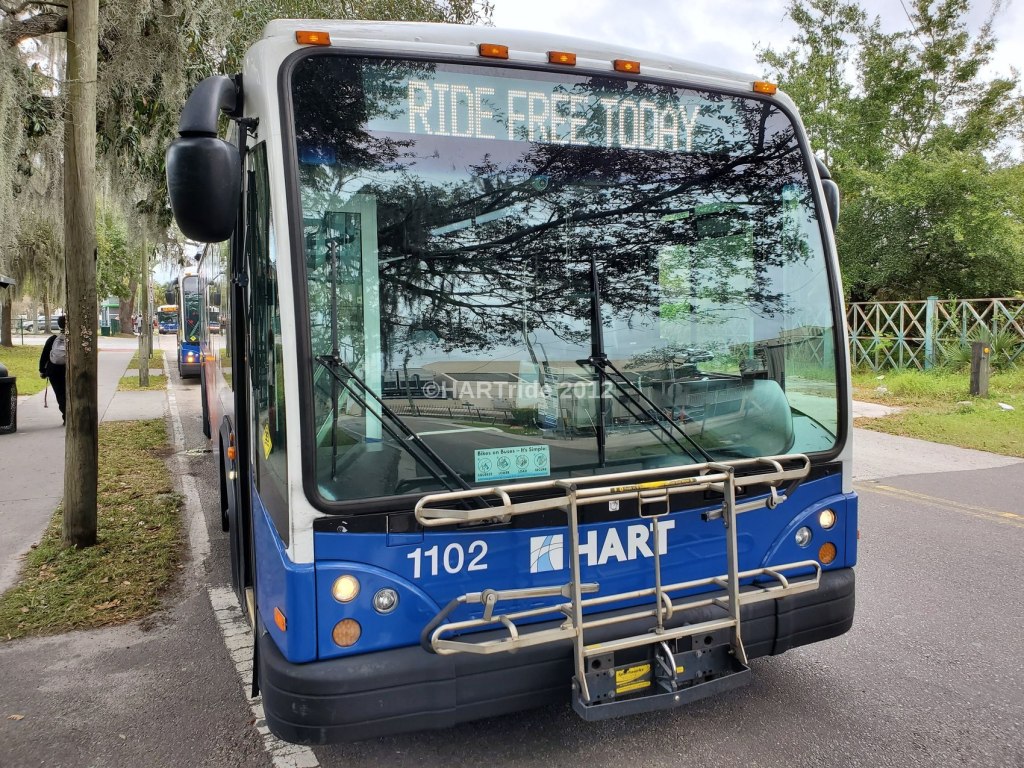
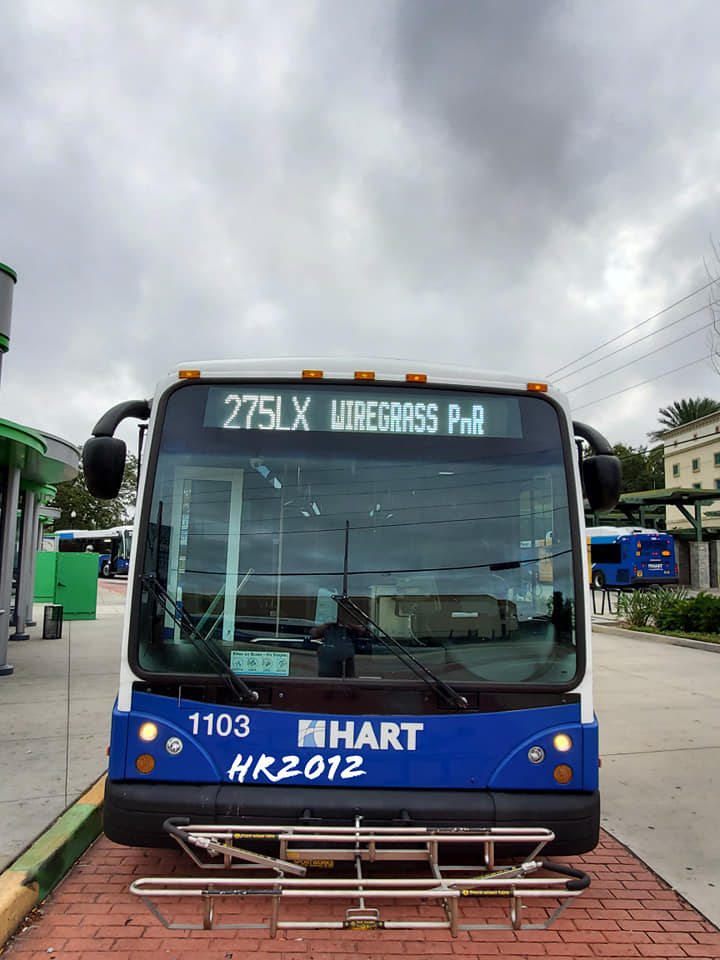
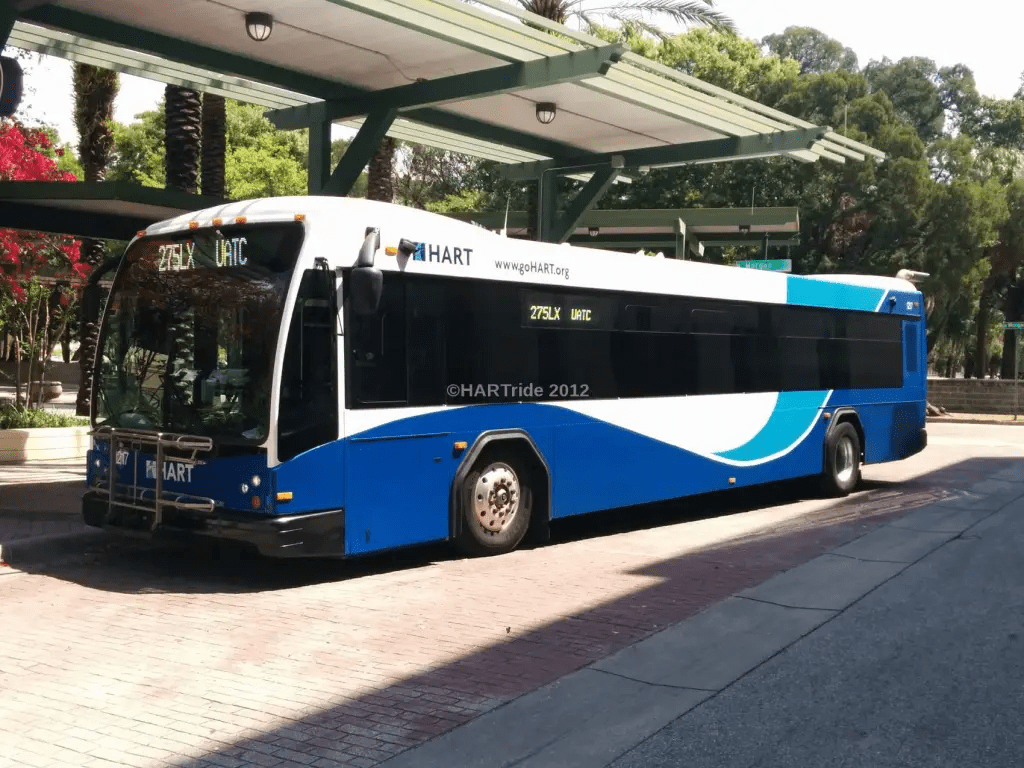
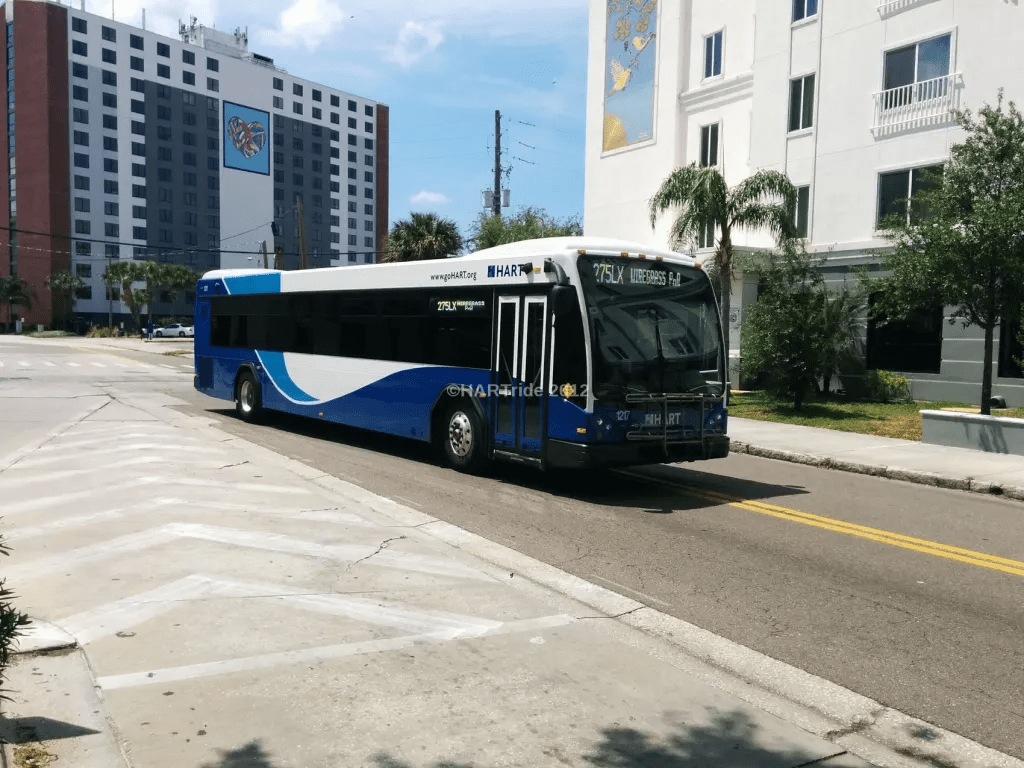
As part of its broader service reduction plan, Sarasota County Area Transit (now known as Sarasota Breeze Transit), sought to sell off its eight 40′ Gillig BRT Diesel Suburban Configuration buses (comprising six 2011 model units & two 2012 model units). HART was the ultimate purchaser, & the agency rebranded the buses in a relatively short amount of time after receiving them. While these buses can be most commonly assigned to Routes 24LX, 25LX, 275LX, & 360LX, they have been spotted on other routes – depending on how they’re handed out each day.
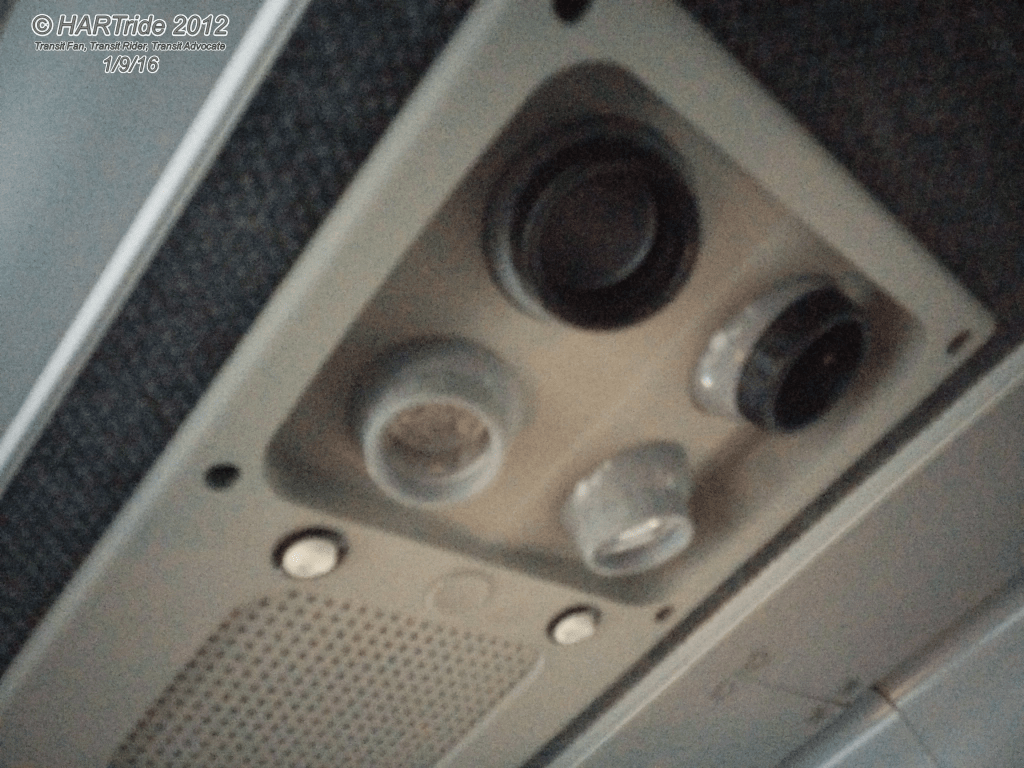
Because these buses are of the suburban configuration, they encompass only one entry/exit door, high-back reclining seats, overhead luggage racks, & individual reading lights & A/C vents. They also originally had three mounted TV screens, although they aren’t used. The monitor closest to the electronics box behind the operator’s seat has been removed – with the standardized LCD screen showing CCTV footage replacing it. All of HART’s buses are fitted with these LCD screens to improve customer safety & piece of mind. Some of PSTA’s newer buses are getting them as well.
Unfortunately, # 1106 caught fire while conducting a run on Route 275LX on 03/21/2022 & has been retired from the fleet.As of 06/01/2025, # 1103 has also been retired (due to severe accident damage).
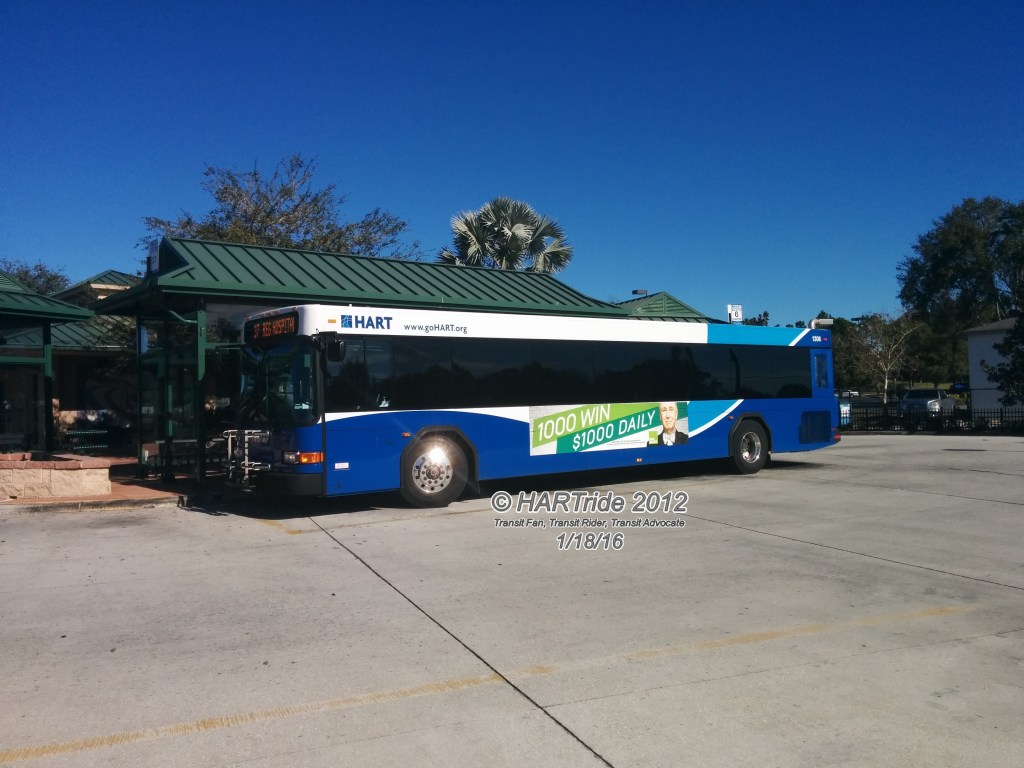
Interior of # 1104.Each bus has overhead luggage racks & individual reading lights & A/C vents.Looking foward inside # 1104.Another angle of # 1101 at the M.T.C.# 1101 leaving the M.T.C.# 1102 at the U.A.T.C.# 1103.# 1104 basks in the sunrise at the M.T.C.# 1105 on recovery at the M.T.C.Different angle of # 1105.# 1106 rolls down Manhattan Ave on old Route 17. From certain angles, one can spot the remnants of the old unique Sarasota Breeze express decals on the side windows.
2012 Gillig Low Floor Diesel
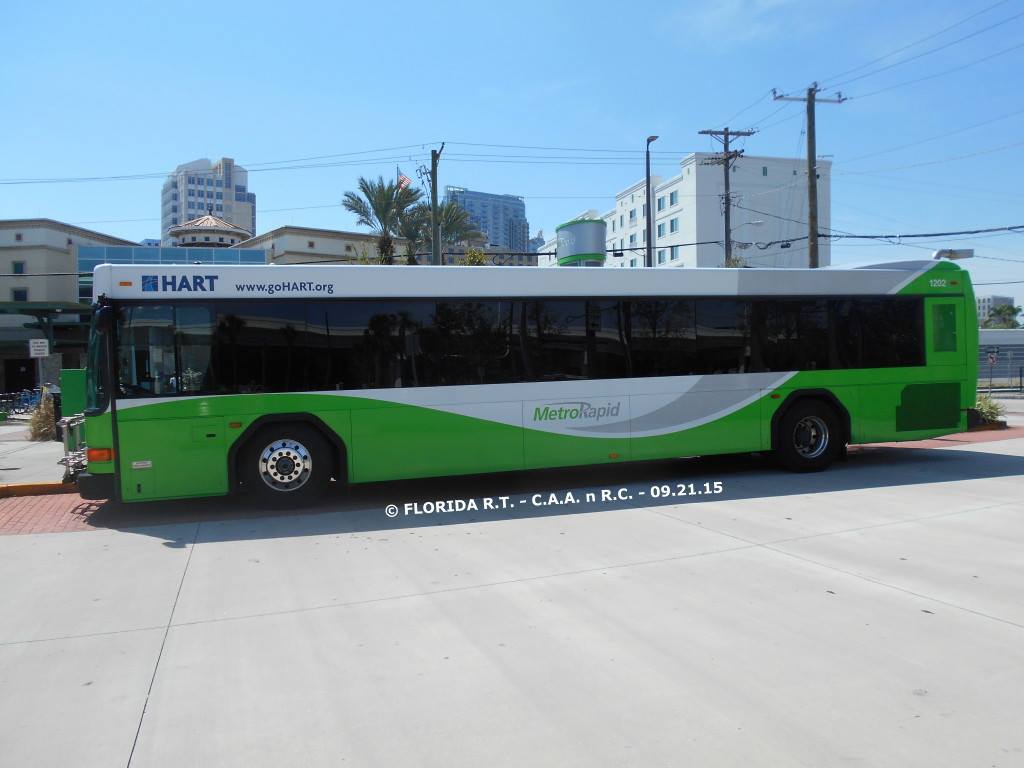
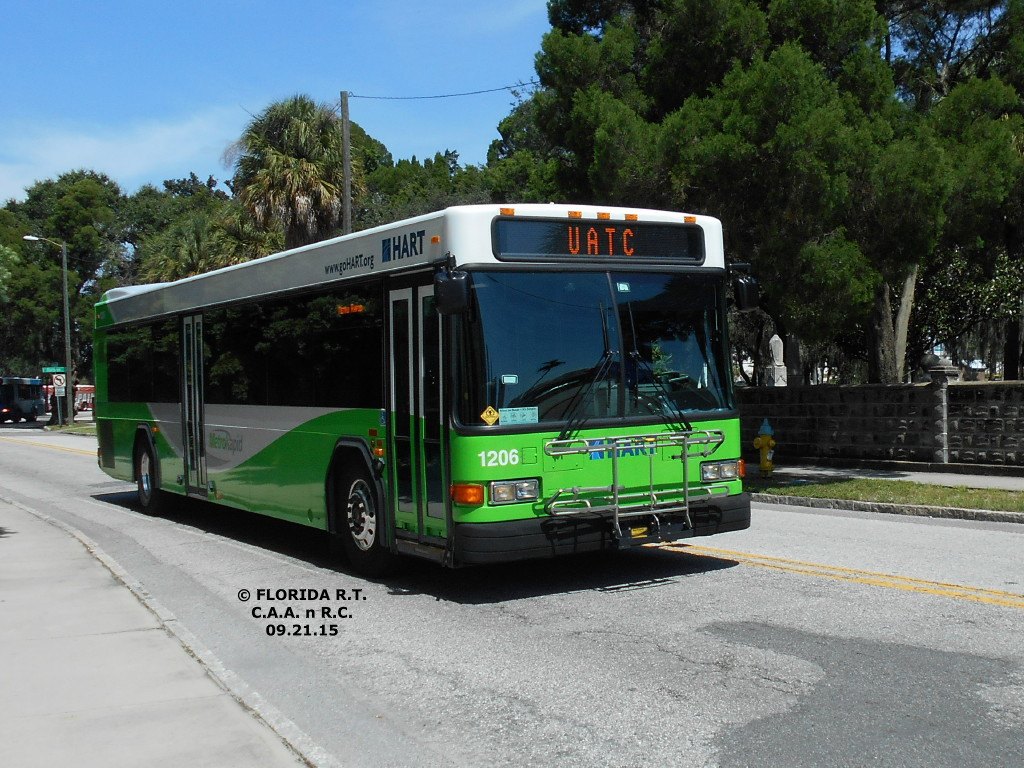
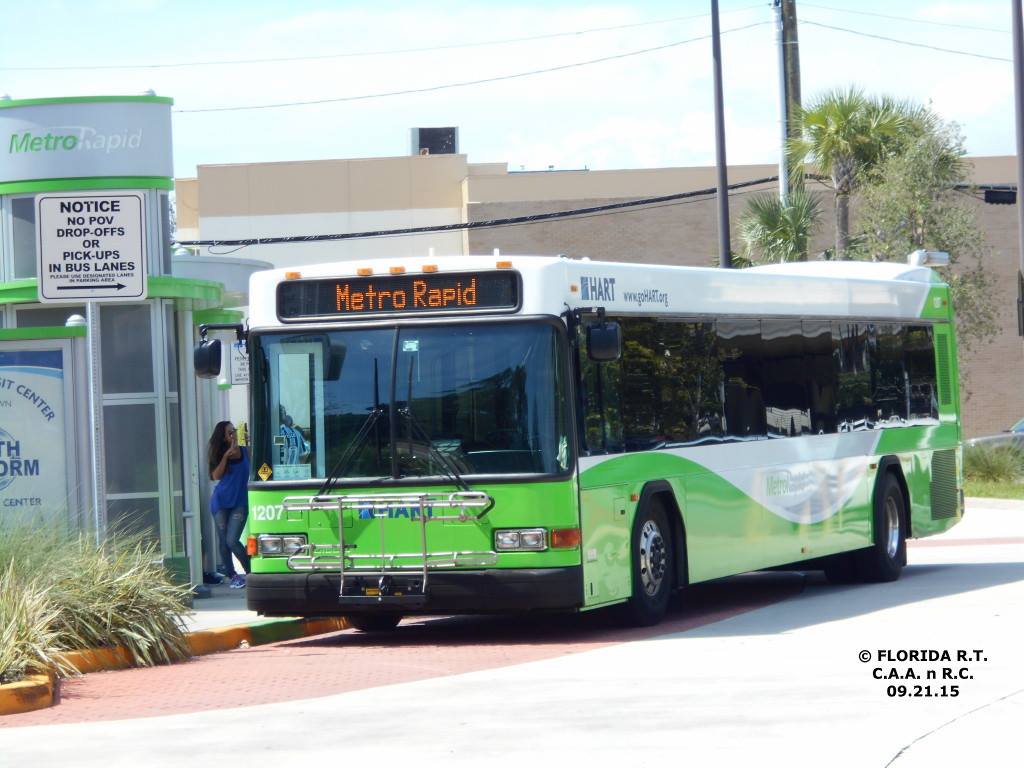
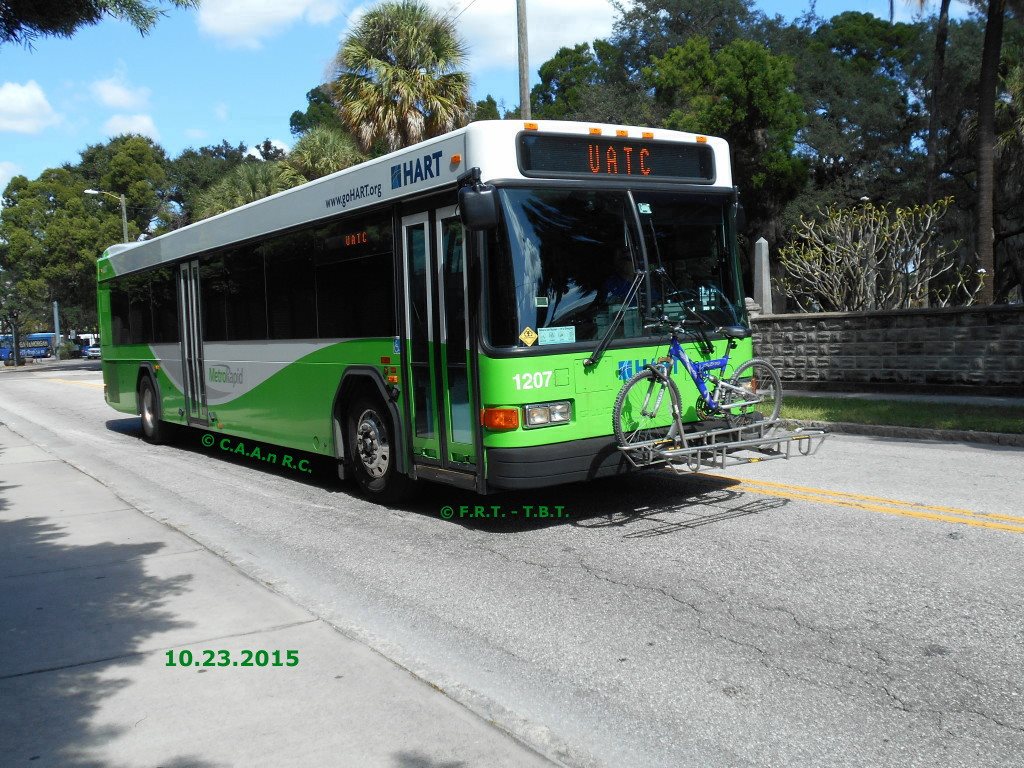
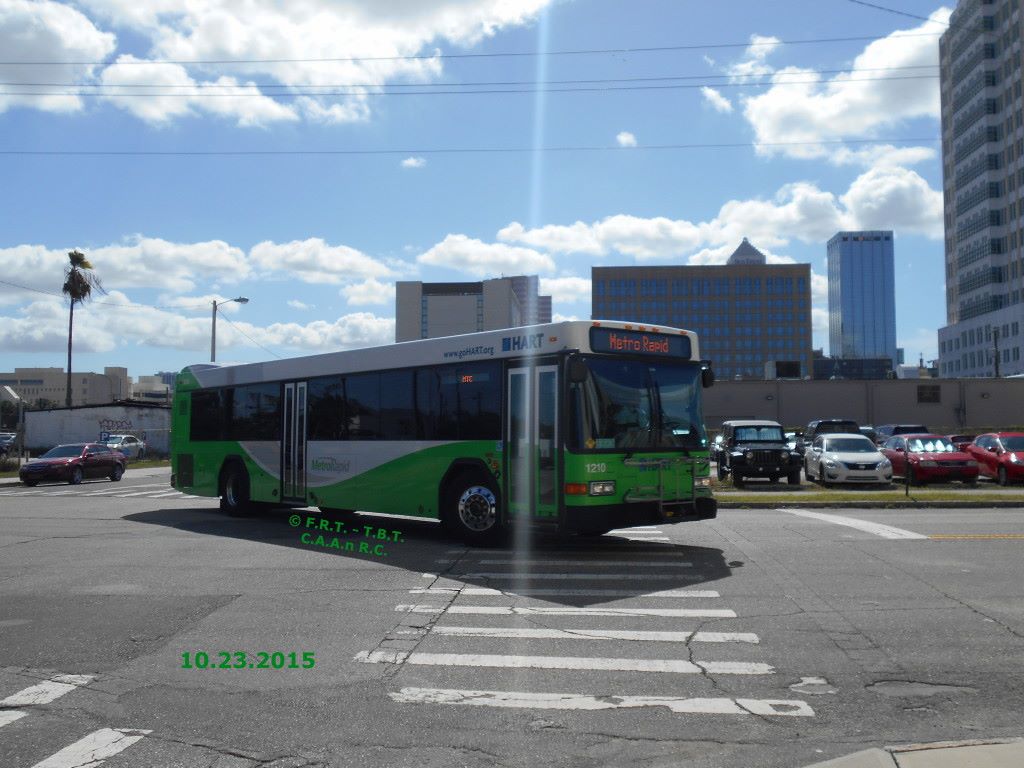
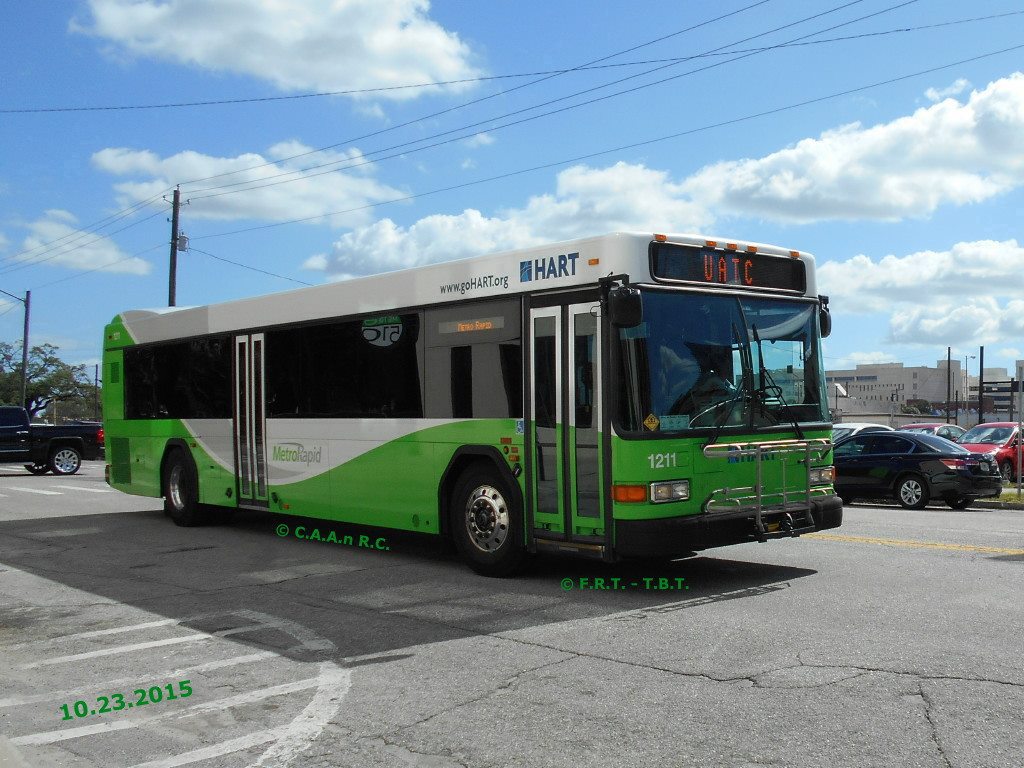
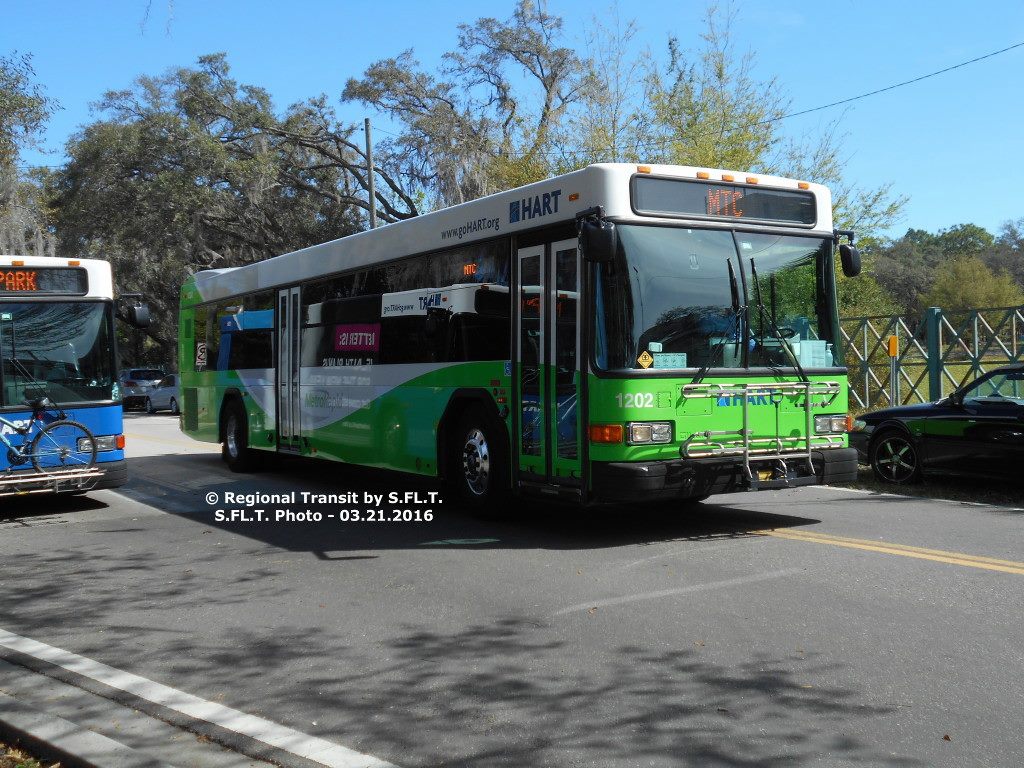
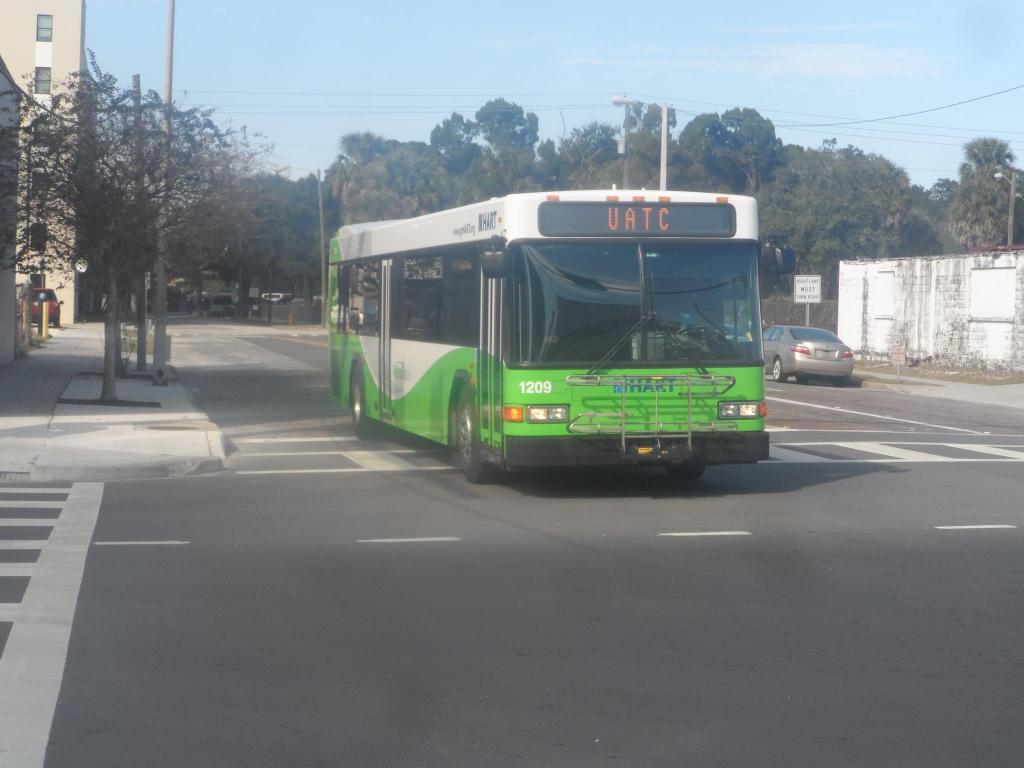
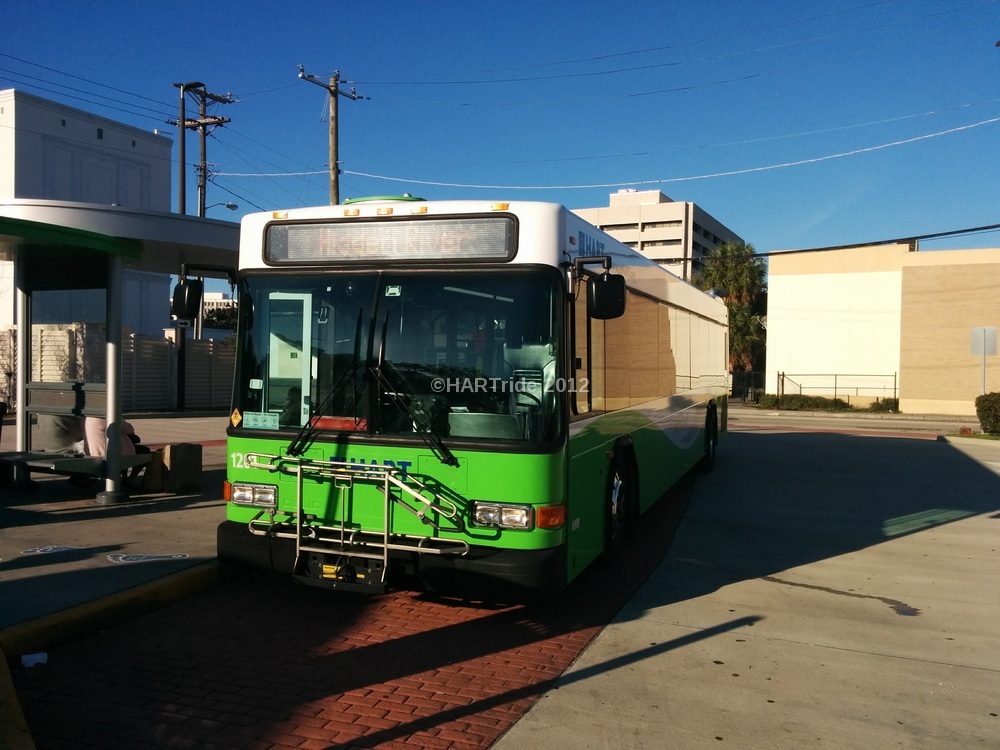
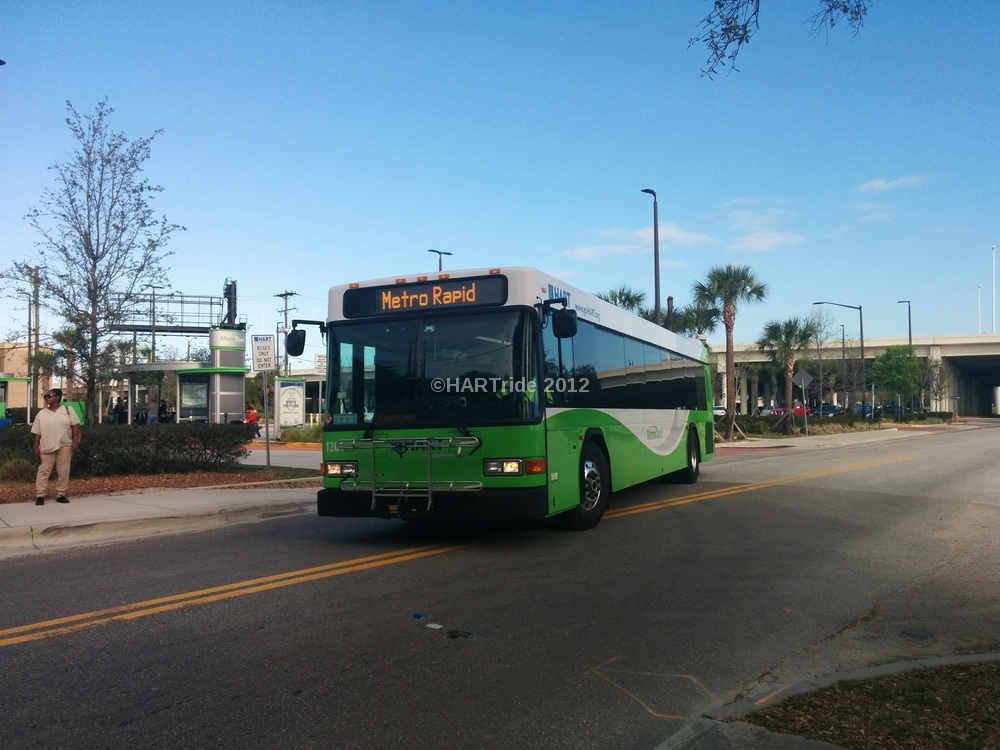
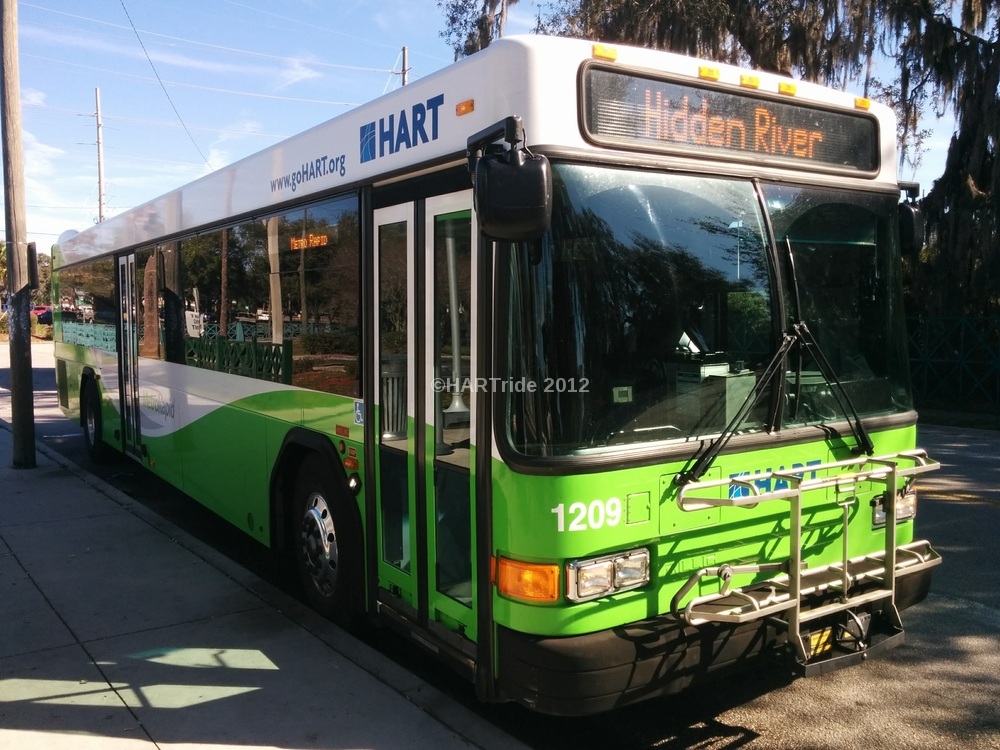
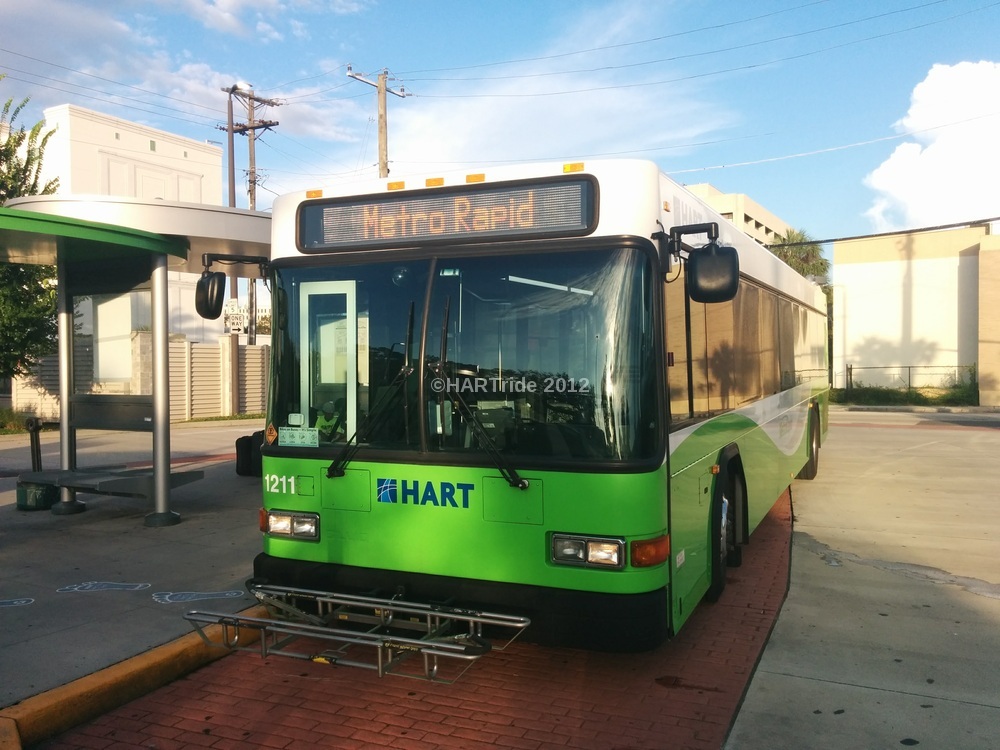
#’s 1201 through 1212
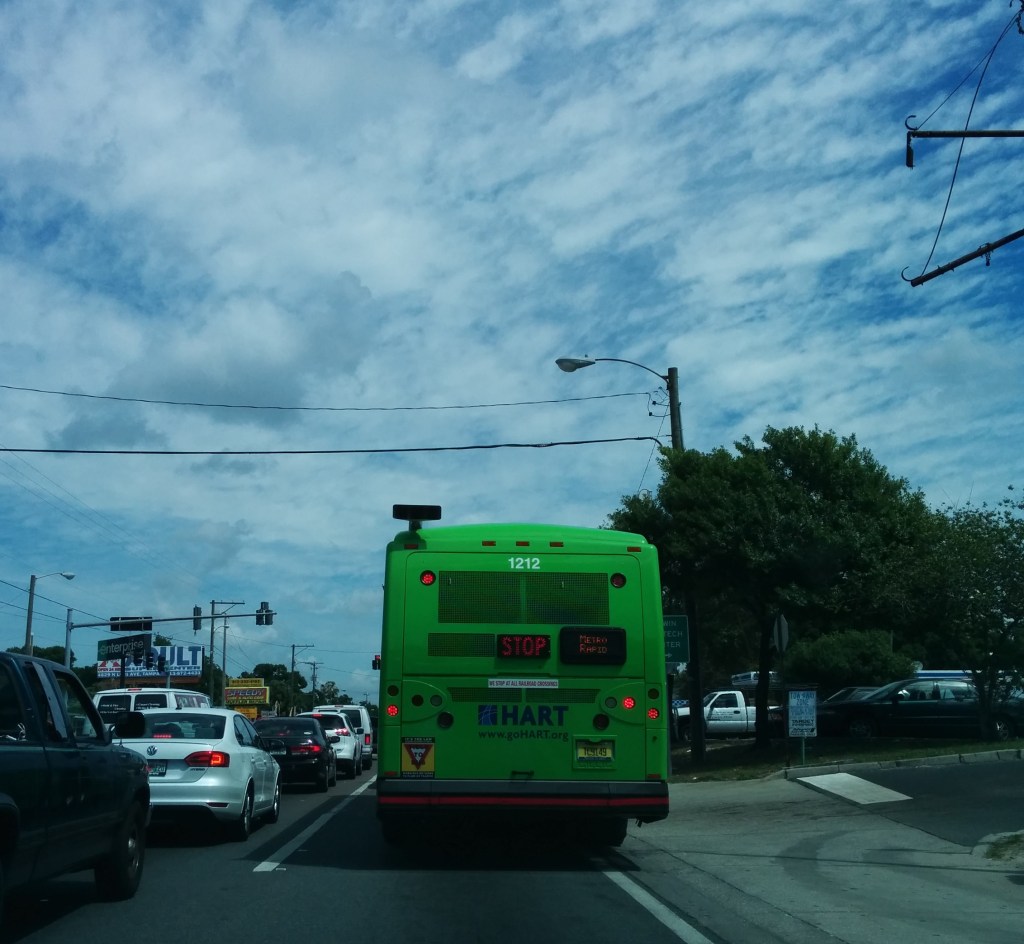
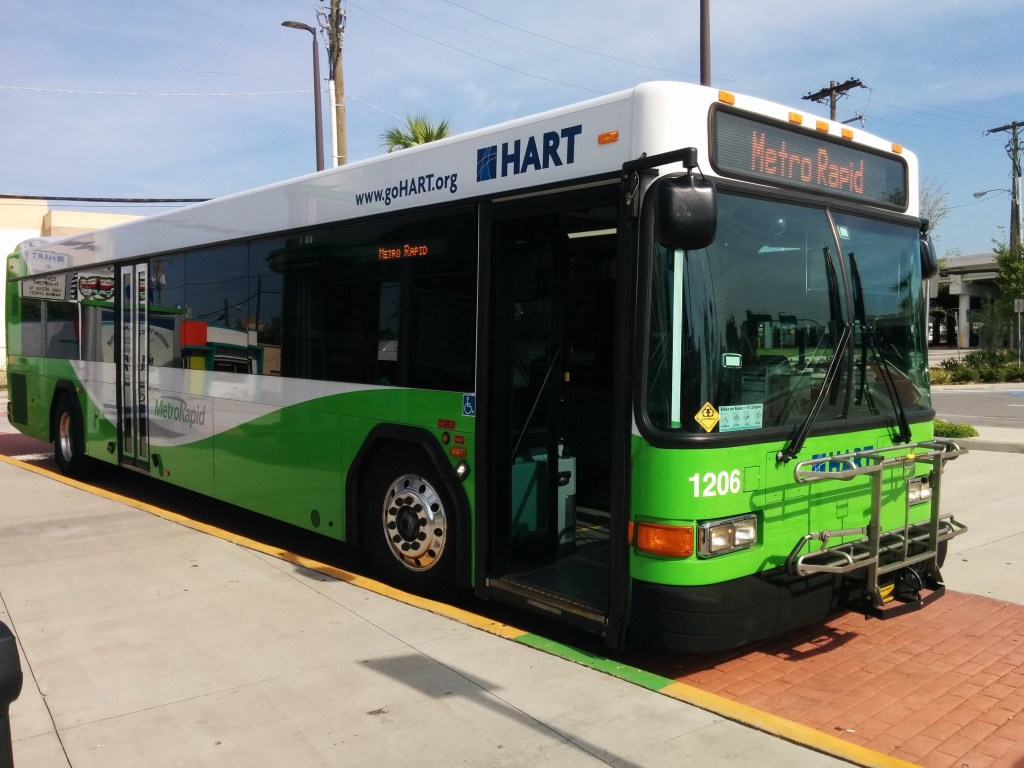
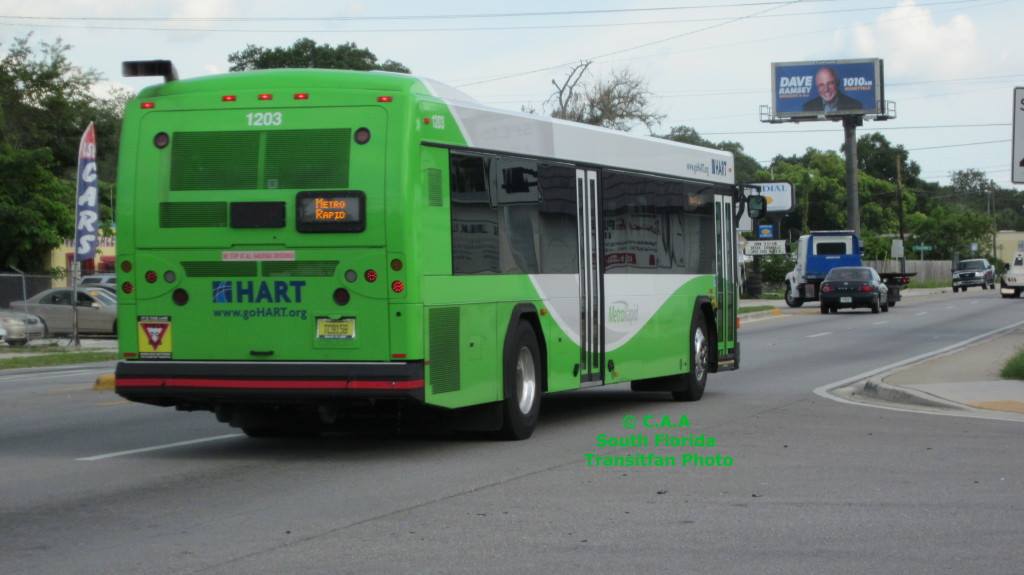
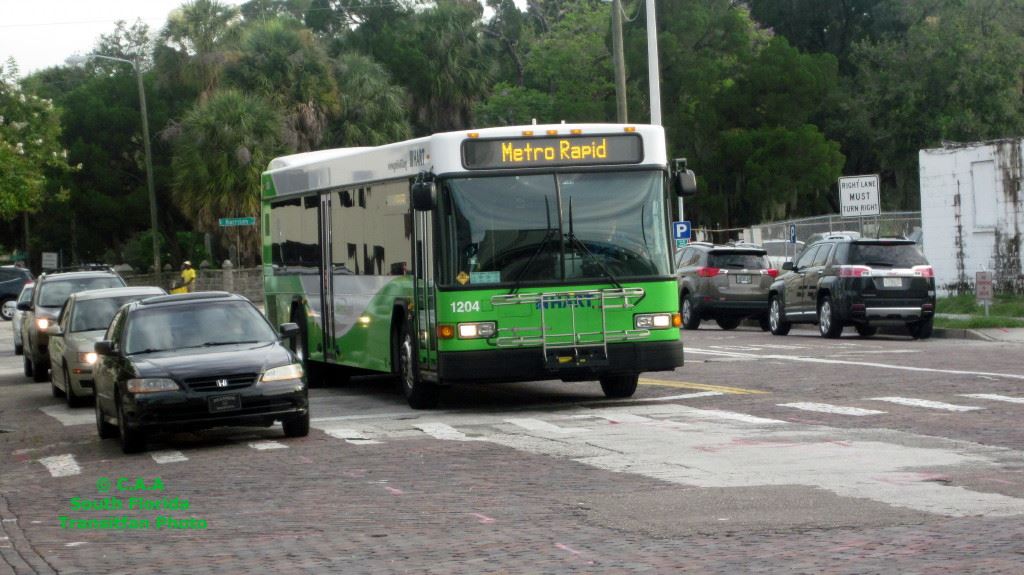
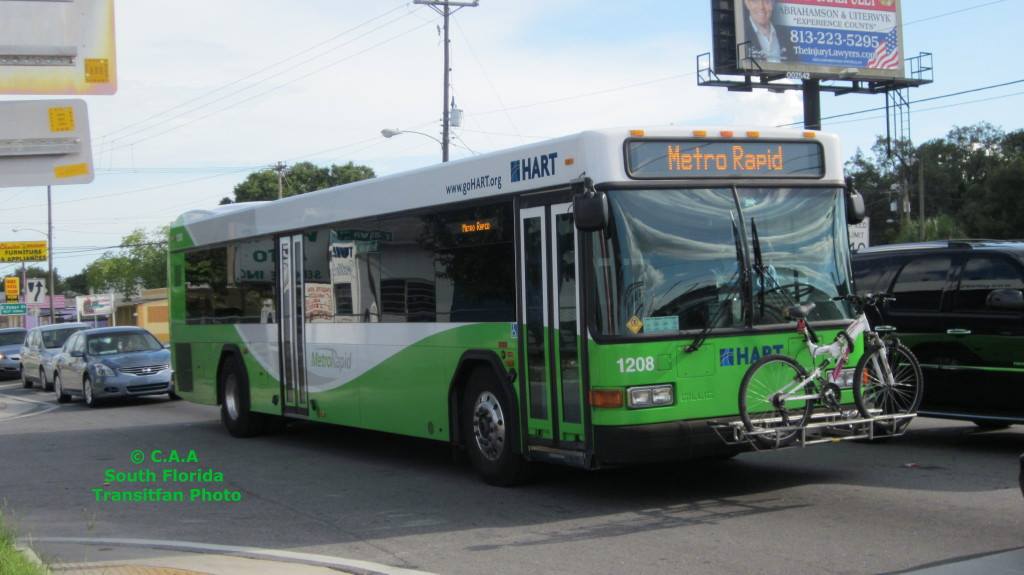
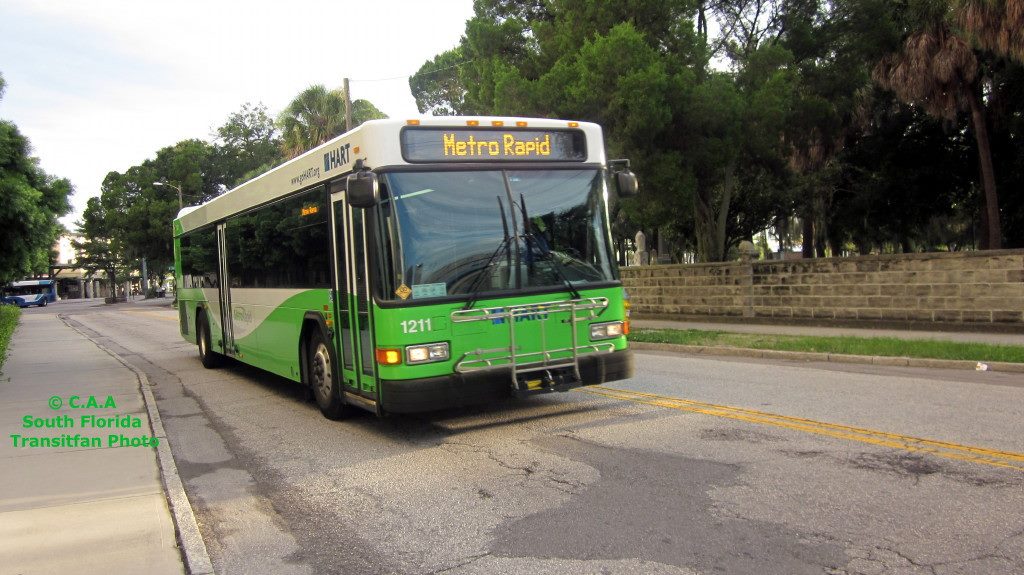
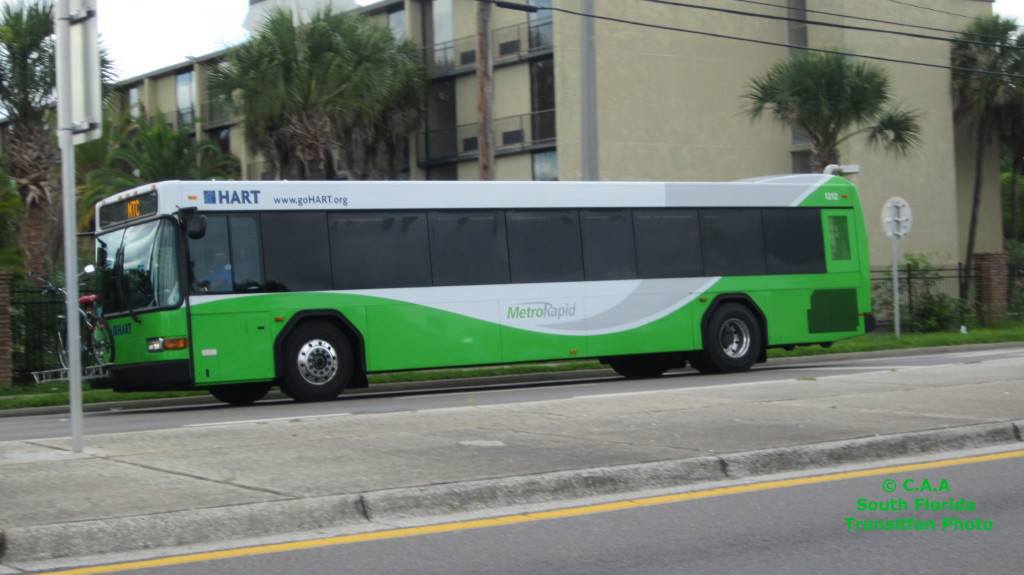
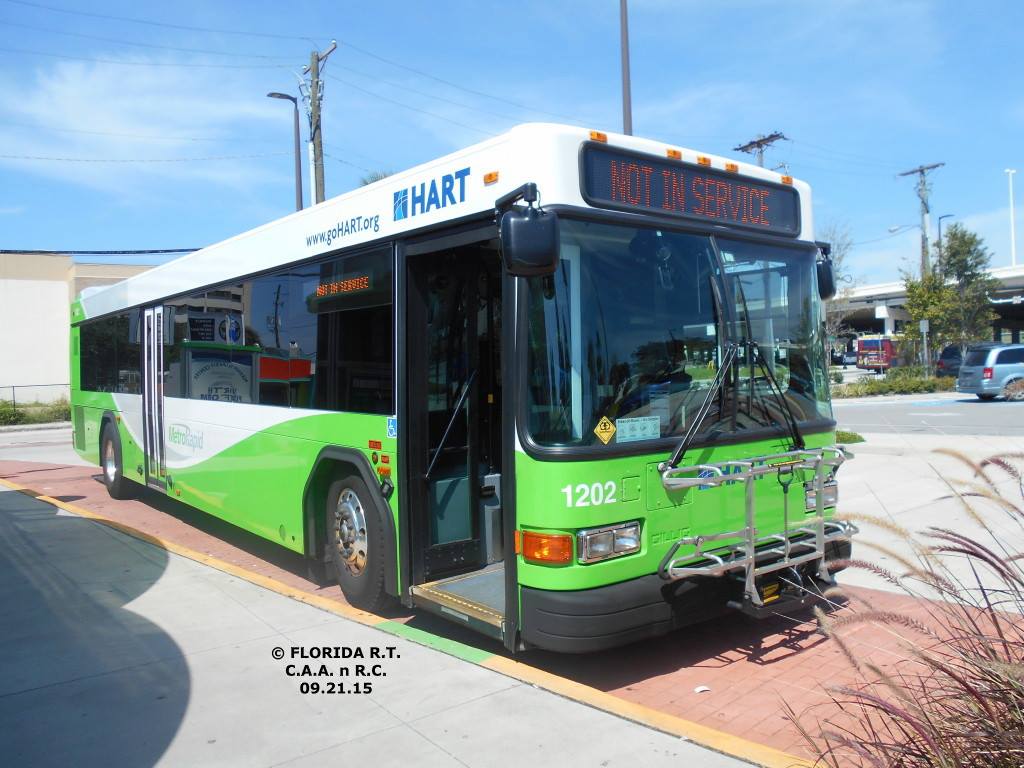
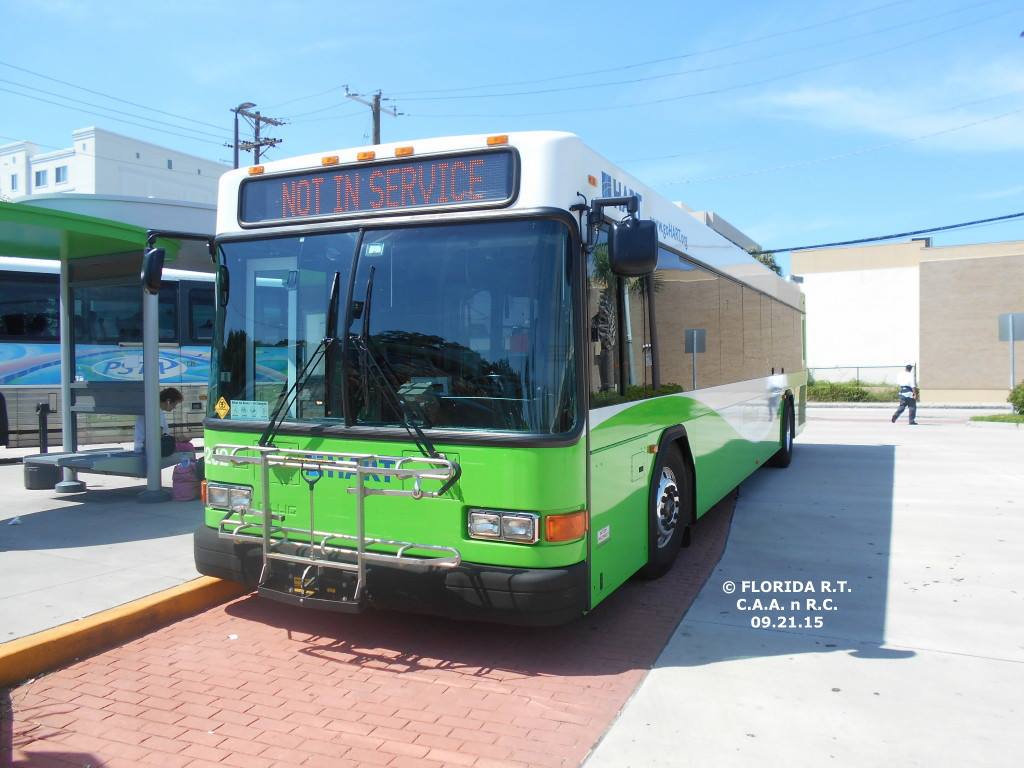
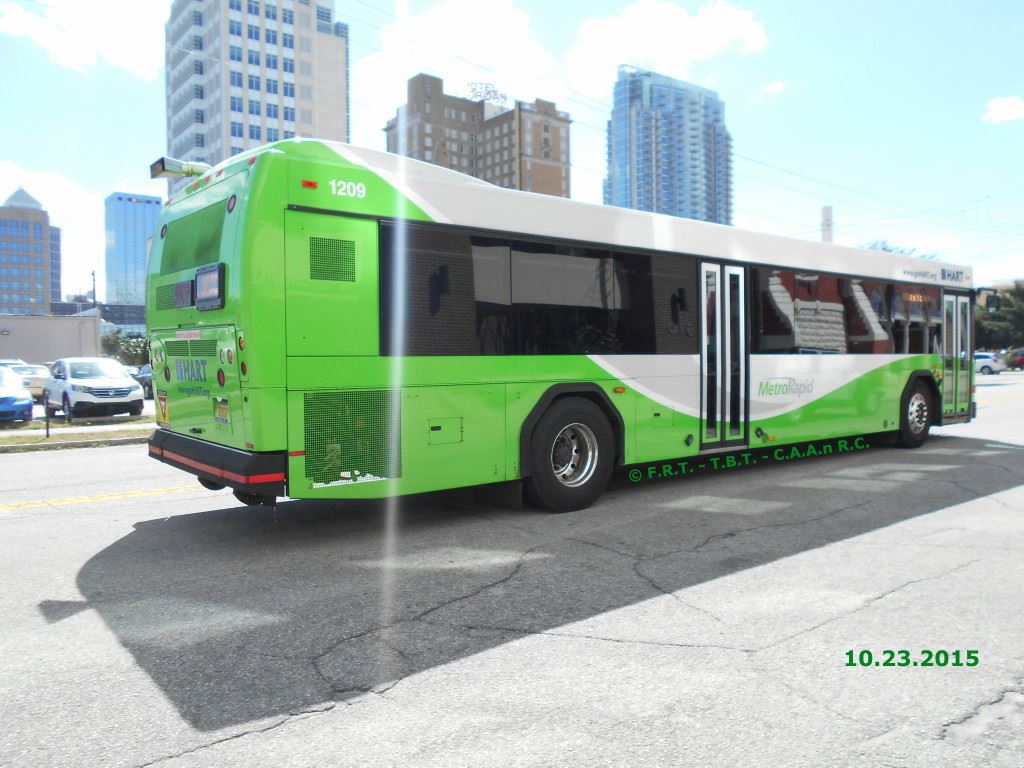
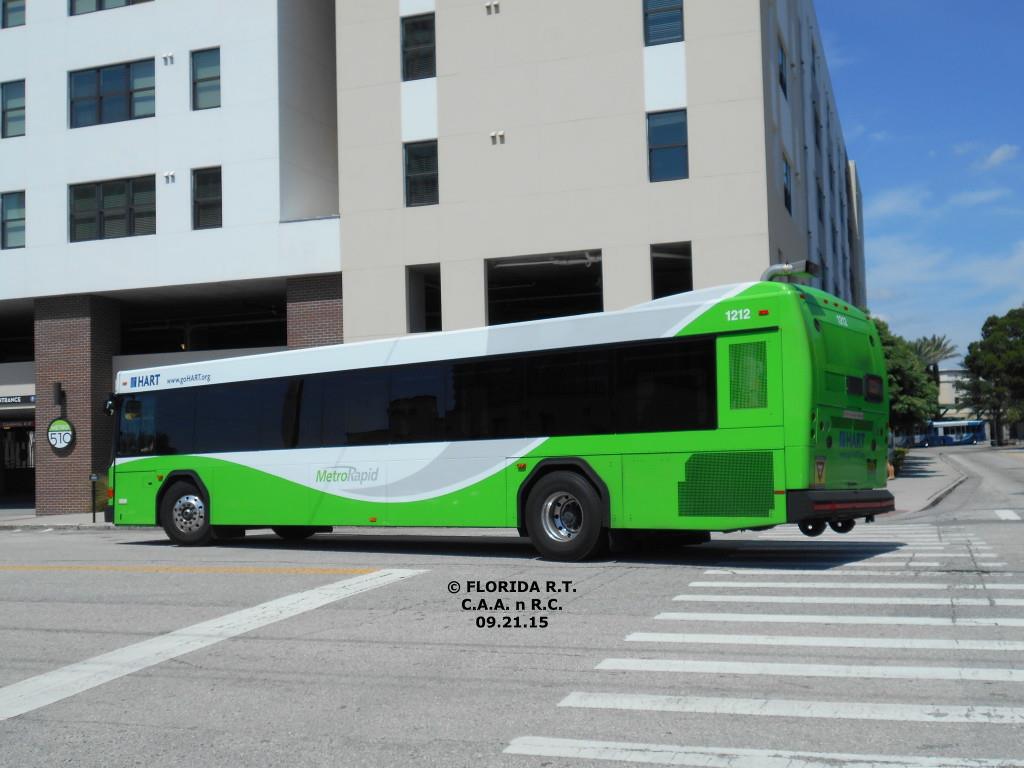
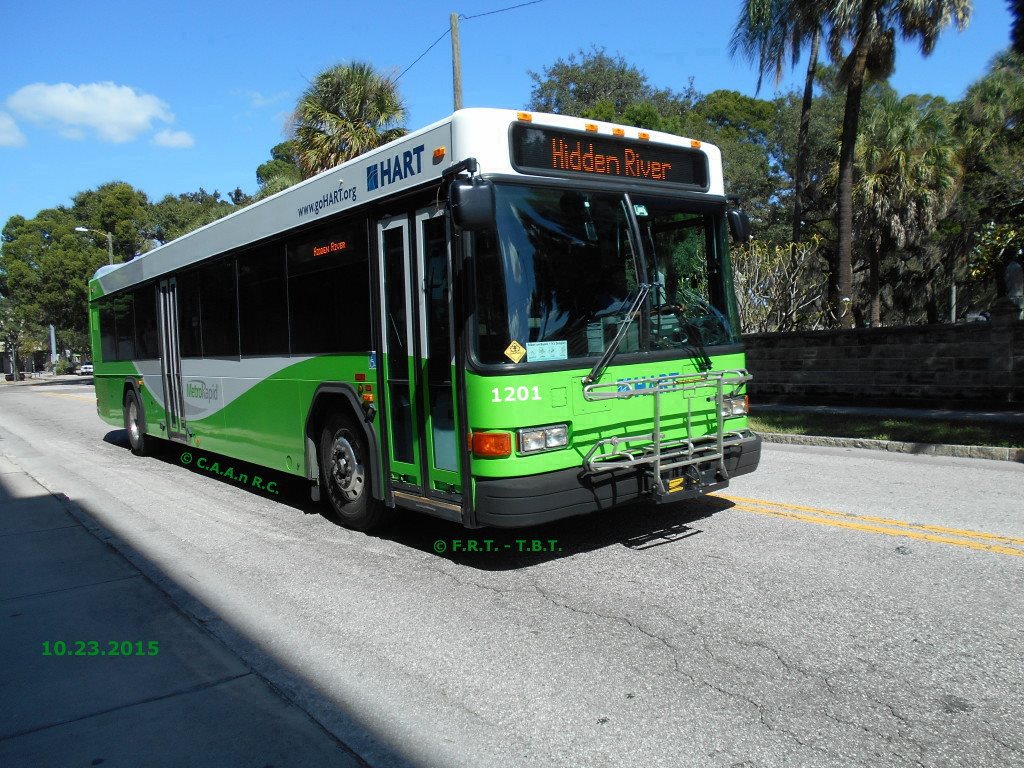
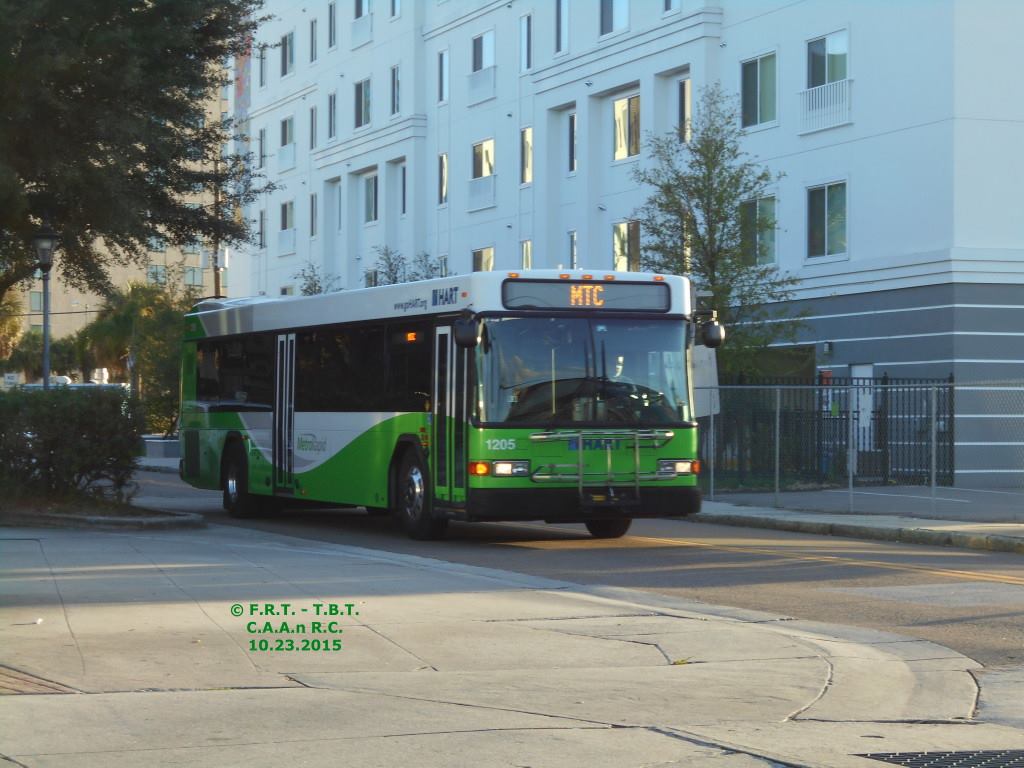
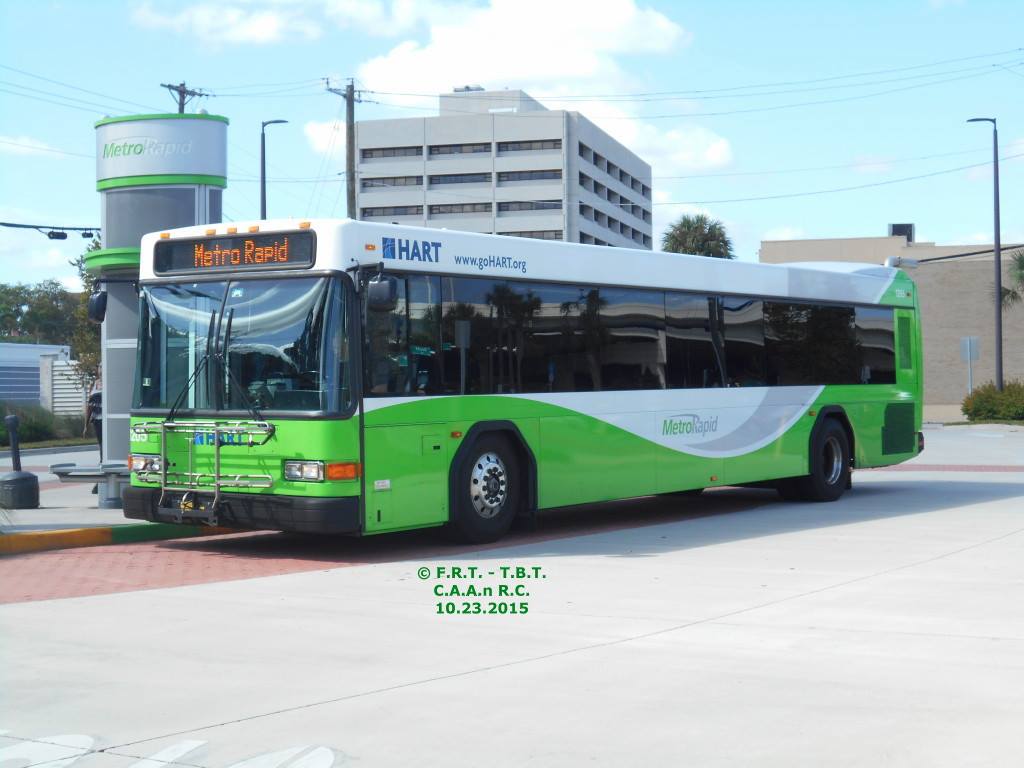
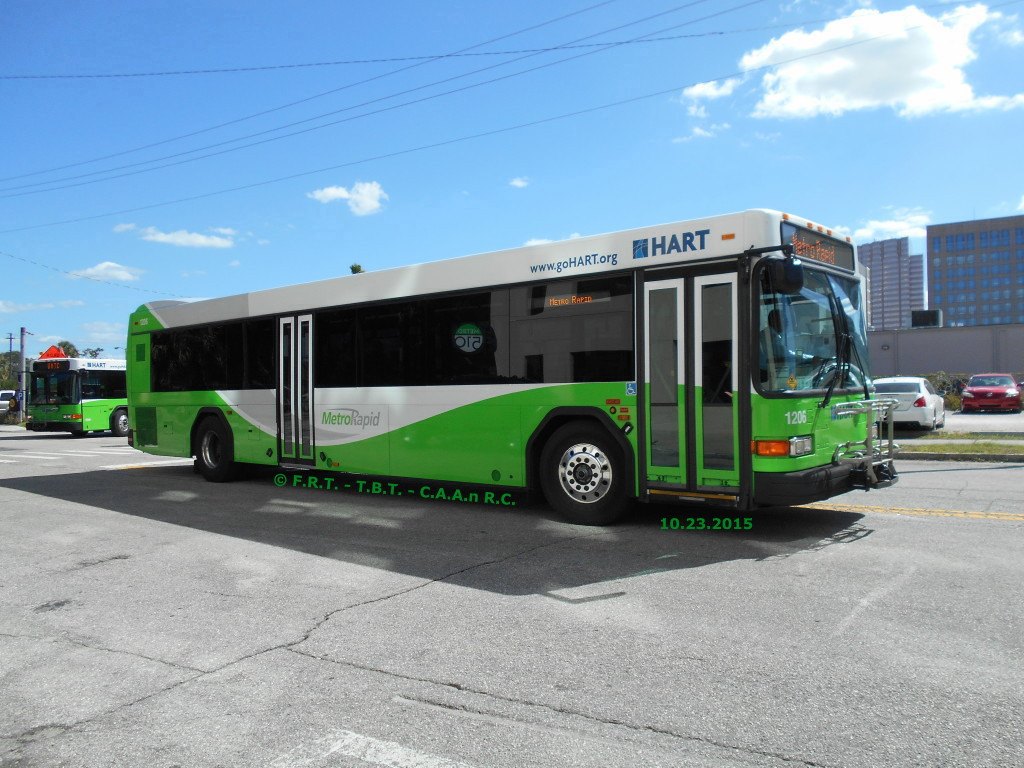
2012’s order of Gillig Low Floor buses was a split order. Originally, plans called for fifteen transit buses for MetroRapid North-South to be ordered, but budgetary constraints forced the order to be revised. The first twelve buses would be designated for MetroRapid while the latter two would be regular service buses to replace #s 2005 and 2015.
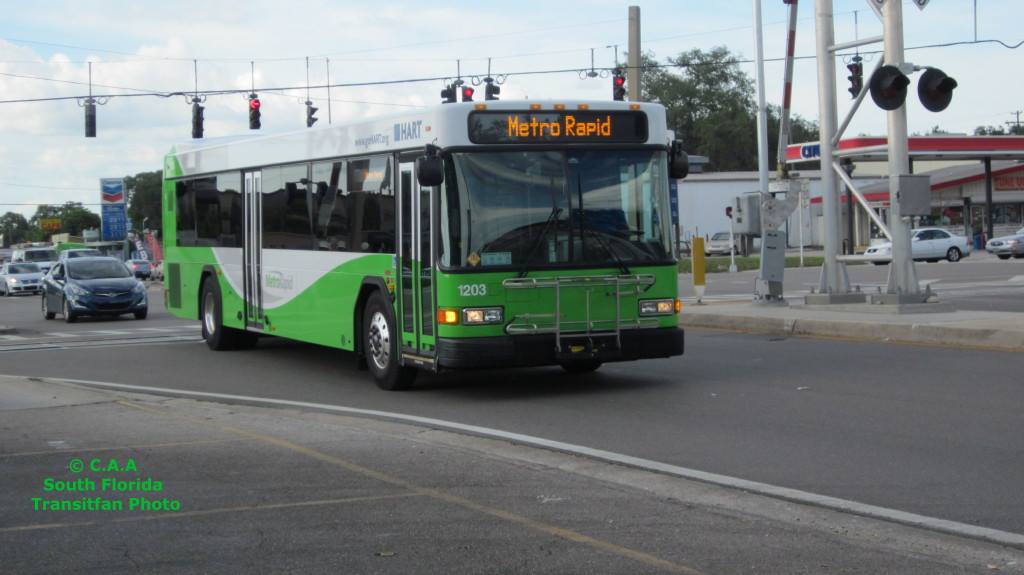
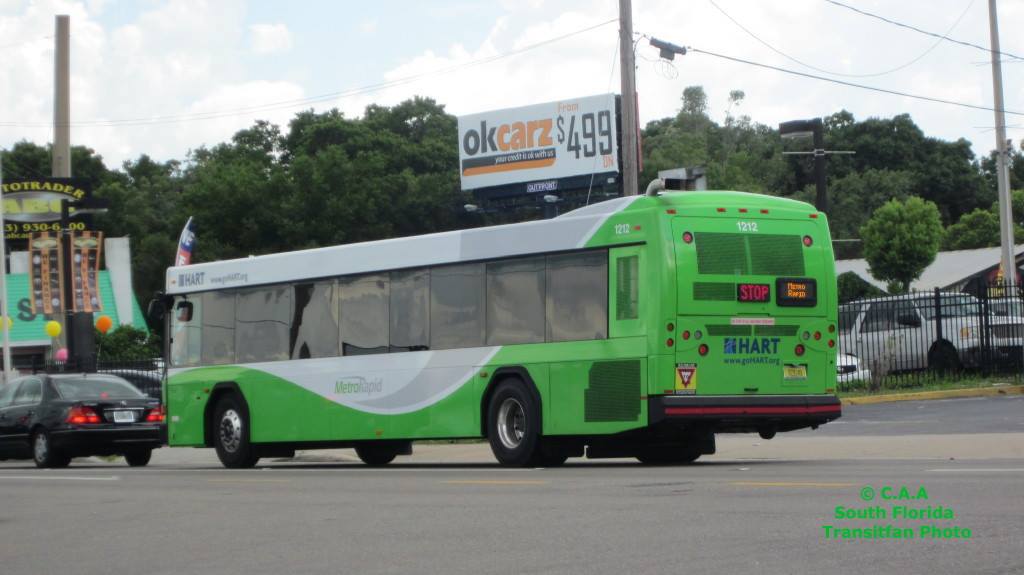
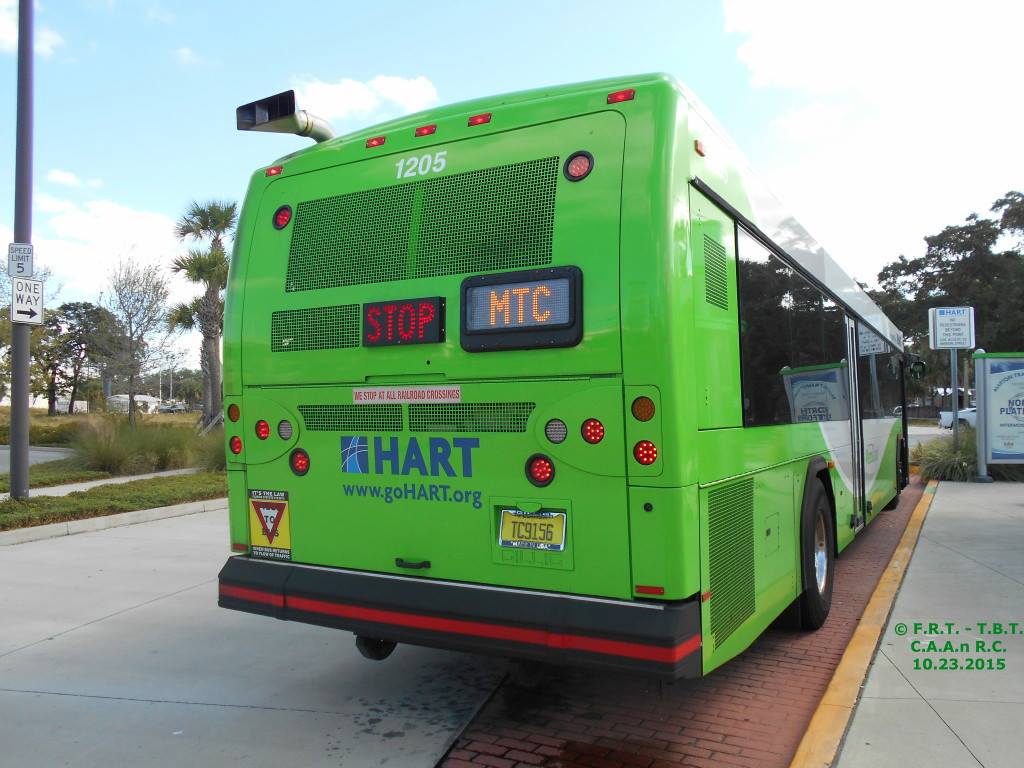
The specifications for this batch are unique. Originally, the buses were to be of the BRT design – with sloped front & rear ends – as they were originally exclusive to MetroRapid service. However, as the order was revised, HART decided to make the front-end standard, while retaining the sloped rear-end. To the best of my knowledge, HART is the only transit agency that has made this kind of specification for a Gillig bus order.
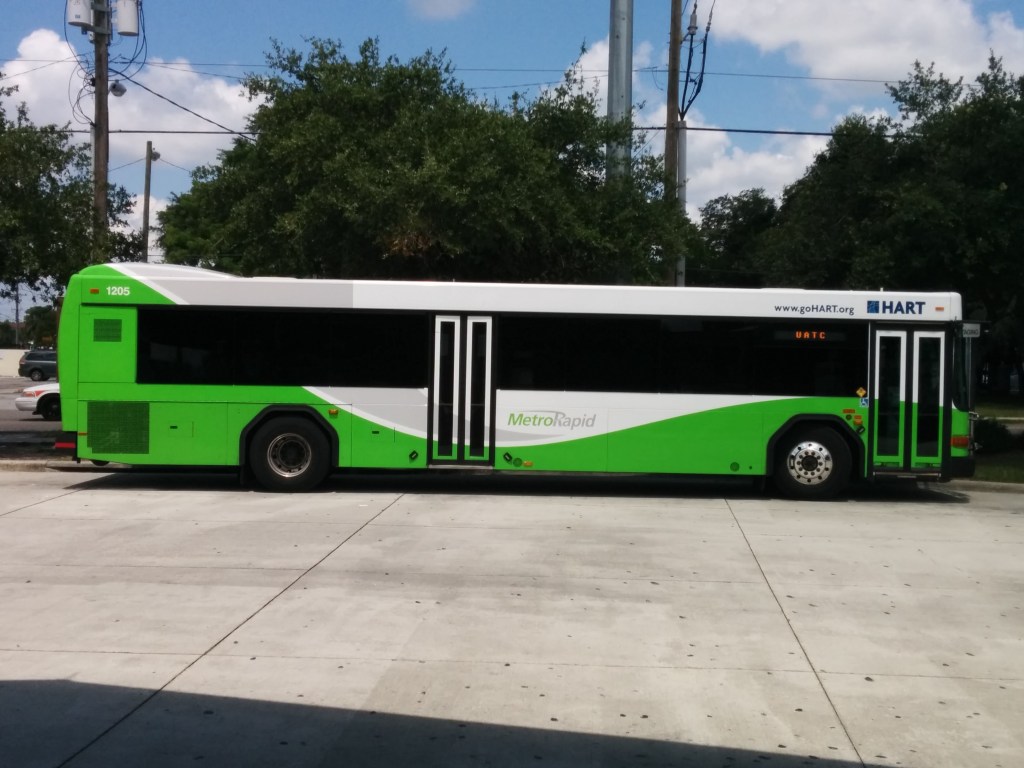
Aside from the oddity in design specifications, these buses look just like any other Gillig Low Floor bus in the mainstay fleet – with “frameless” side windows & transverse seating. The interiors have a gray scheme with green and black seat cushions (almost like a jungle pattern). In 2019, the agency changed the configuration of the “Priority Seating” section towards the front of the bus to make the seats longitudinal. This allows better conformity to ADA regulations & easier securing of mobility devices.
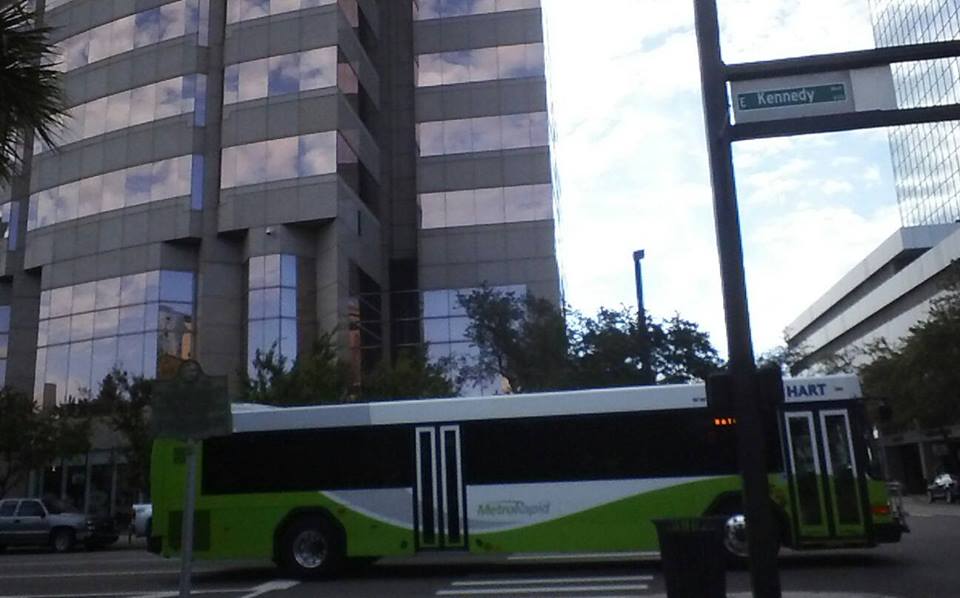
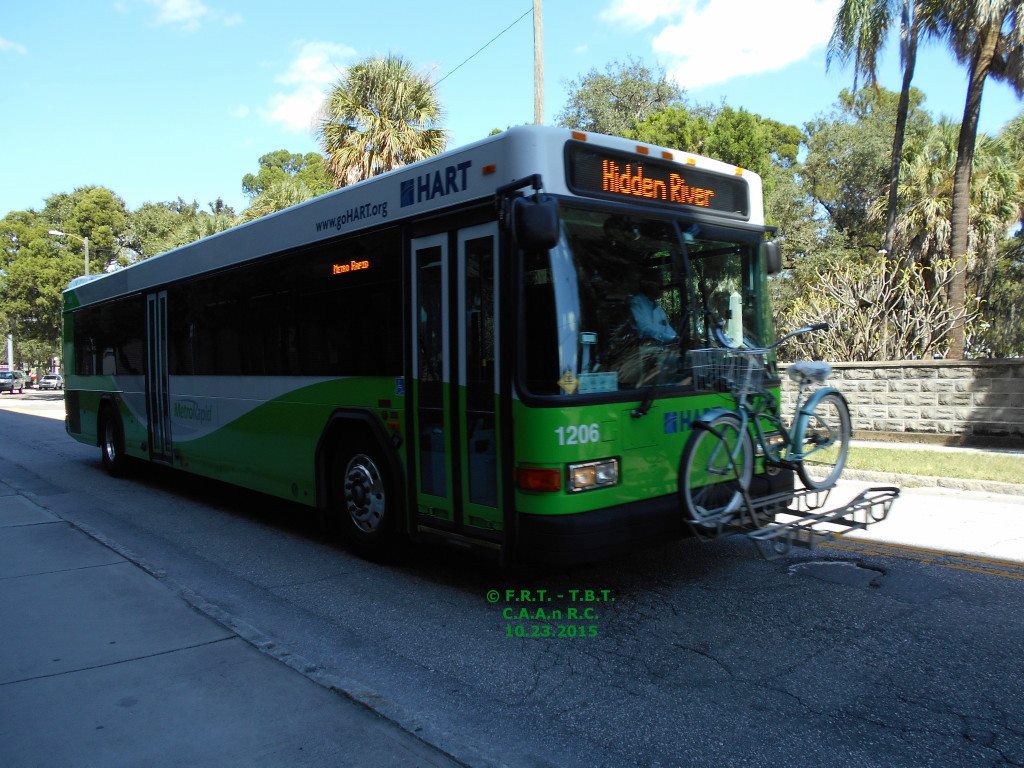
When the buses were originally produced, the exteriors had a lime green/gray/white livery scheme to match the theming of MetroRapid. The livery design itself is the same as all other HART vehicles.
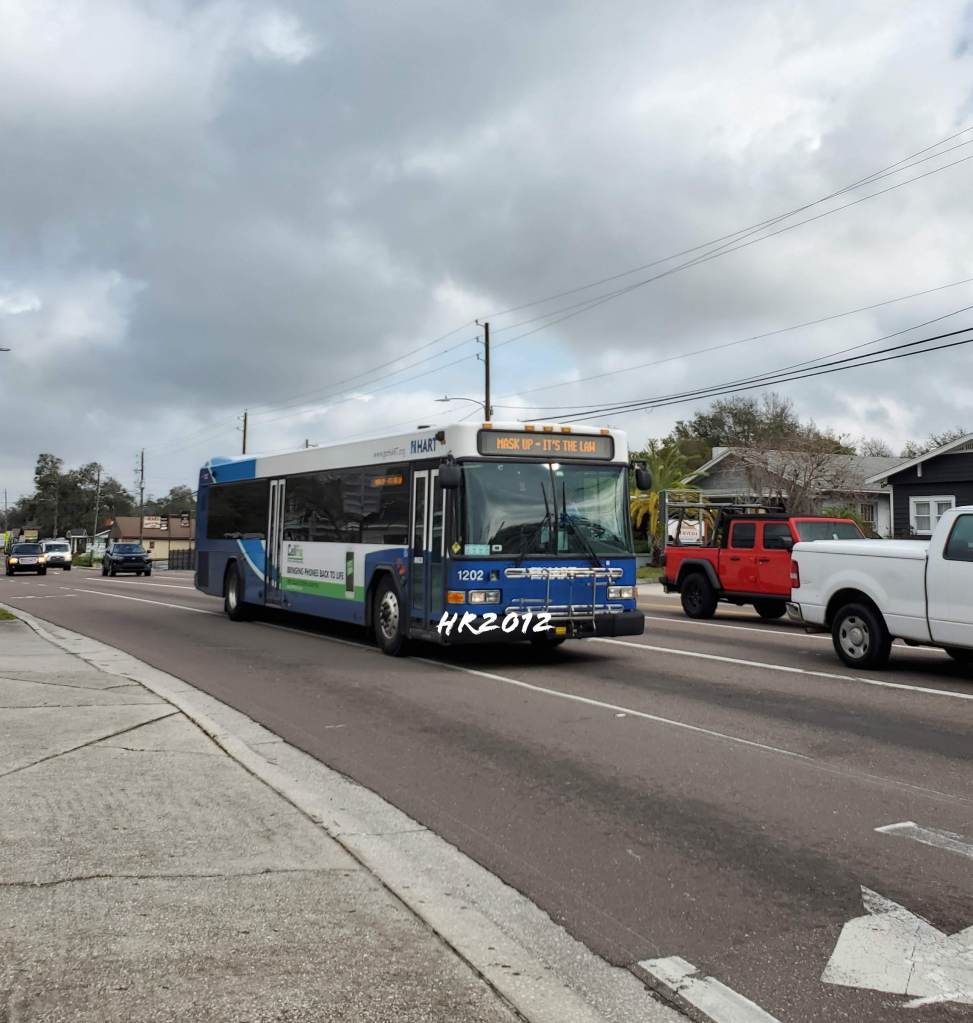
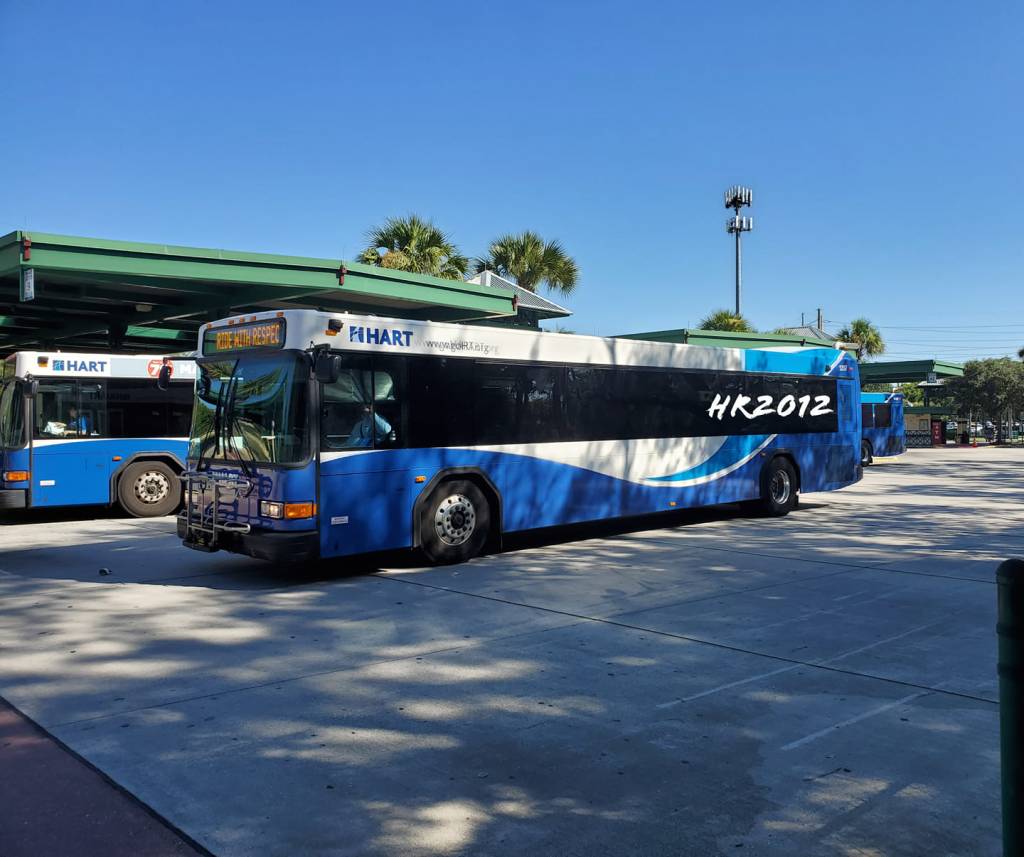
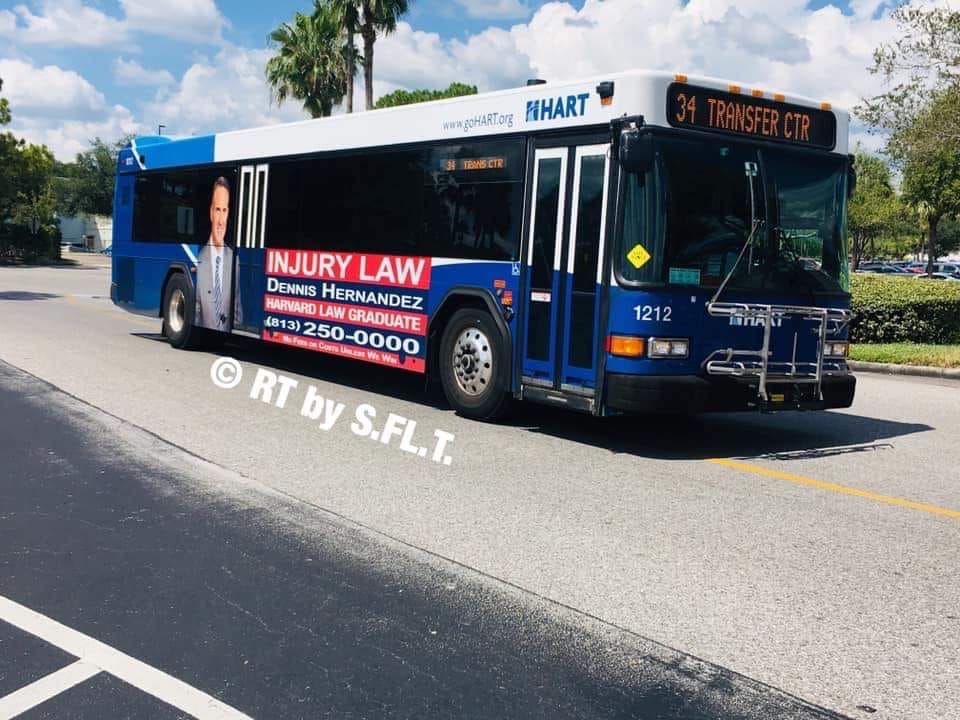
#1212 makes its turn onto Morgan St in downtown Tampa. Photo Credit: HARTride 2012. January, 2014.And later…#1212 winds up on Nebraska Ave. Notice the rear faring, just like the 2005-series buses? Also the newer tailpipe? Photo Credit: HARTride 2012. April, 2014.#1206 makes a stop along Jackson St. Photo Credit: HARTride 2012. March, 2014.This northbound bus waits at Nebraska and Twiggs. Photo Credit: HARTride 2012.And here’s a southbound bus heading towards downtown. Photo Credit: HARTride 2012.#1202 boards at the UATC. Photo Credit: HARTride 2012. April, 2014.#1206 at the Marion Transit Center, ready for departure. Photo Credit: HARTride 2012.The interior of #1206. Photo Credit: HARTride 2012.The rear of #1206. Photo Credit: HARTride 2012.#1205 in the staging area of the UATC. Photo Credit: HARTride 2012.#1206 on Harrison St, leaving the Marion Transit Center.#1205 at the Marion Transit Center (MTC).#1203 on Nebraska Ave. Photo Credit: Carlos A.Rear shot of #1203. Photo Credit: Carlos A.#1204. Photo Credit: Carlos A.#1205 passes by. Photo Credit: Carlos A.#1206 making its turn. Photo Credit: Carlos A.Rear of #1206. Photo Credit: Carlos A.#1207 chugging along. Photo Credit: Carlos A.Rear of #1207. Photo Credit: Carlos A.#1208. Photo Credit: Carlos A.#1209. Photo Credit: Carlos A.#1210 resting at the MTC. Photo Credit: Carlos A.#1211 leaving the MTC. Photo Credit: Carlos A.#1212 on Nebraska Ave. Photo Credit: Carlos A.And there she goes! Photo Credit: Carlos A.#1202 at the MTC. Photo Credit: Carlos A.Same bus, different angle. Photo Credit: Carlos A.Same bus, different angle. Photo Credit: Carlos A.Same bus, different angle. Photo Credit: Carlos A.#1206 leaving the MTC. Photo Credit: Carlos A.And there she goes! Photo Credit: Carlos A.#1207 at the MTC. Photo Credit: Carlos A.Same bus, different angle. Photo Credit: Carlos A.#1207 pulls out of the MTC. Photo Credit: Carlos A.And off she goes! Photo Credit: Carlos A.#1209 approaching the MTC. Photo Credit: Carlos A.Same bus, pulling into the MetroRapid stop at the MTC. Photo Credit: Carlos A.Later, #1209 pulls out to head to the University area. Photo Credit: Carlos A.And off she goes! Photo Credit: Carlos A.#1212 leaving the MTC. Photo Credit: Carlos A.Same bus, heading into Downtown. Photo Credit: Carlos A.#1201 leaving the MTC. Photo Credit: Carlos A.And off she goes! Photo Credit: Carlos A.#1205 approaching the MTC. Photo Credit: Carlos A.#1205 resting at the MTC. Photo Credit: Carlos A.Same bus, different angle. Photo Credit: Carlos A.Same bus, different angle. Photo Credit: Carlos A.Rear of #1205. Photo Credit: Carlos A.Same bus, different angle. Photo Credit: Carlos A.#1206 leaving the MTC, with another bus (going to MTC) pulling behind it. Photo Credit: Carlos A.Later, #1206 pulls out of the MTC. Photo Credit: Carlos A.#1210 on approach to the MTC. Photo Credit: Carlos A.#1211 shows up shortly after. Photo Credit: Carlos A.And there she goes! Photo Credit: Carlos A.#1202 pulls out of the University Area Transit Center (UATC). Photo Credit: Carlos A.And there she goes! Photo Credit: Carlos A.#1210 leaving the MTC. Photo Credit: Carlos A.#1208 approaching the MTC. Photo Credit: Joseph C.#1209 leaving the MTC. Photo Credit: Joseph C.#1201 resting at the MTC.#1209 at the UATC.#1204 at the MTC.#1211 resting at the MTC.#1207 at the MTC. Notice the post-Mission MAX headsign readout, the route number now shows.
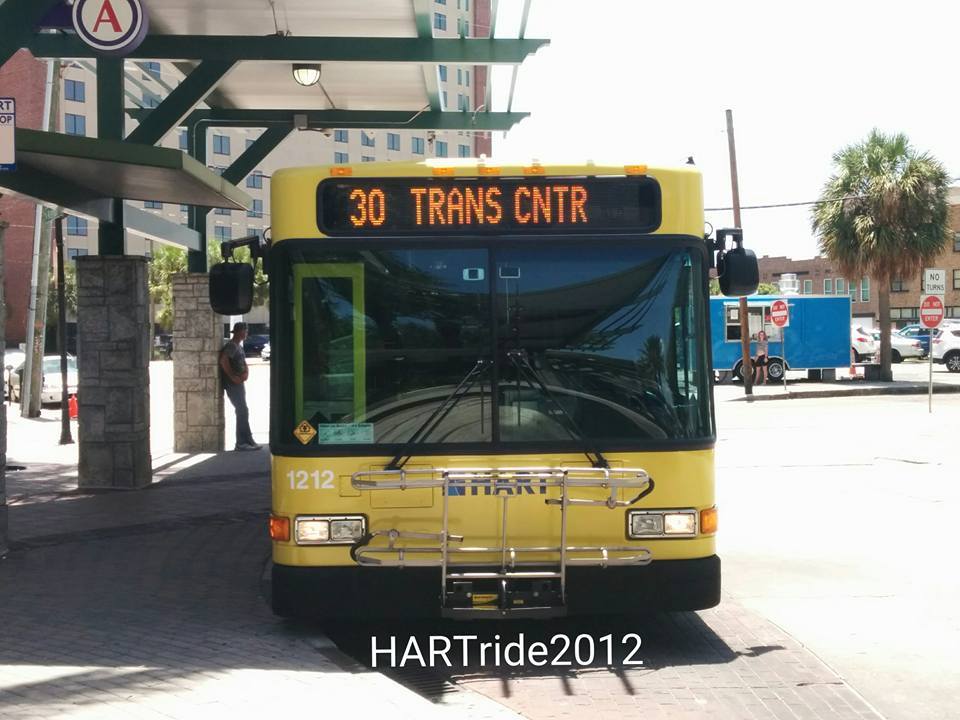
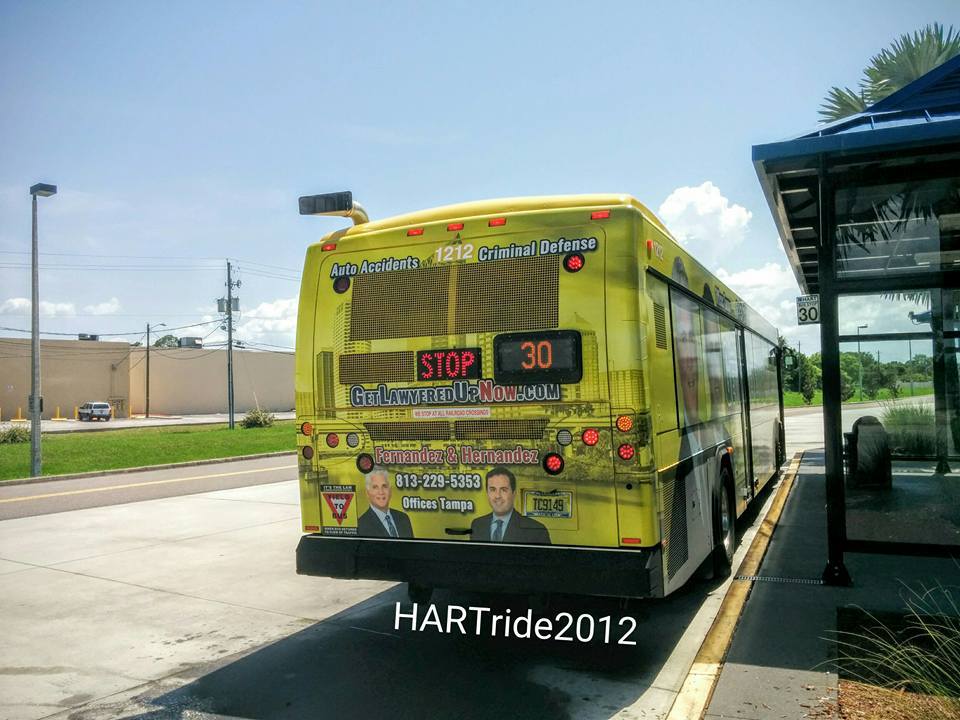
For a brief time in 2018, HART wrapped # 1212 in yellow & assigned it to routes outside of MetroRapid.
# 1212 on recovery at the M.T.C.Approaching the Britton Plaza stop.On recovery at Northwest Transfer Center.Different angle.Different angle.
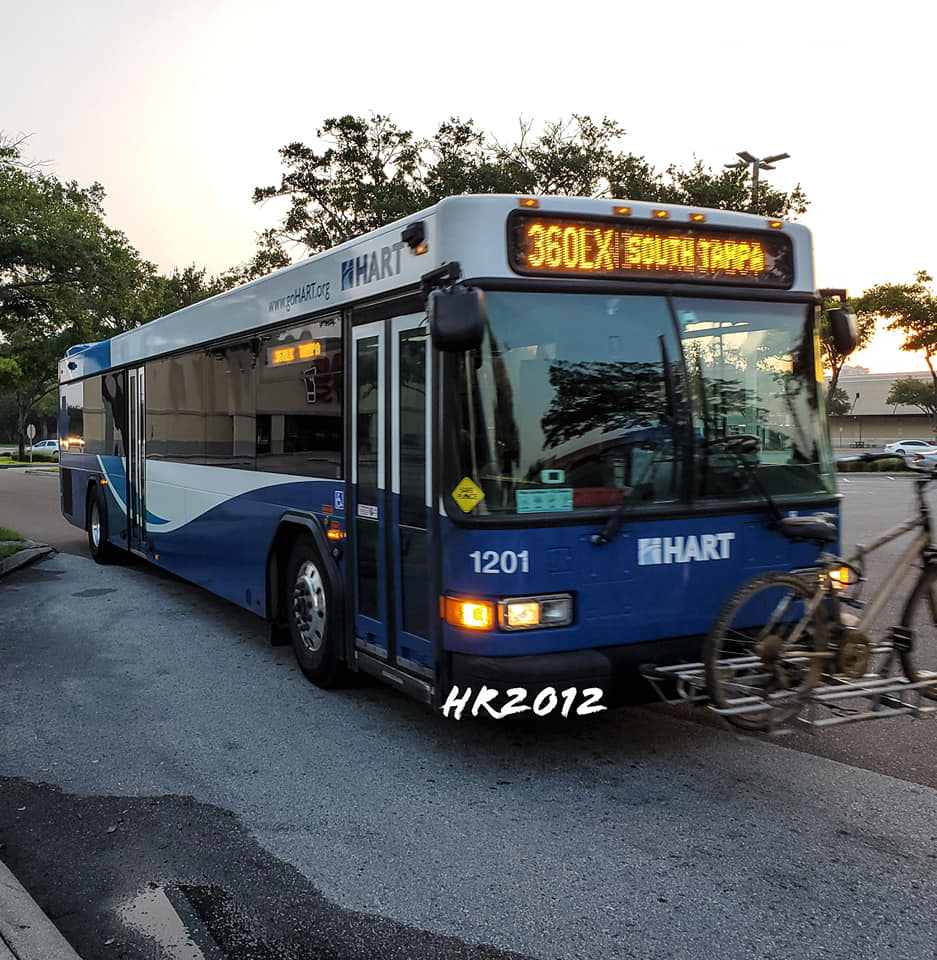
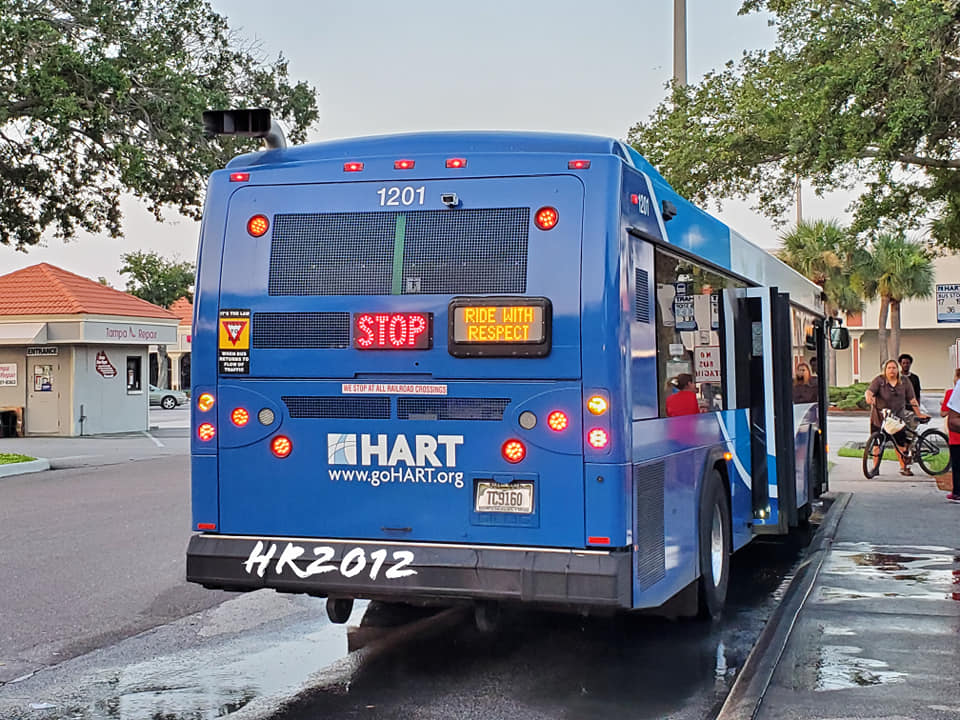
In 2020, HART began repainting all twelve buses into the standard two-toned blue/white livery to maintain fleet reliability systemwide.
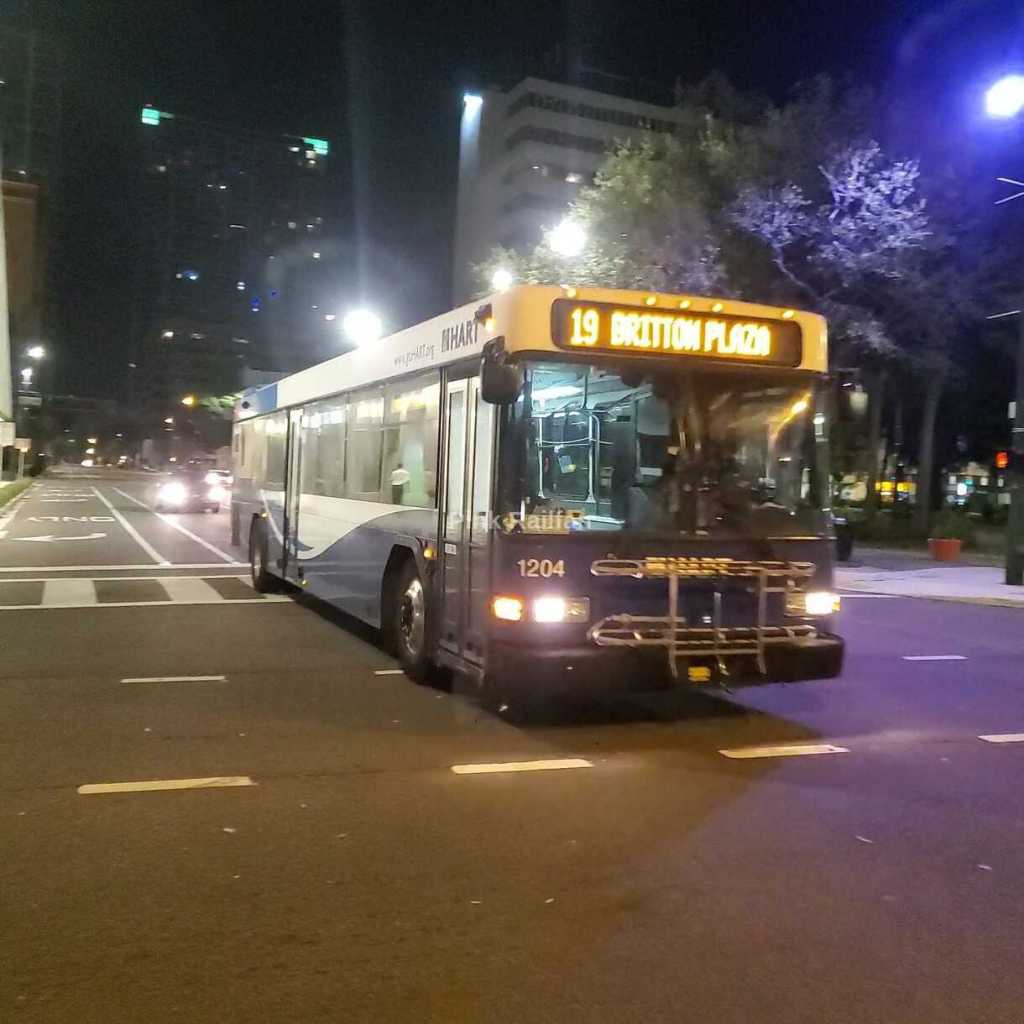
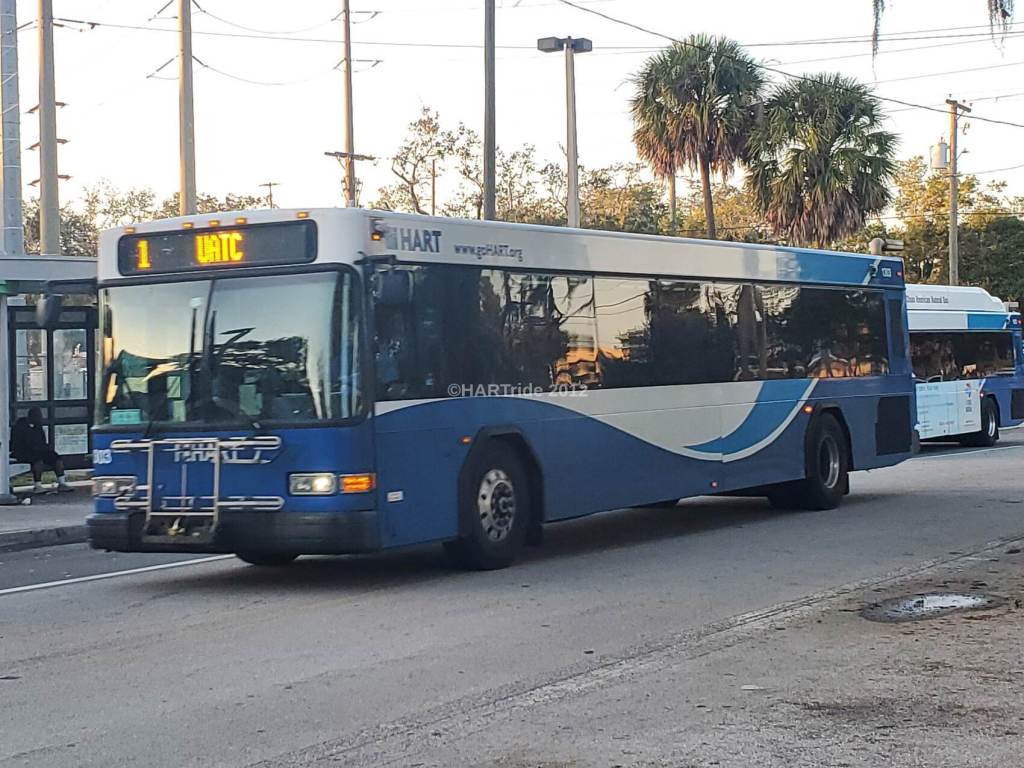
# 1201 pulls into Britton Plaza.Rear shot of # 1201.# 1202 on Route 1.# 1204 on Route 19. Credit: Pink Railfan.# 1207 deadheading back to the garage.# 1210 on Route 17.# 1211 at NetP@rk.# 1212 entering NetP@ark. Credit: Carlos A.
2012 Gillig Low Floor Diesel
#’s 1215 & 1216
# 1216 at Marion Transit Center.
#’s 1215 & 1216 are virtually identical to most of the other buses in HART’s fleet.
2012 Gillig BRT Diesel
#’s 1217 & 1218
Secondhand buses from Sarasota Breeze Transit.
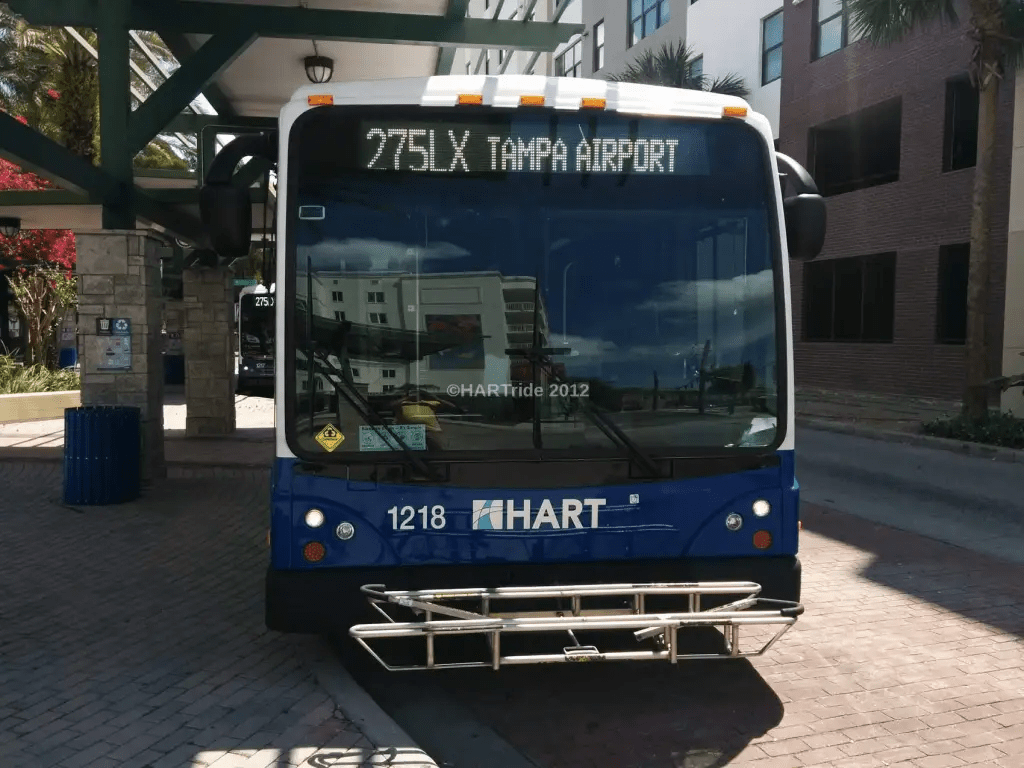
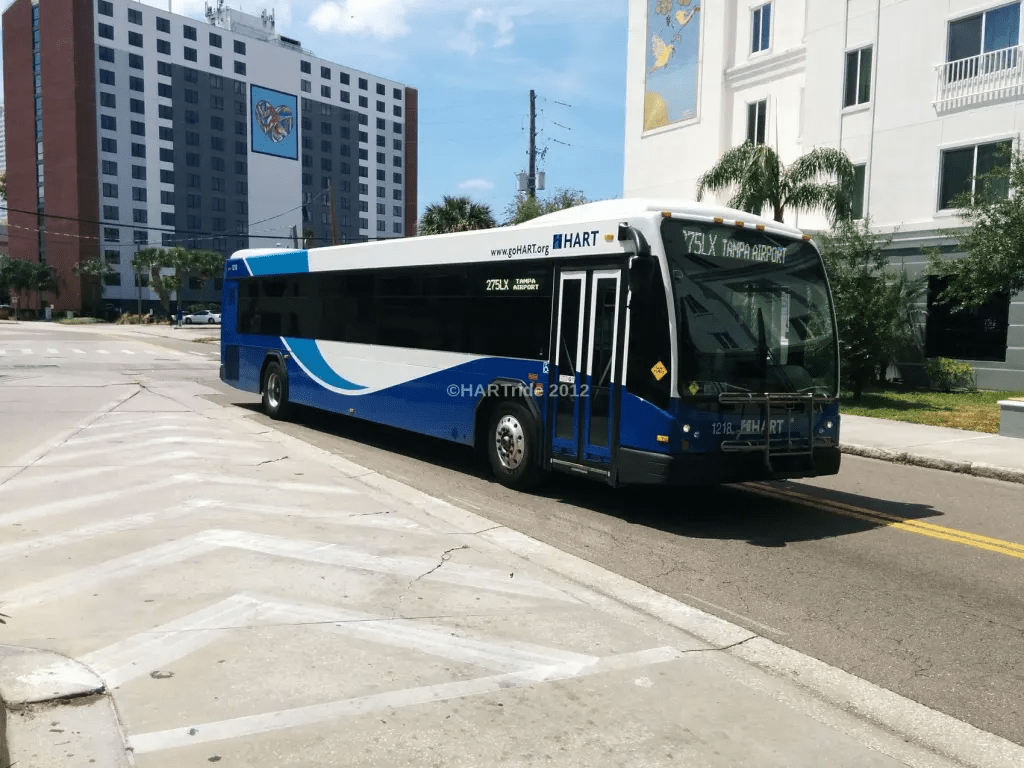
Originally designated as #’s 1201 & 1202 under Sarasota Breeze Transit, HART renumbered the units as #’s 1217 & 1218. They are virtually identical to #’s 1101 – 1106.
# 1217 at the TPA Airport Bus Hub.And here she is at the M.T.C.And she departs!Here’s # 1218 at the M.T.C.Different angle.Different angle.And there she goes!
2013 Gillig Low Floor Diesel
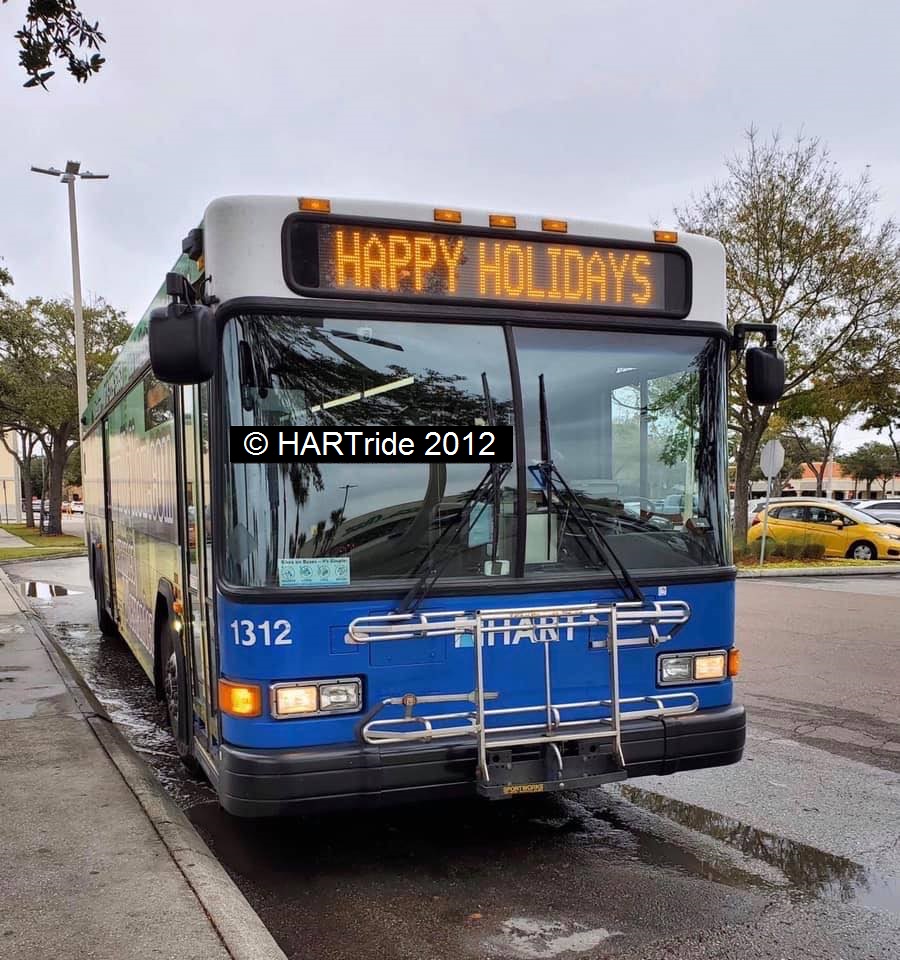
#’s 1301 through 1312
# 1312 at Britton Plaza.
Aside from having a different “Priority Seating” configuration from the onset, these buses are virtually identical to #’s 1215 & 1216.
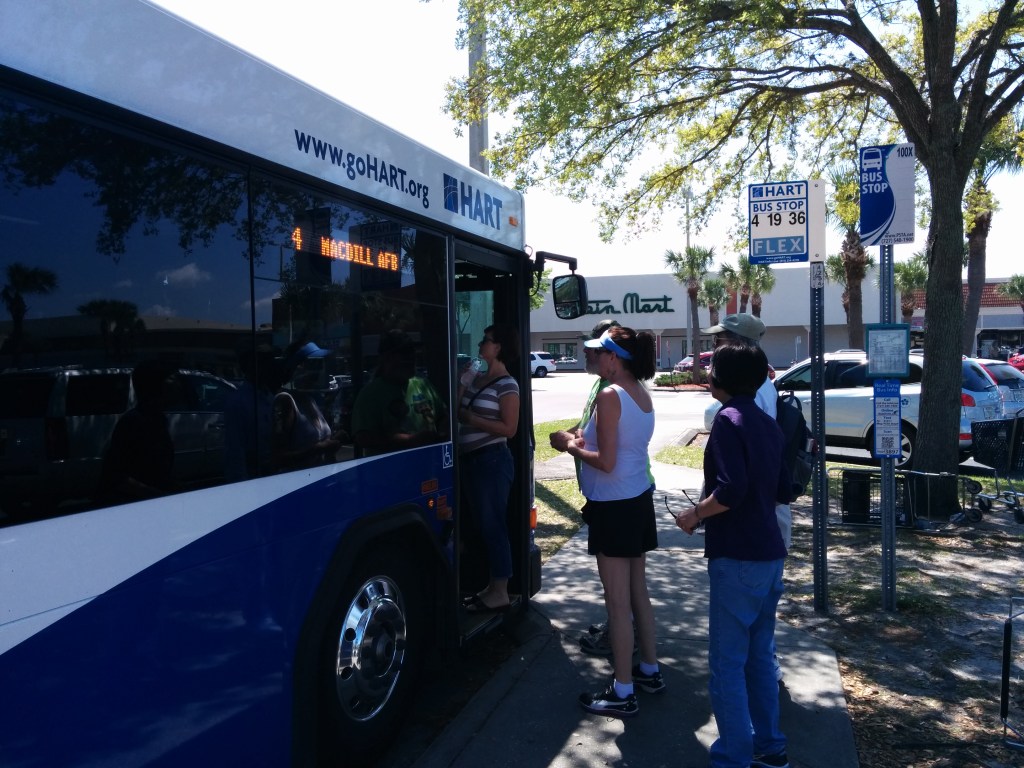
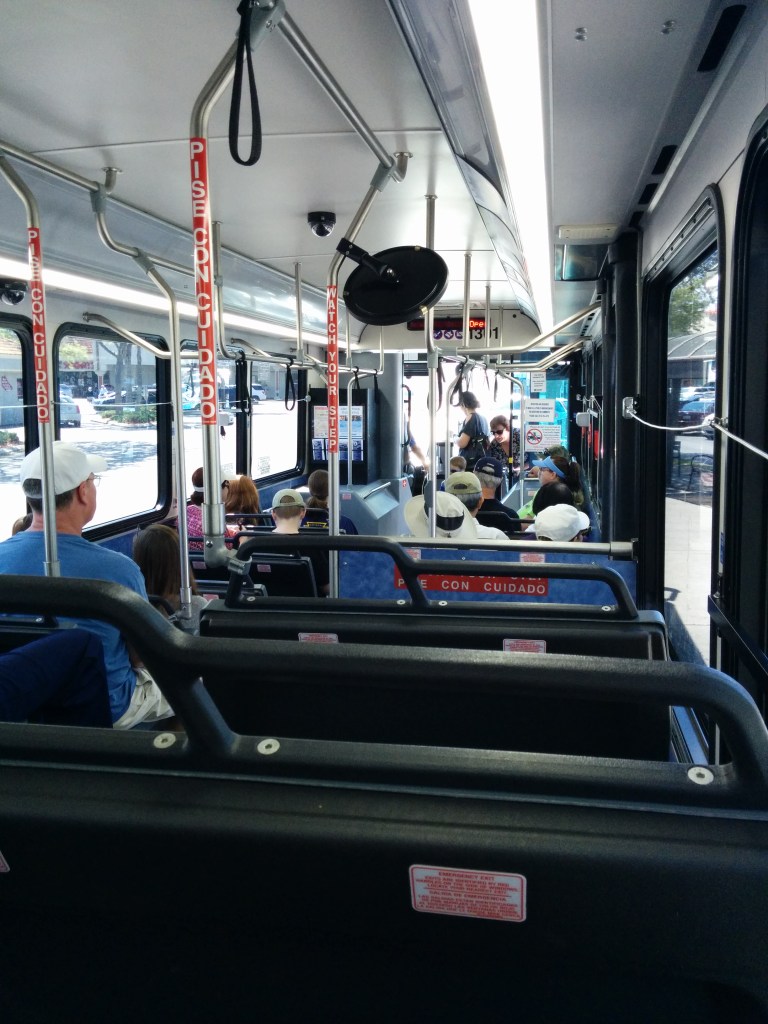
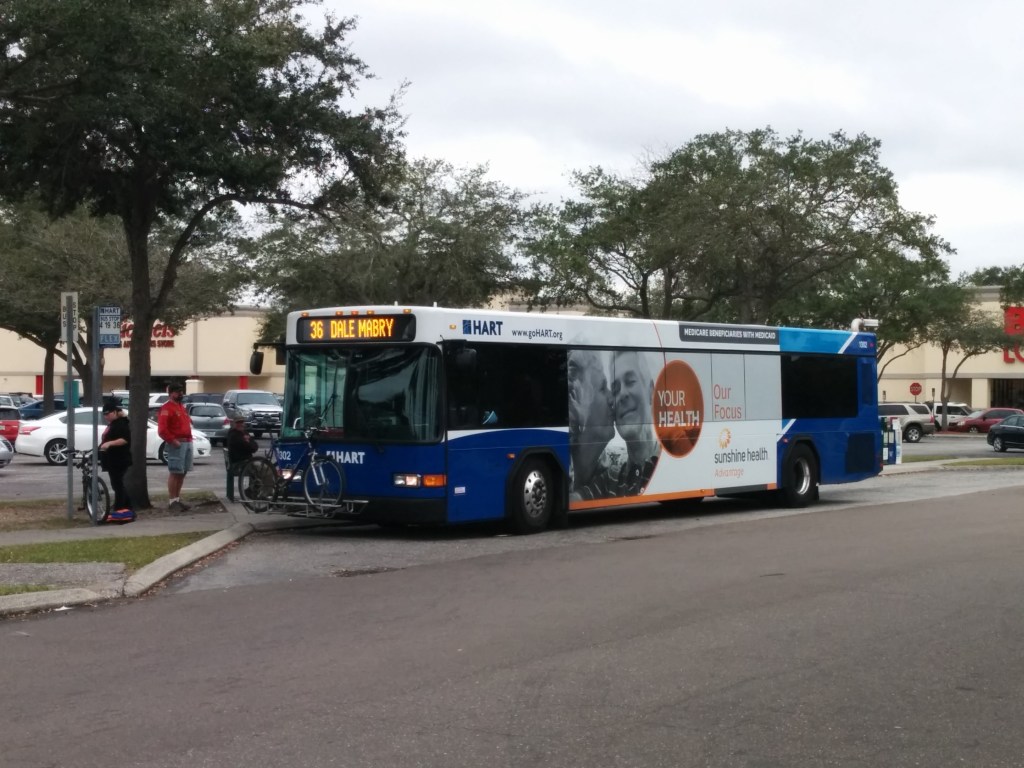
#1309 at Britton Plaza. Photo Credit: HARTride 2012. December, 2013.Two 2013-series buses on “lineup” at Britton Plaza. This was taken during the 2014 AirFest at MacDill AFB, where HART ran the Route 4 “Shuttle”. Photo Credit: HARTride 2012. March, 2014.Trying to figure out which bus goes where. Photo Credit: HARTride 2012.On board #1301, waiting for passengers to board. Photo Credit: HARTride 2012. March, 2014.This bus a was PACKED! Photo Credit: HARTride 2012. March, 2014.Here’s #1303 at the Marion Transit Center, running Route 30. Photo Credit: HARTride 2012.#1302 at Britton Plaza – Route 36.And off she goes!Rear shot.# 1303.# 1303 making a turn.1305 at Britton Plaza – Route 19.#1306 at NetPark.#1310 on the Route 14 at Yukon.
2014 Gillig Low Floor Diesel
#’s 1401 through 1406
Secondhand buses from TranStar (defunct charter bus company)
# 1404.
Not long after HART acquired the eight Sarasota Breeze Transit Gillig units, the agency acquired six more Gillig Low Floor secondhands from a party overseeing the liquidation of TranStar, one of several charter bus providers in the Orlando area. These charter companies provide various contractual services to the various Orlando theme parks – including Walt Disney World. TranStar in particular had a contract for several years with Disney to operate buses for some of its employee shuttles. Once Disney decided to go a different route & did not renew the contract, it was very likely that TranStar could no longer meet its financial obligations. At least, this is what I had heard from several transit enthusiasts in the east central Florida region.
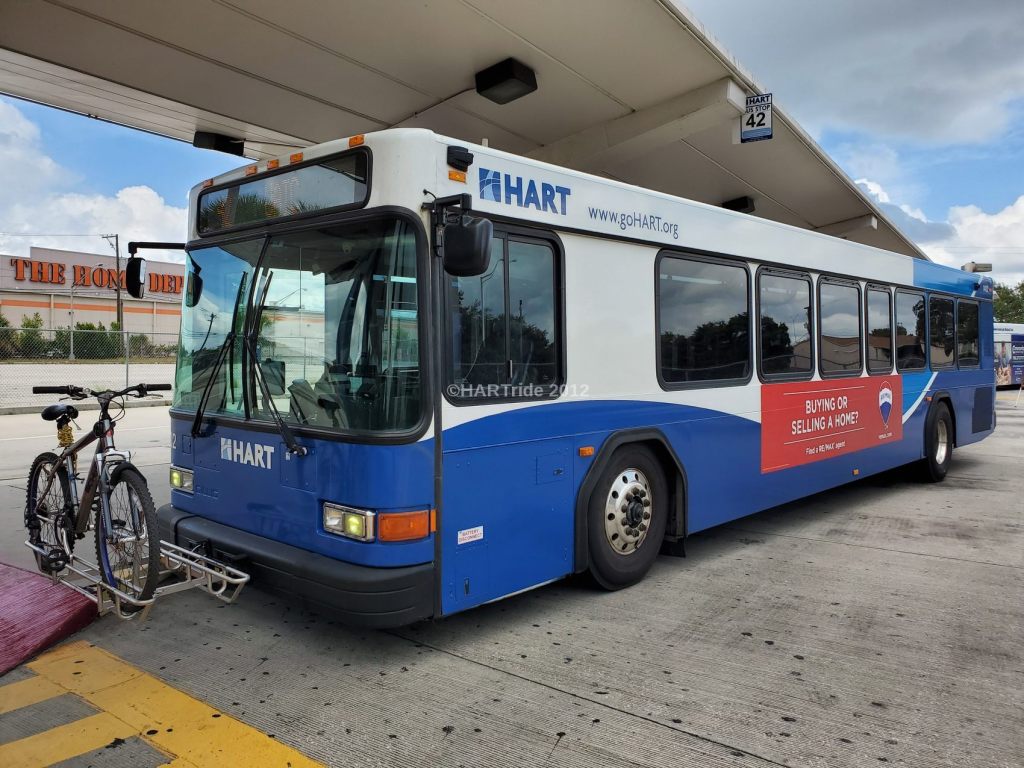
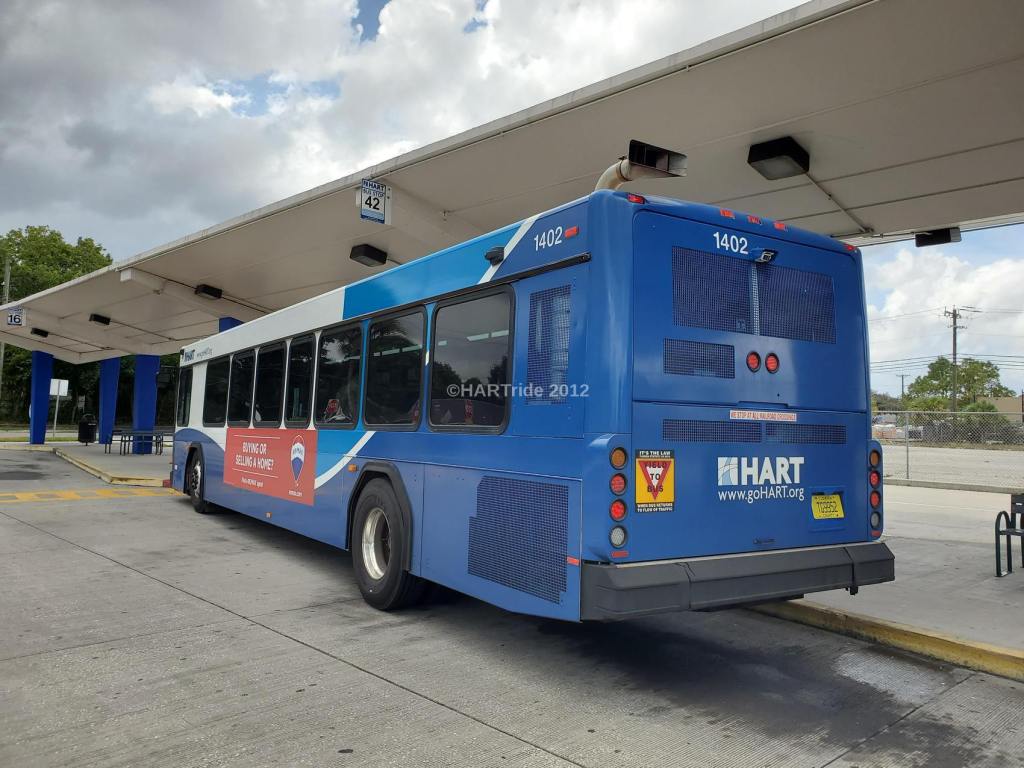
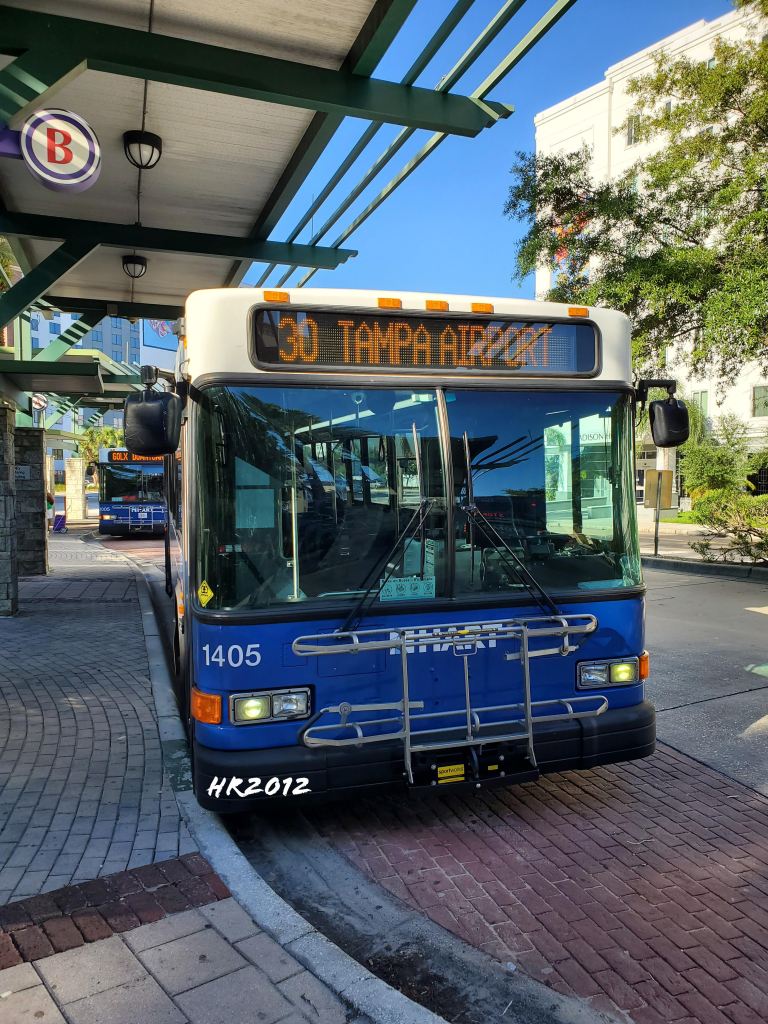
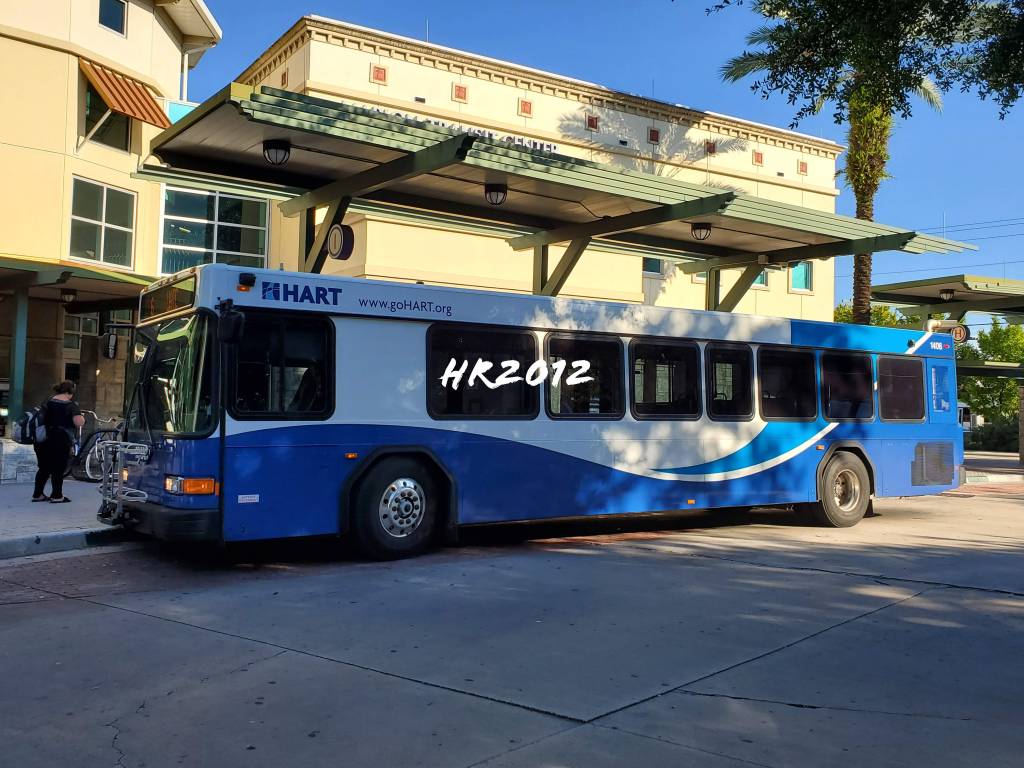
Unlike most of HART’s buses, these units are more reminiscent of the 2004 & older Gillig Low Floors that HART operated until just a few years ago.
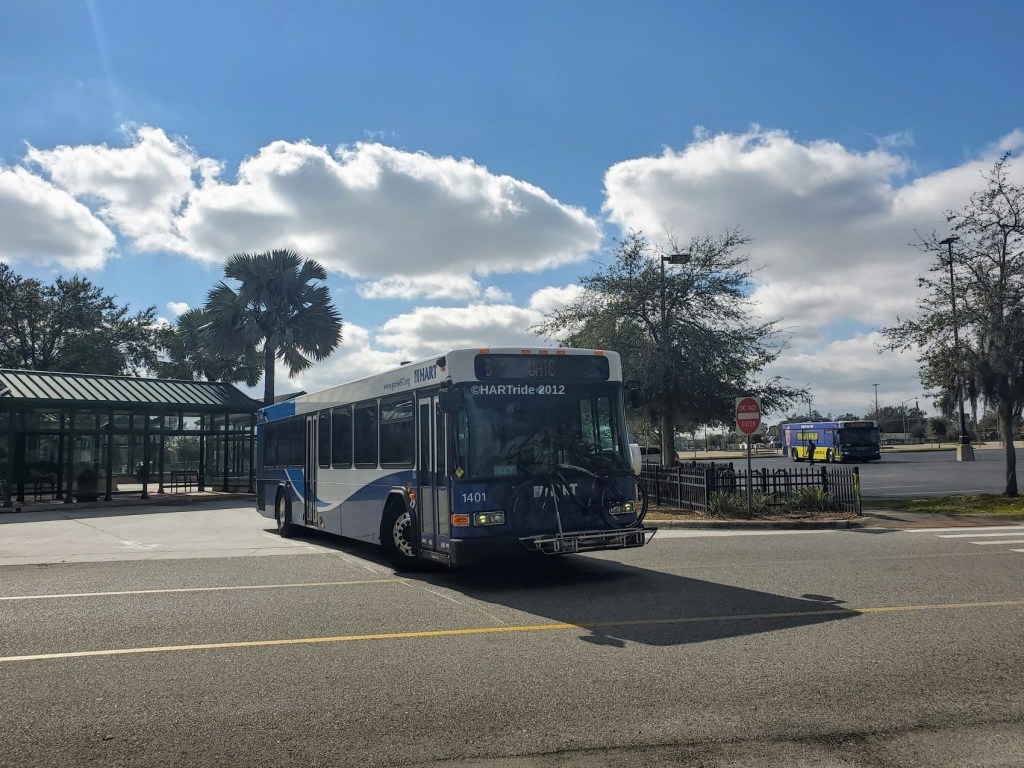
# 1401 pulls out of the NetP@rk Transfer Center.And off she goes!# 1402 at the Yukon Transfer Center.Different angle.Different angle.# 1403 on layover at Britton Plaza.The rear of # 1403. Notice the lack of a rear LED sign?# 1404 on Route 36.# 1405 at the M.T.C.# 1406 at the M.T.C.
2015 – 2017, 2019, & 2021 Gillig Low Floor CNG
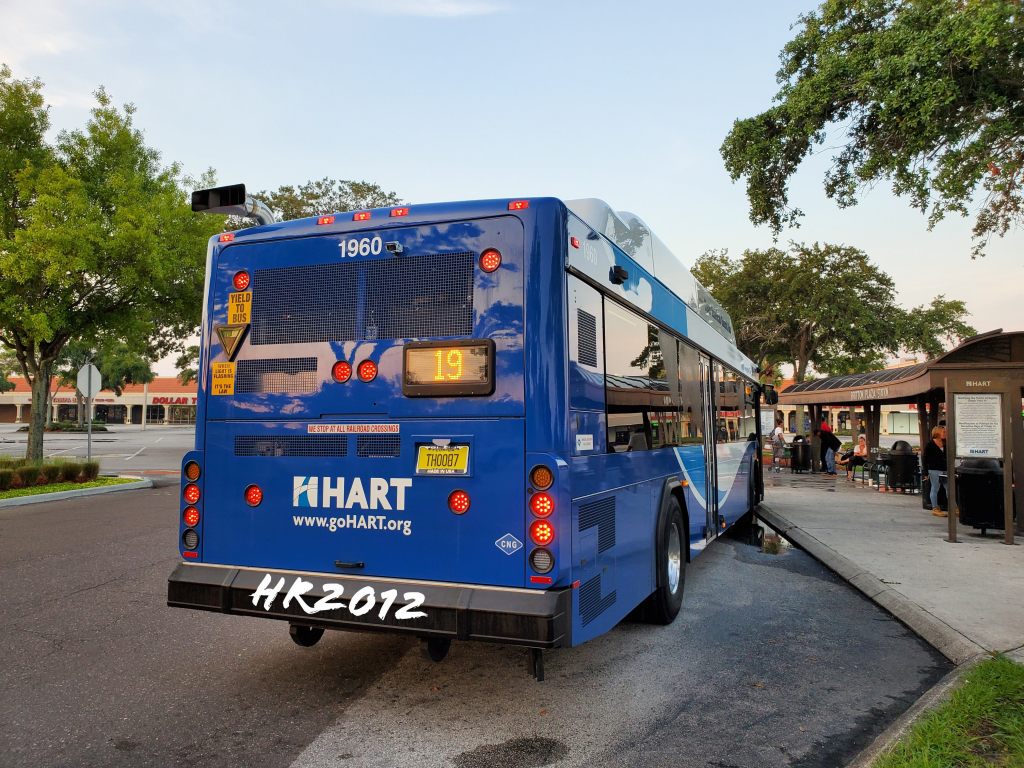
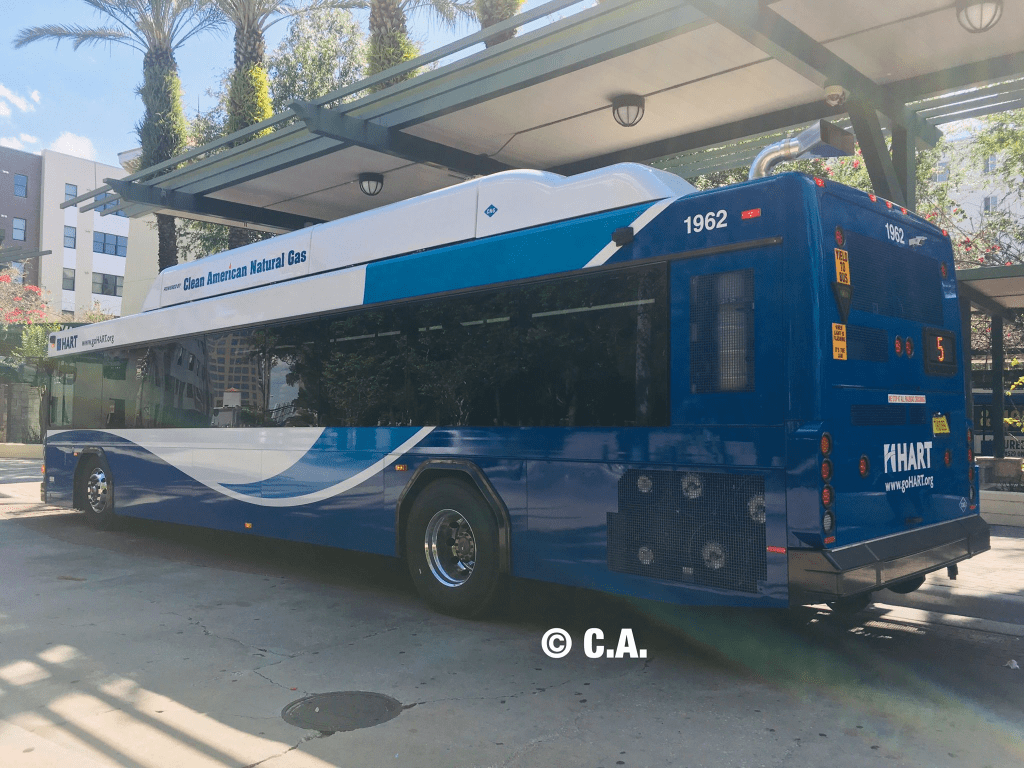
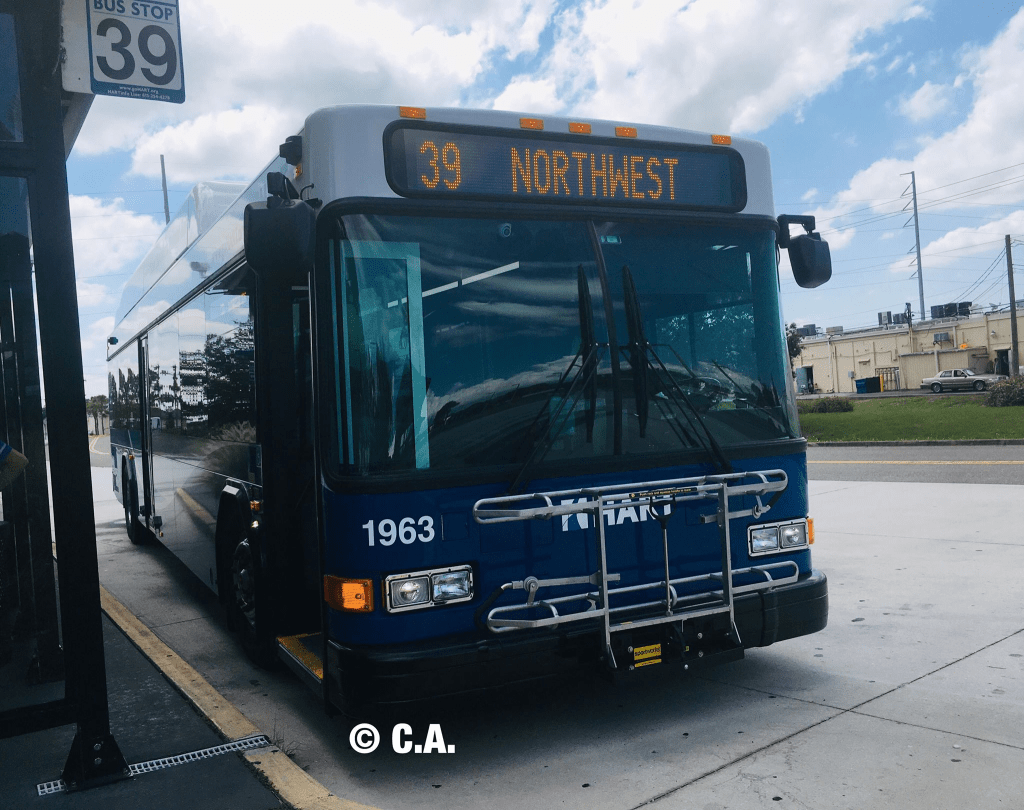
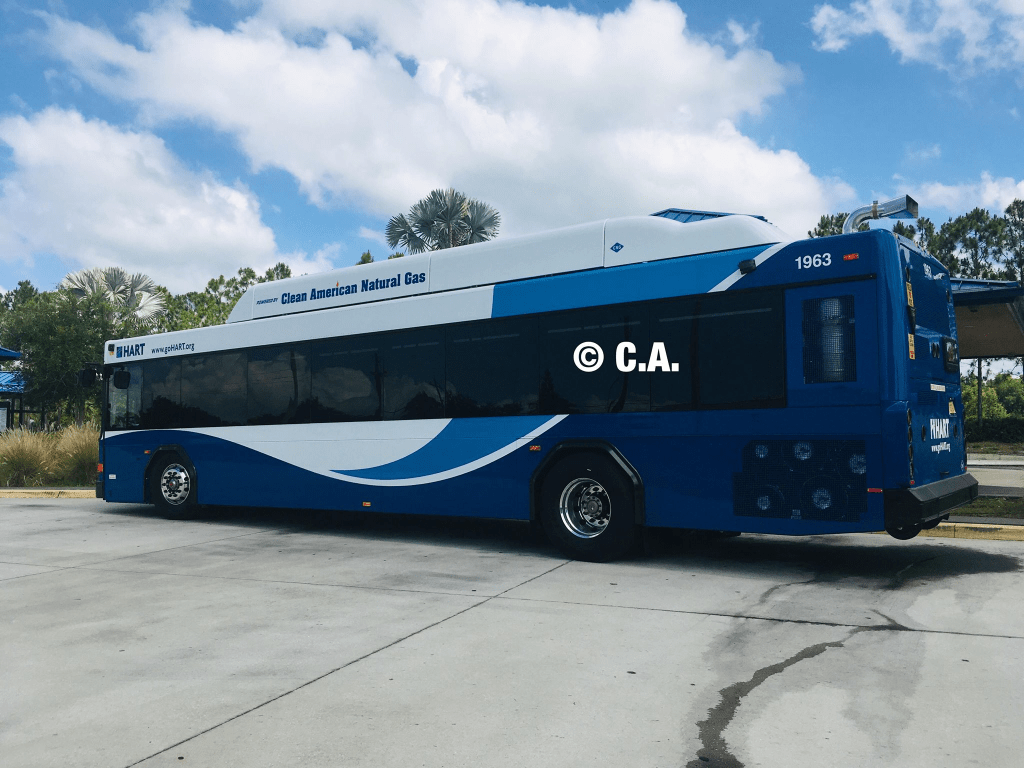
2015 – #’s 1501 through 1522 2016 – #’s 1601 through 1613 2017 – #’s 1701 through 1715 2019 – #’s 1960 through 1969 2021 – #’s 2130 through 2145
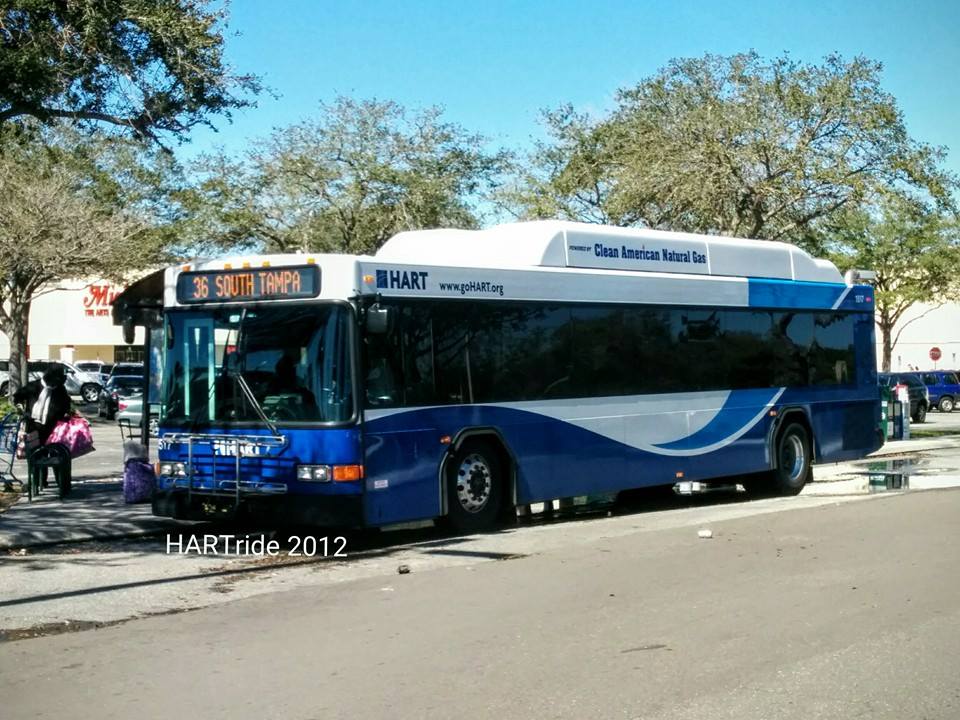
# 1517 at Britton Place – Route 36.
In 2014, HART decided to begin ordering Compressed Natural Gas (CNG) fueled vehicles – beginning with a batch of cutaway vans that would serve on flex & paratransit services. For 2015, the agency initially ordered twenty Gillig CNG units – though two additional buses were added in to replace two older units that were forced into retirement sooner than anticipated.
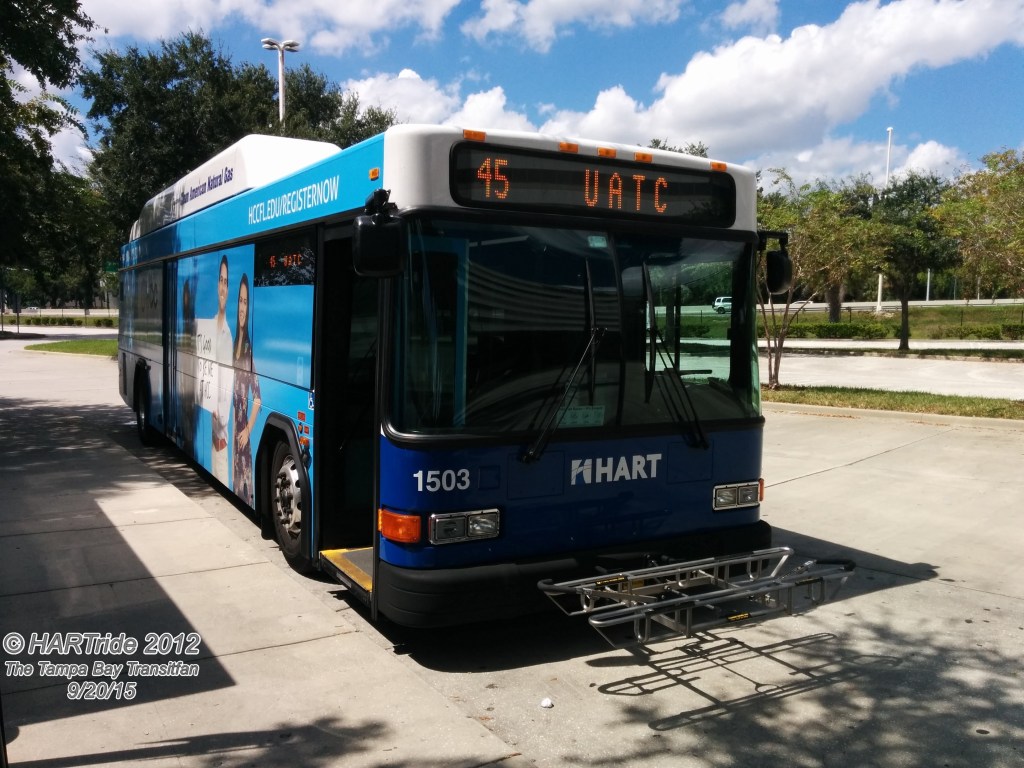
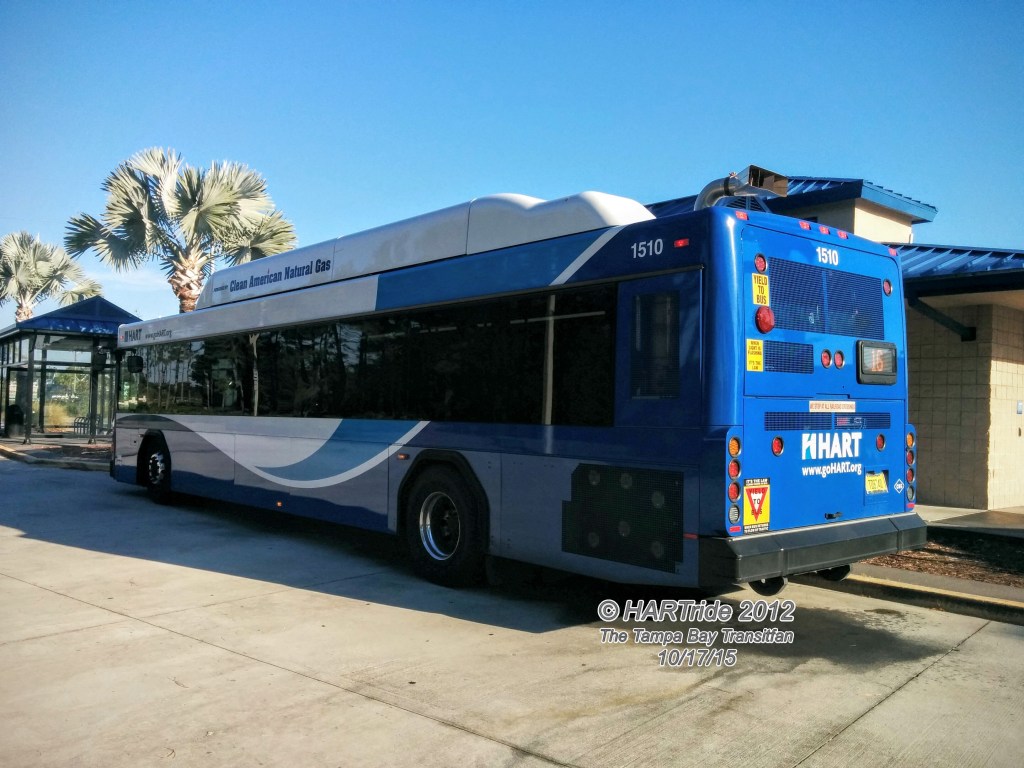
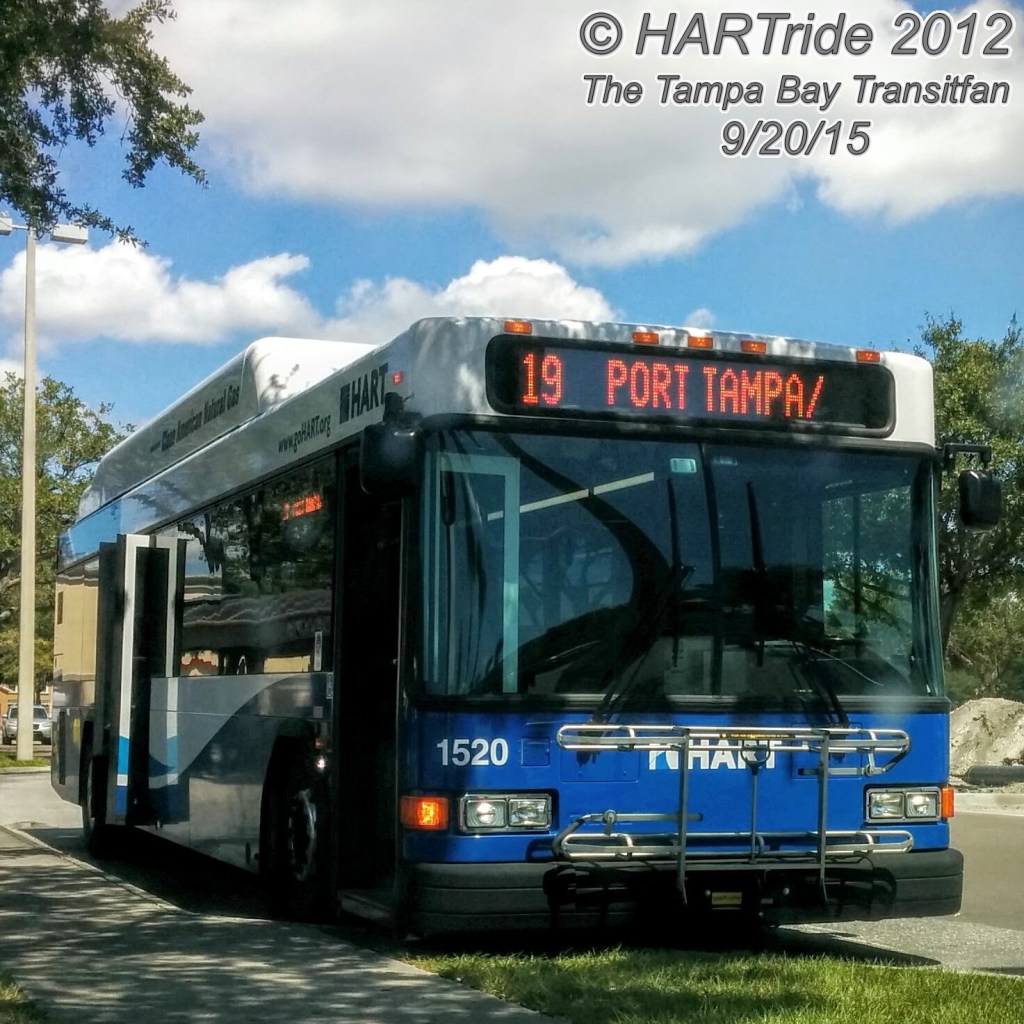
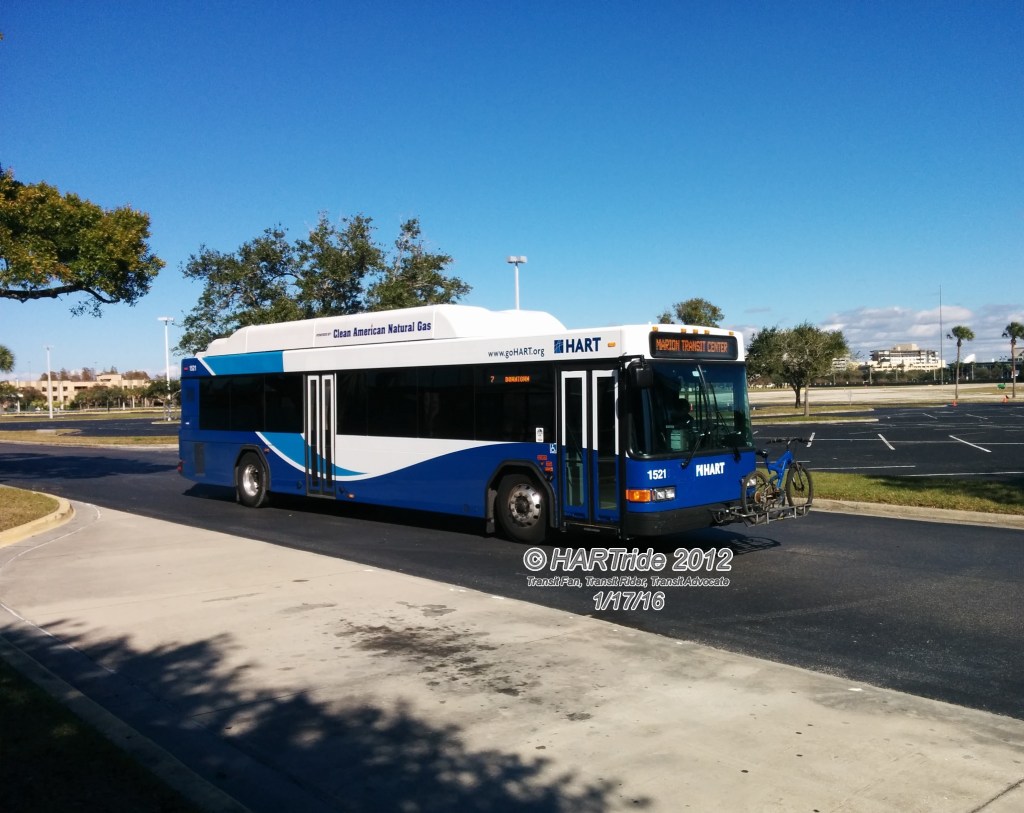
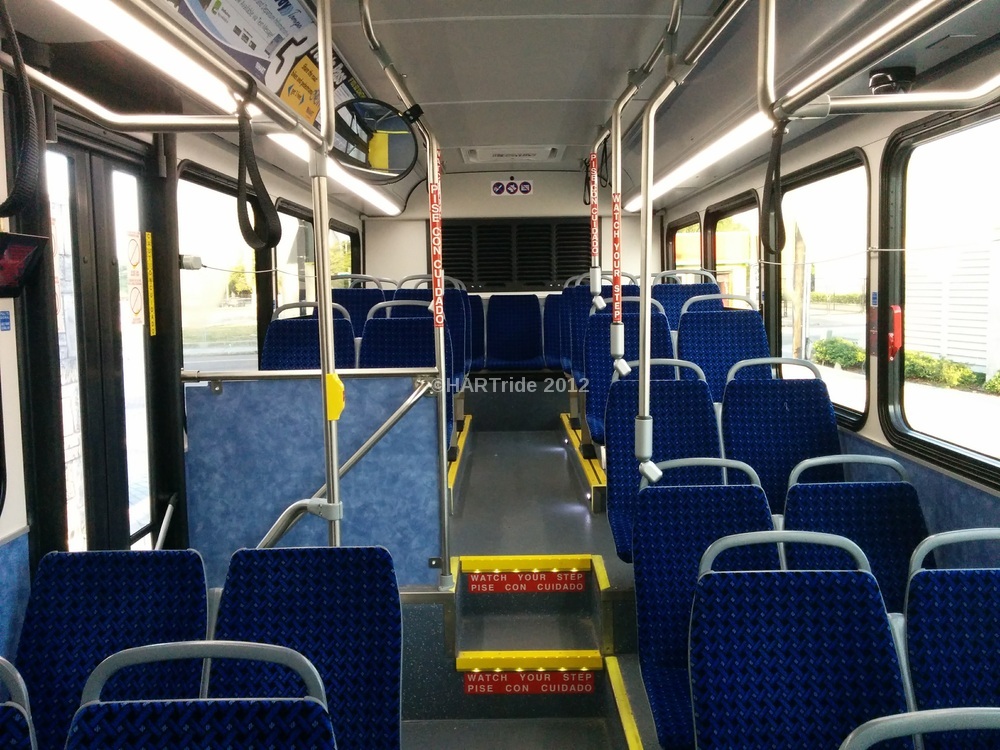
These buses are virtually identical to their predecessors from 2013, but of course the biggest difference is the CNG tank on the roof, along with corresponding systems. Interior-wise, these buses feature more ergonomic seating, which are now being featured in the newest Gillig buses, as well as newer competitor buses. Additionally, the ADA priority seating is now virtually identical to the 1999 and 2001 series Gilligs with a 4X3 parallel setup instead of a 2X2 setup seen in the 2013 buses.
On August 18, 2016, the 2016 fleet of thirteen buses began to hit the road. These buses are virtually identical to their 2015 counterparts, but with different seating utilized and some minor technological enhancements. In September of 2017, the first batch of the 2017 fleet entered revenue service – comprising of fifteen buses. The 2016 & 2017 orders are virtually identical to the 2015 order – with some technological advances & varying seat types. The 2019 order comprised of ten buses & the 2021 order comprised of sixteen buses. The 2100-series (2021) buses have a different CNG tank cover than the rest of the CNG-powered fleet.
# 1708 was retired due to severe accident damage sustained in 2020.
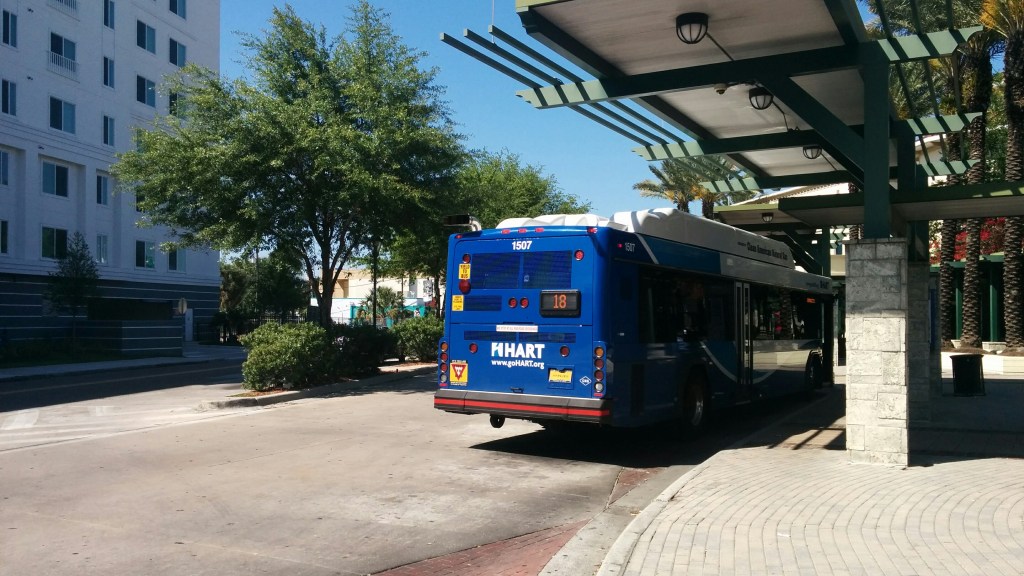
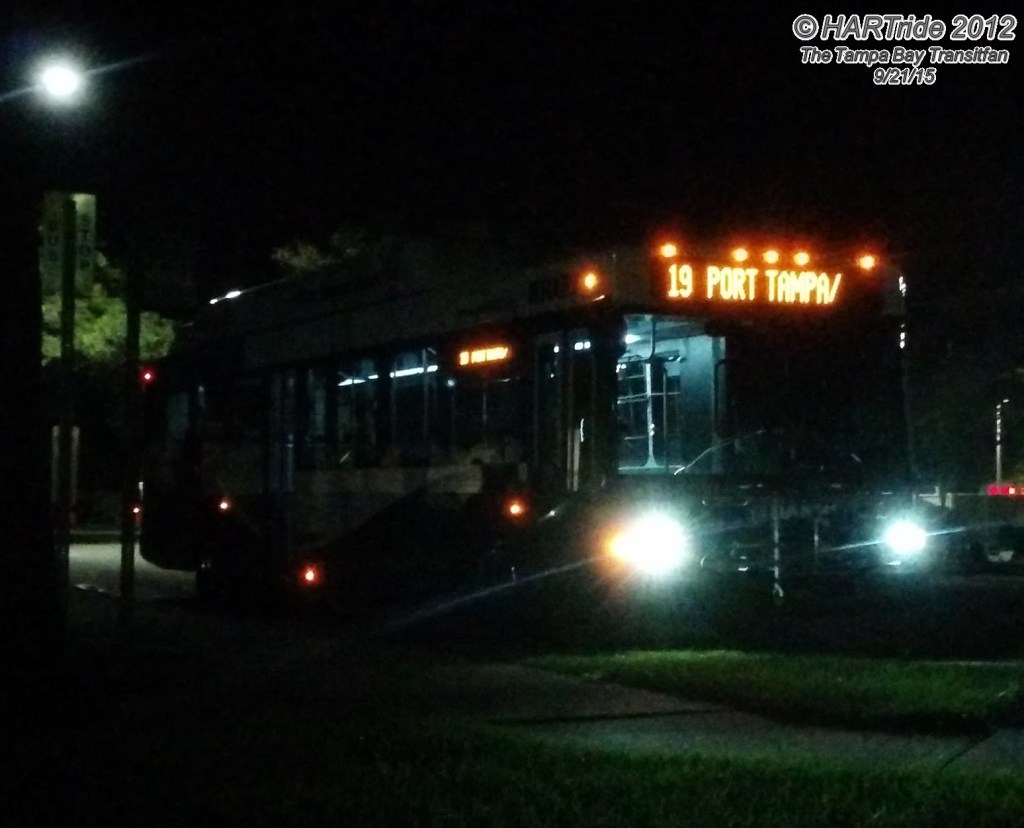
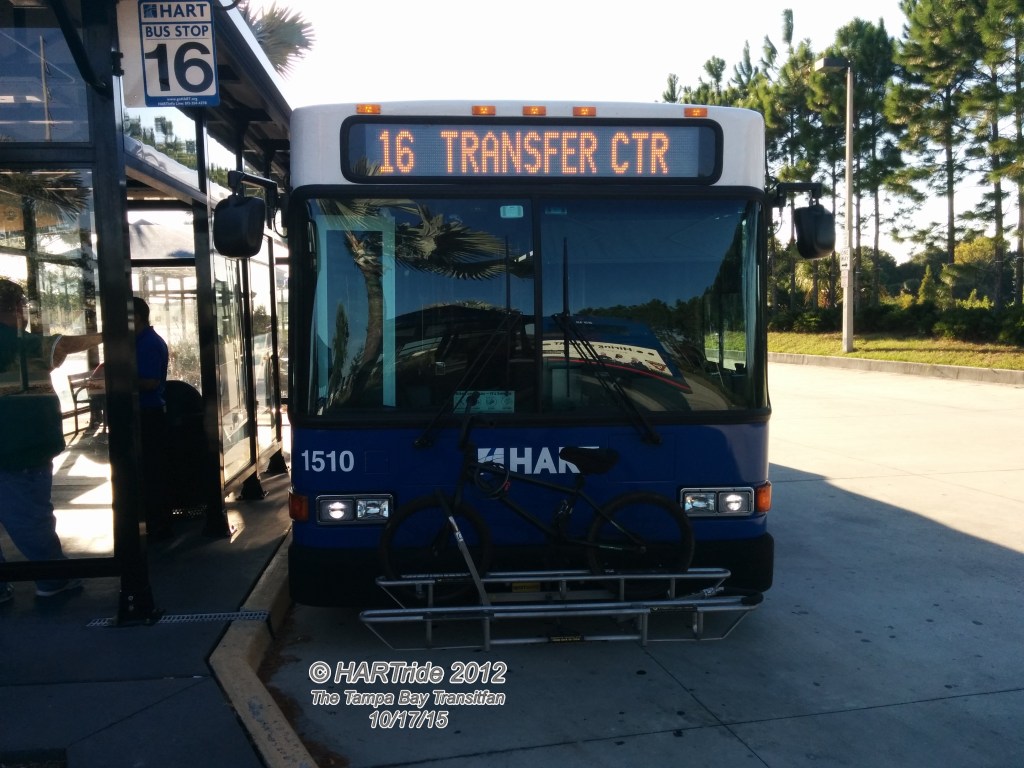
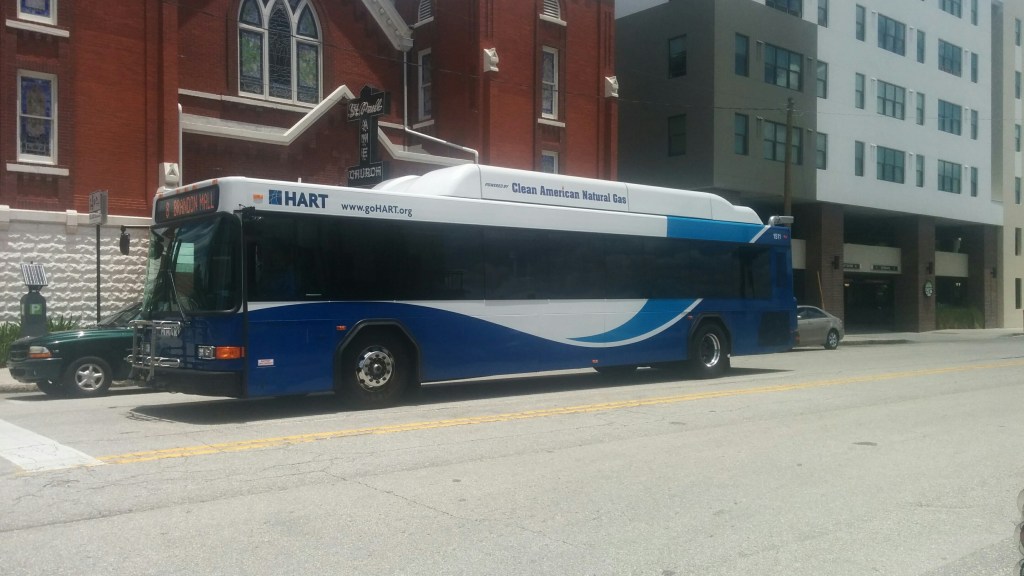
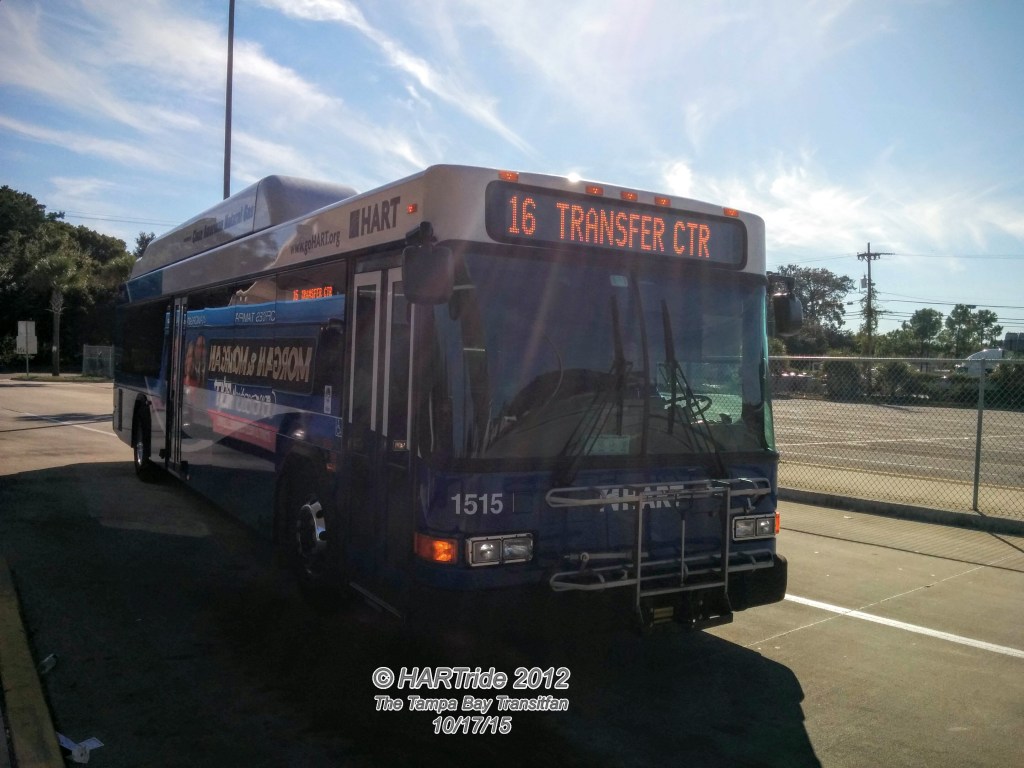
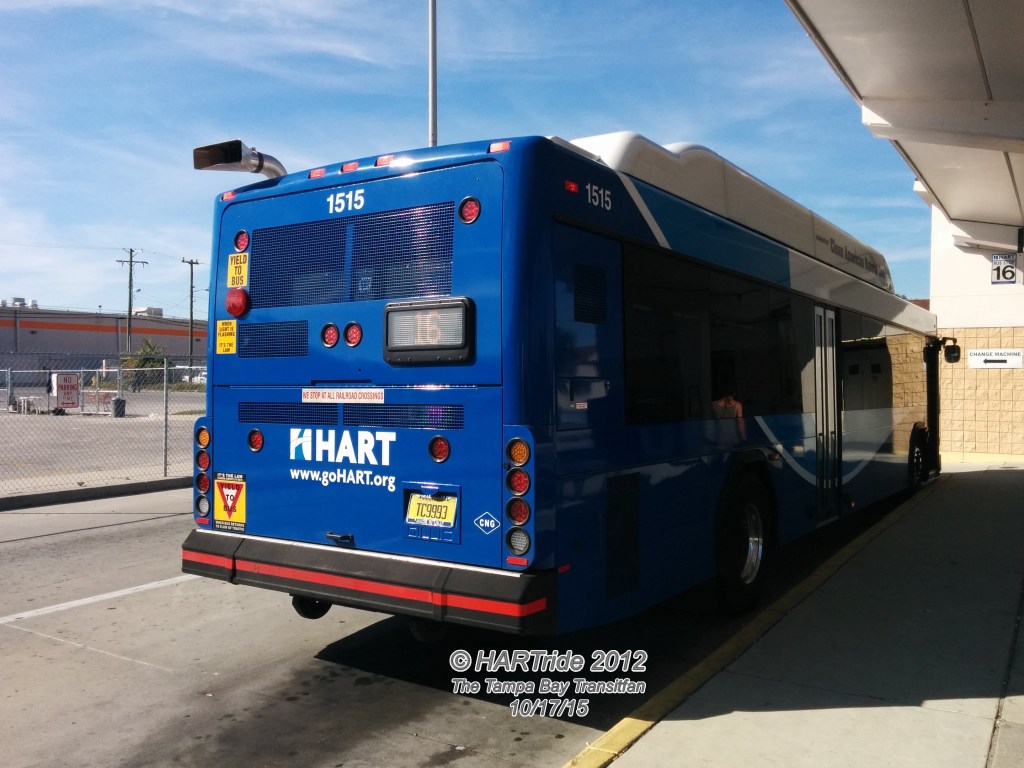
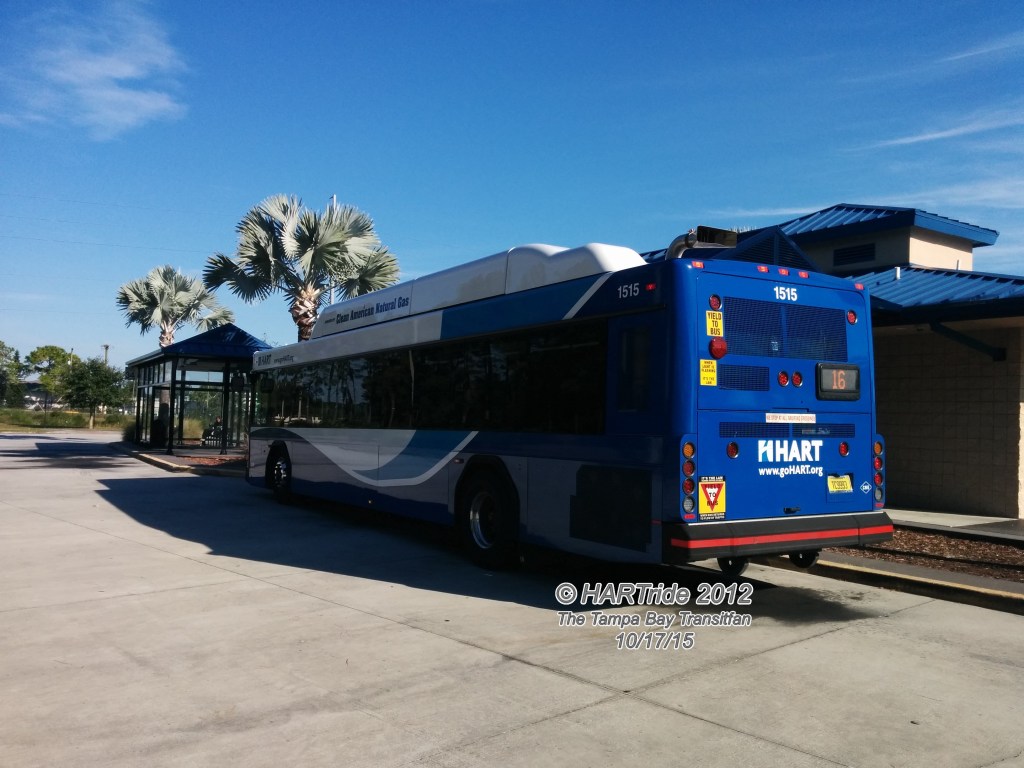
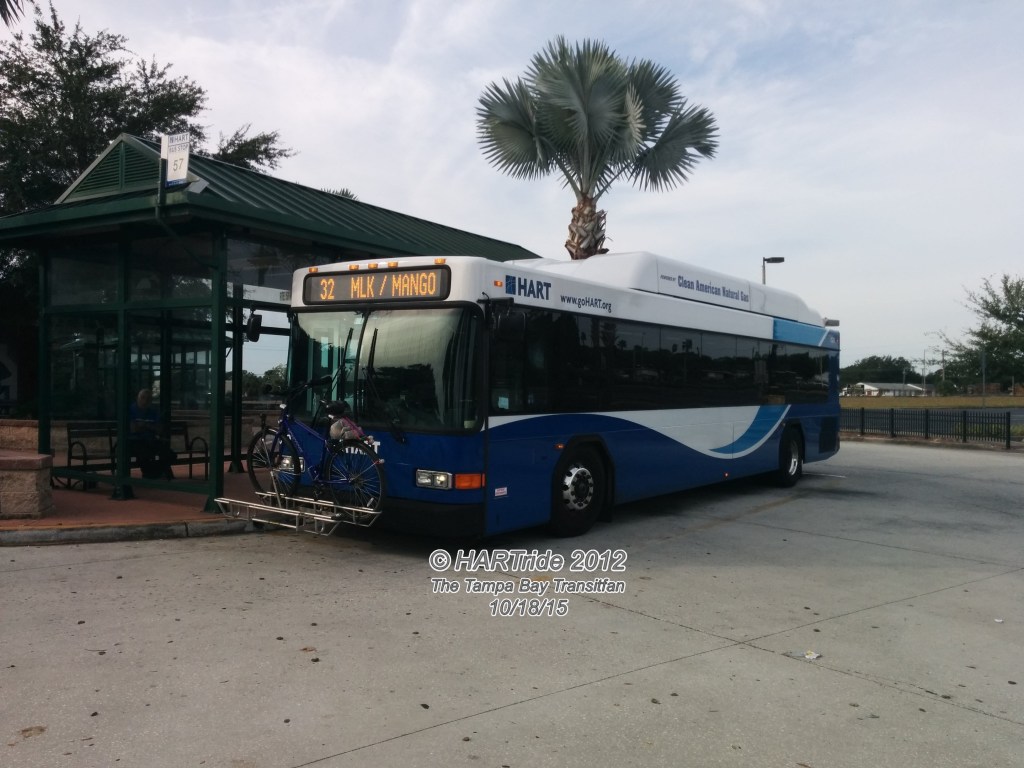
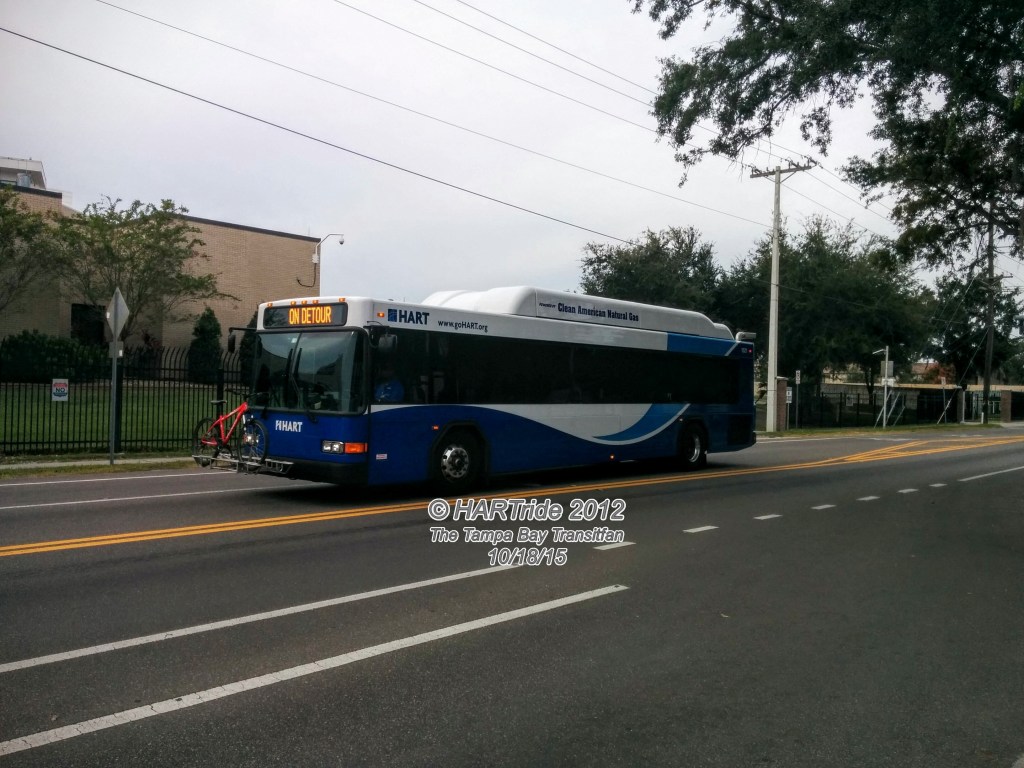
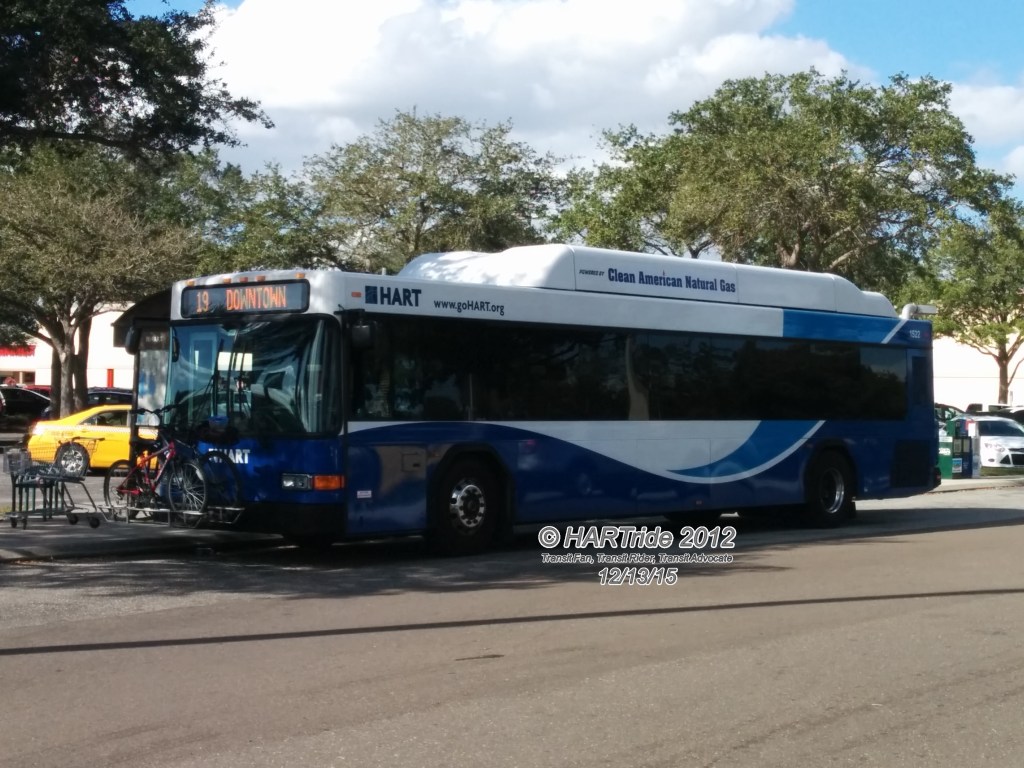
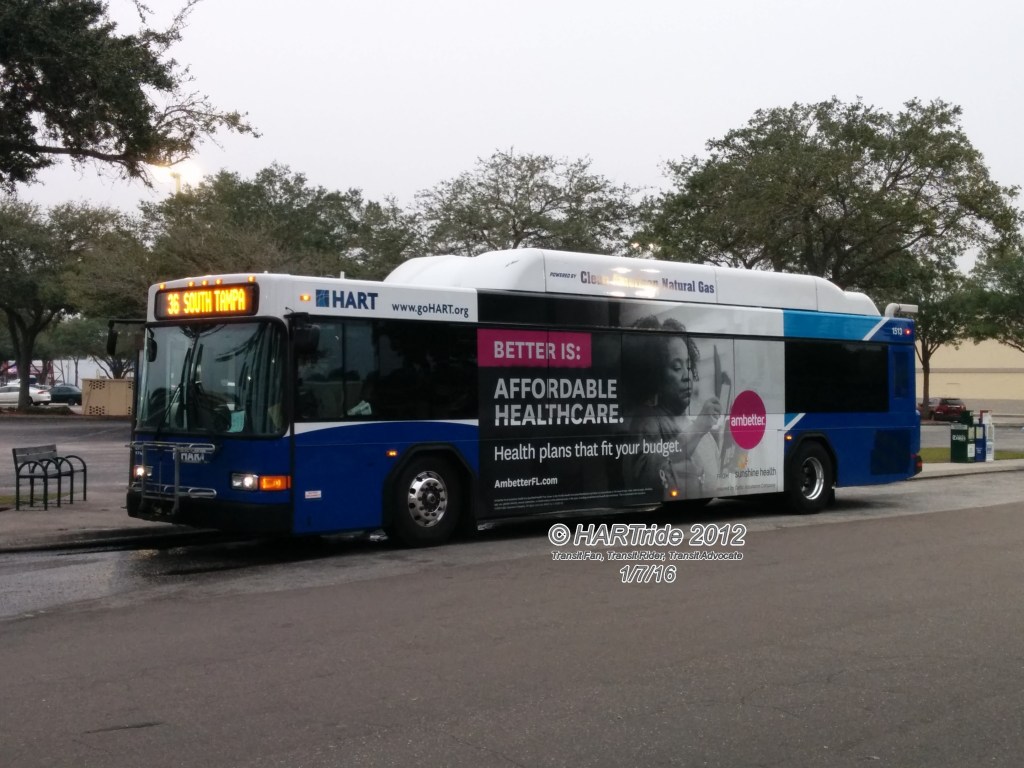
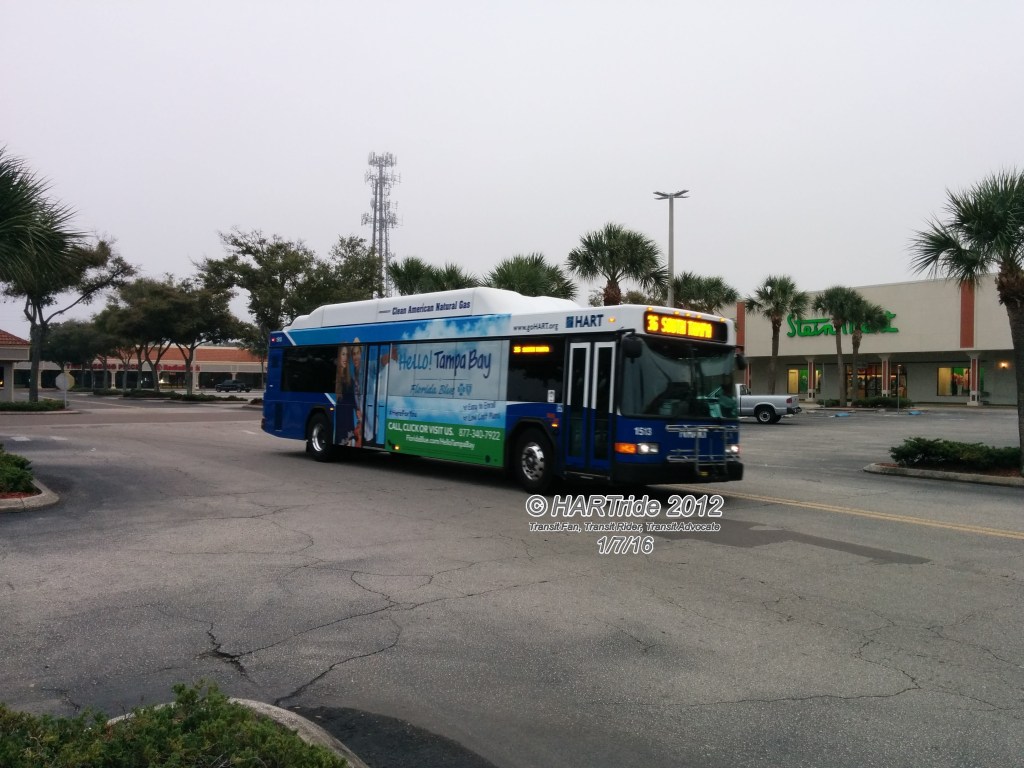
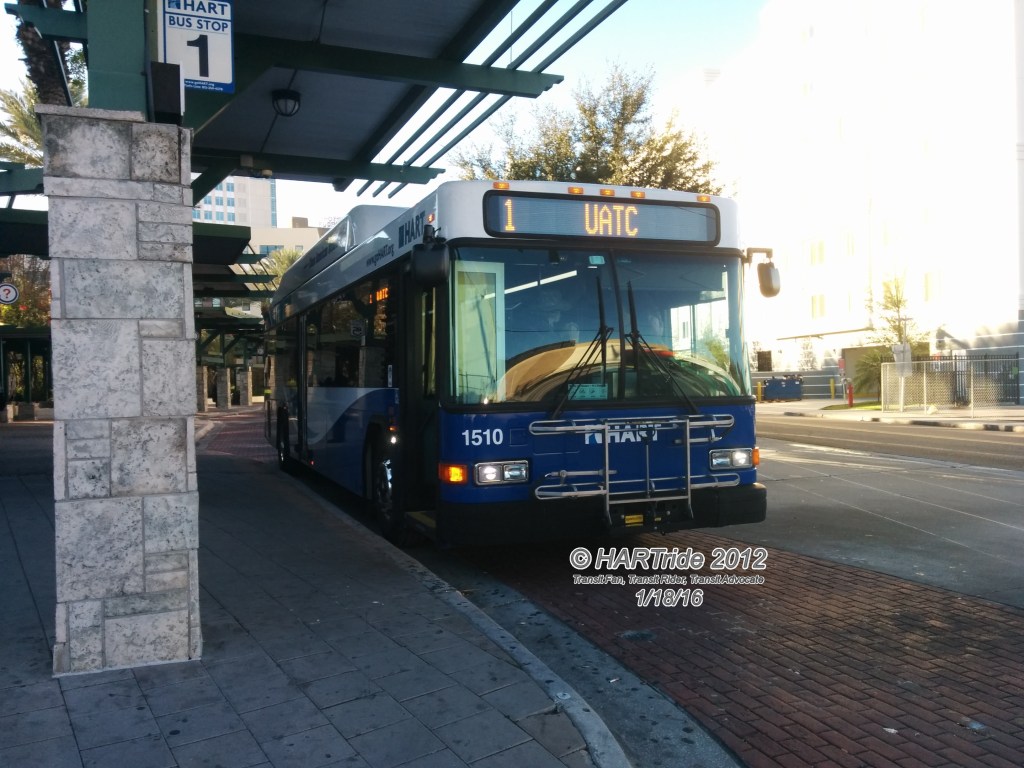
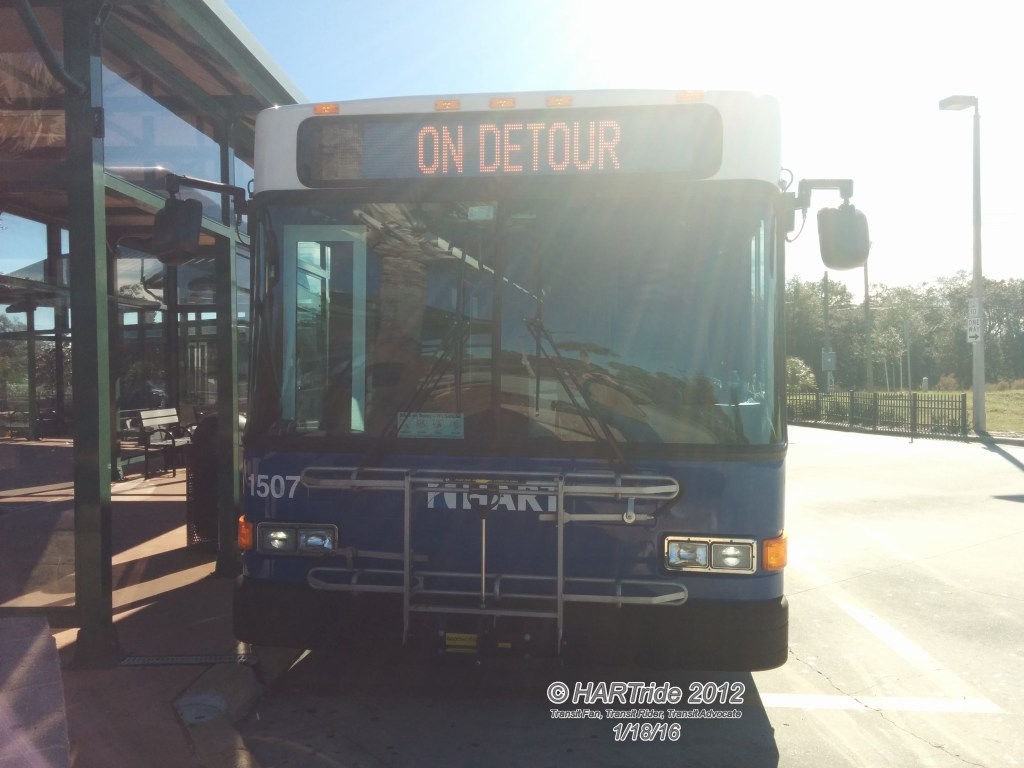
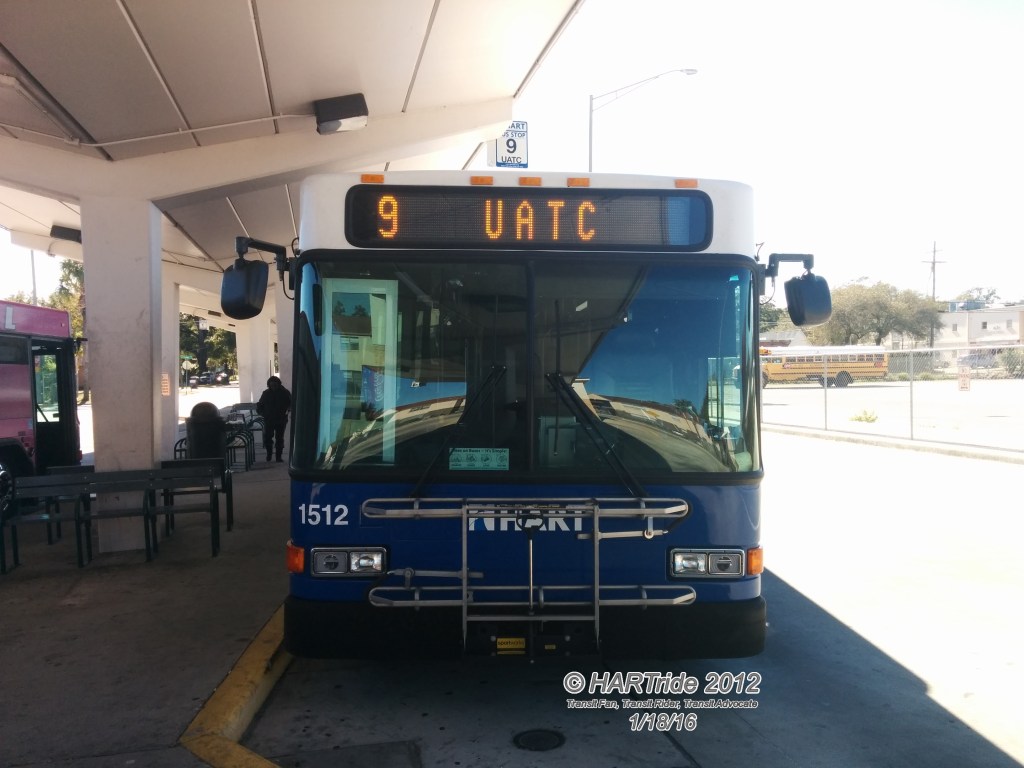
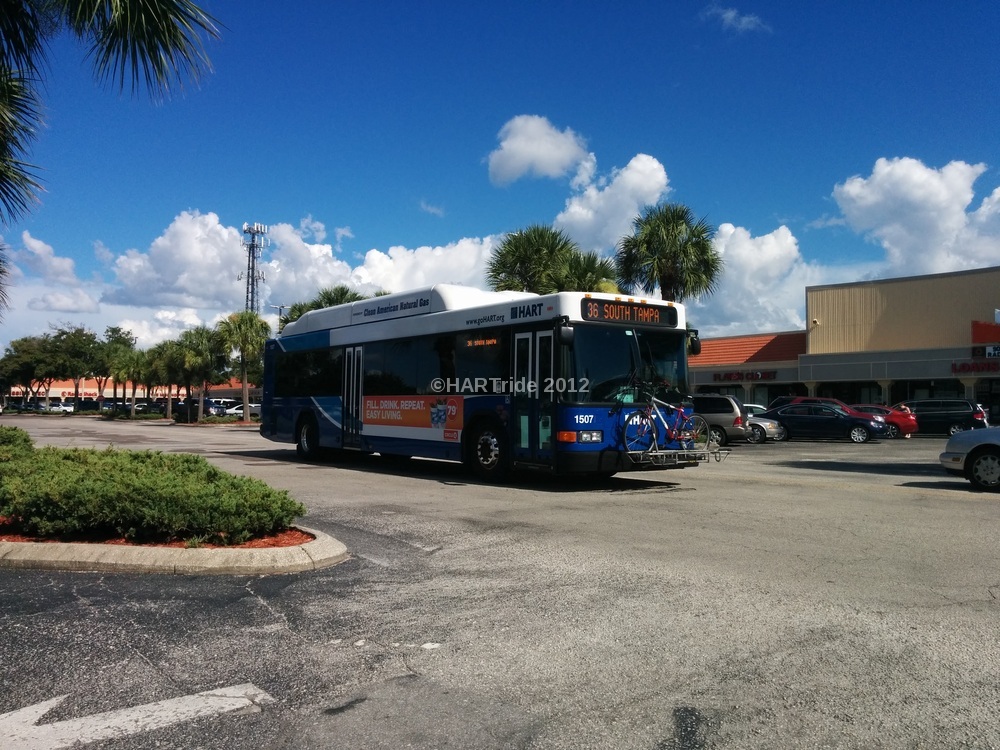
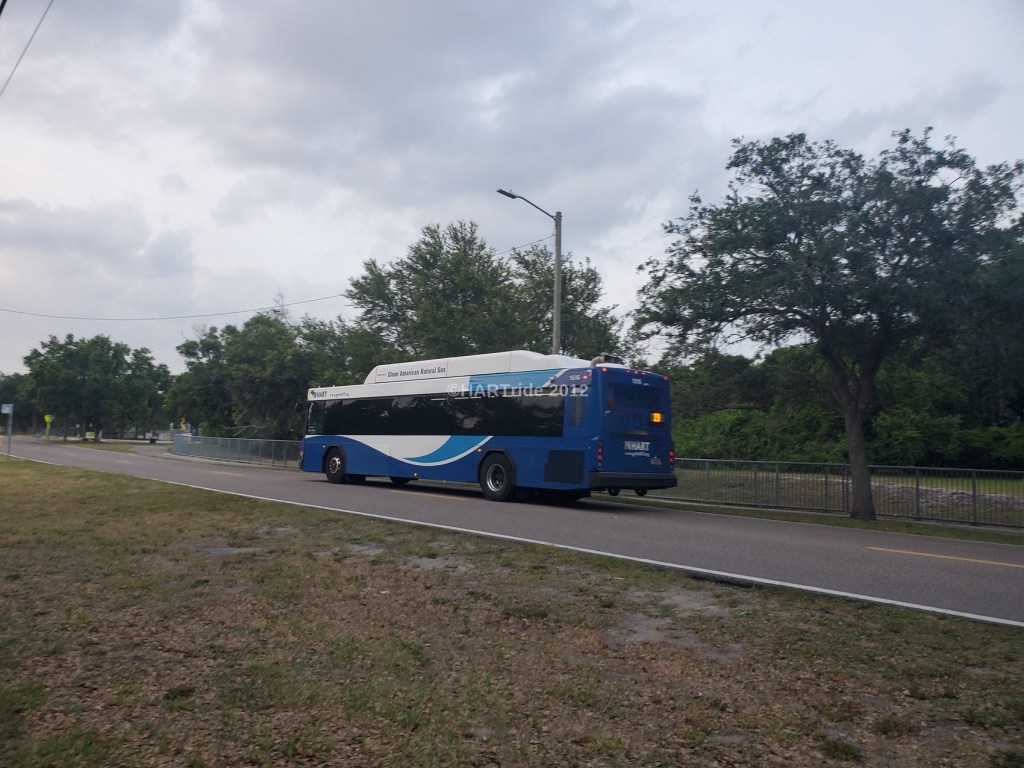
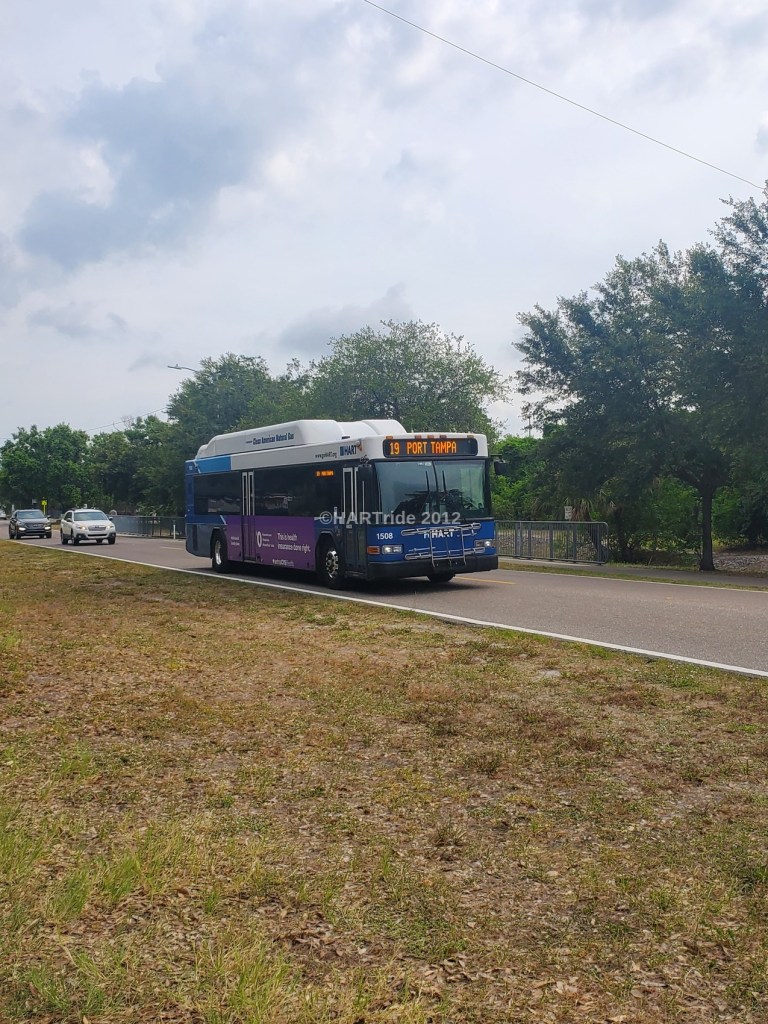
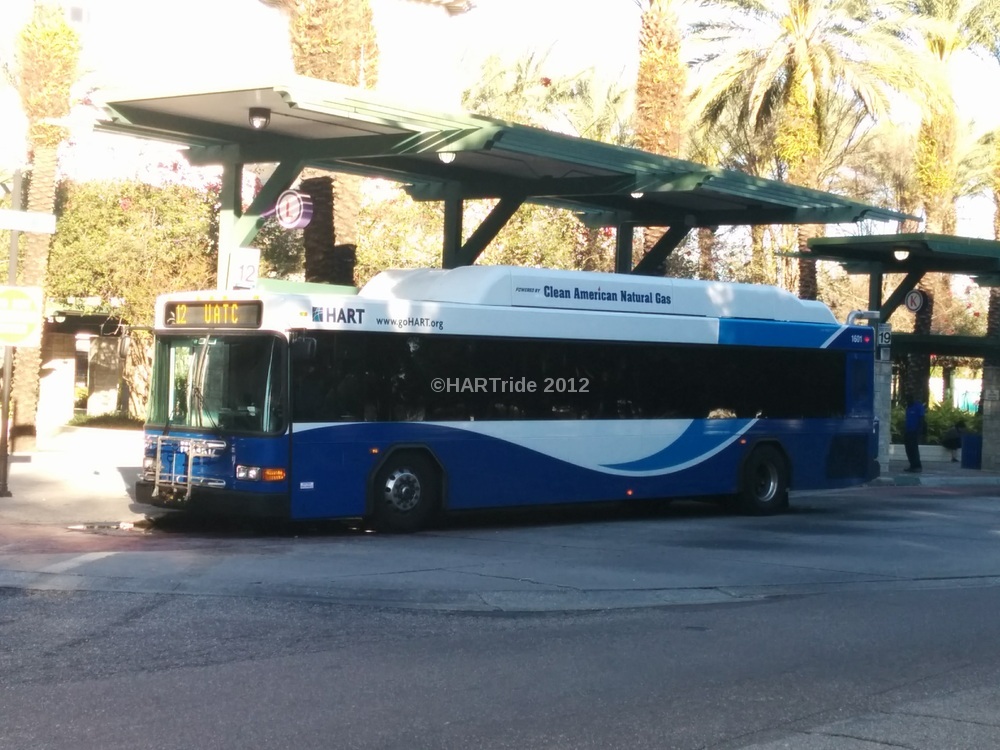
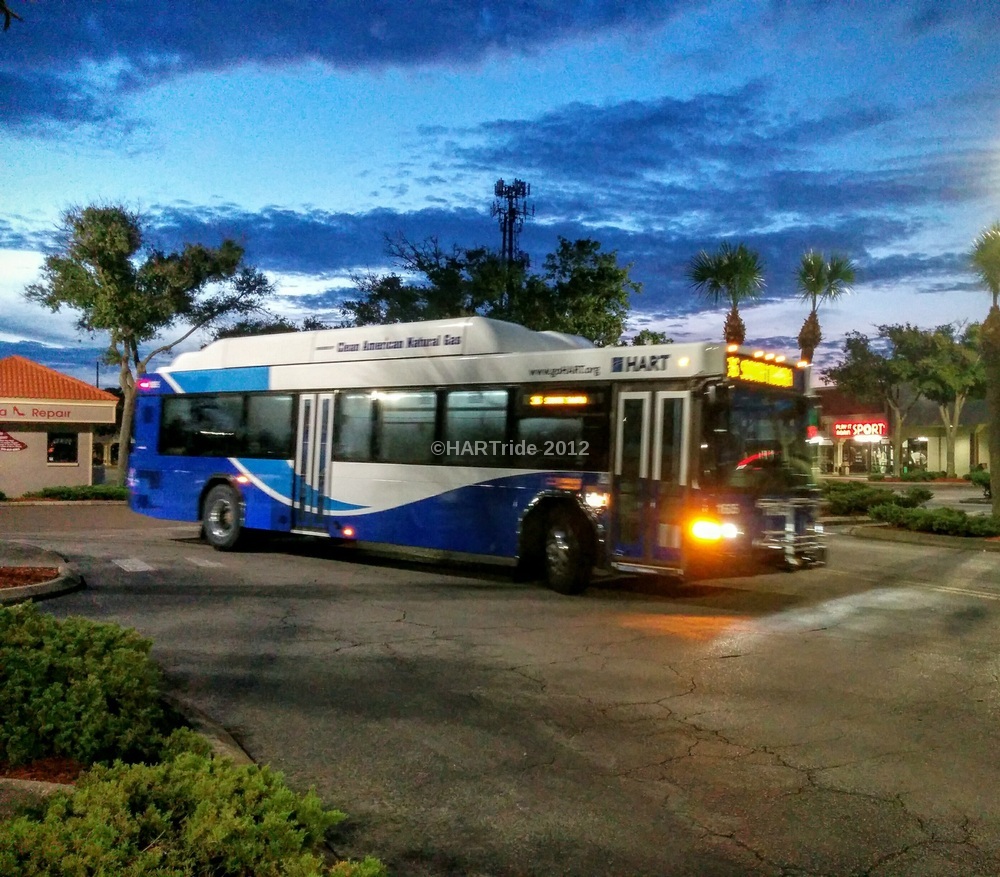
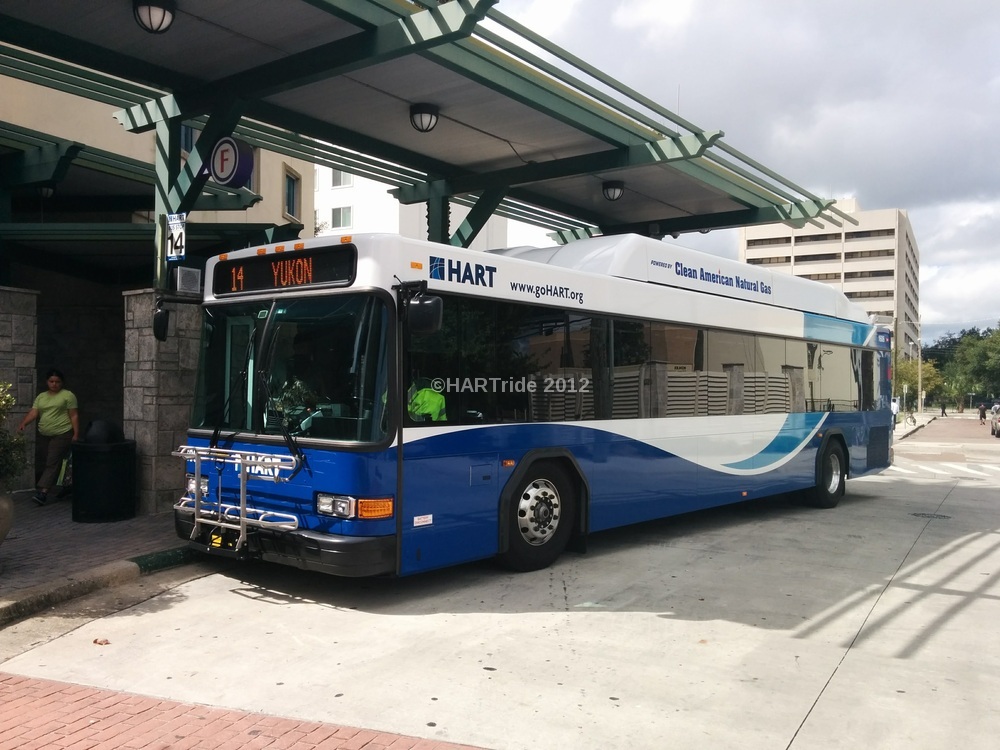
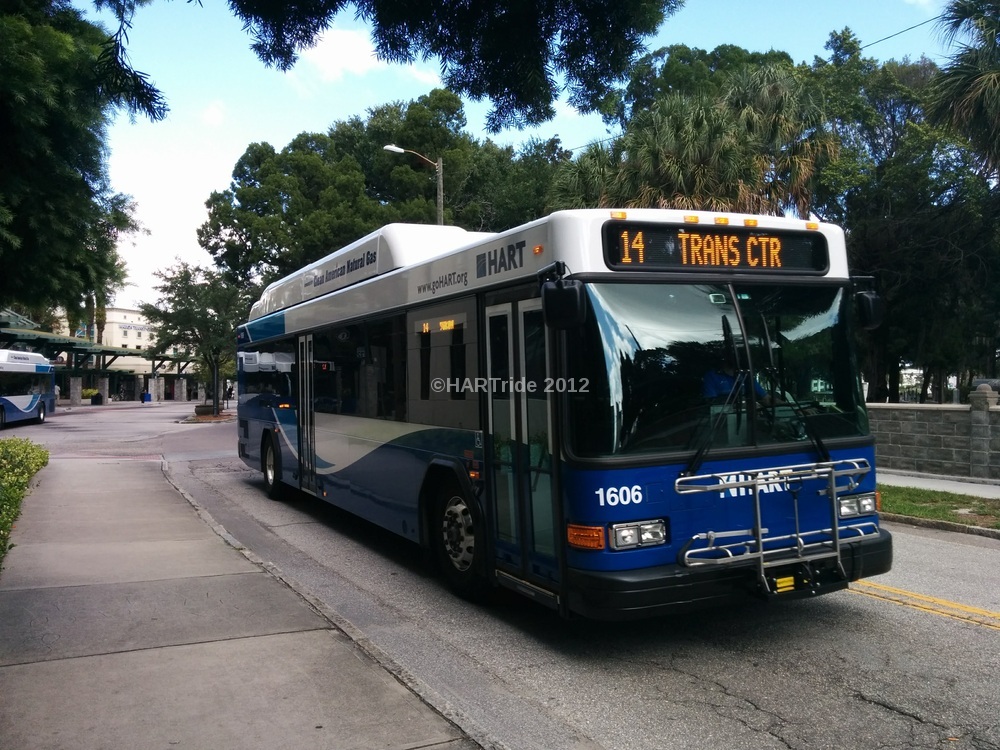
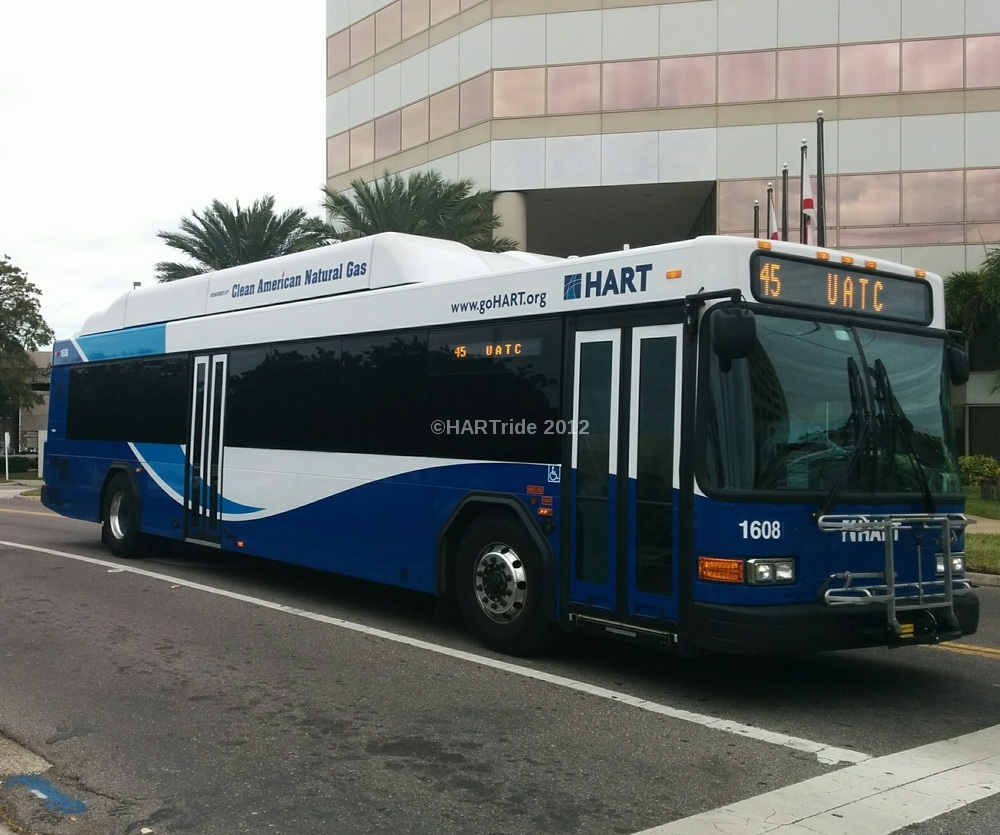
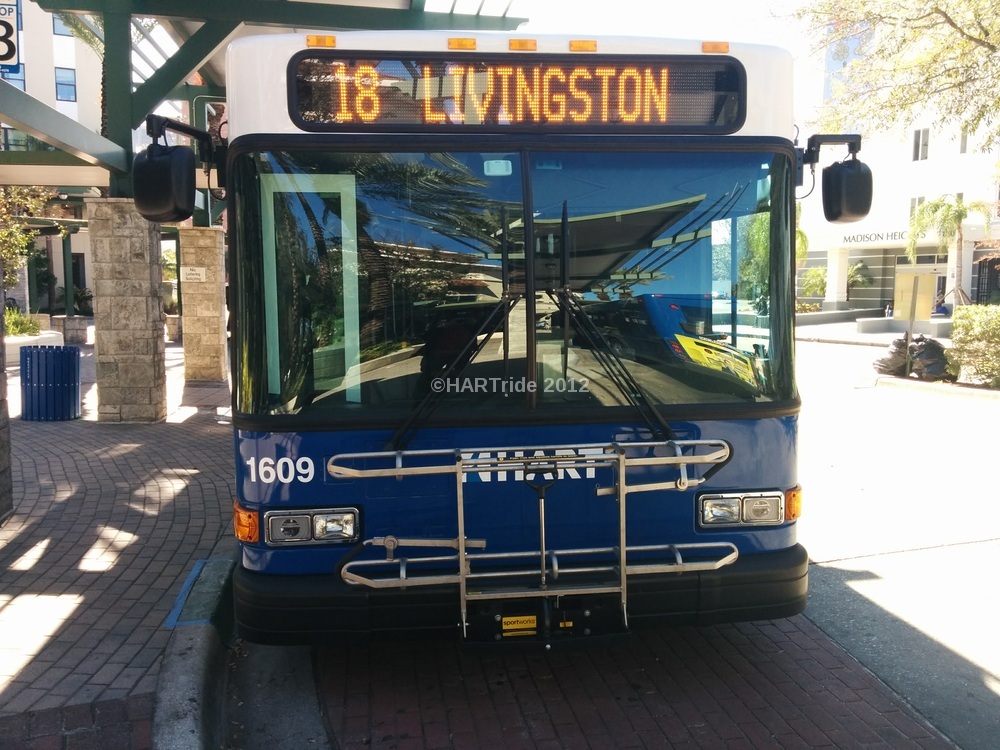
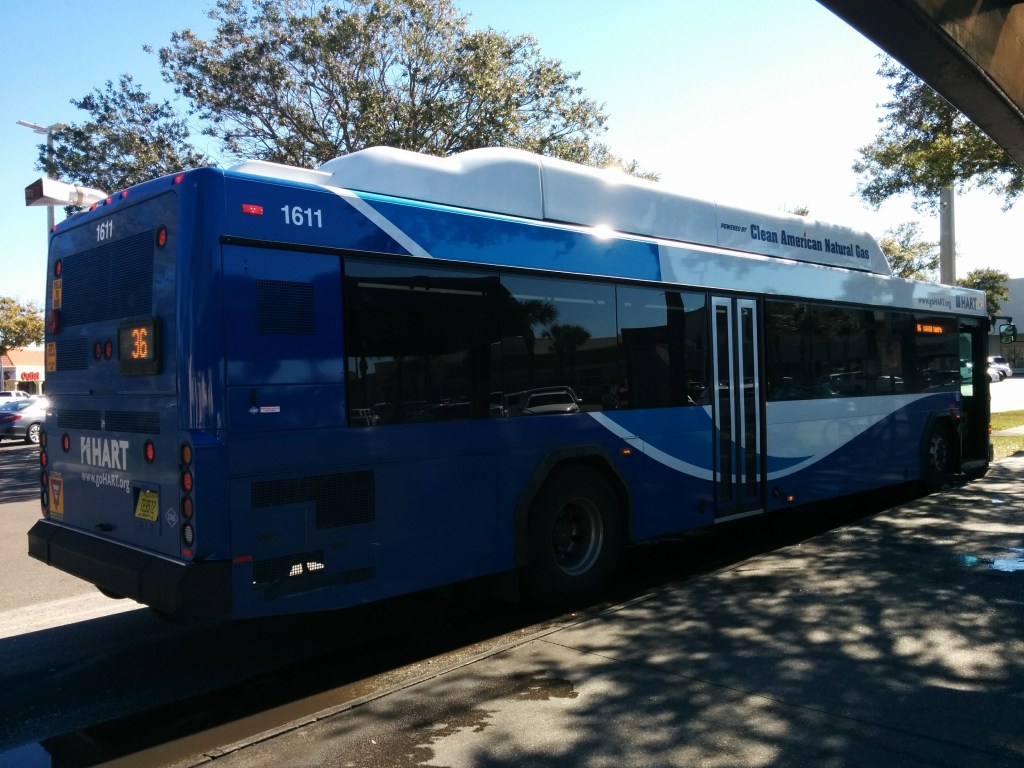
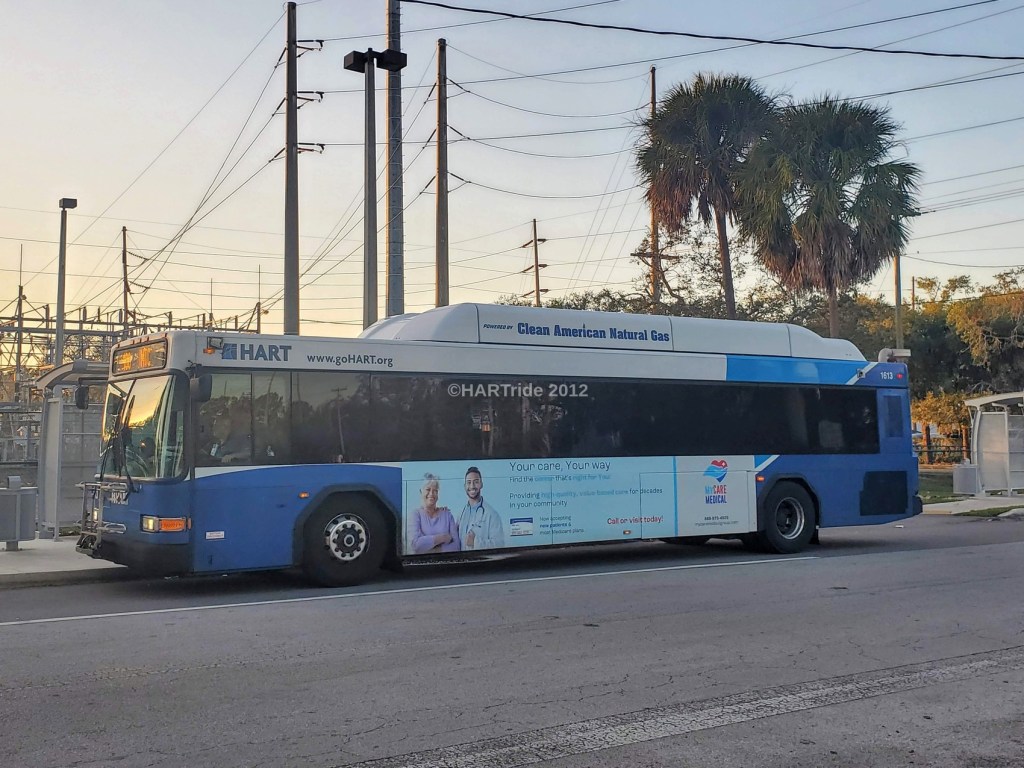
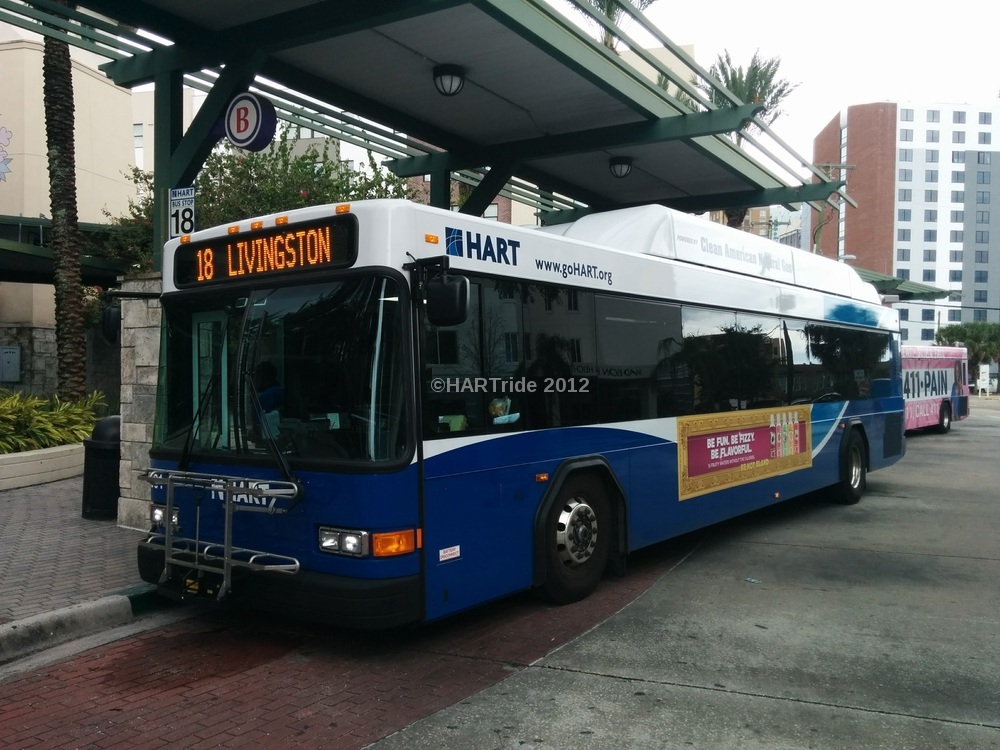
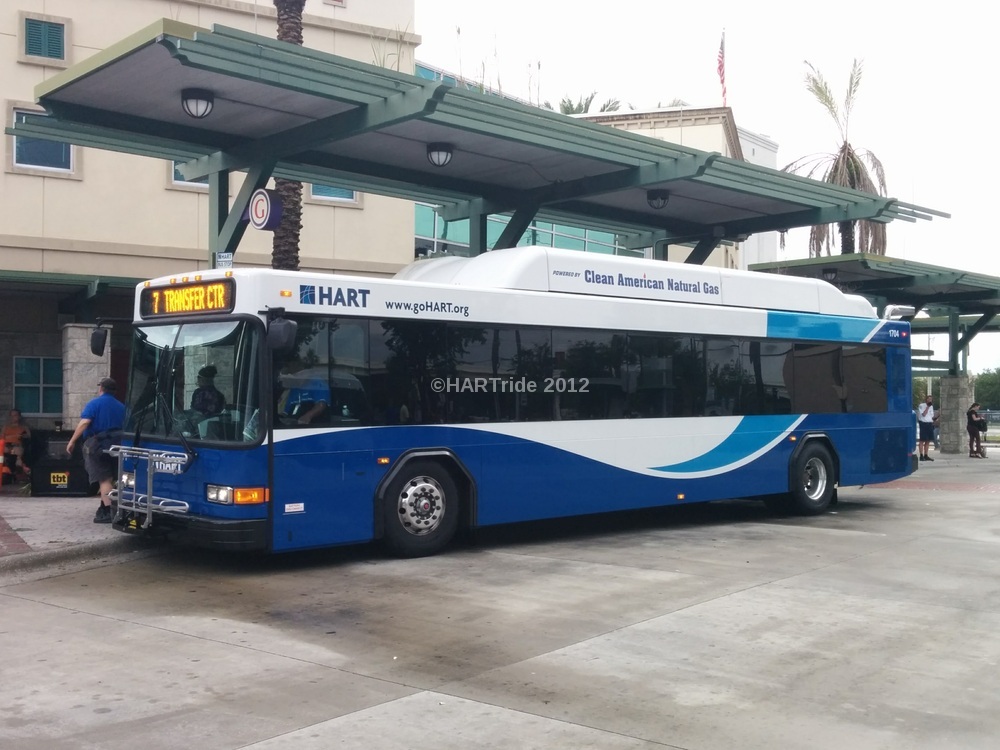
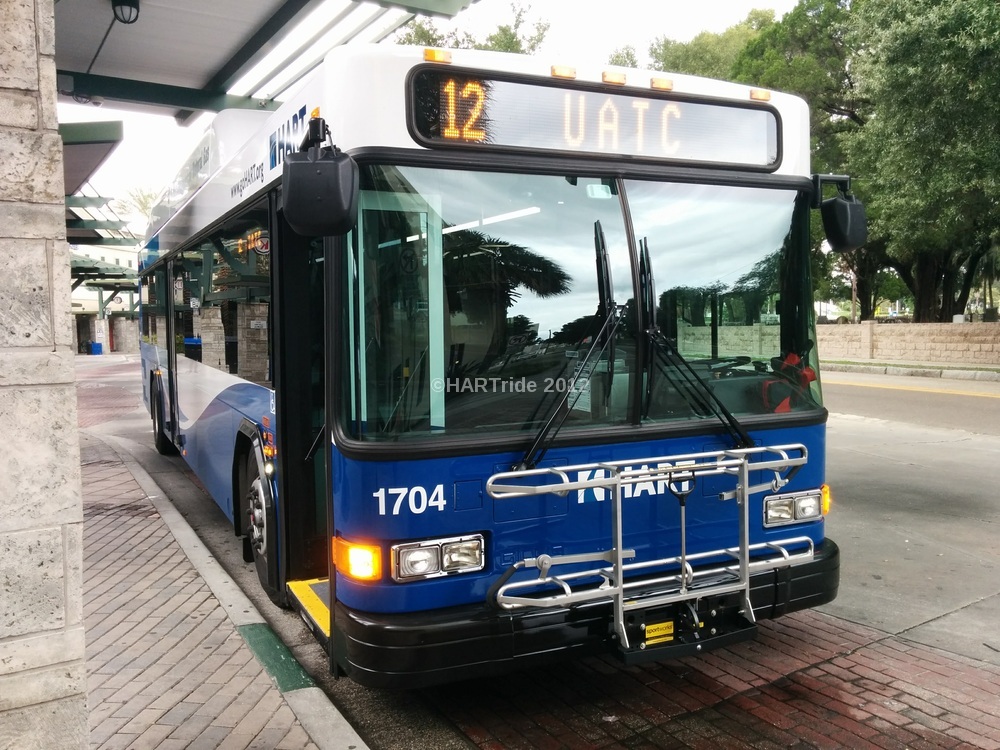
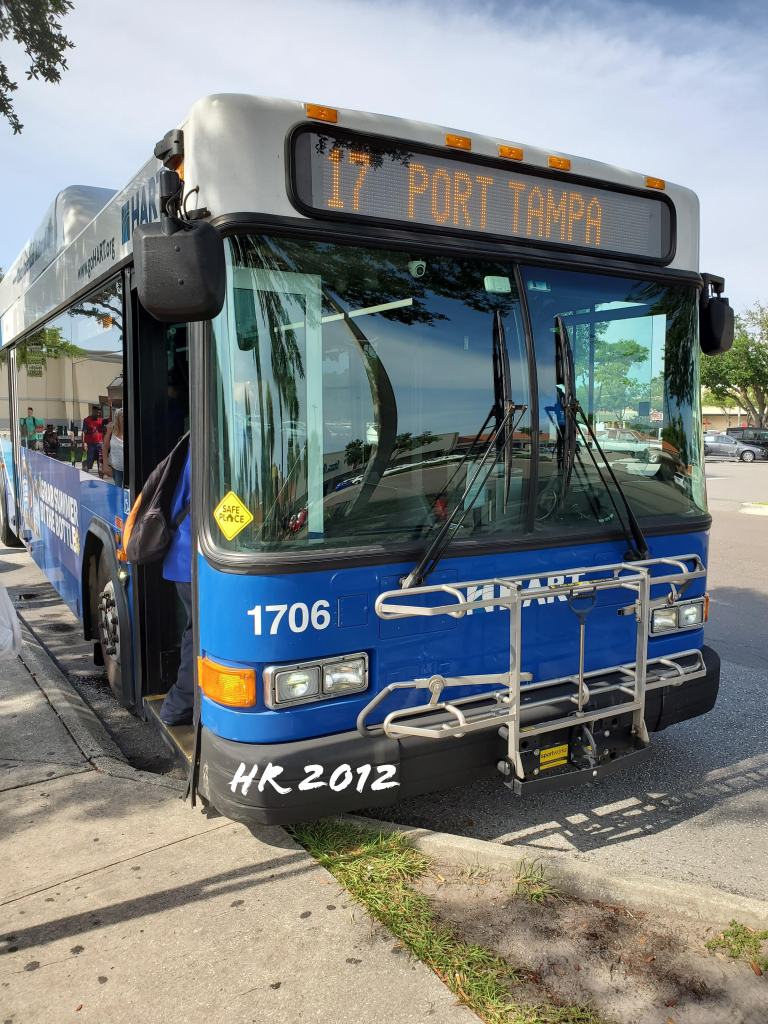
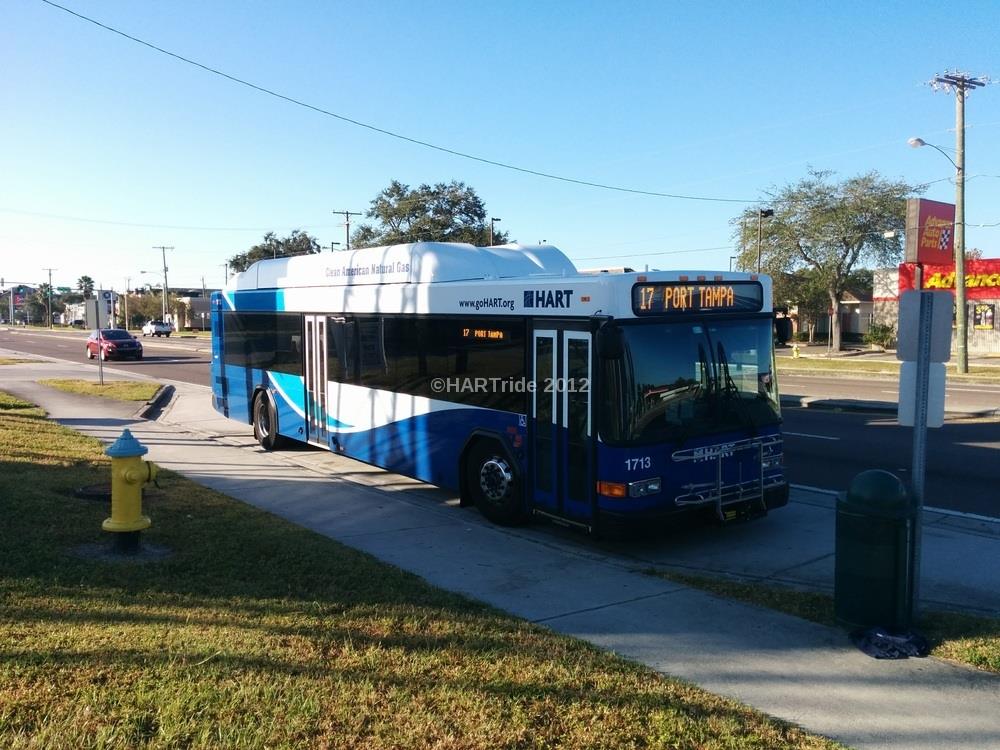
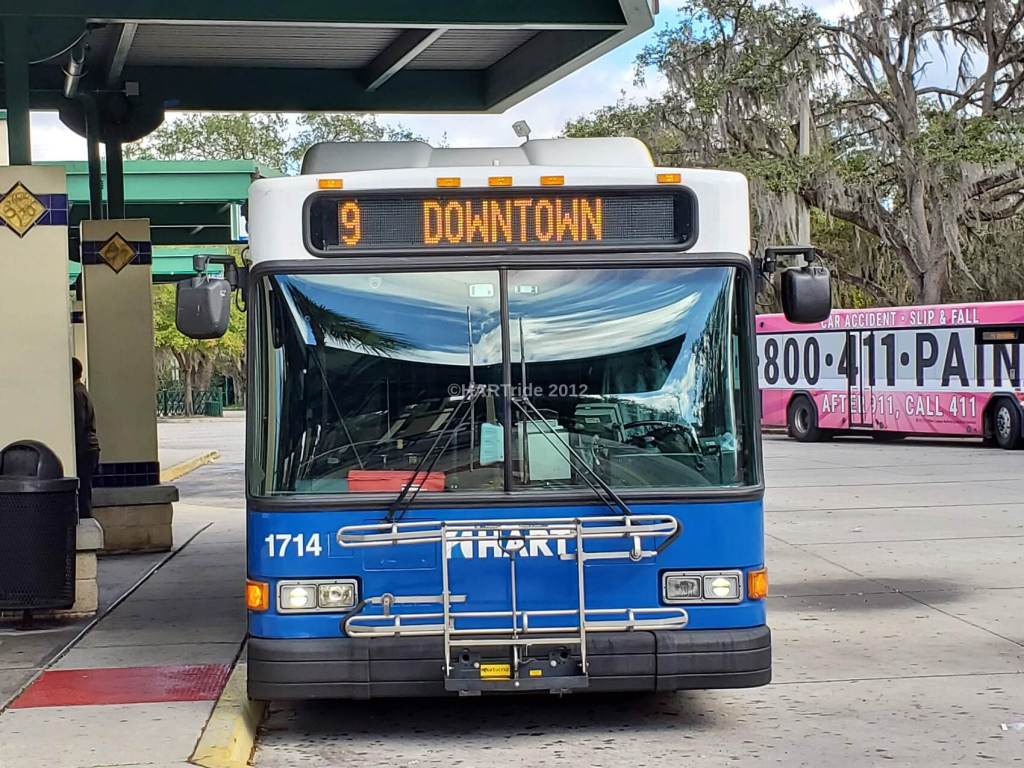
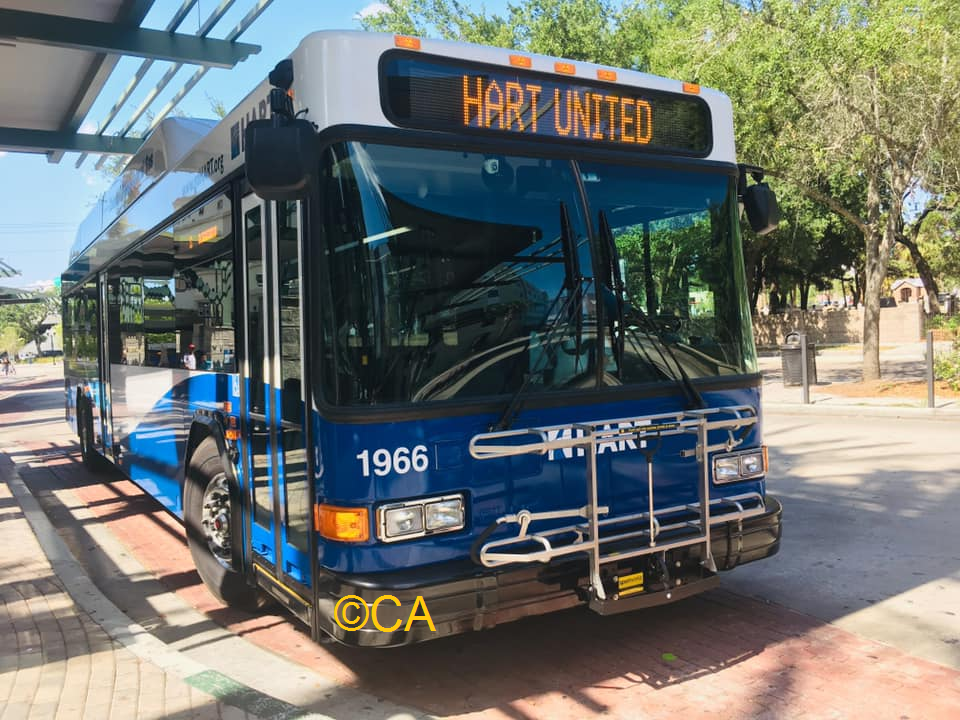
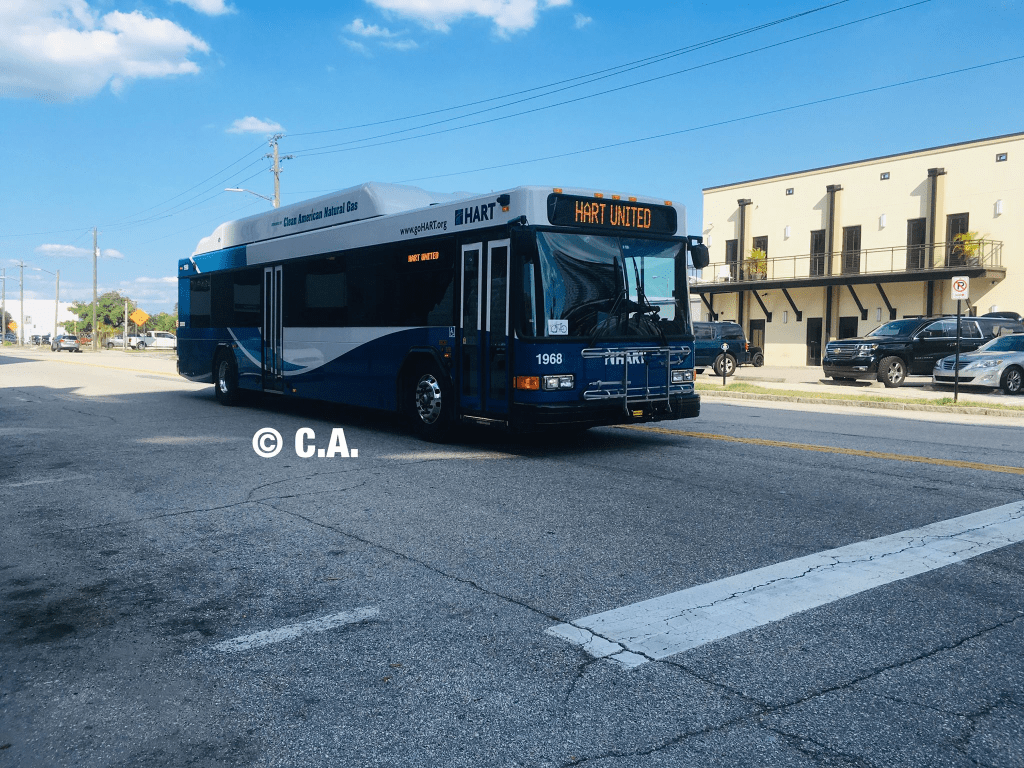
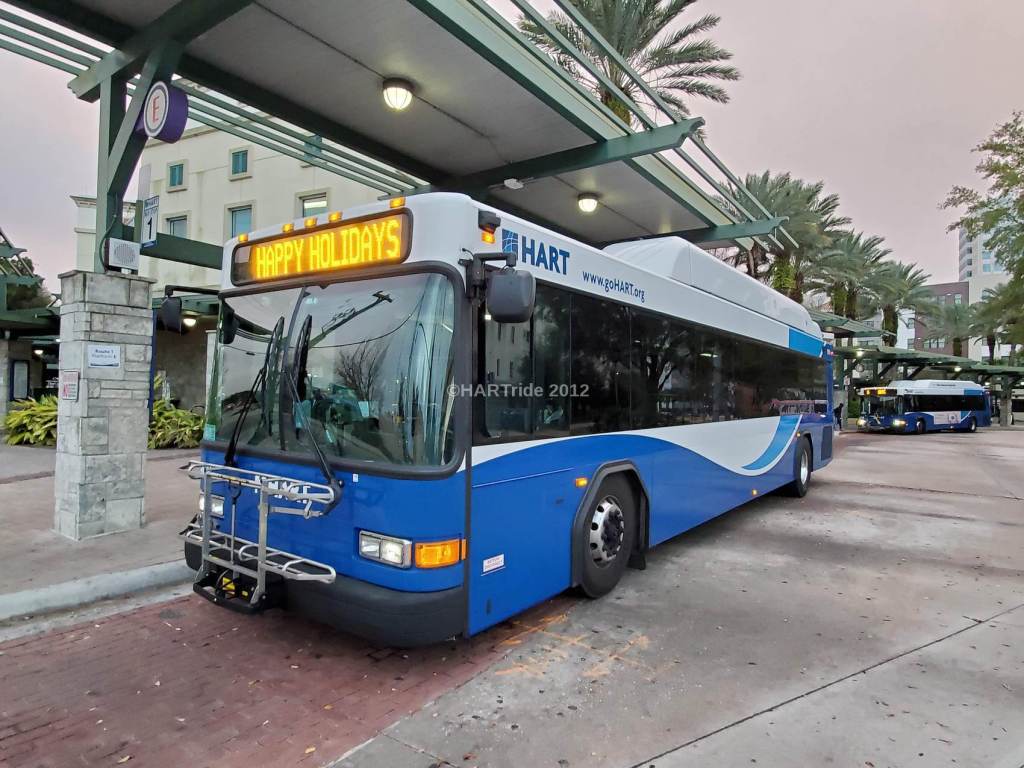
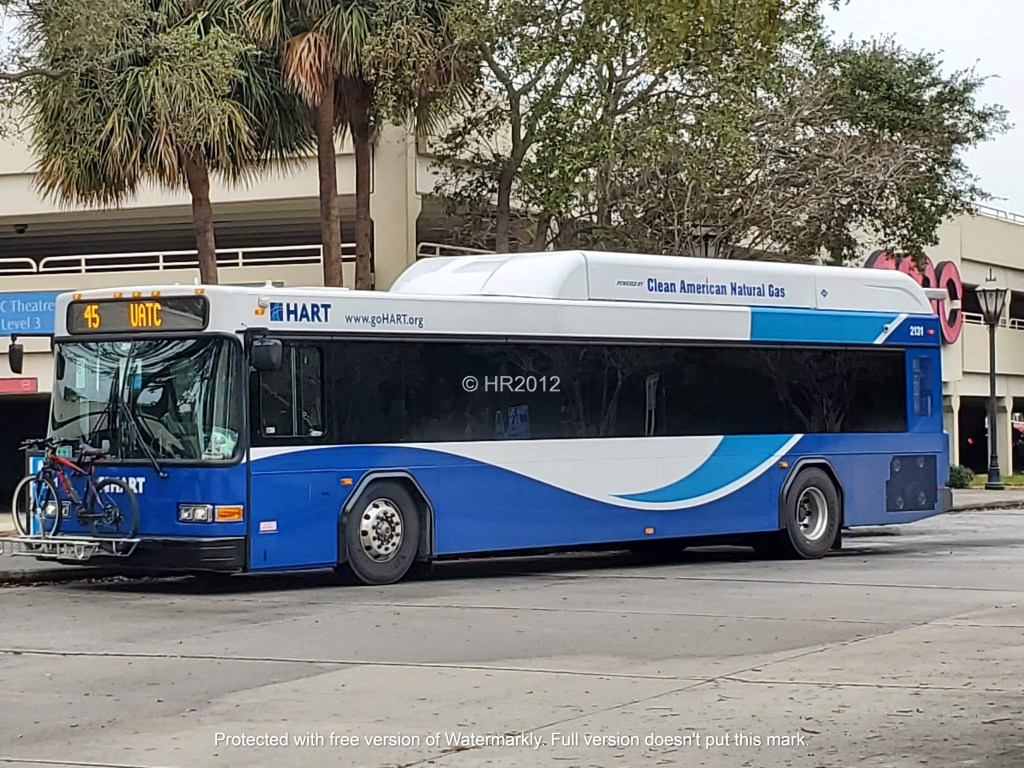
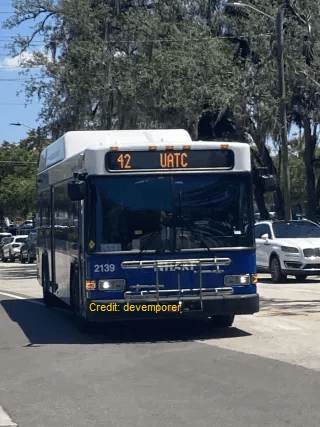
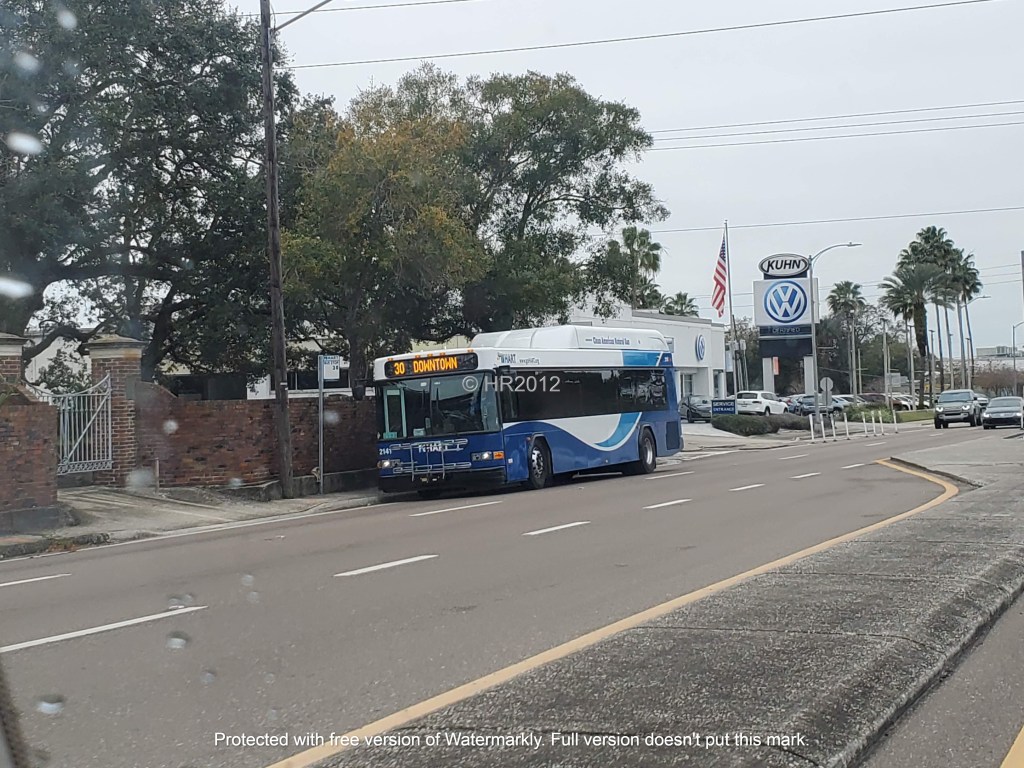
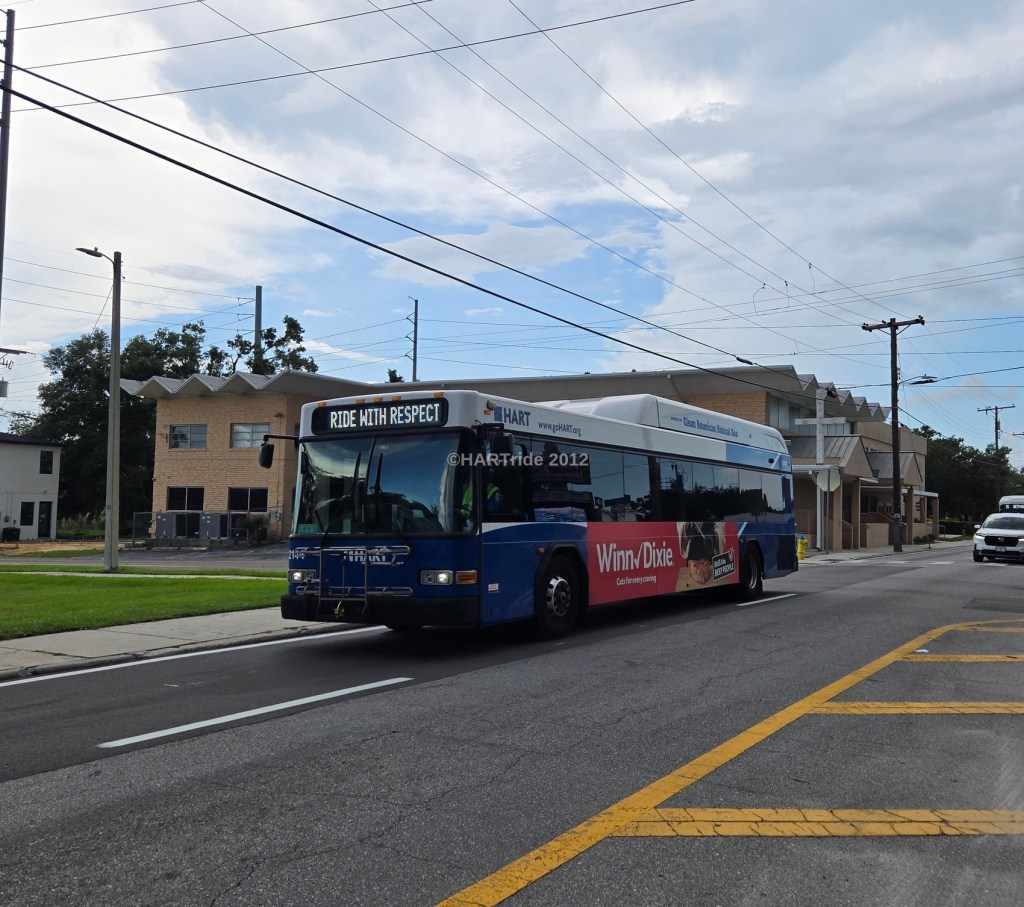
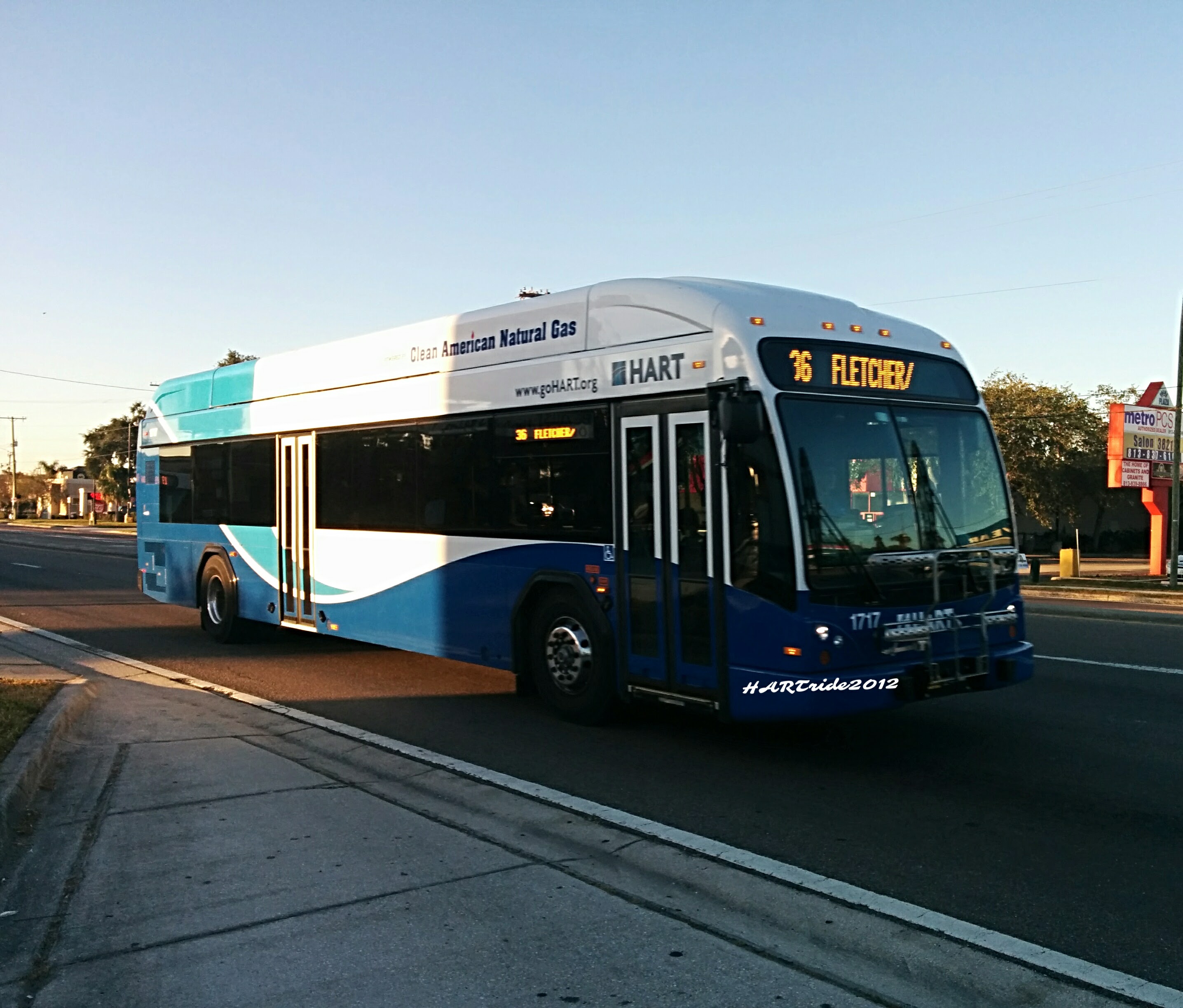
#1501 at the Marion Transit Center, preparing to run on Route 1.And later, #1501 stops into the Yukon Transfer Center.#1502 sits at HART’s operations center in Tampa, awaiting its CNG decals. Photo Credit: HART.The front of #1503.Interior of #1503. Notice the seats and seating layout?#1503 at the Marion Transit Center, Route 8.And later at Westshore Plaza.$1507 waits for its Route 18 run at the Marion Transit Center. Photo Credit: HARTride 2012. March, 2015.All shiny and new! Photo Credit: HARTride 2012. March, 2015.The front of #1507 with a bike just screaming, “can we please be best friends?” to the bus. Photo Credit: HARTride 2012. March, 2015.Unknown #1500 at Britton Plaza at night, running Route 19.#1510 at the Northwest Transfer Center. This was the other bus running on Route 16.Side angle of #1510.Front shot of #1510.After spending a weekend on Route 16, here’s #1510 on the 36, leaving Britton Plaza.#1511 makes its turn towards the Marion Transit Center. Photo Credit: HARTride 2012.#1515 roars into Yukon on the Route 16.Rear shot of #1515.Another angle of #1515 at the Northwest Transfer Center.#1520 at NetPark.Another angle of #1520.Same bus, different angle…Same bus, different angle…Same bus, different angle…#1514 on Route 19.Same bus, different angle…Same bus, different angle…Same bus, different angle…#1519 at NetPark.#1519 on Route 19 (The last two digits of the fleet number matches the route, lol)And she makes her turn onto Dale Mabry Hwy…#1520 at Britton Plaza#1517 going southbound on Route 36.#1521 at the UATC, preparing to travel on Route 6. Photo Credit: HARTride 2012. July, 2015.#1521 approaching the University Area Transit Center.And she makes her turn onto 27th St…#1521 pulls in shortly after.#1522 running down Morgan St in downtown Tampa.#1522 at Britton Plaza, Route 19.And she begins her exit out of the plaza…#1506 at Britton Plaza – Route 19. I took this photo at this angle to signify that both this bus and the Britton Plaza Publix store both have matching numbers. The Publix store number here is also 1506.Side angle of #1506.And off she goes!#1513 at Britton Plaza – Route 36.And off she goes!#1513 at the West Tampa Transfer Center.#1513 pulling out of the West Tampa Transfer Center.#1521 on layover.And there she goes…#1510 at Marion.#1507 basks in the sun before its run on Route 39.Same bus, different angle.#1512 at Yukon.Same bus, different angle.#1516 at the Northwest Transfer Center, Route 16.1511 on layover at Yukon Transfer Center, Route 39.1503 leaving Marion Transit Center, Route 12.1507 makes her exit from Britton Plaza on Route 36.# 1516.# 1508.1601 at Marion Transit Center, Route 12.1602 at Marion Transit Center, Route 21603 at Marion Transit Center, Route 2.1605 pulling away from the Britton Plaza shelter on Route 36.1605 on layover at Marion Transit Center.1606 on layover at Marion Transit Center, Route 14.1606 pulls away from Marion Transit Center.And there she goes!Interior of 1607.1608 leaving WestShore Plaza, Route 45.1609 on layover at Marion Transit Center, Route 181611 at Britton Plaza, Route 36.Same bus, different angle.Same bus, different angle.1612 on Route 12.1613 on layover at Marion Transit Center.# 1613 at the U.A.T.C.# 1613 in South Tampa.1701 at Marion Transit Center, Route 18.And later, she winds up at Britton Plaza, Route 17.1702 at Marion Transit Center, Route 1.# 1703 at Northwest Transfer Center.Different angle.1704 at Marion Transit Center, Route 7.And later, she winds up on the 12…# 1705 at Britton Plaza.# 1706 at Britton Plaza.1707 pulls into Britton Plaza, Route 19.1709 at Northwest Transfer Center.# 1710 at the U.A.T.C.# 1711 at Britton Plaza.Different angle.# 1712. Credit: Carlos A.# 1713 at Britton Plaza.# 1714 at the U.A.T.C.Rear of # 1714 at the U.A.T.C.. Credit: devemporer.# 1714 in South Tampa.# 1715 at twilight at the TPA Airport Bus Hub. Credit: Carlos A.# 1512 & 1701 at the TPA Airport Bus Hub. Credit: Pink Railfan.# 1960 at Britton Plaza.Rear angle.# 1961 at the TPA Airport Bus Hub.# 1962 at the M.T.C. Credit: Carlos A.Different angle. Credit: Carlos A.Different angle. Credit: Carlos A.# 1963 at the Northwest Transfer Center. Credit: Carlos A.And nearby is # 1964 on layover. Credit: Carlos A.# 1965 on layover.# 1966 at the M.T.C. Credit: Carlos A.# 1966 at the U.A.T.C.. Credit: devemporer.# 1966 in South Tampa.# 1967 pulls into the TPA Airport Bus Hub. Credit: Carlos A.# 1968. Credit: Carlos A.# 1969 is at the M.T.C. ready to greet everyone for the winter holidays!# 2131 at WestShore Plaza.# 2131 at the U.A.T.C.. Credit: devemporer.# 2133 on layover.# 2136 on layover.# 2138 at Britton Plaza.# 2139 at the U.A.T.C.. Credit: devemporer.# 2141.# 2143 on layover.# 2144 on Route 5.# 2145 departs from Britton Plaza. #’s 2144 & 45 are equipped with white text headsigns instead of amber.
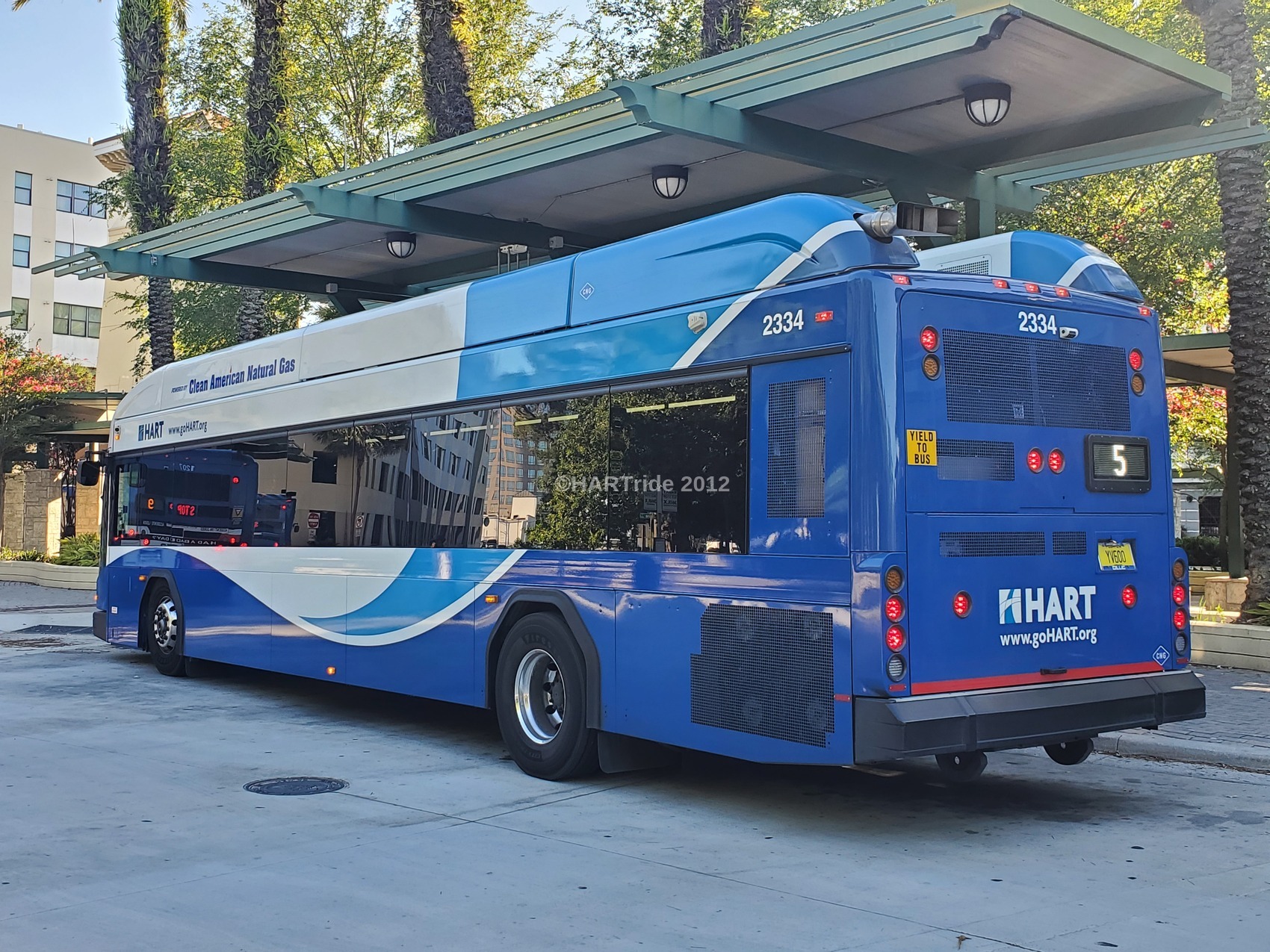
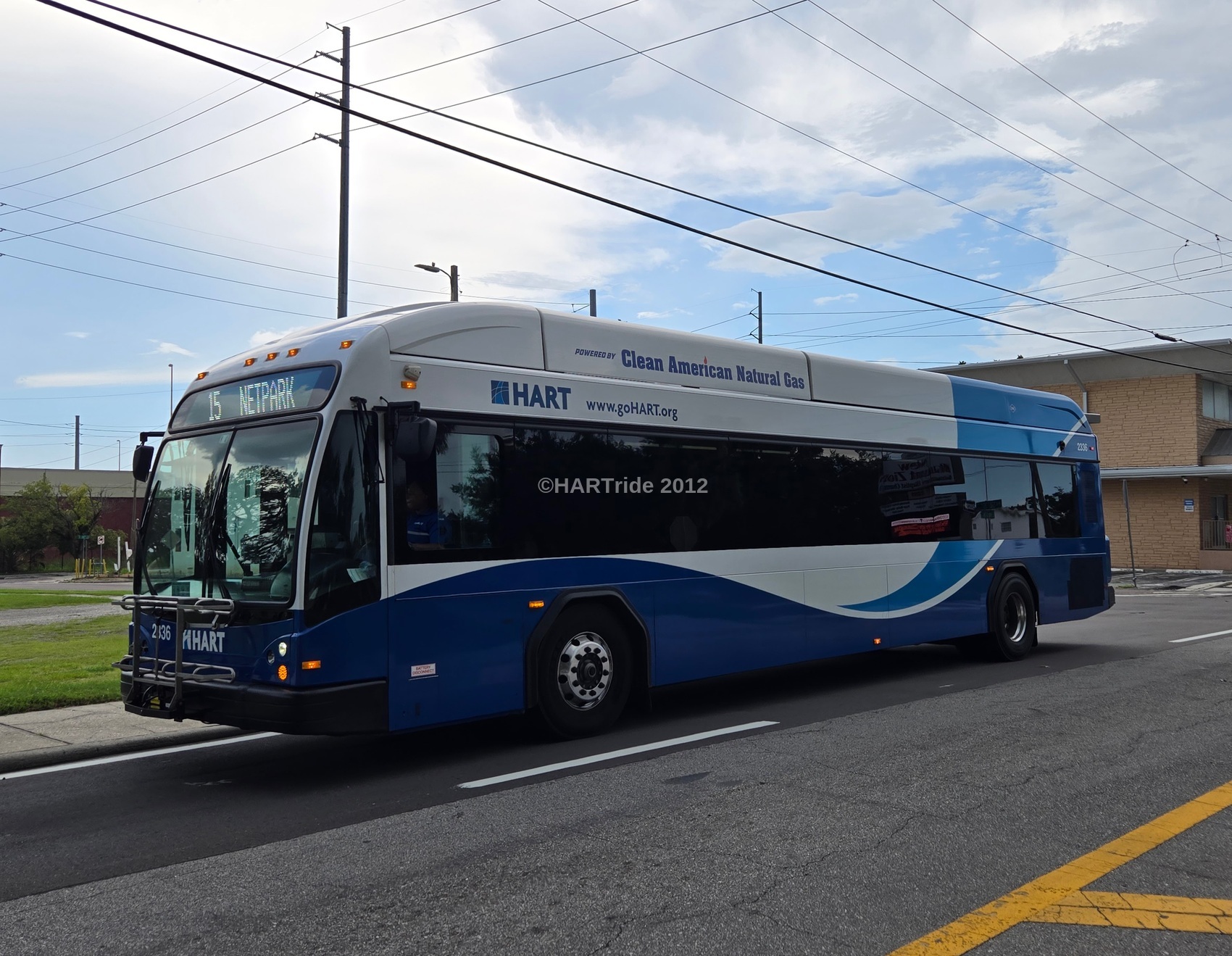
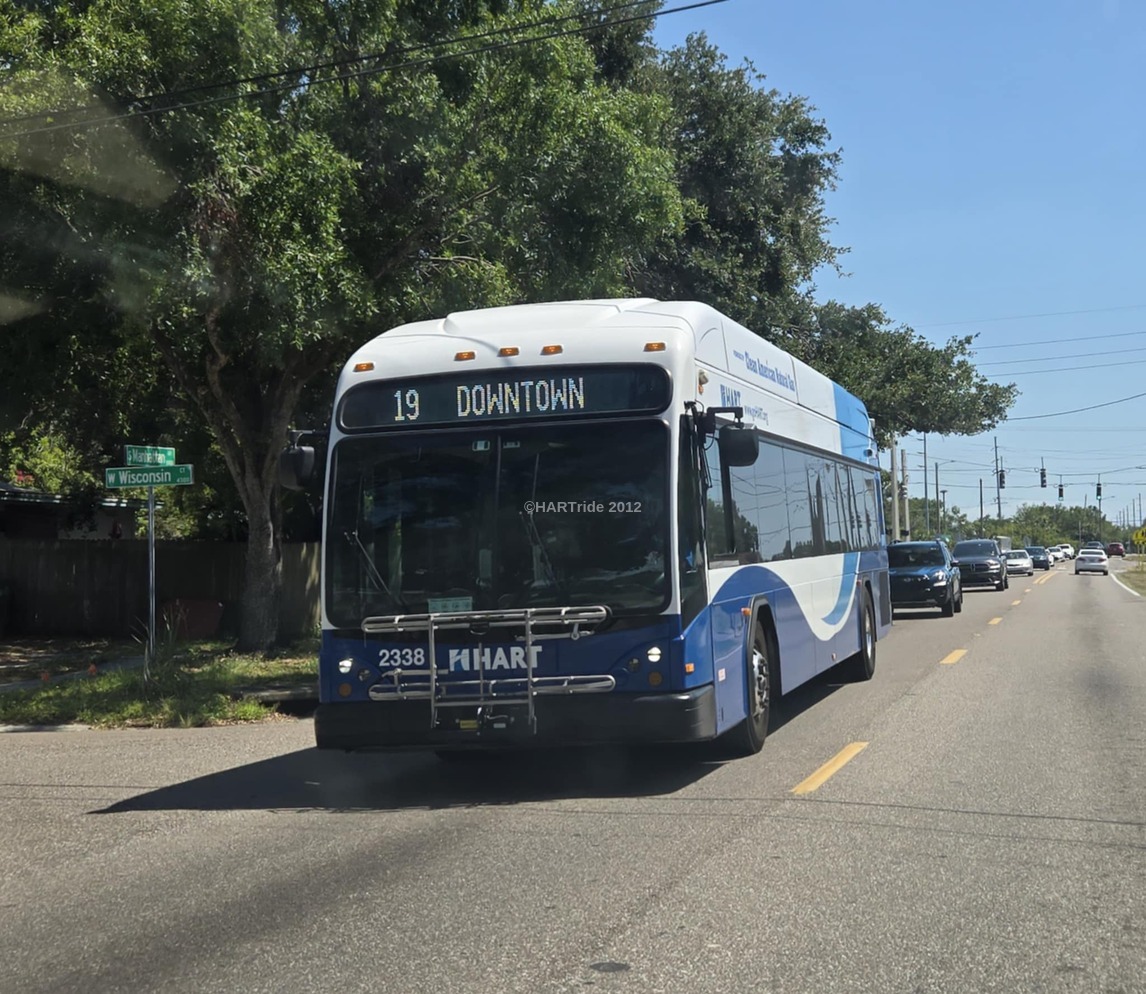
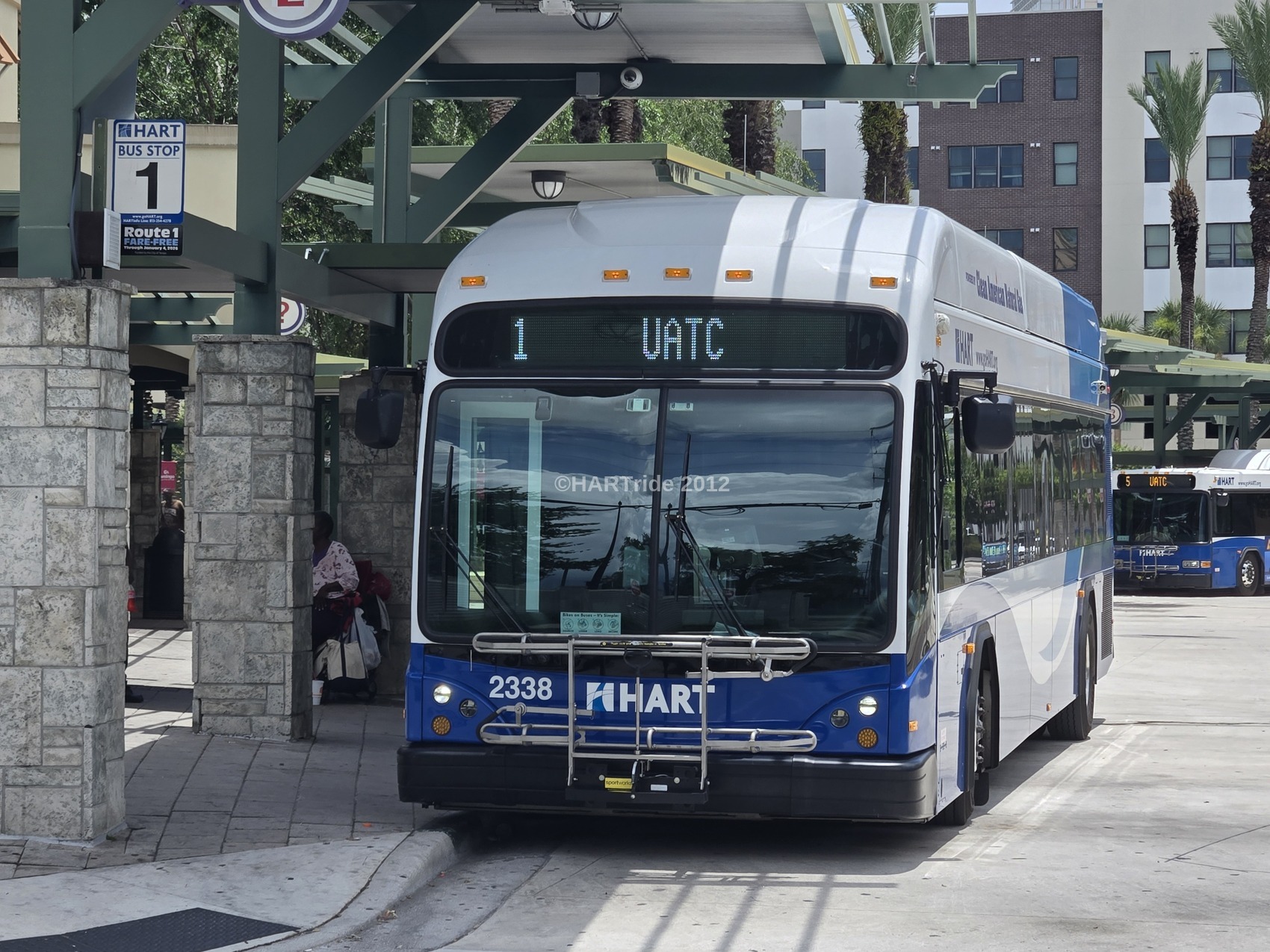
2017 & 2023 Gillig BRT Plus CNG
2017 – #’s 1716 through 1725 2023 – #’s 2331 through 2344
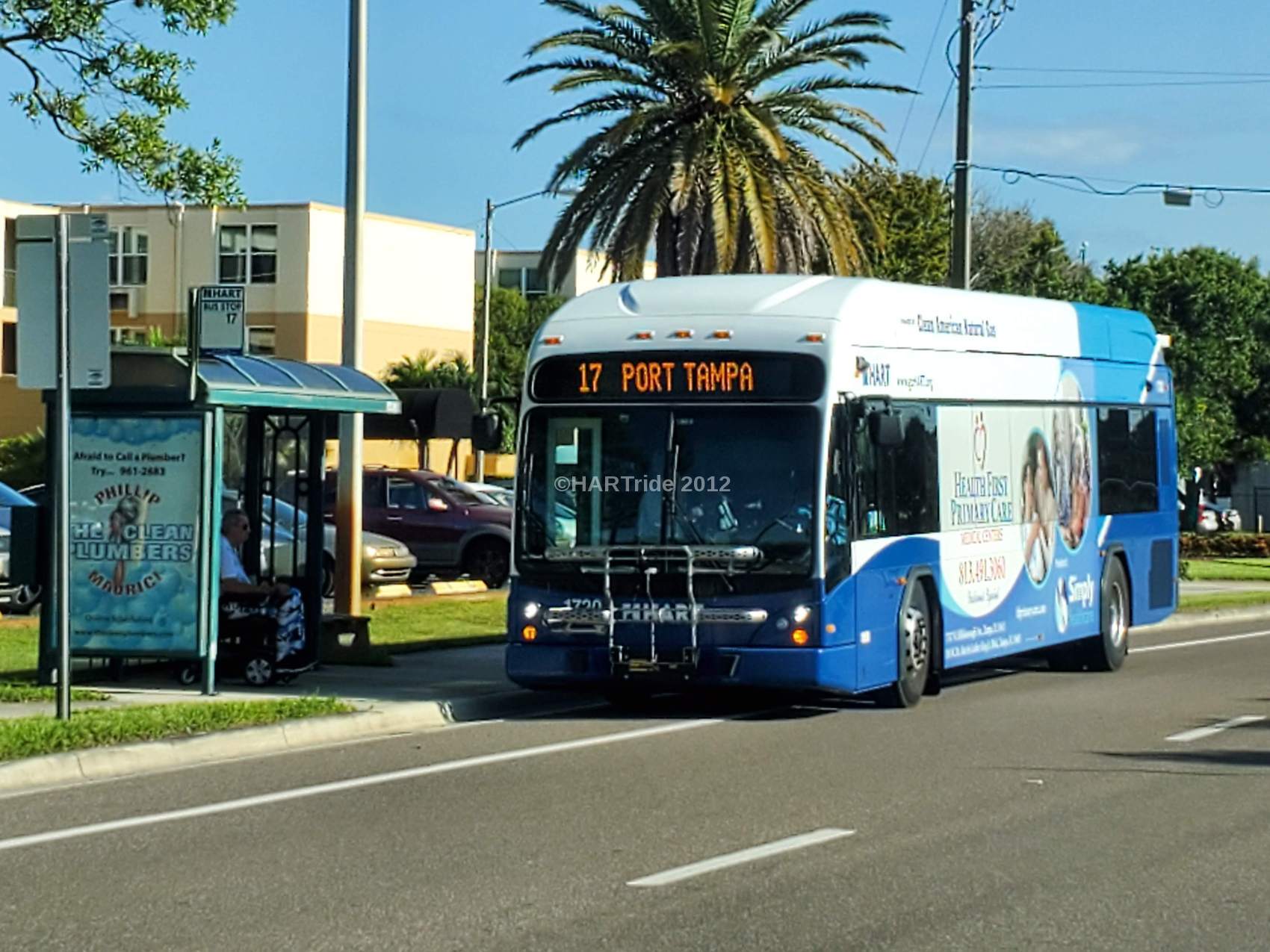
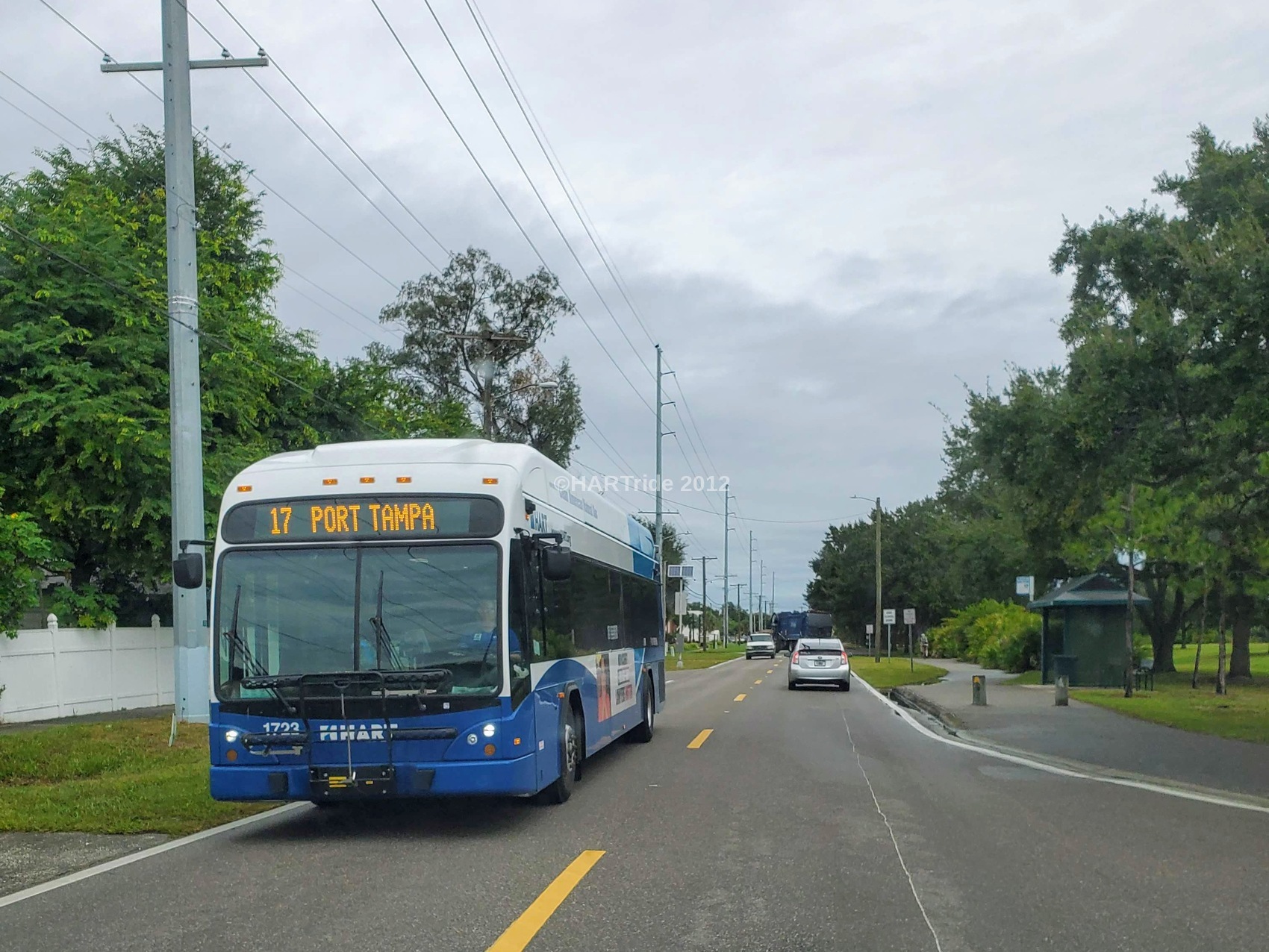
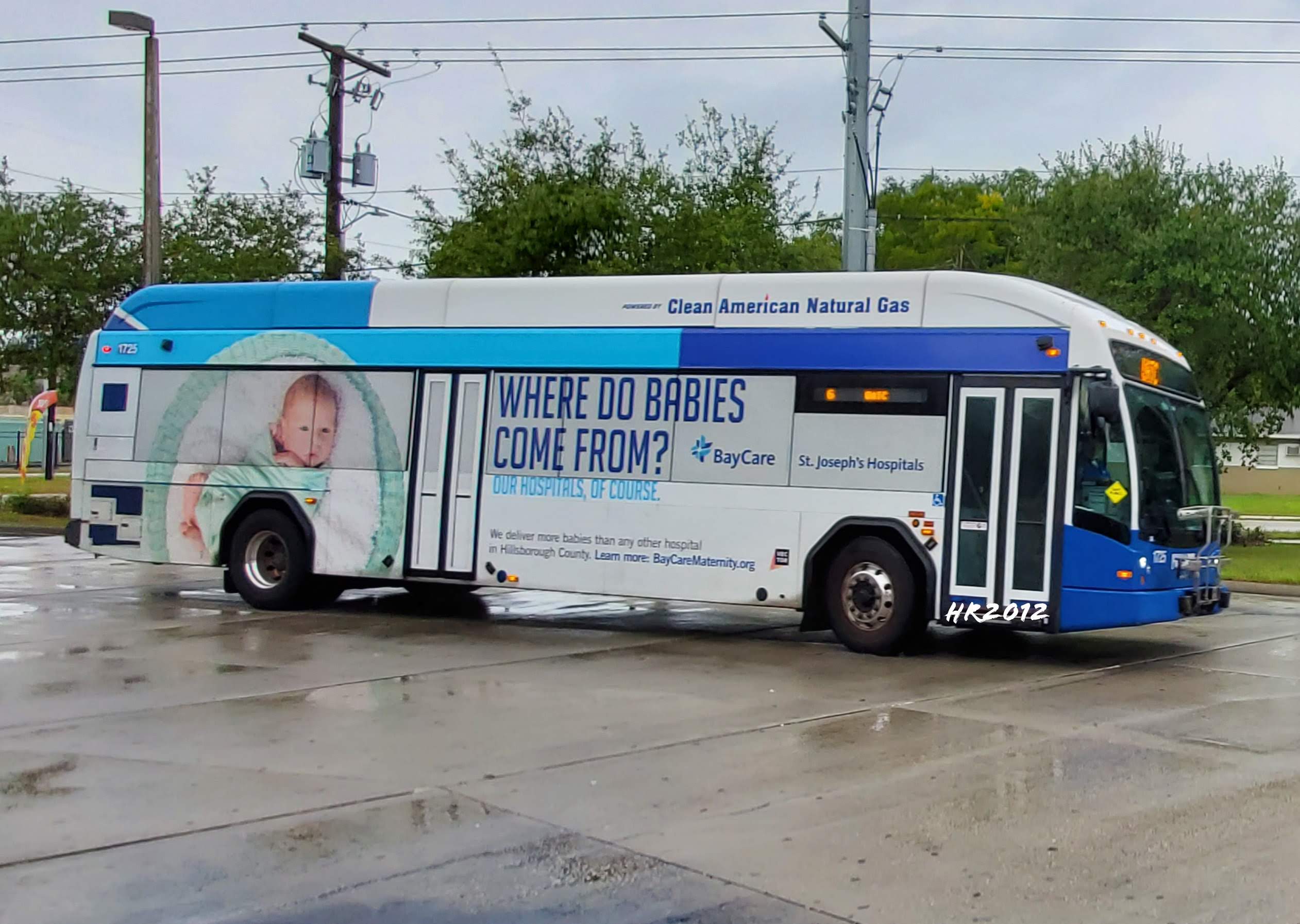
# 1718 on old Route 17.
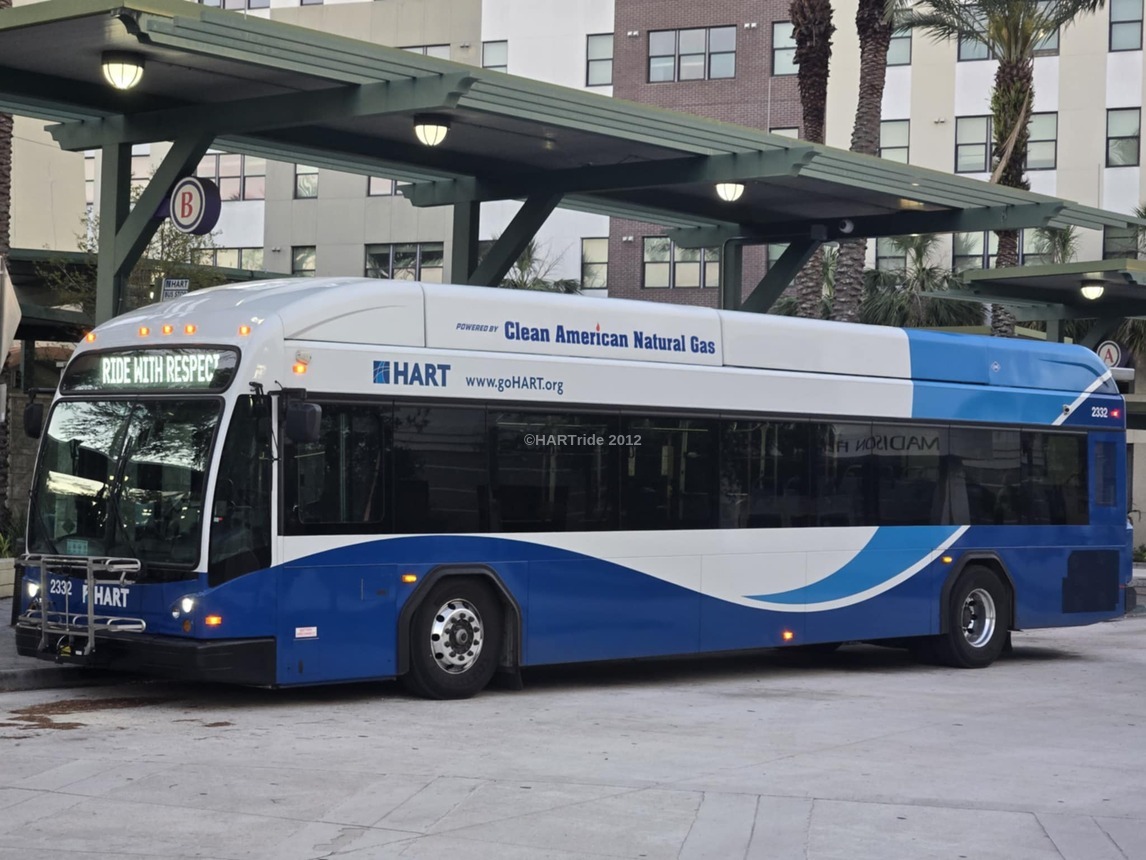
In late 2016, HART placed an order for ten additional buses to the 2017 order thanks to a grant from the Federal Transit Administration (FTA). This allowed the agency to phase out all remaining 29′ buses from 2002 & 2003. For this particular order, HART decided to try out the BRT Plus styling that has been adopted by other Florida transit agencies such as Miami-Dade Department of Transportation & Public Works (DTPW), Palm Tran, Jacksonville Transportation Authority, & LYNX.
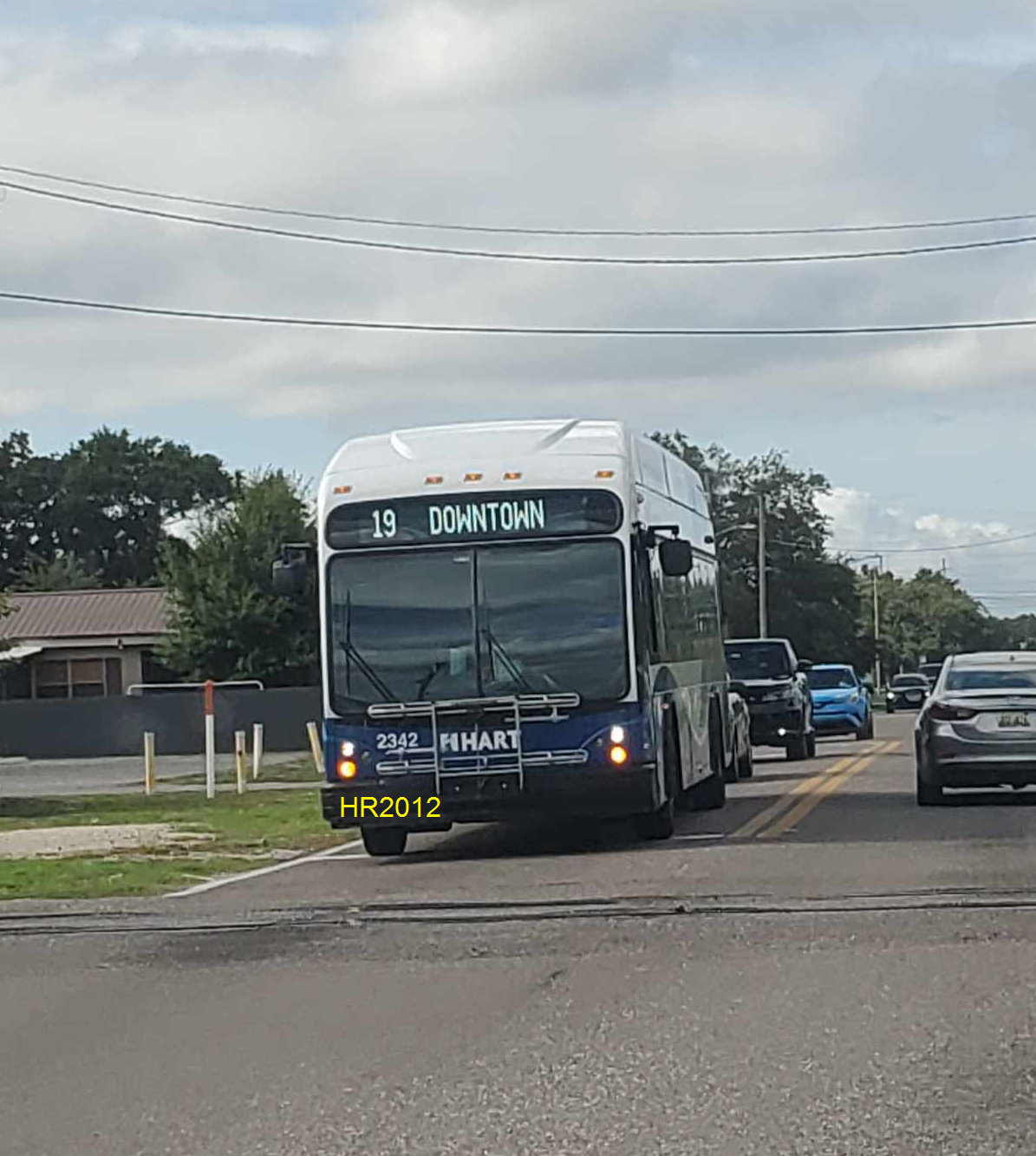
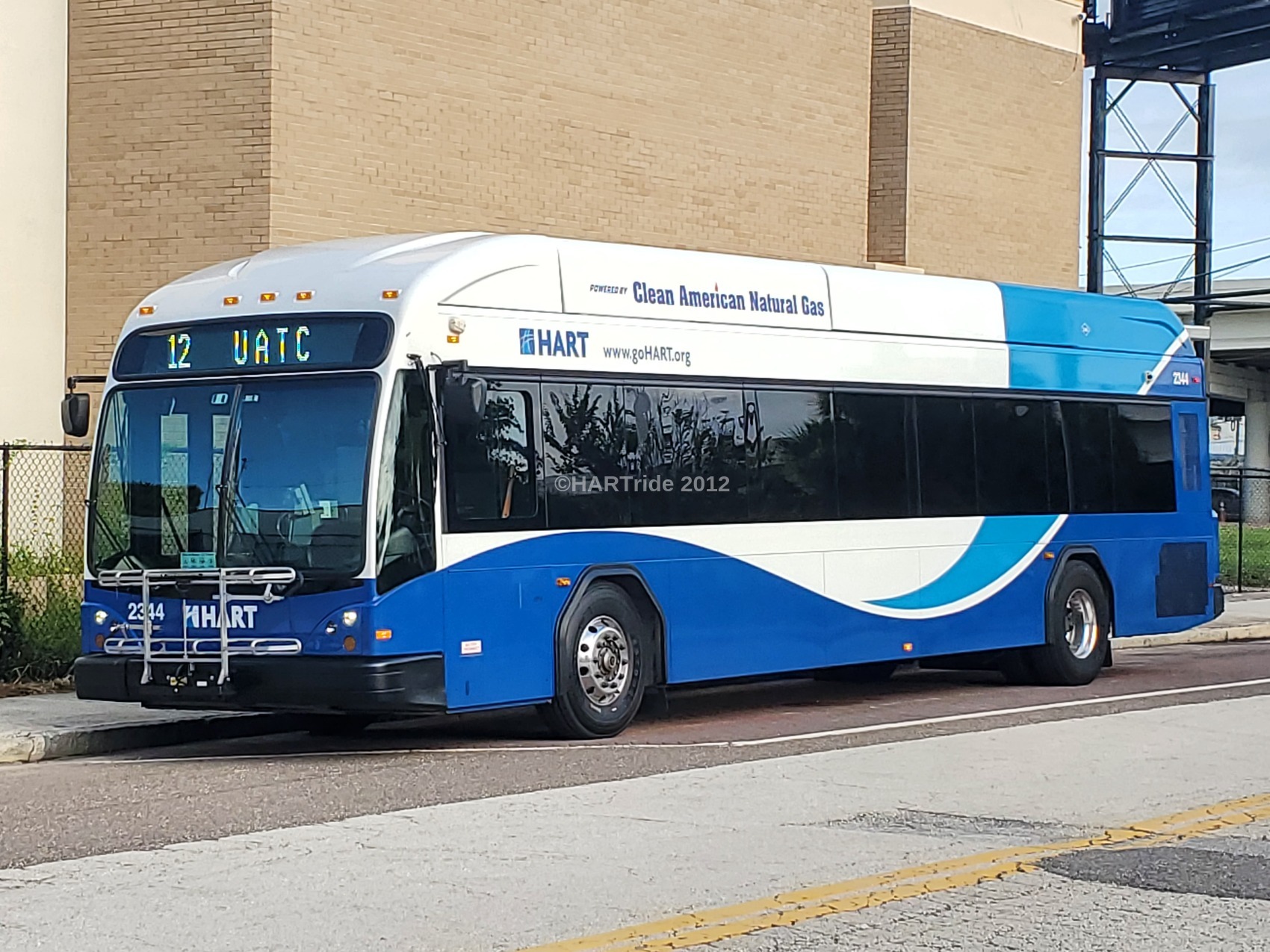
In 2022, HART ordered another fourteen BRT Plus models. While they appear mostly similar to the 1700s, they are equipped with white text head signs & the standard low floor rear panels instead of the sloped BRT style panels.
Unknown 4500-series van pulls out from the Britton Plaza shelter.
For HART Plus paratransit services & HART Flex routes, HART utilizes a fleet of Champion Crusader cutaway vans built on the Chevrolet Express chassis. Vans that are used for Plus service only do not have LED headsigns & will simply have the HARTPlus text printed on the overhead front portion of the van. Vans that are used for Flex service have front & passenger side LED headsigns, as well as fareboxes & bike racks. The Flex vans can be used interchangeably with Plus service.
# 20403 in South Tampa.
All of the vans are powered by regular unleaded gasoline or diesel fuel. While HART did initially order a batch of CNG powered units, those units did not perform as well as expected & have been retired.






















































































































 The Global Transit Guidebook