Welcome to the PSTA Retired Vehicles page. Here, I will showcase photos of the various vehicles that PSTA has retired from its fleet. Please keep in mind that this page only documents standard buses from 2001 through 2008 (except the 2007 series buses, as most of those are still active), the 2003-series express coaches, the 2007 through 2009 replica trolley buses, & the 2012 cutaway vans. If you’d like to make a contribution, please feel free to contact me.
Due to recent fleet retirements, the 2005, 2006, & 2008 Gillig Low Floor Diesel subsections have been moved here. The 2007 Gillig Low Floor Diesel section may also move here in the near future – depending on what PSTA intends to do with them.
Retired Buses Pre-dating 2001
I don’t really have any comprehensive information regarding PSTA’s fleet prior to 2001, nor the buses that were operated by SPMTS or CPTA prior to the merger to create PSTA. However, the Canadian Public Transit Discussion Board (CPTDB) has a detailed wiki that transit riders & enthusiasts can provide information to be added. The website has a team of members who actively update the wiki database as needed, based on feedback. You may visit the wiki pages to look up information on retired vehicles – but just like any wiki database (like Wikipedia), accuracy cannot be guaranteed.
2001 Gillig Low Floor
40′ – #’s 2101 through 2116
In revenue service from 2001 until 2018
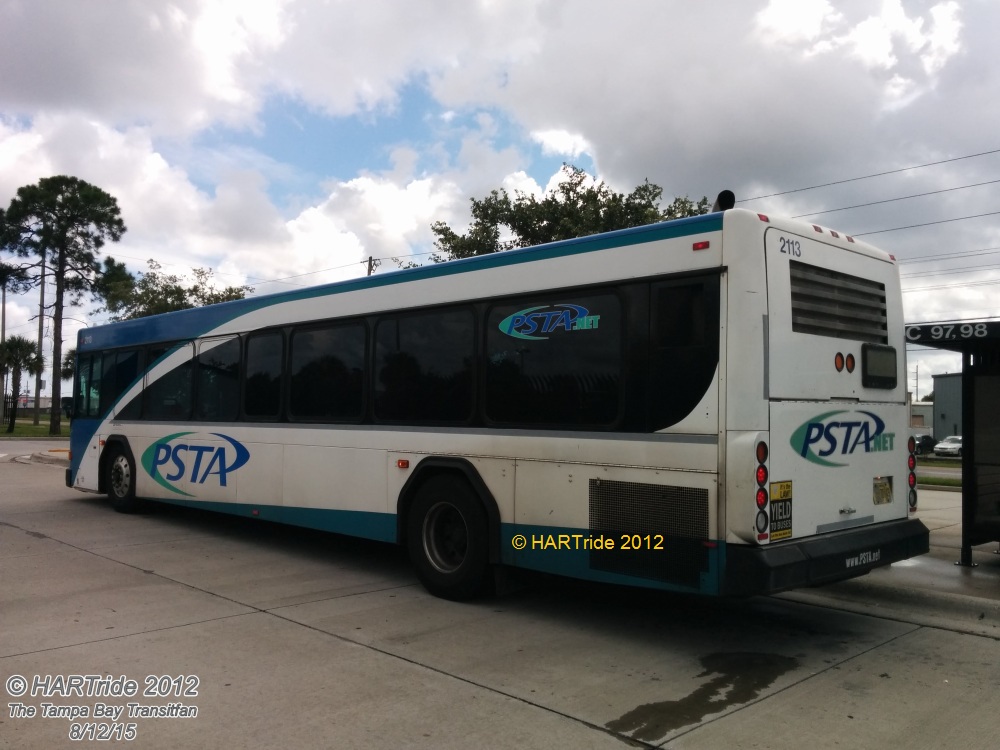
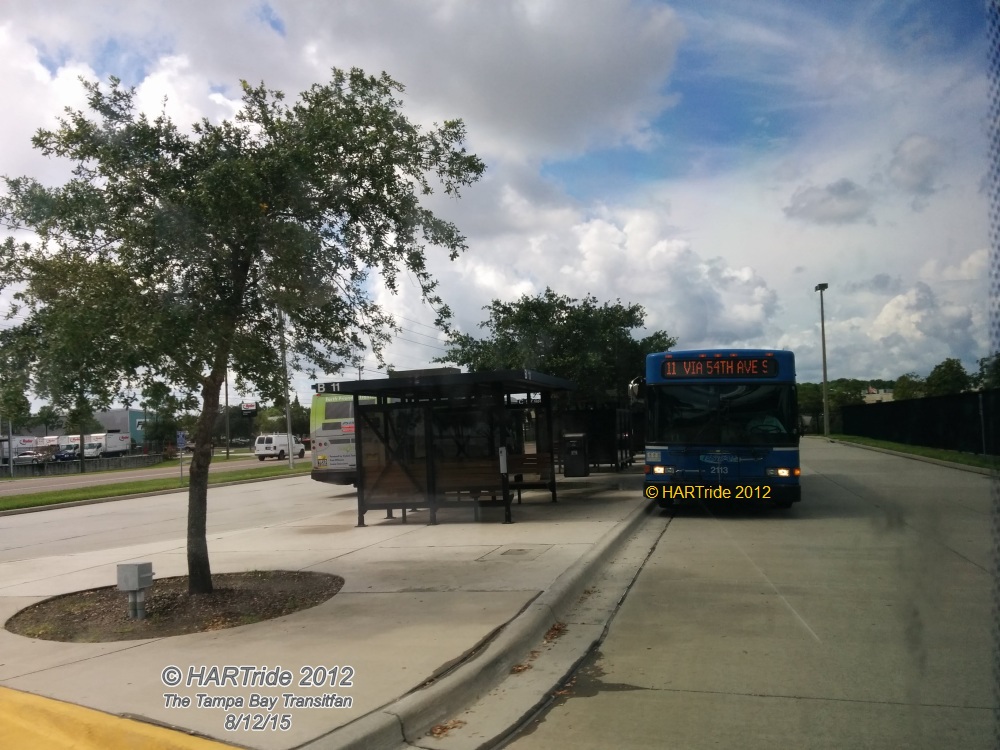
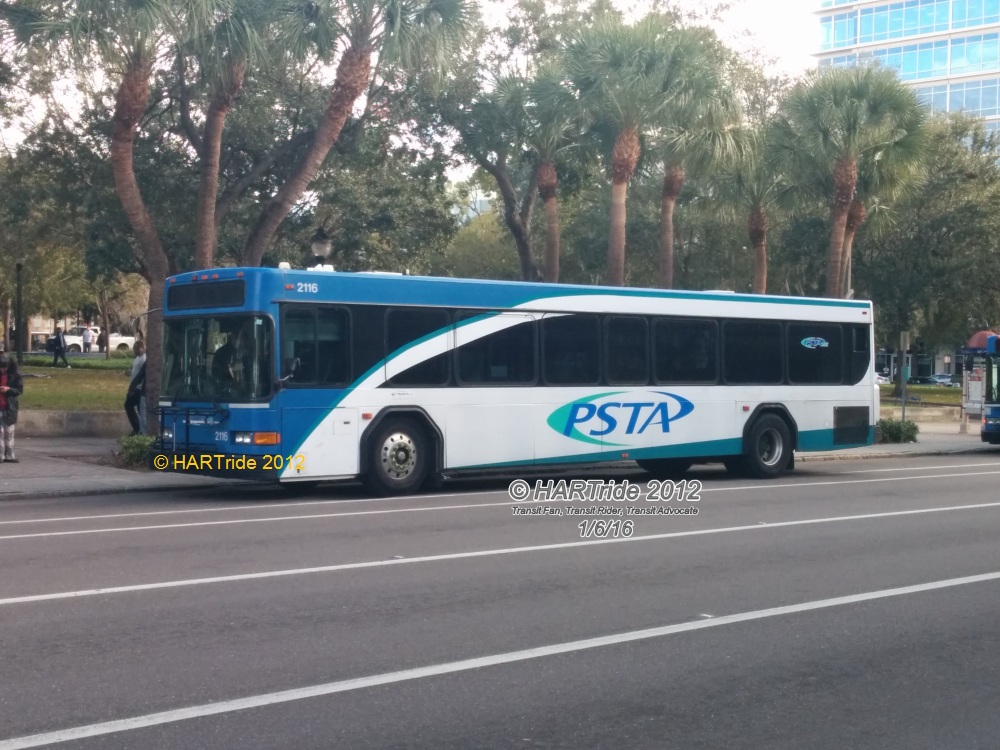
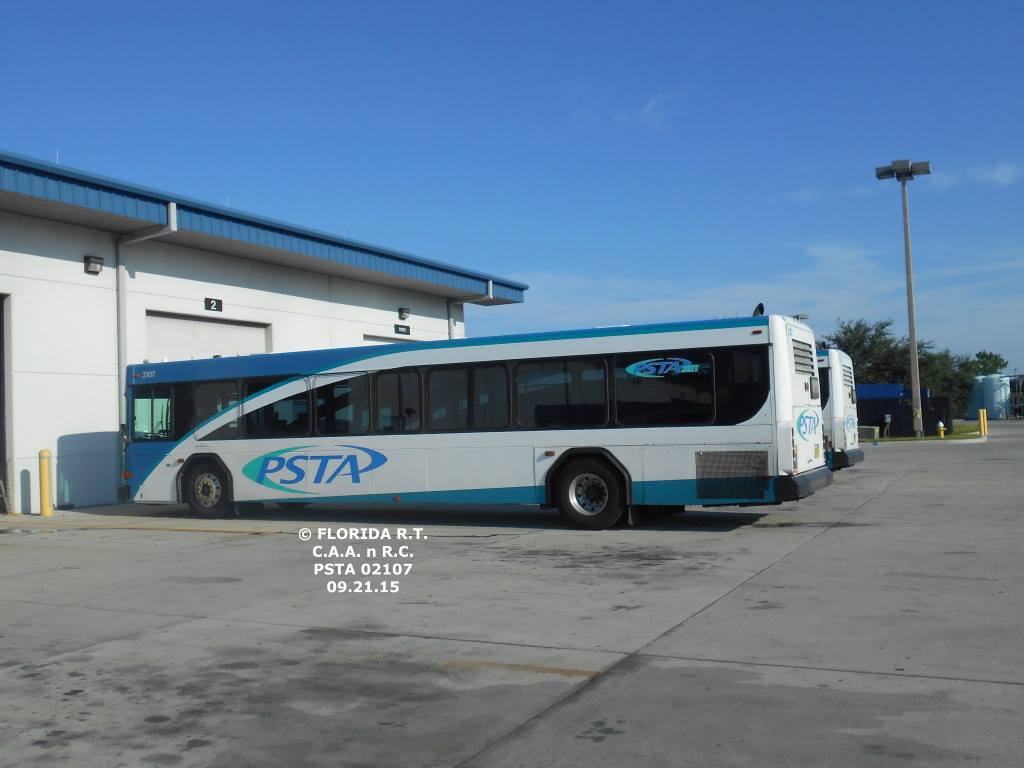
The 16 bus order that was carried out in 2001 was one of a powerhouse. I’ve been told by several PSTA operators that these buses drove very nicely – even after being in service for 13 years. Some buses lasted in revenue service for as long as 16 or 17 years – though many were relegated to the contingency fleet after 2014.
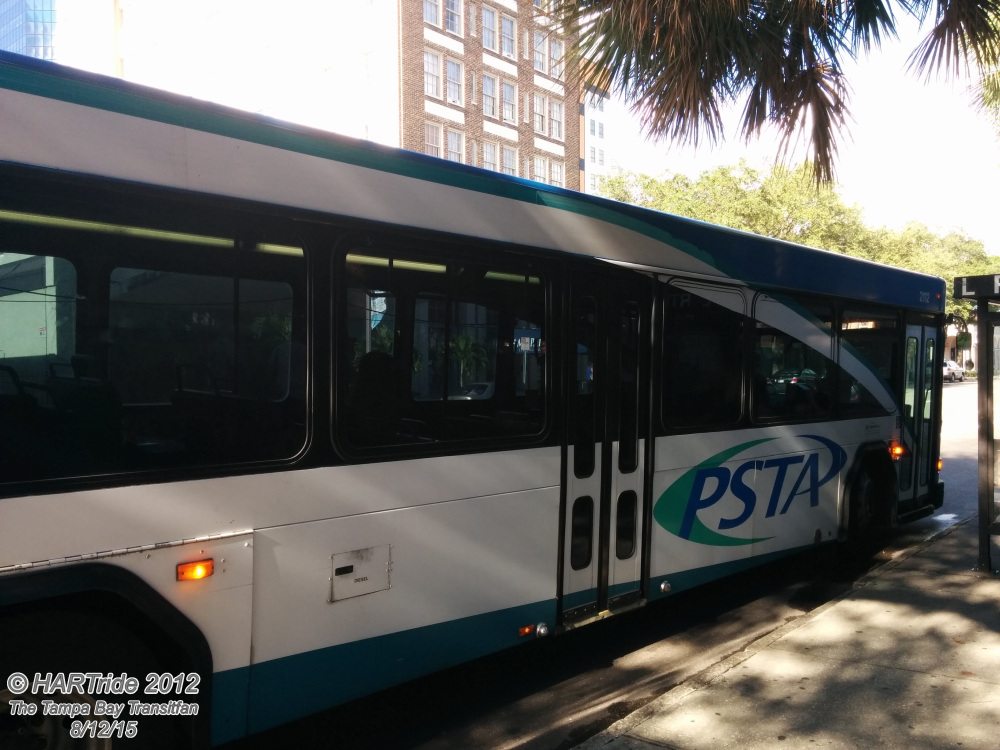
In 2013, the fleet was gradually repainted into the 2005-era blue/teal/white livery. By the start of 2019, all buses were retired out.
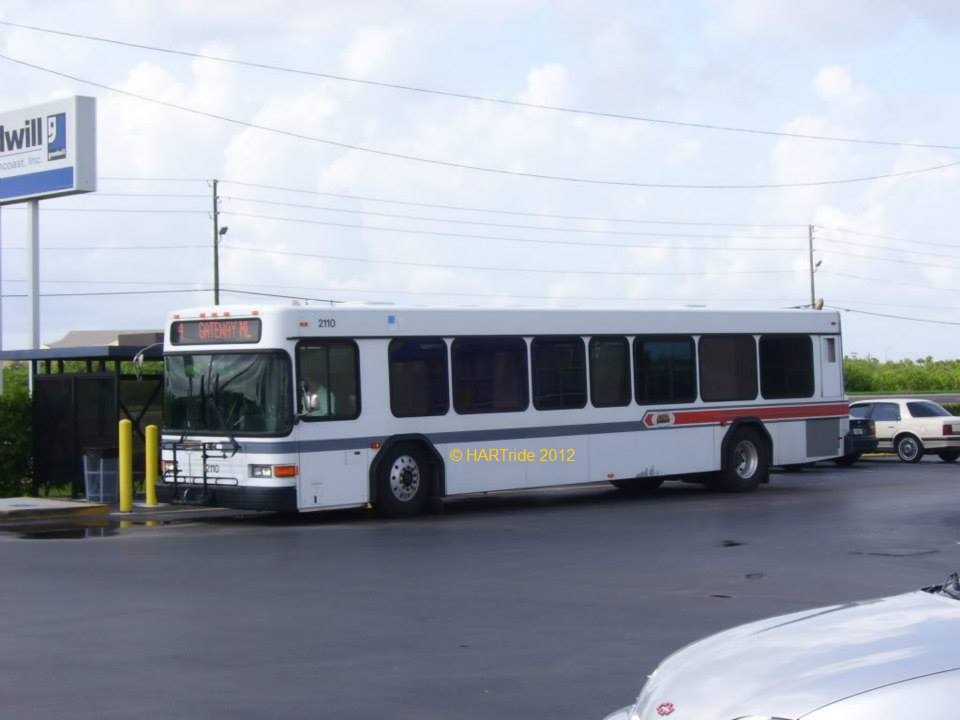
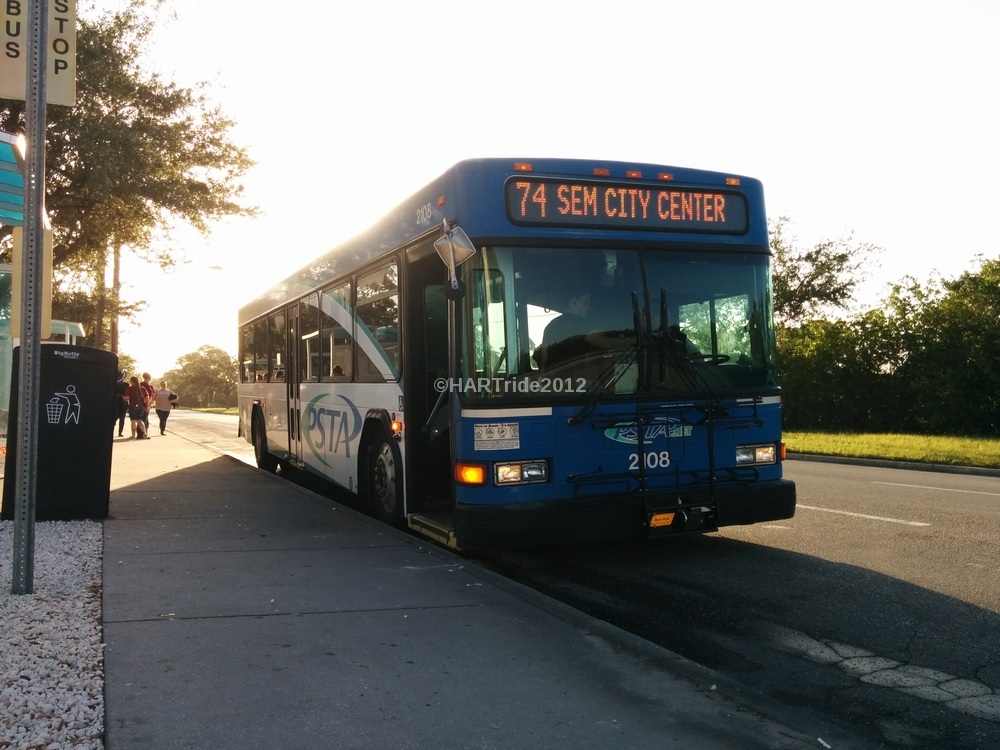
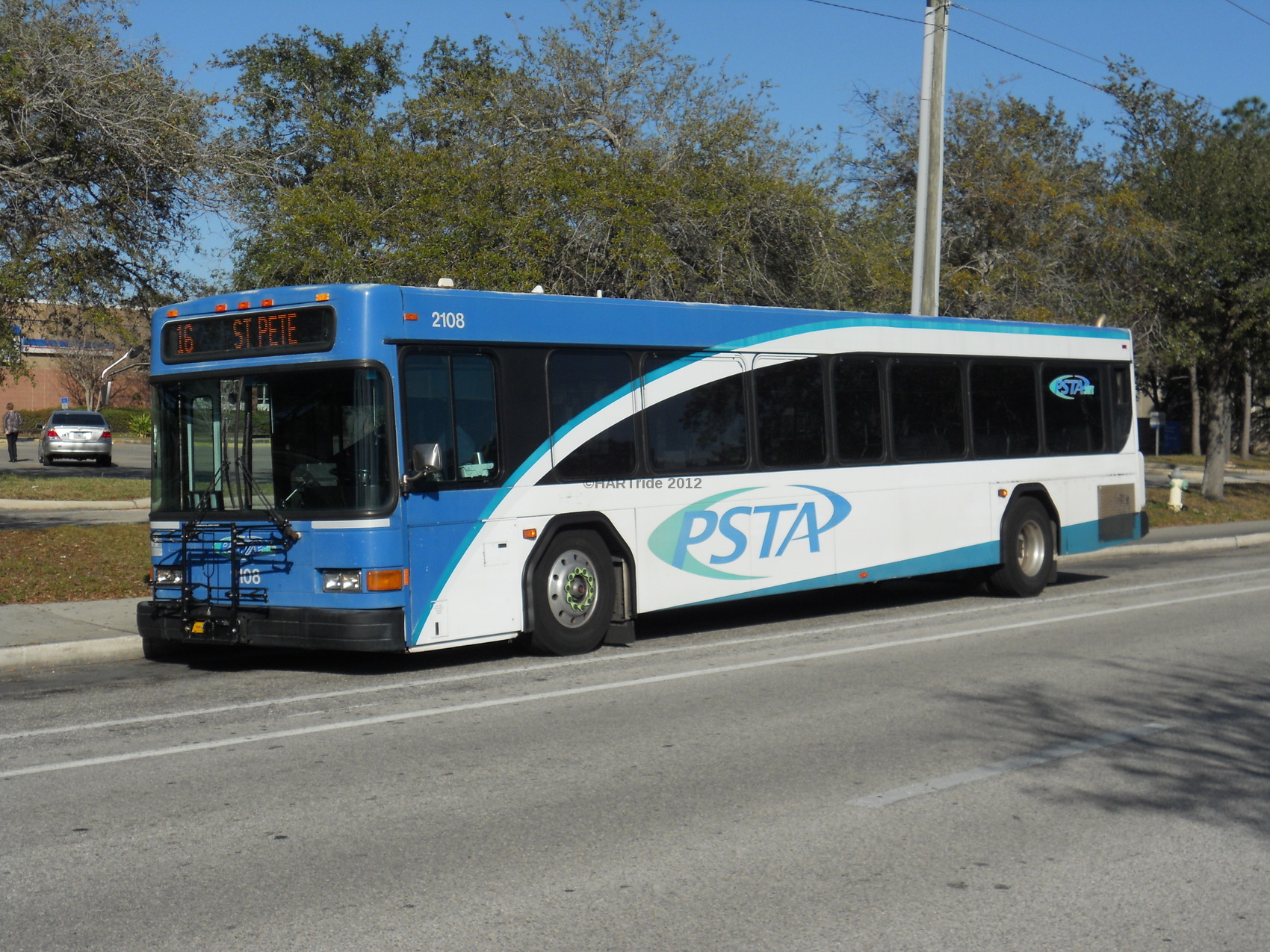
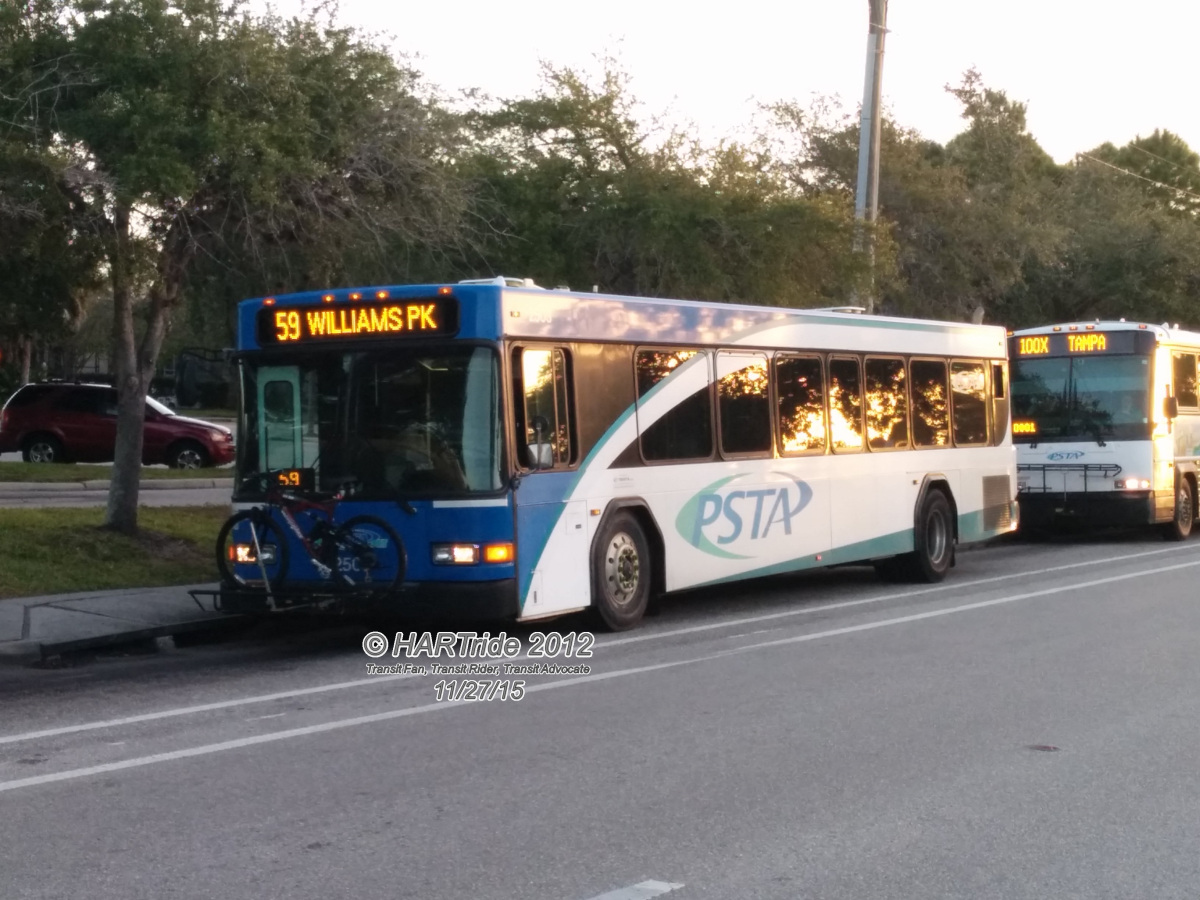
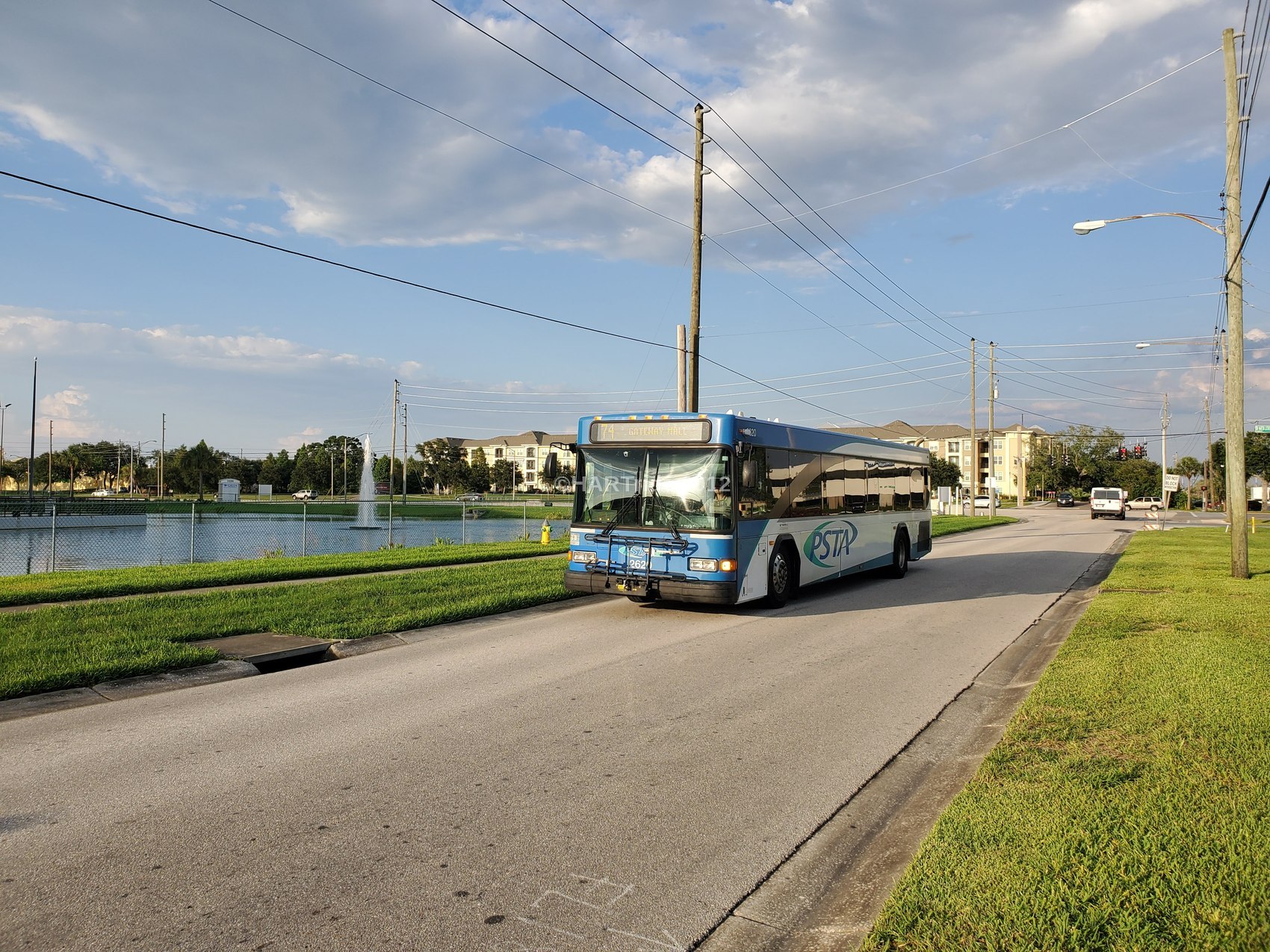
#2110 on Route 4 at the Goodwill facility on Gandy Blvd N. This was one of a handful of buses that still possessed the old 80s -era PSTA livery.#2105 entering the 34th St N Transfer Center next to the PSTA Facility.#2105 on layover at the Park St Terminal in Clearwater.Different angle of #2105.#2106 on layover at Grand Central Terminal. Credit: Joe C.#2108 on Route 74 at Gateway Mall.#2109 on standby at Park St Terminal. Credit: Joe C.#2112 on Route 59 back when it traveled all the way to Downtown St. Petersburg.#2112 on layover at Williams Park.Side angle of #2112.#2112 not having a good day at Williams Park – it had to be towed shortly after I took this photo.#2113 at the 34th St N Transfer Center.Rear angle of #2113.Side angle of #2113.After boarding a Route 52 bus, I snapped this shot of #2113 as we circled the platform.#2116 returns to the garage.#2116 on layover at Williams Park.#2106 on Route 74 when it went from Downtown St. Pete to Indian Rocks Shopping Center. Routes 59 & 74 were shortened in late 2016 for efficiency purposes. Credit: Carlos A.#2105 exits Pinellas Park Transit Center on Route 52. Credit: Carlos A.And there she goes! Credit: Carlos A.# 2106 at the garage. Credit: Carlos A.# 2107 at the garage. Credit: Carlos A.# 2109 at the garage. Credit: Carlos A.# 2108 on layover at Gateway Mall.
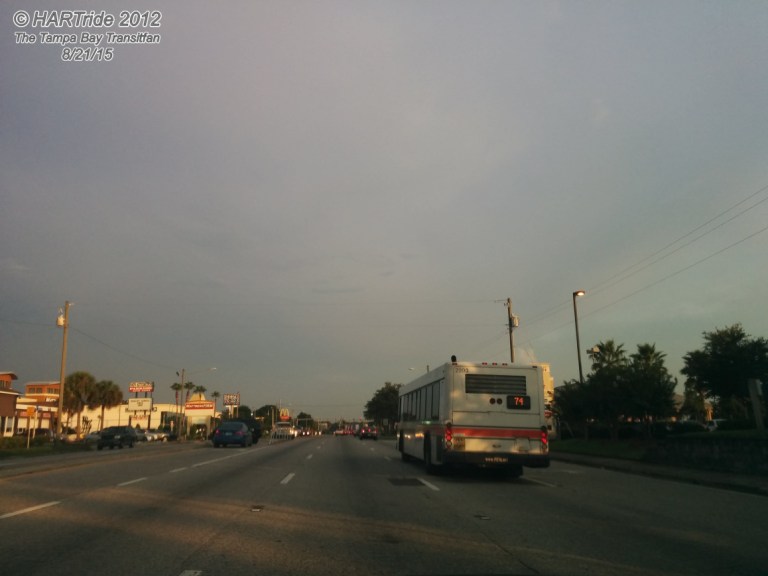
#2203 on US 19, Route 74. Old livery.
2002 Gillig Low Floor Diesel
40′ – #’s 2201 through 2210 29′ – #’s 2230 through 2233
In revenue service from 2002 until 2019
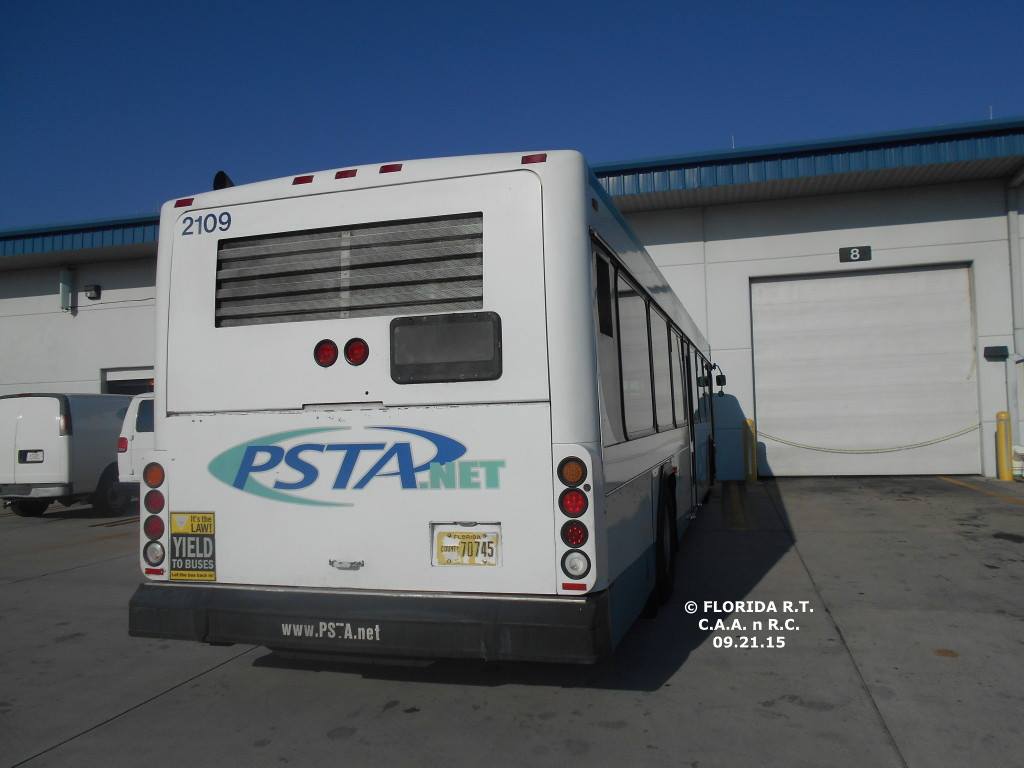
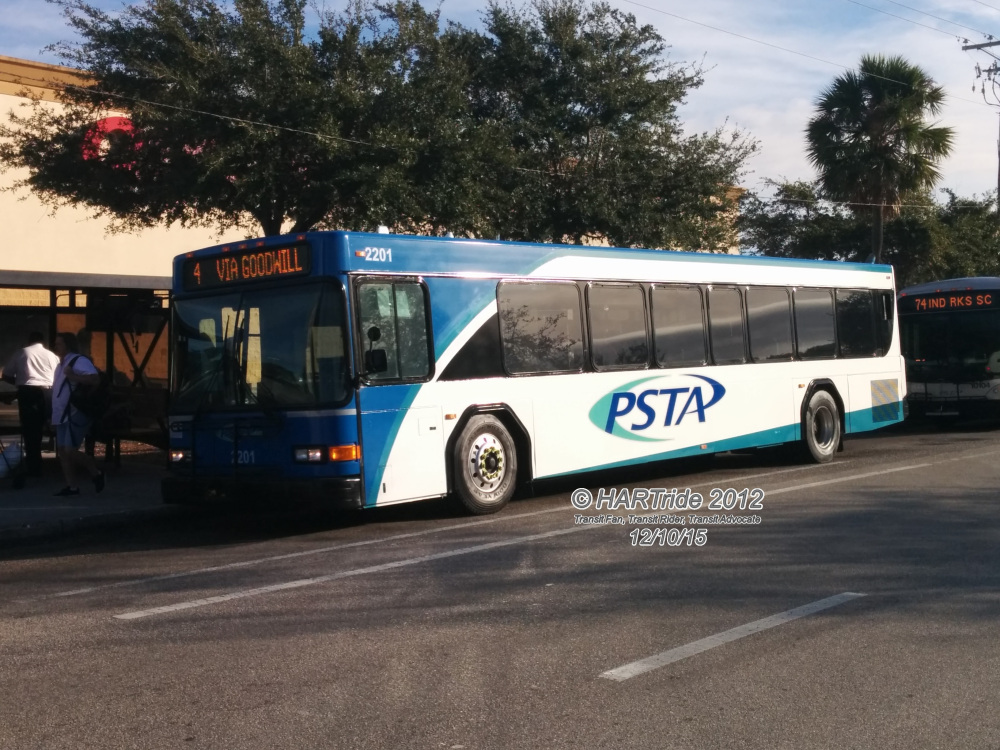
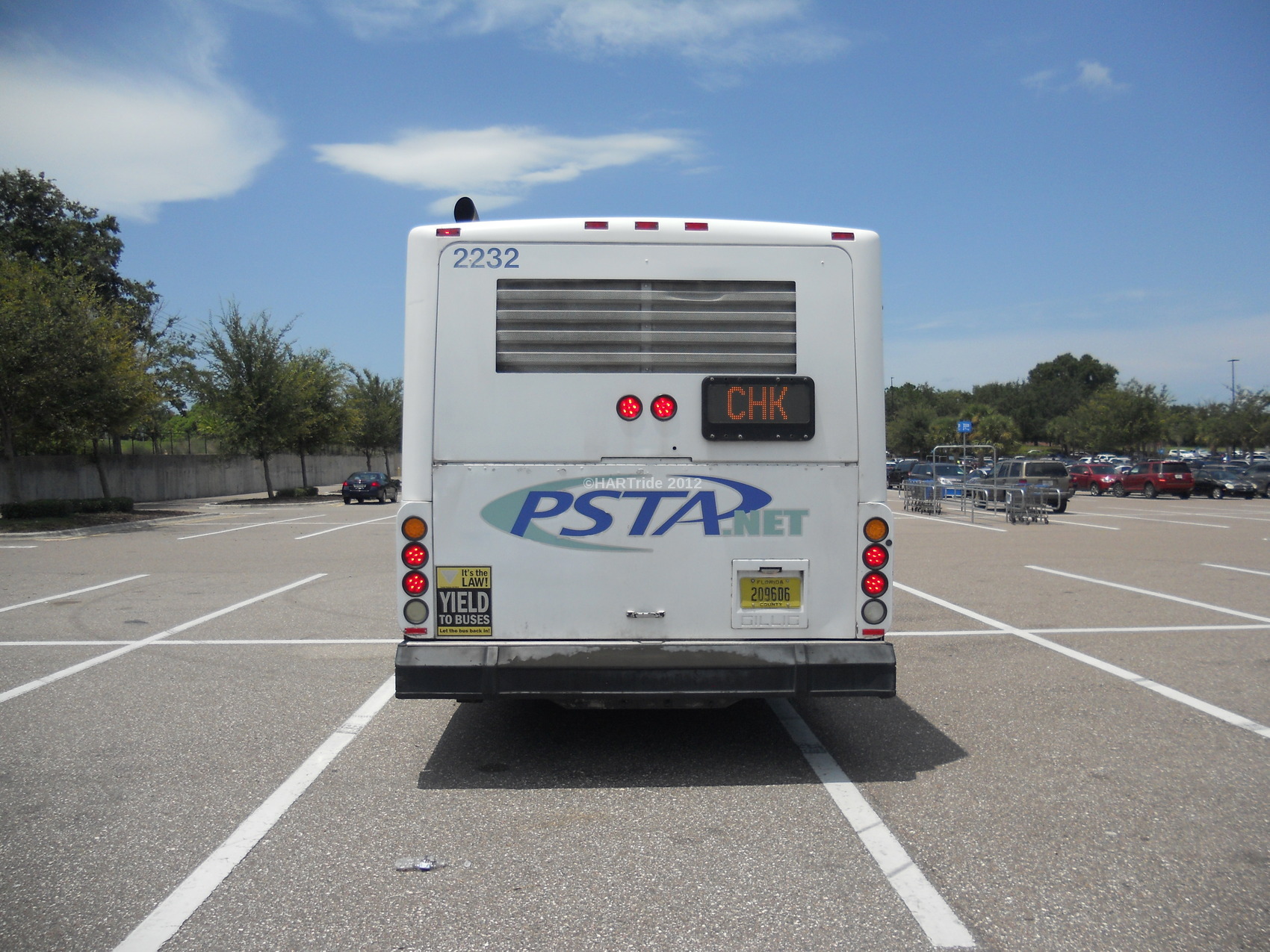
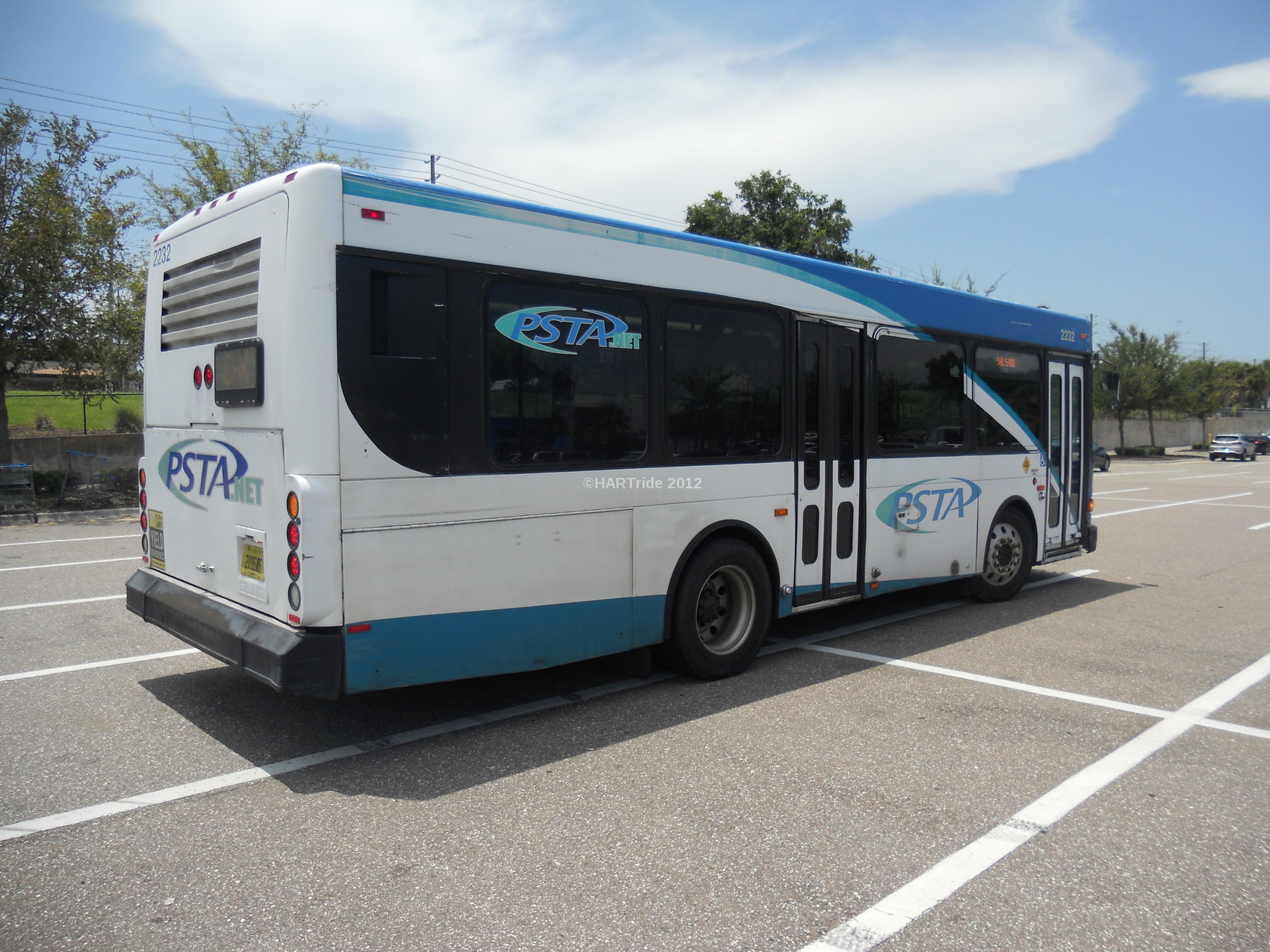
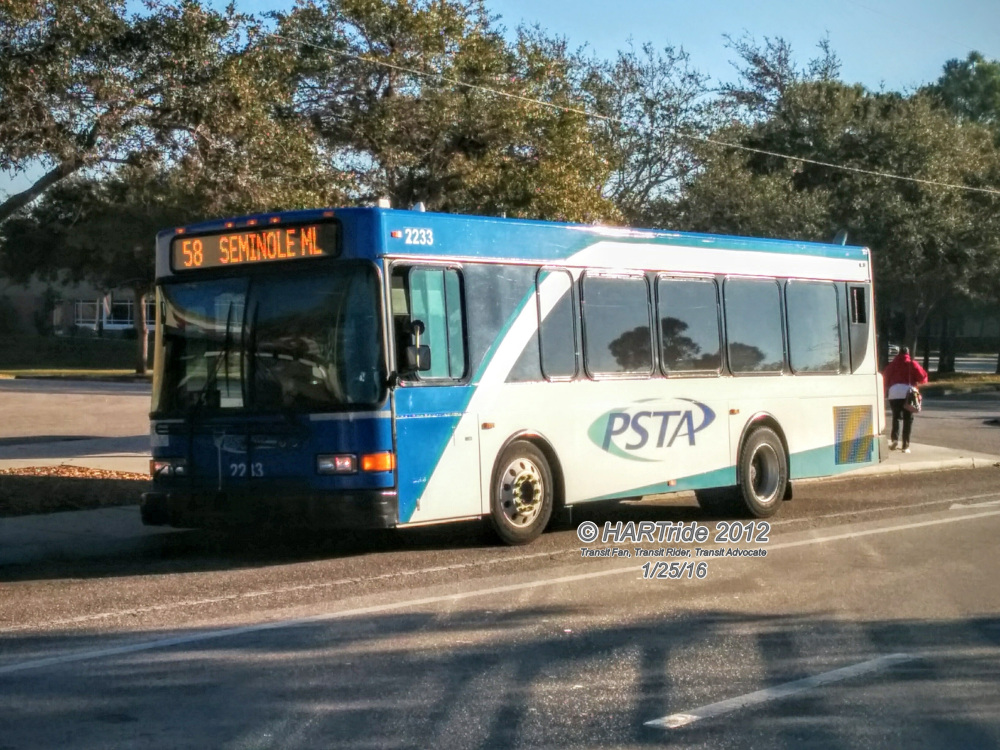
In 2002, PSTA ordered a split batch of buses that comprised of ten 40′ buses & four 29′ buses. The 40′ buses were numbered # 2201 through 2210, while the 29′ buses were numbered # 2230 through 2233. The Almost all of these buses would operate to see service for 16 to 17 years – with only #’s 2210, 2230, & 2231 being retired prior to 2016. The 40′ buses spent their final months in service as contingency spares across the PSTA network, while the 29′ buses served as spares specifically designated for the North County Connector. As of mid 2019, all remaining buses have been retired out.
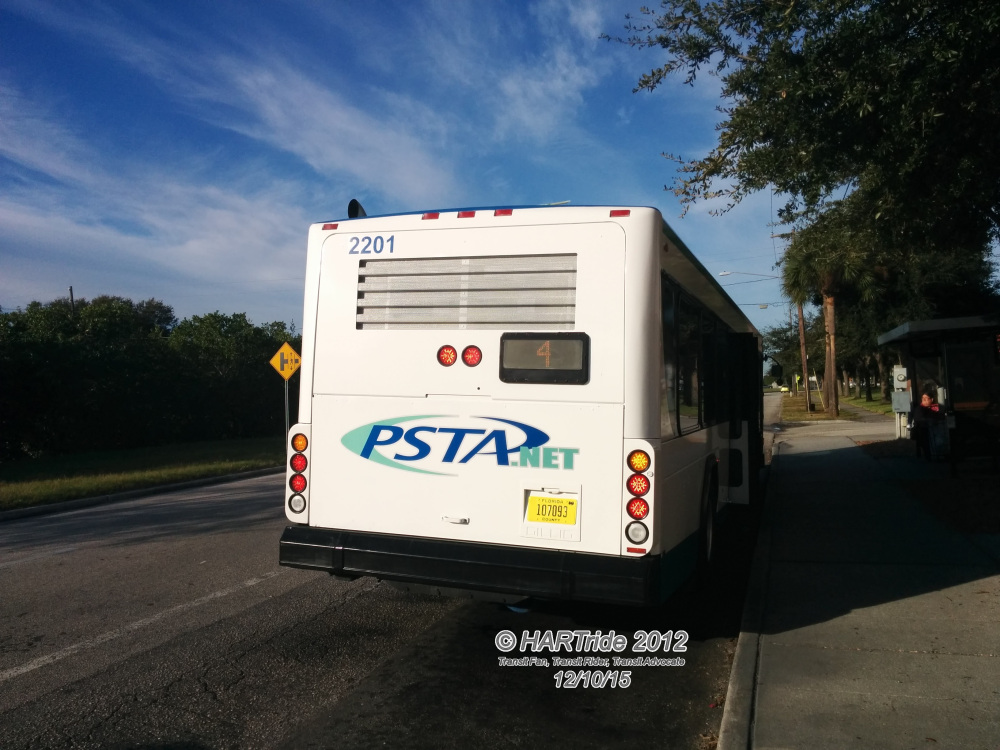
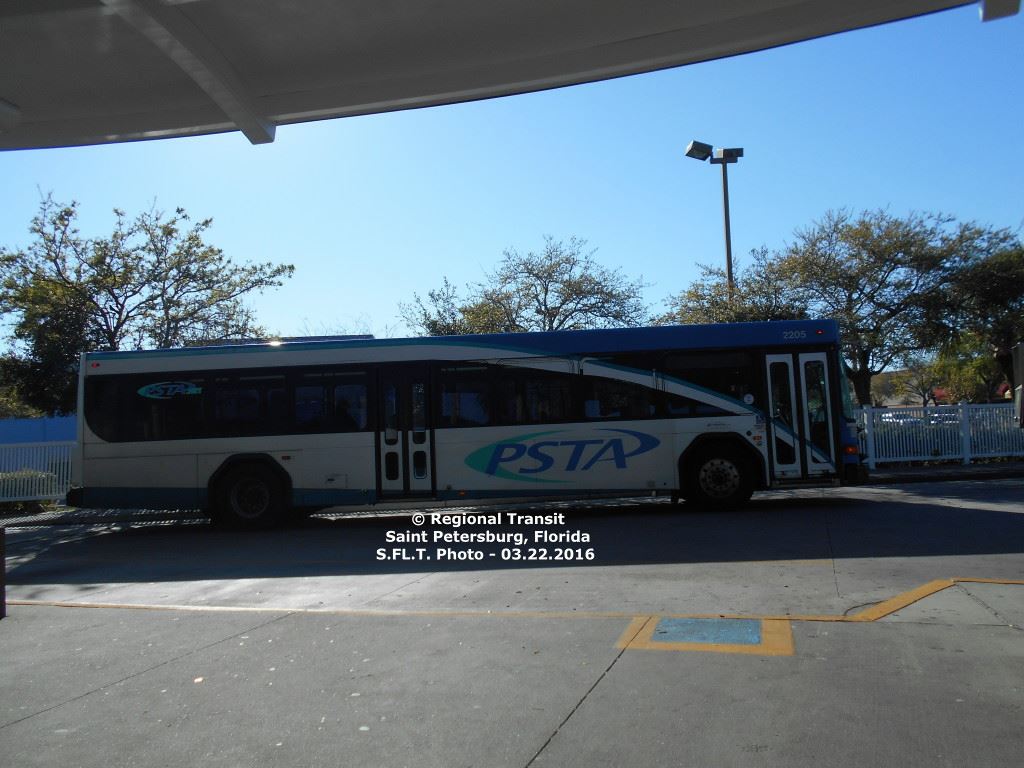
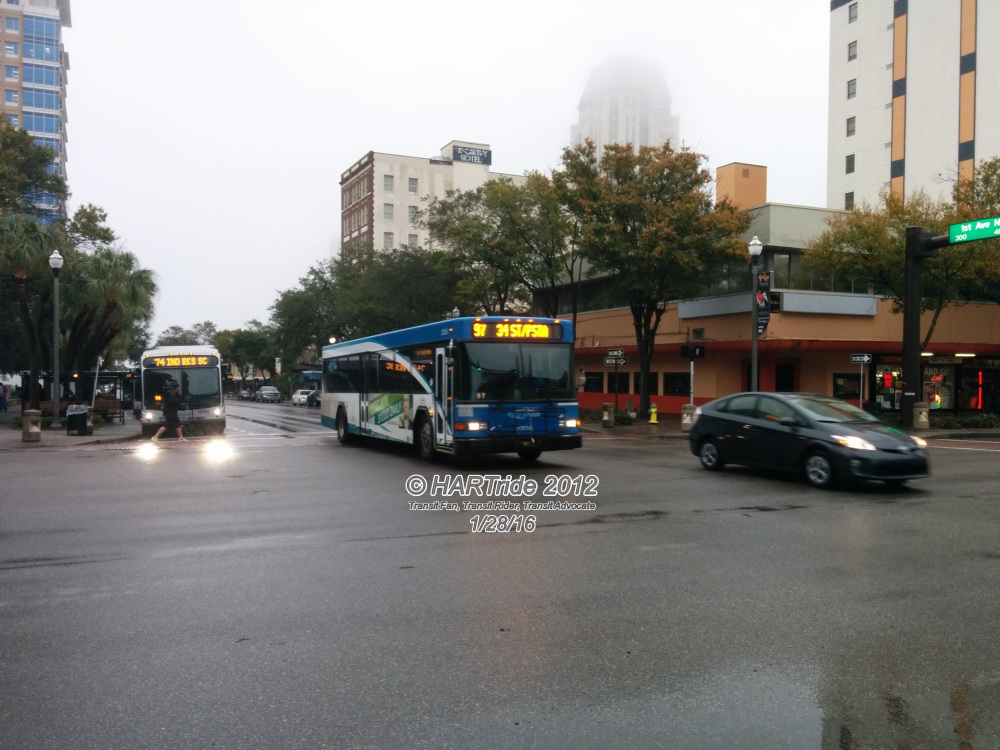
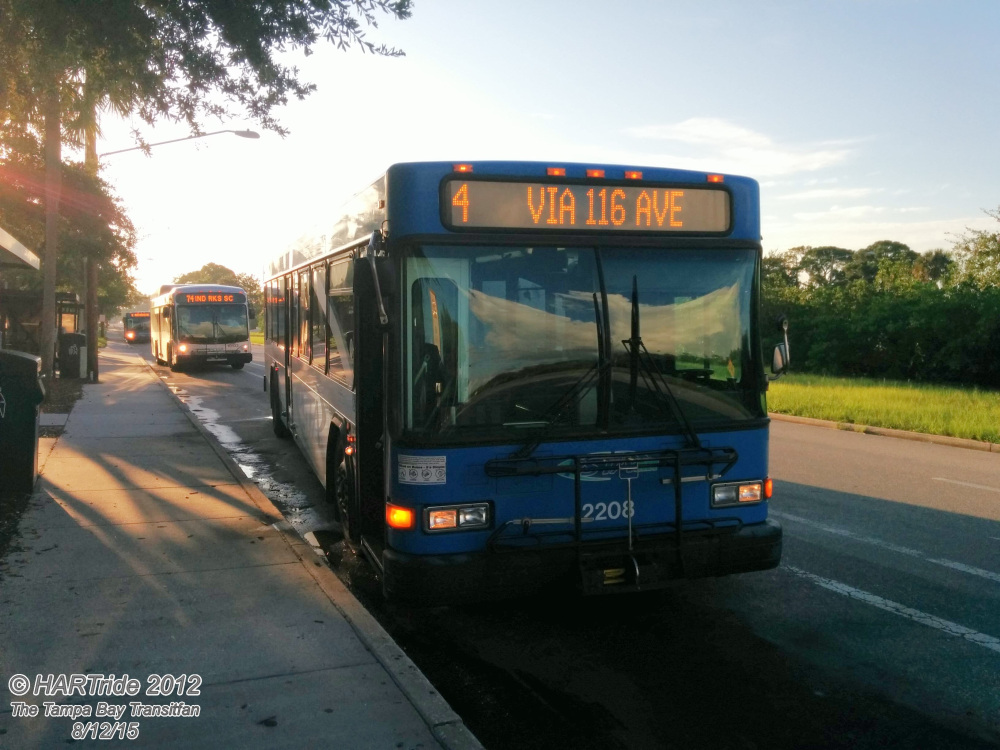
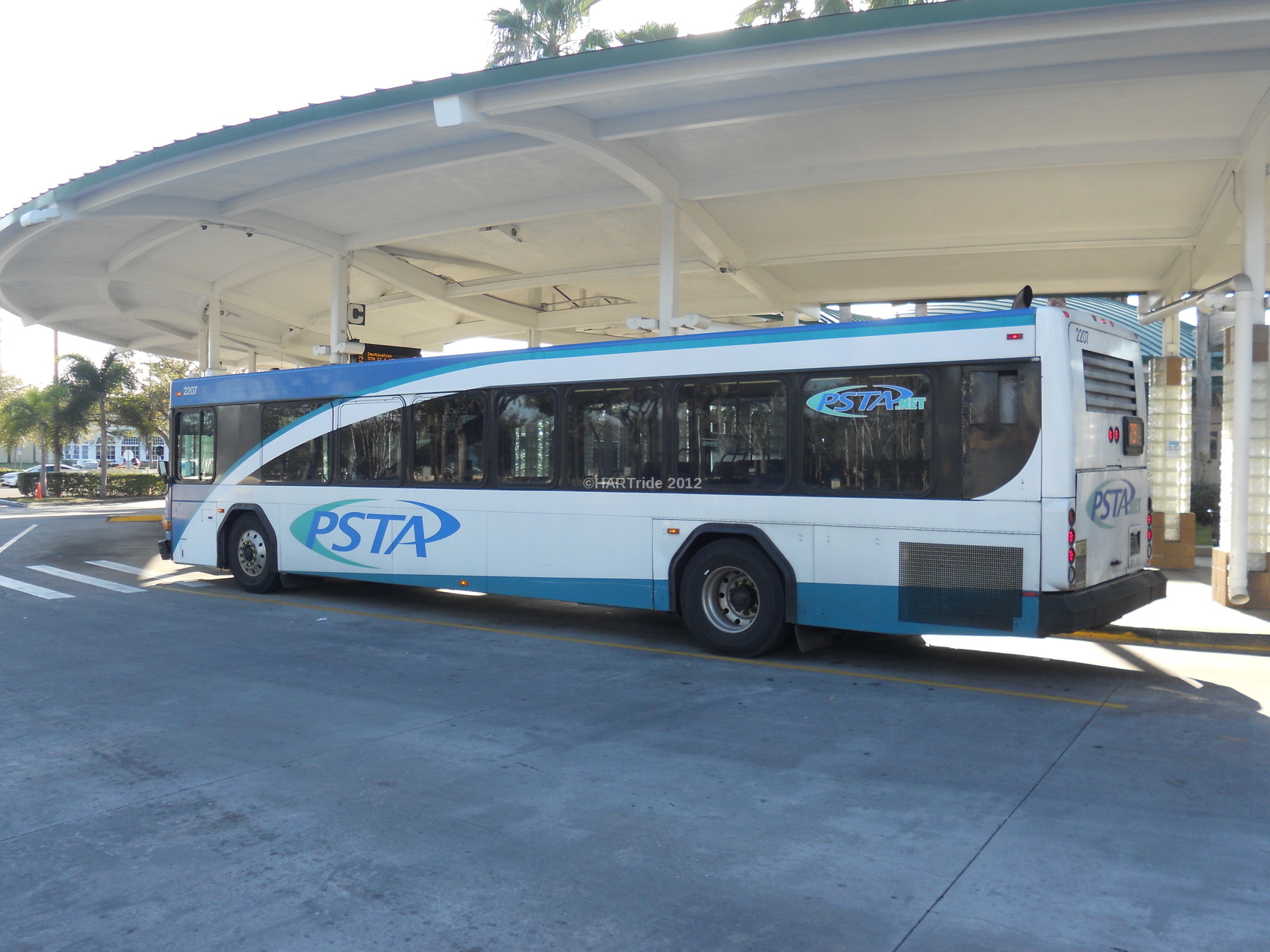
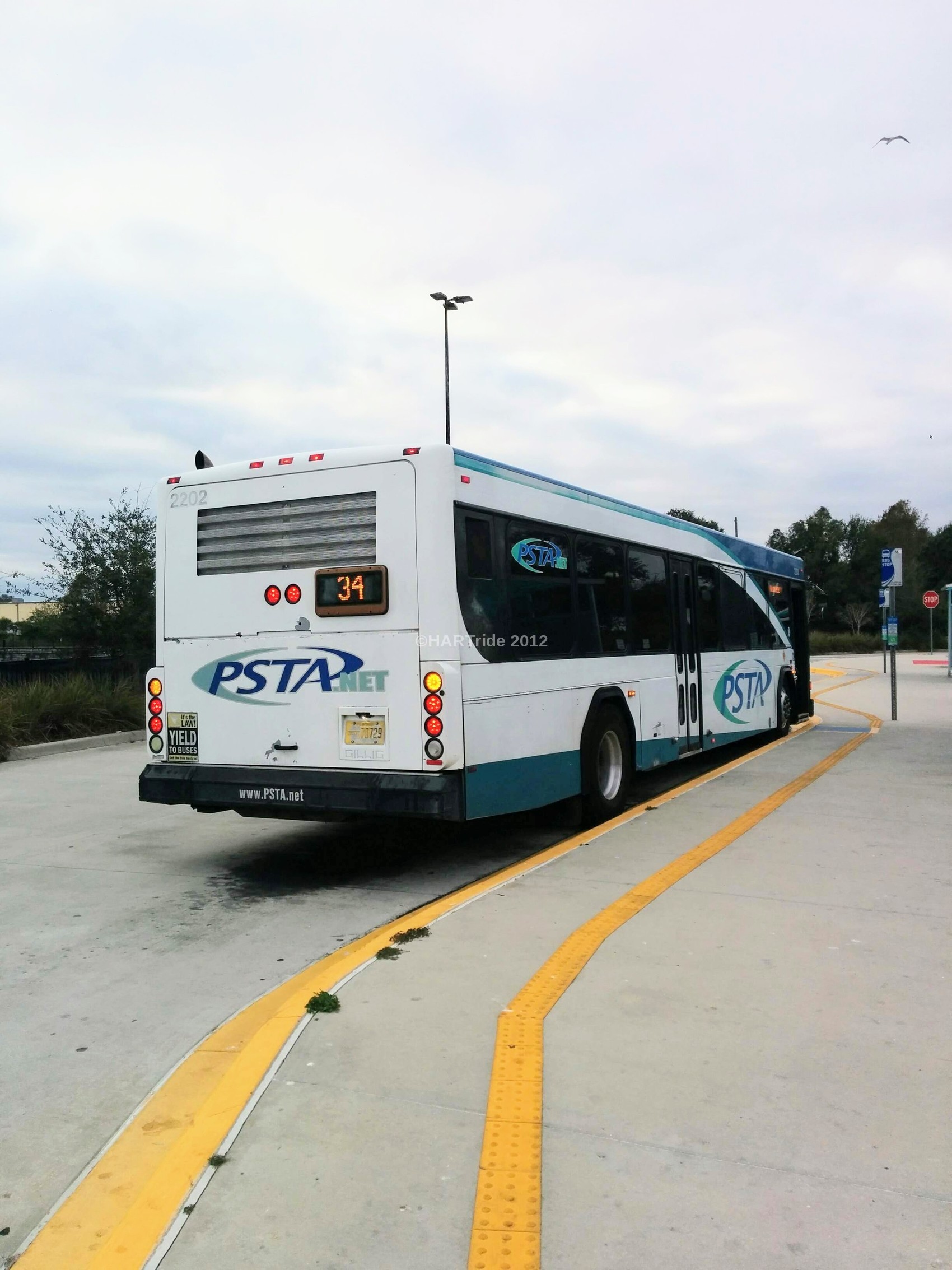
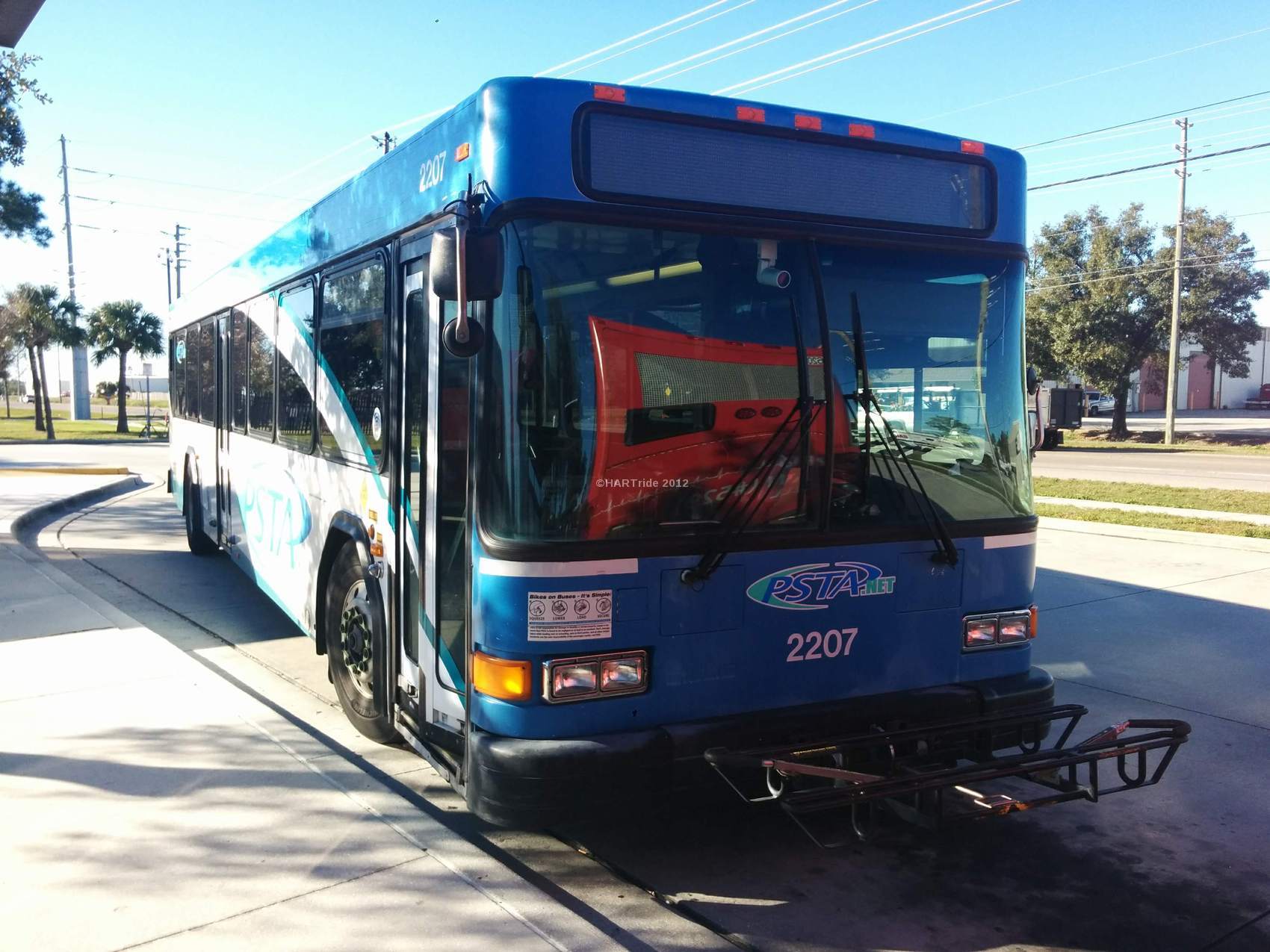
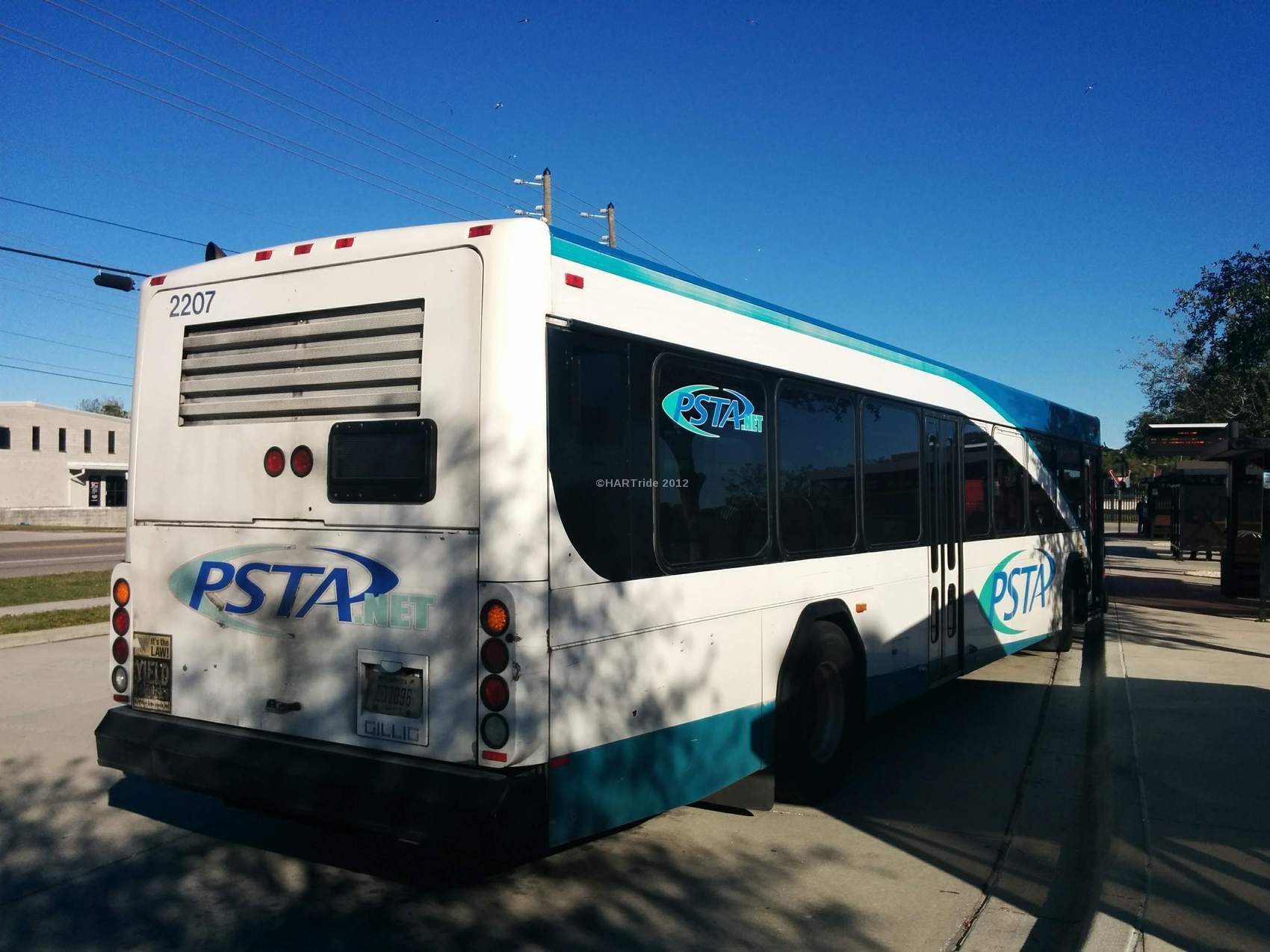
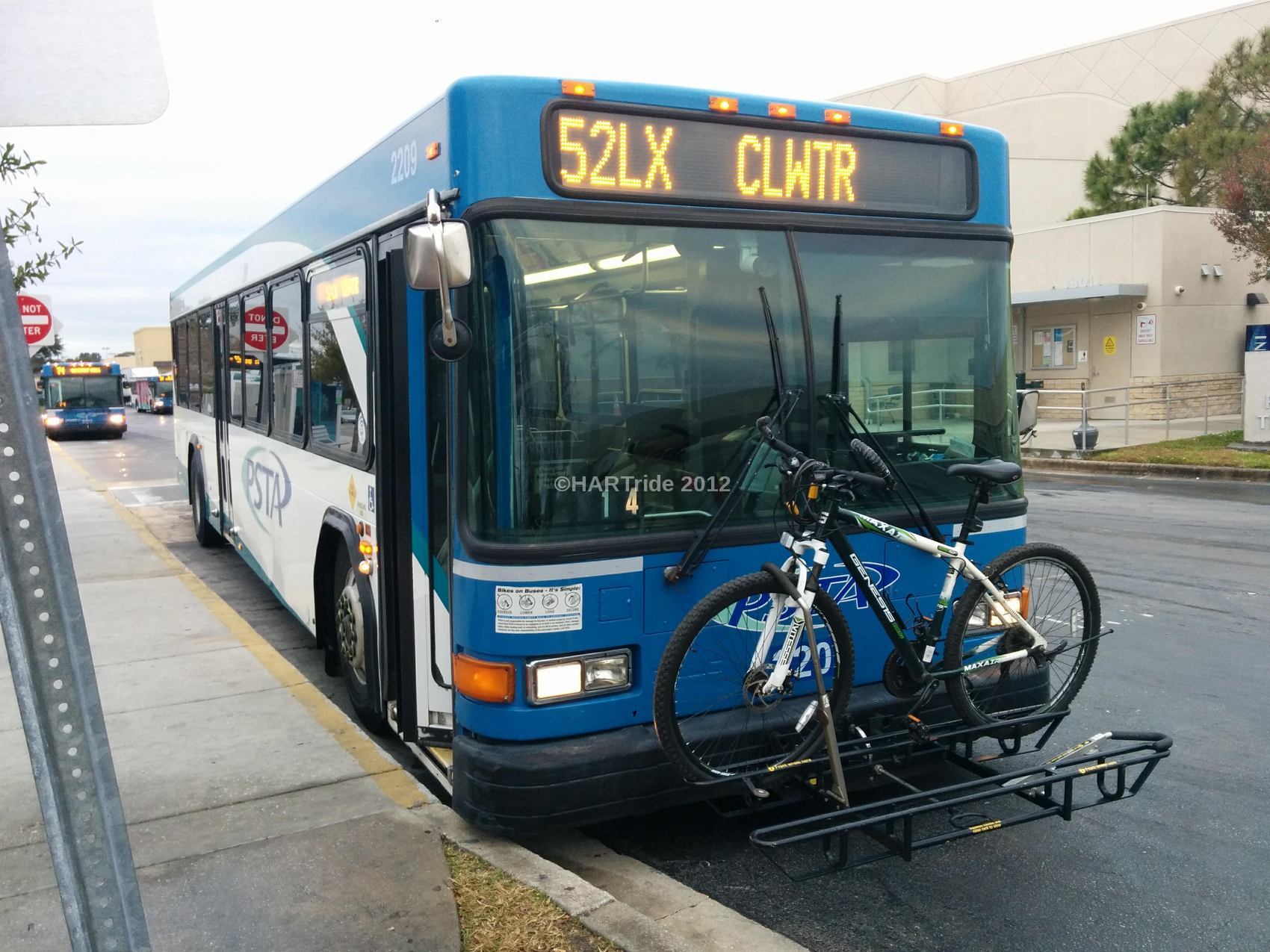
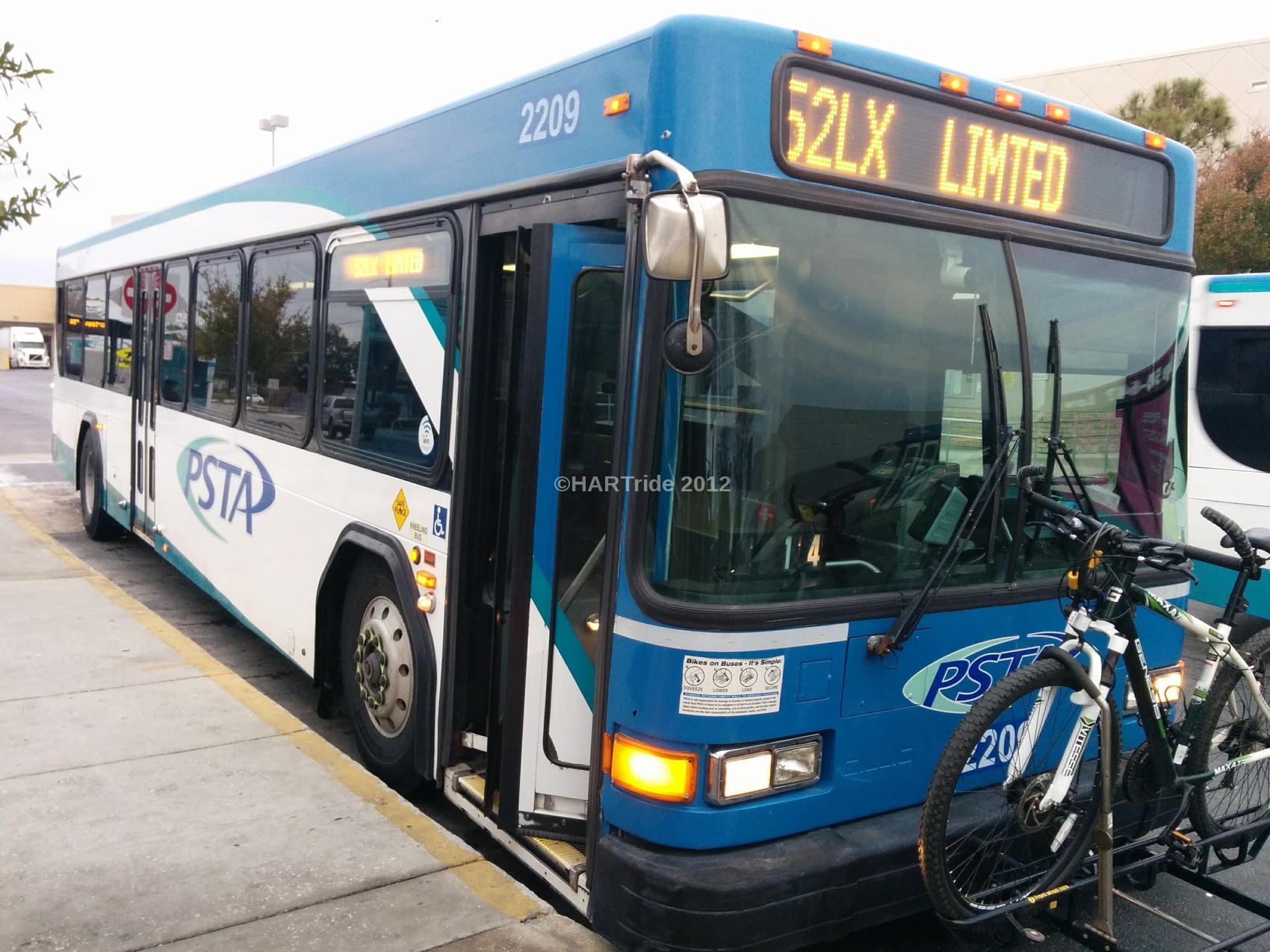
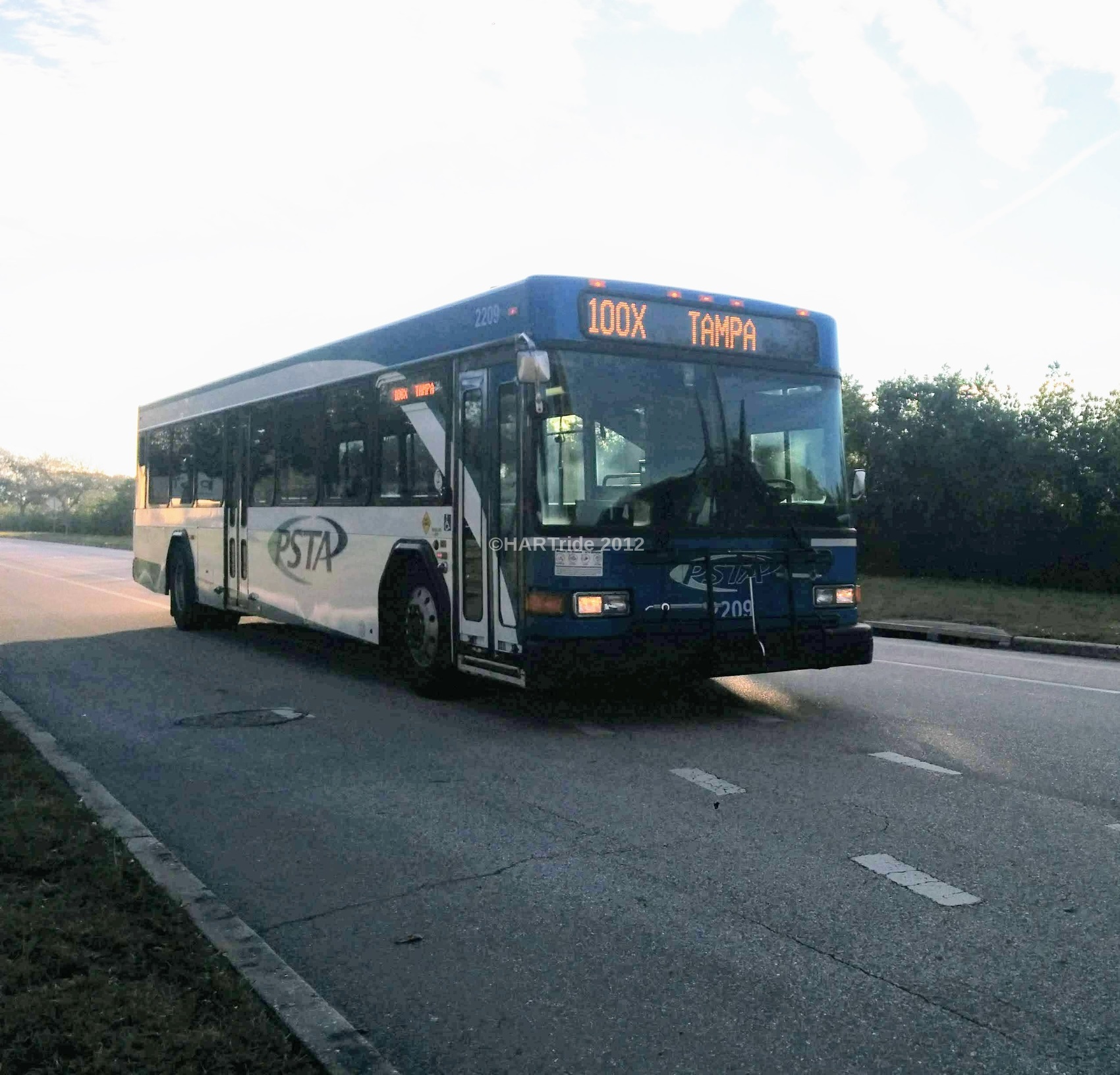
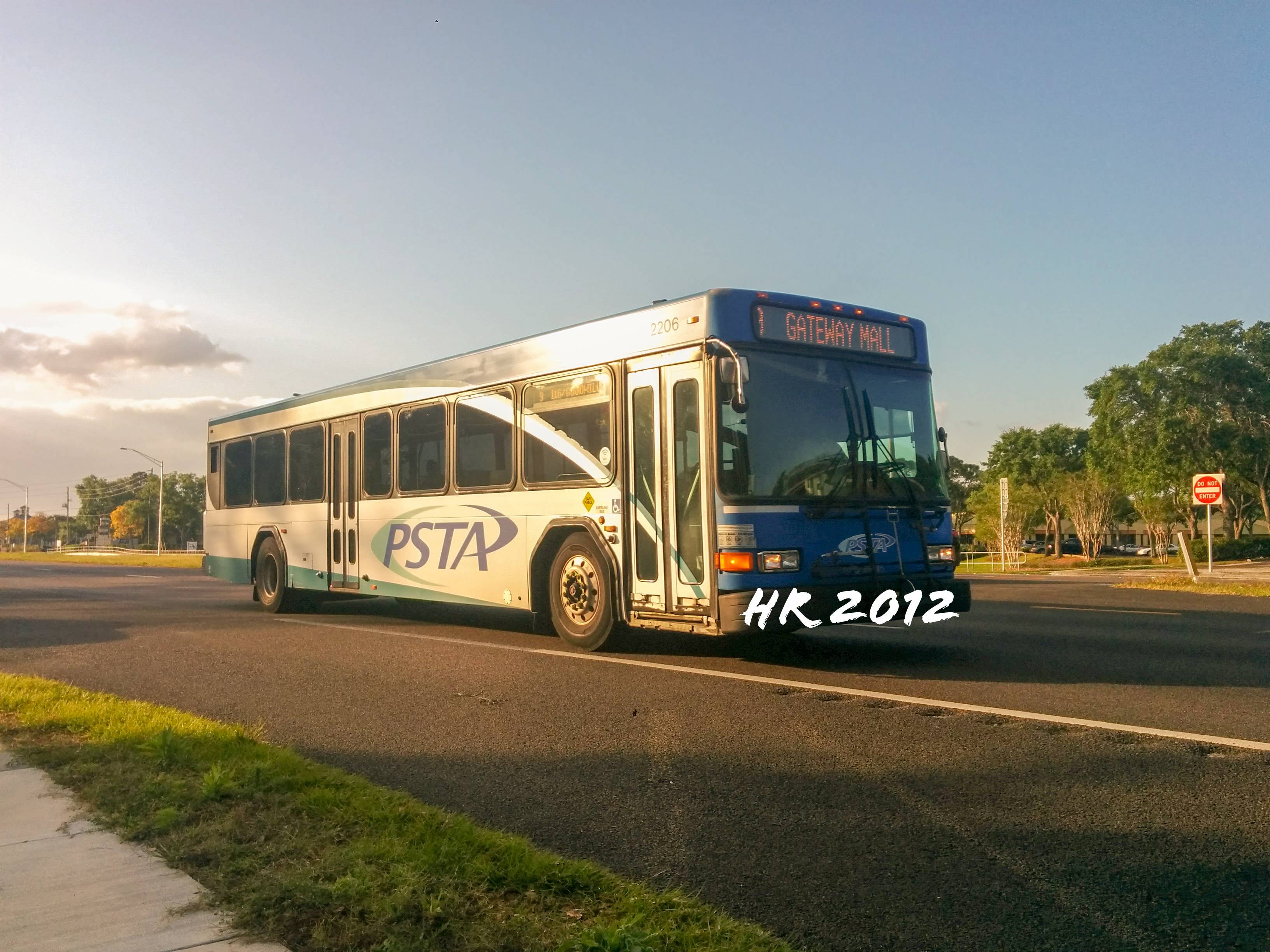
# 2201 at Gateway Mall.Front shot of # 2201.Rear shot of # 2201.# 2205 on Route 74. Credit: Carlos A.# 2205 leaving Grand Central. Credit: Carlos A.# 2205 leaving Williams Park.# 2208 at Gateway Mall.Same bus, different angle.Same bus, different angle.# 2208 pulls out of Grand Central. Credit: Carlos A.# 2209 on Route 79.# 2232 on layover at the Palm Harbor WalMart.Same bus, different angle. Same bus, different angle. Same bus, different angle. Same bus, different angle. Same bus, different angle.# 2233 at Gateway Mall.# 2207 at Grand Central.Side angle of # 2207.# 2204 at Largo Transit Center.Side angle of # 2204.Rear angle of # 2204.# 2206 on layover at Pinellas Park Transit Center – Route 34.And there she goes!# 2202 on recovery at Largo Transit Center.Rear angle of # 2202.With only a 10 minute layover, the operator decided to remain on board.# 2207 on recovery at the 34th St N Transfer Center (PSTA Layby).Same bus, different angle.Same bus, different angle.# 2209 on layover at Pinellas Park Transit Center – Route 52LX.Slightly different angle of # 2209.And here’s # 2209 the next day on Route 100X, leaving Gateway Mall.# 2209 on recovery at Pinellas Park Transit Center.Final sighting of #2206 prior to retirement – Route 58.
Quick glimpse inside # 2232.
Quick ride on board #2204 on Route 74.
#2204 turning the corner in the Carillon Business Park.
On board #2232 through Dunedin.
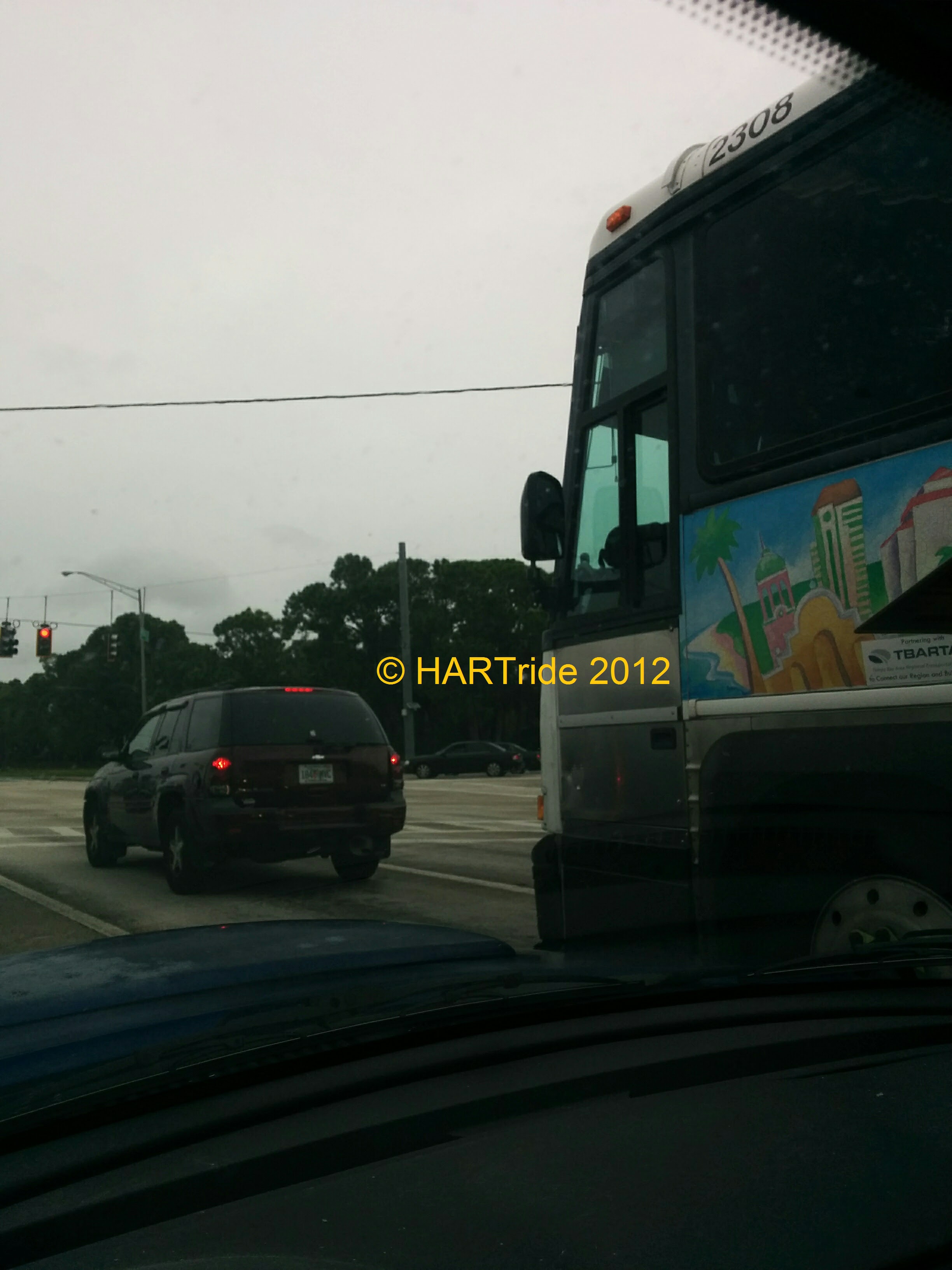
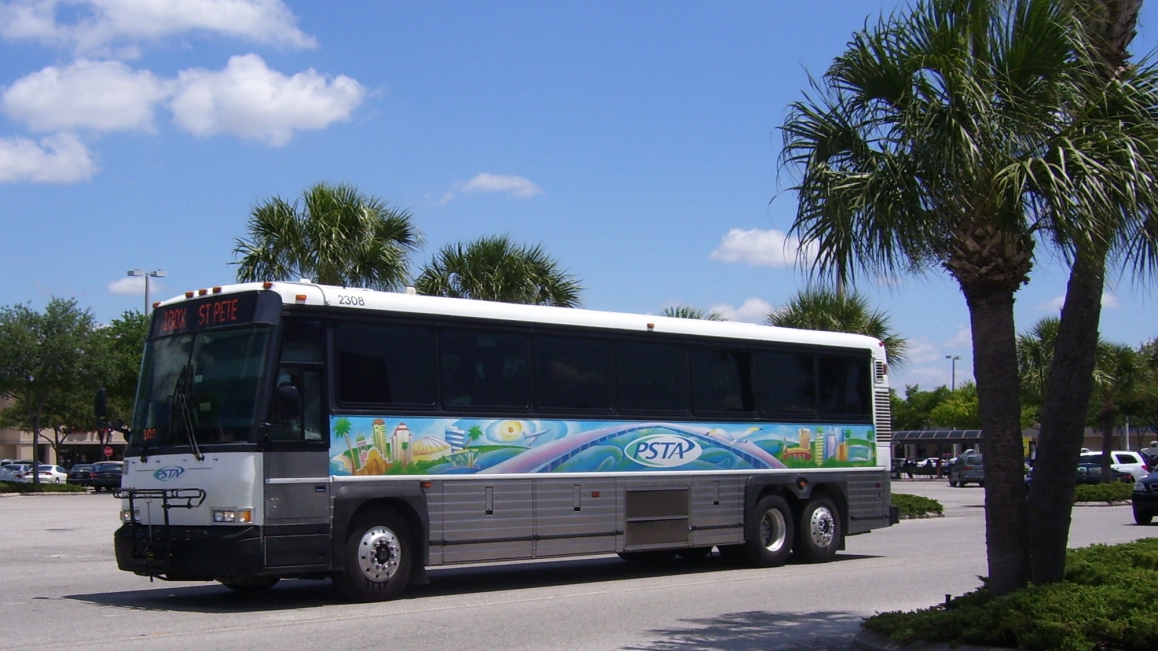
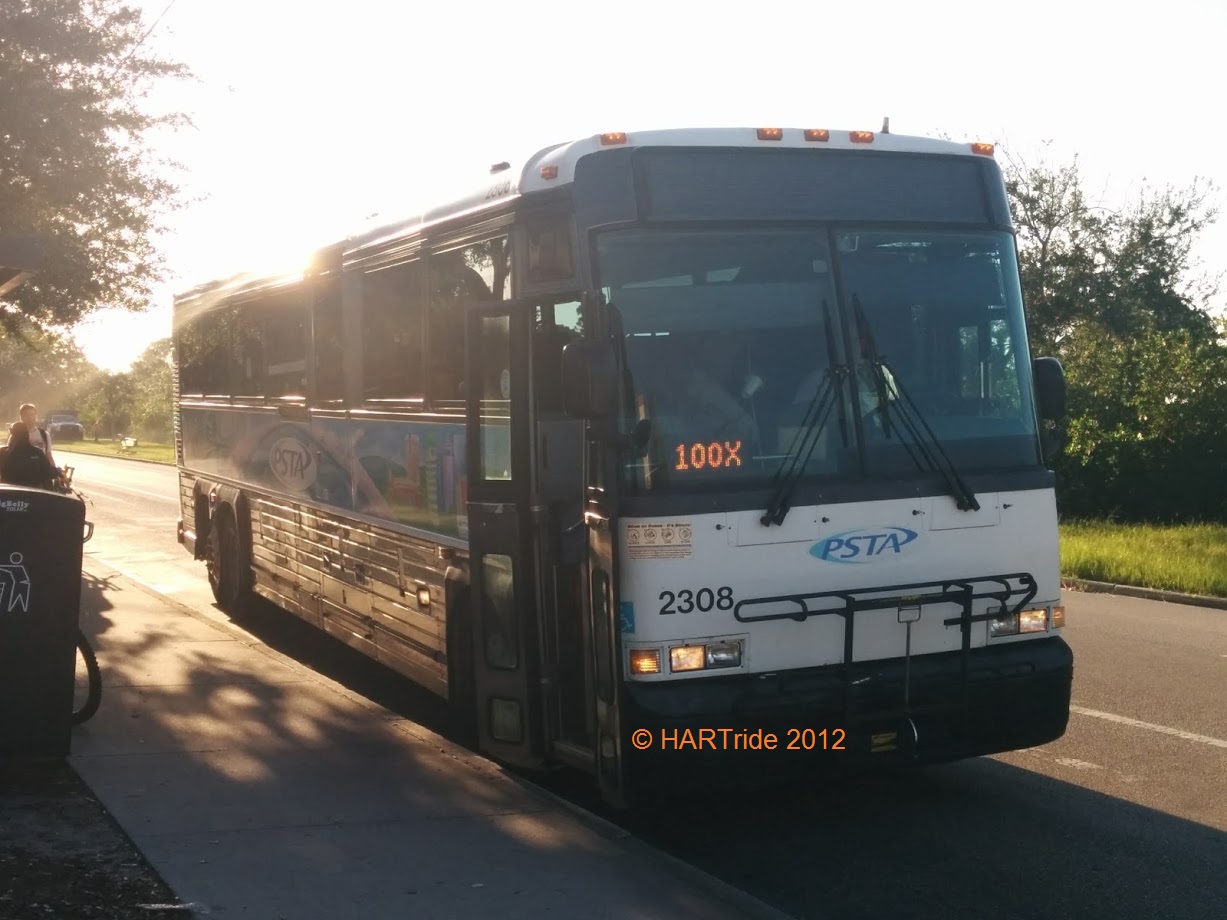
# 2308 departs Britton Plaza. Photo taken originally by HARTride 2012 (me), but released into the Public Domain (used on Wikipedia).
2003 Motor Coach Industries (MCI) D4000 Diesel
40′ – #’s 2301 through 2310
In revenue service from 2003 until 2017
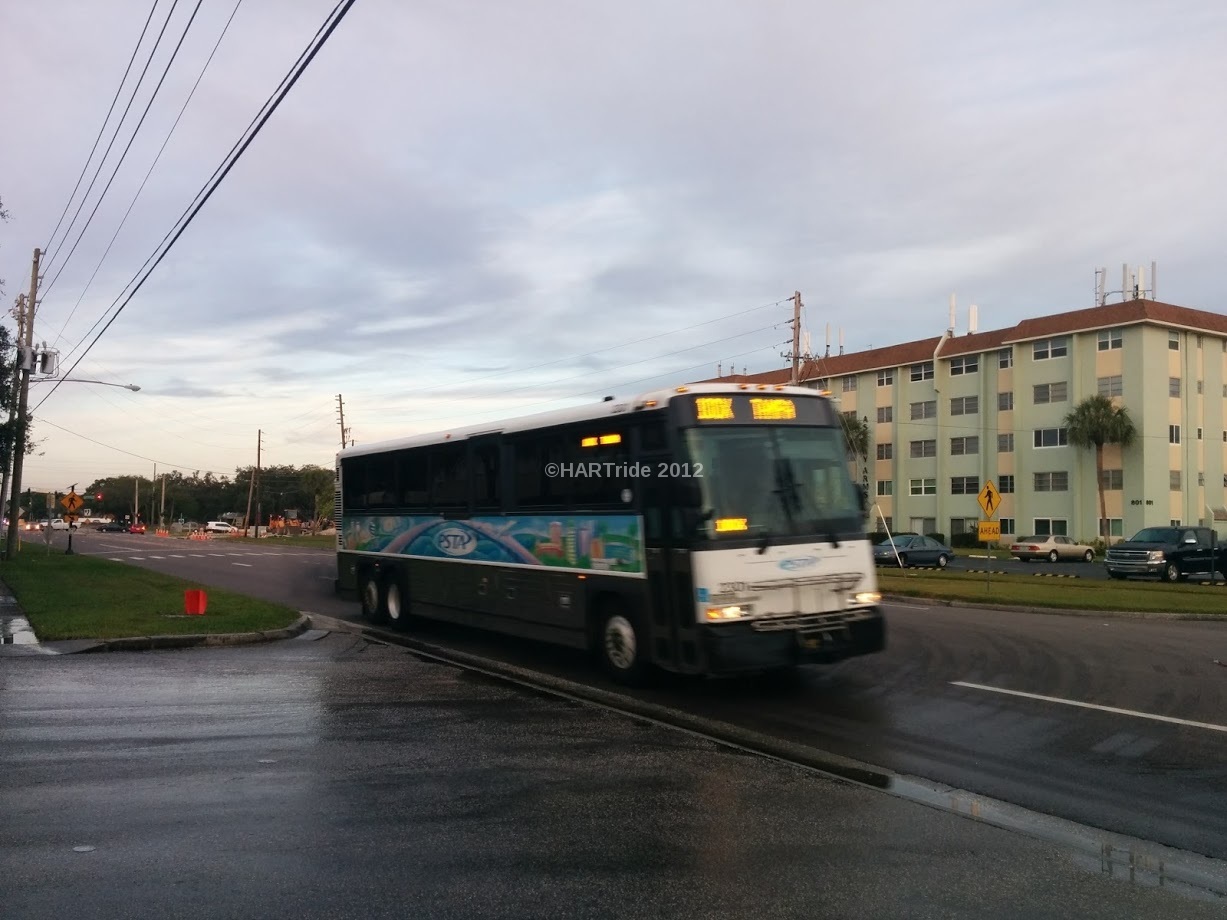
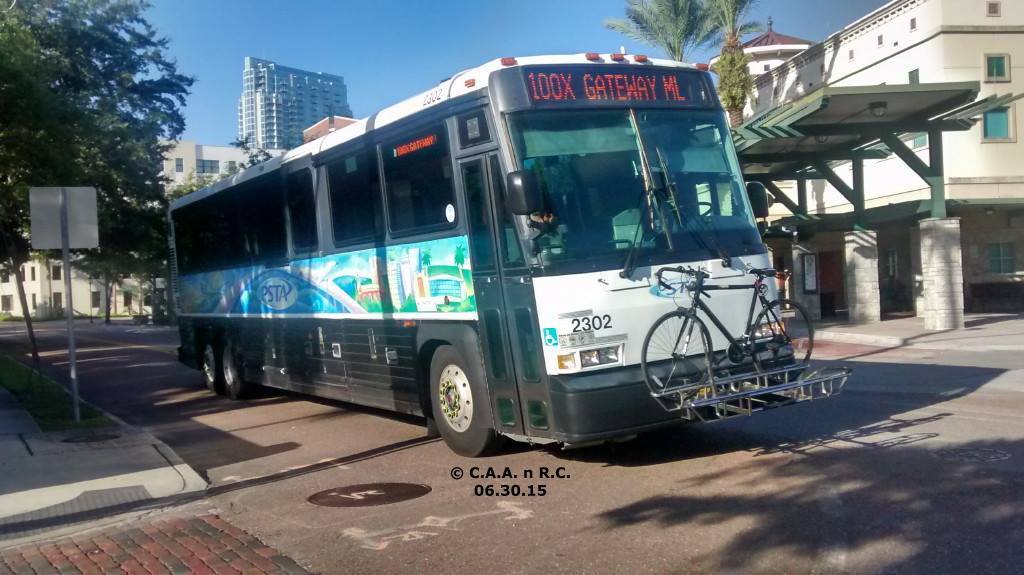
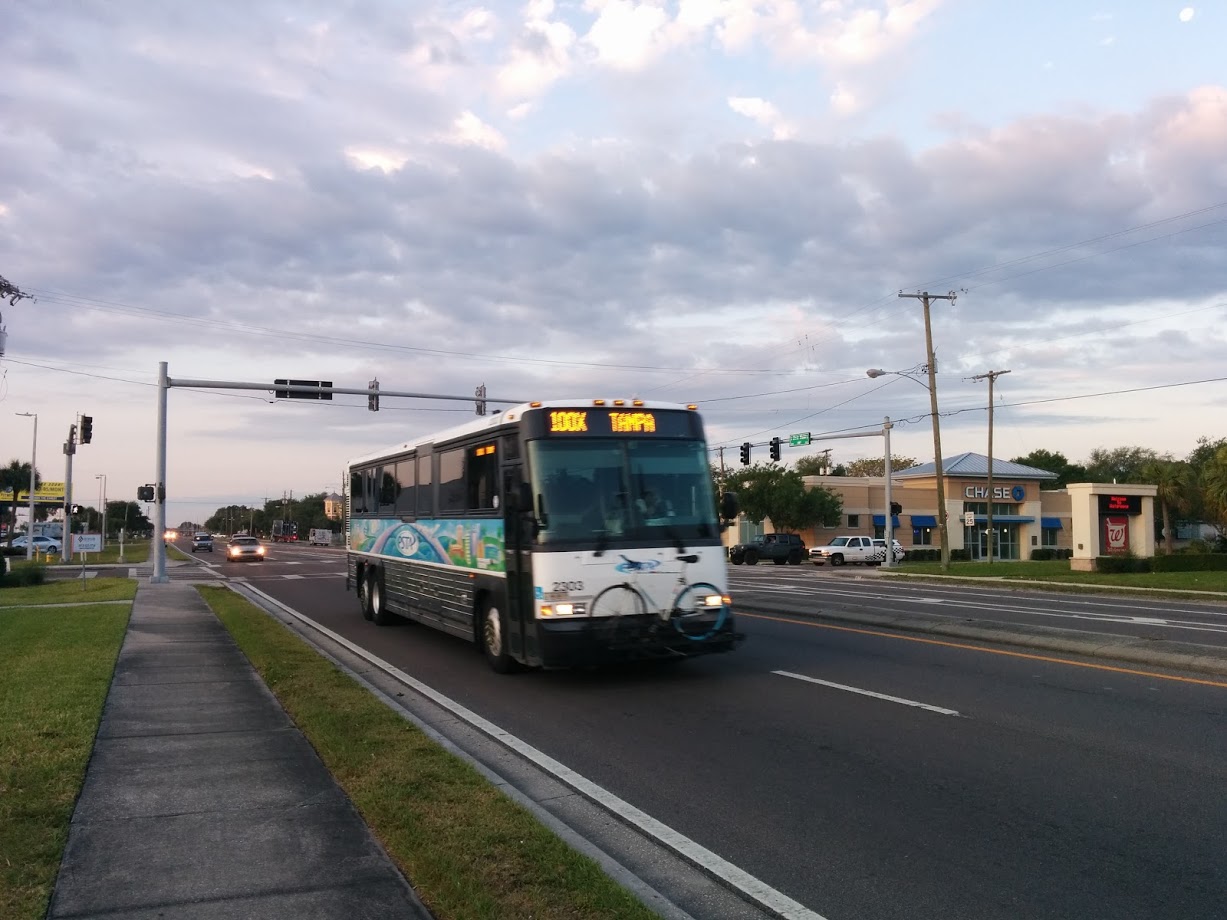
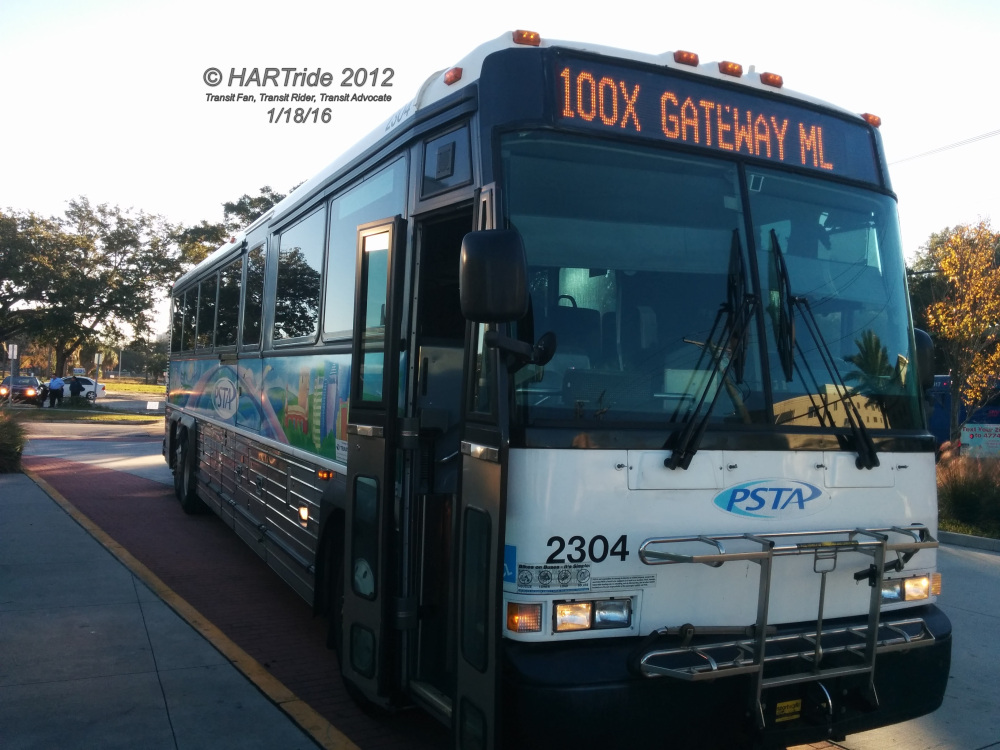
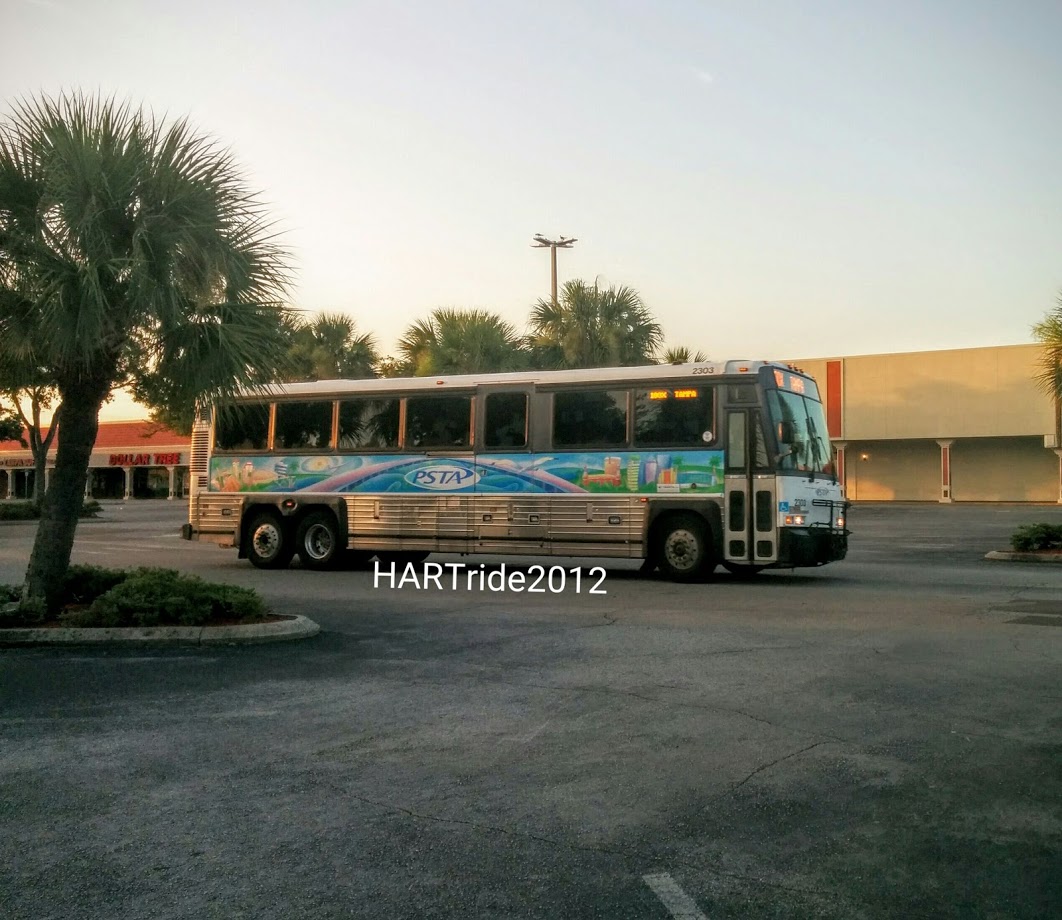
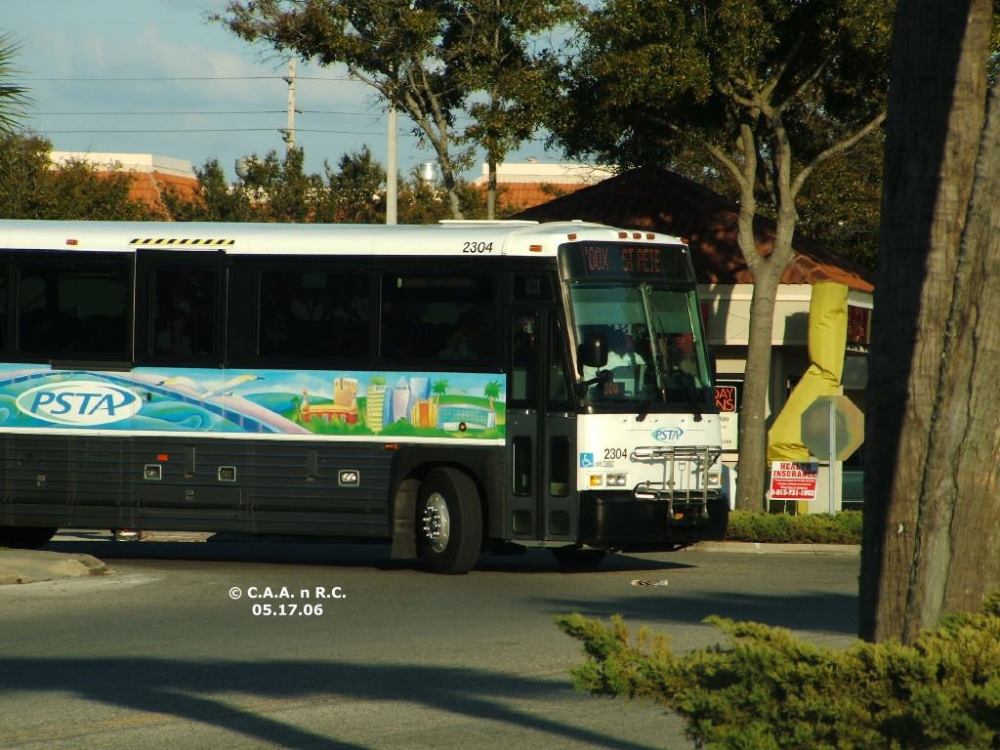
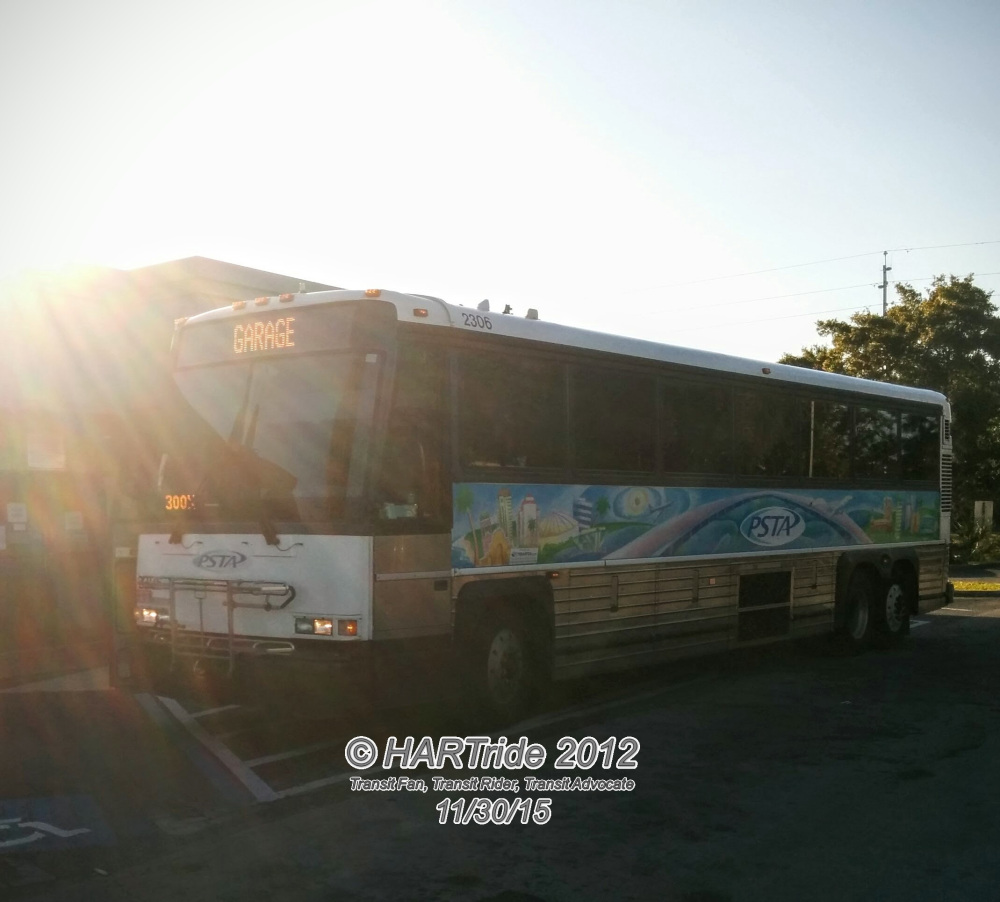
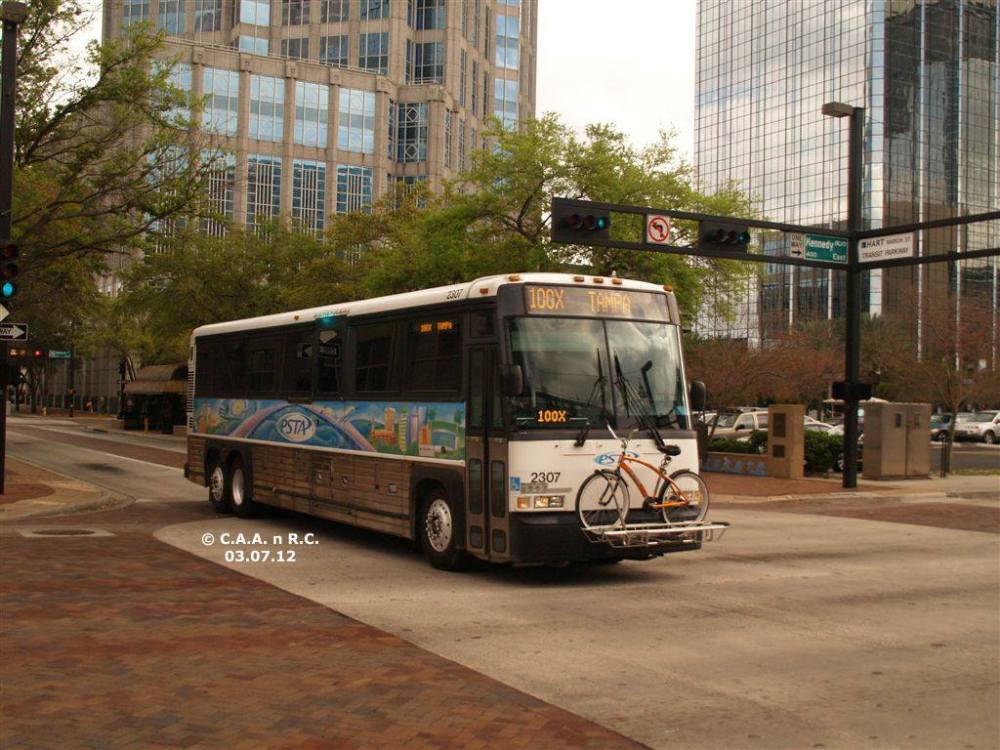
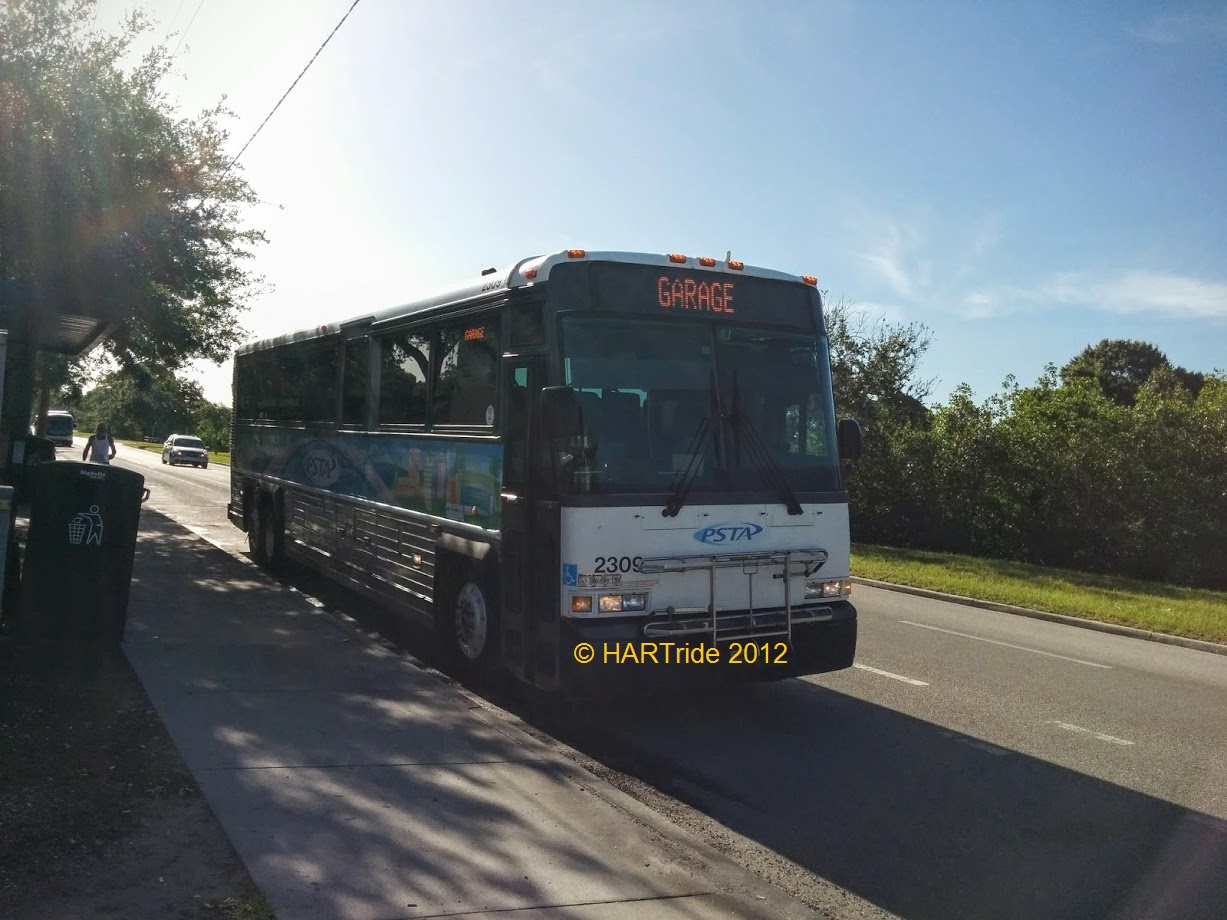
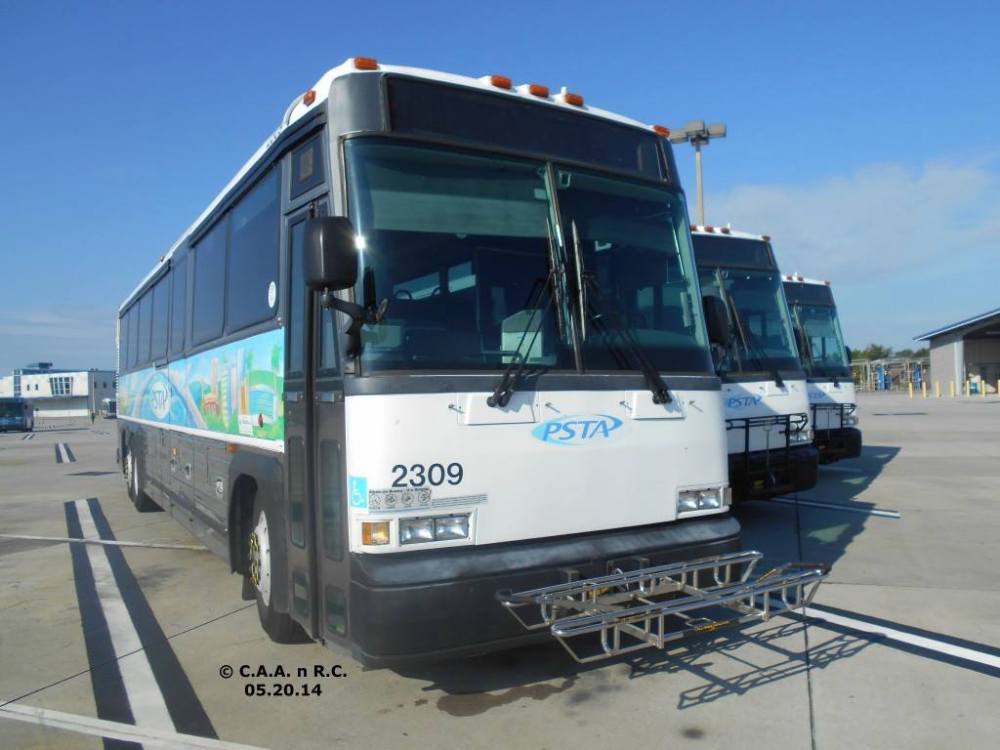
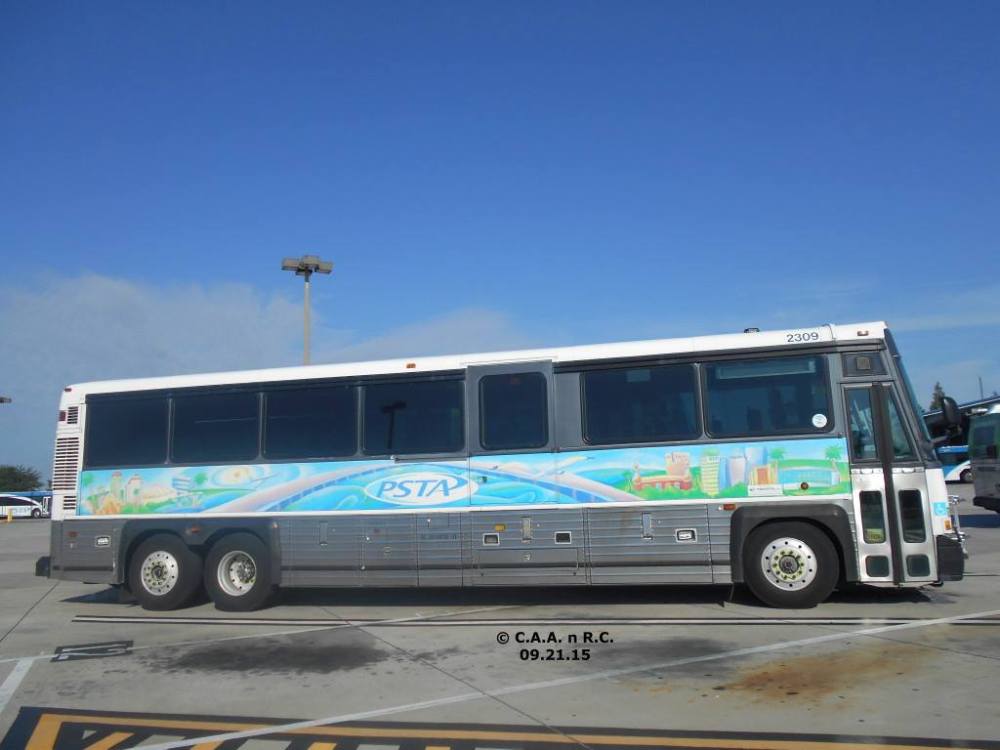
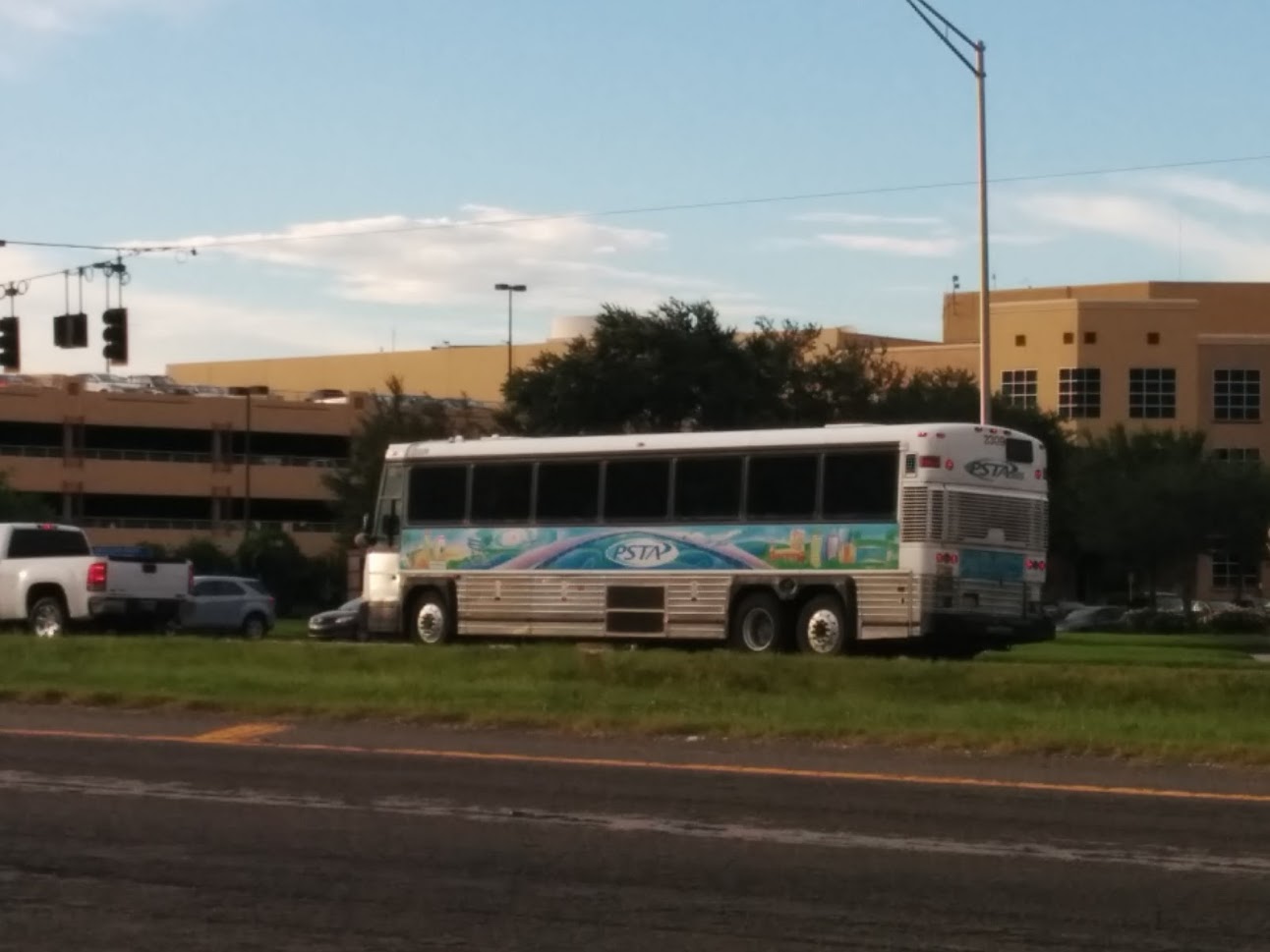
In 2003, PSTA purchased ten 40-foot Motor Coach Industries (MCI) coaches for use on the 100X and 300X. These coaches were mostly white with side wraps depicting an artistic view of downtown St. Pete and downtown Tampa connected by a bridge, highlighting the cross-bay connection between Pinellas and Hillsborough Counties.
While these coaches enjoyed a good run across the bay area bridges and back, their time began to wind down in 2015 when #’s 2302, 2303, 2304, & 2305 were retired. Then in 2016; #’s 2301, 2307, & 2310 were retired. Finally in 2017; #’s 2306, 2308, & 2309 were retired – with 2309 being the last of the bunch to be phased out of revenue service.
# 2301 at Britton Plaza. Credit: Carlos A.# 2301 on the 300X. Credit: Carlos A.# 2301 on the 100X. This photo would be my last ever sighting of this particular bus.# 2302 pulling into Marion Transit Center. Credit: Carlos A.# 2302 turns the corner in Downtown Tampa. Credit: Carlos A.# 2303 returning to the garage.Another deadheading occurrence for # 2303.# 2303 on the 100X, passing Britton Plaza.# 2304 at Marion Transit Center.And here she is back at Gateway Mall.# 2303 leaving Britton Plaza.# 2302 at Britton Plaza# 2304 turns the corner to exit Britton Plaza. Credit: Carlos A.# 2305 arrives at Marion Transit Center. Credit: Carlos A.Rear of # 2303 at Marion Transit Center. Credit: Carlos A.# 2306 at the Ulmerton Park-N-Ride Lot.Same bus, different angle… Same bus, different angle… Same bus, different angle… # 2307 on the Marion Transitway. Credit: Carlos A.And she passes by! Credit: Carlos A.# 2308 on the Marion Transitway. Credit: Carlos A.# 2305 is all but a blur as it exits Britton Plaza.# 2309 exiting Britton Plaza.And here she is at Gateway Mall, about to return to the garage.# 2308 at Gateway Mall.It’s boarding time for # 2309.# 2309 at the garage. Credit: Carlos A.Different angle of # 2309. Credit: Carlos A.Different angle of # 2309. Credit: Carlos A.# 2309 deadheading to the garage.# 2304 heading to Gateway Mall for its 100X departure.# 2310 at Marion Transit Center. Credit: Carlos A.
# 2505 is prepped for a switchout at Pinellas Park Transit Center. It wound up replacing # 2634 on Route 74. Notice the headsign reading – yes these buses are programmed to operate on the Downtown St. Petersburg “Looper” if needed, but the use of a diesel bus on that route is a last resort if no hybrids are available to replace one of the battery electrics.
2005 Gillig Low Floor Diesel
40′, 35′, & 29′
40′ – #’s 2501 through 2508, 35′ – 2510 through 2517, 29′ – 2530 through 2534
In revenue service from 2005 until 2025
PSTA made a split order of Gillig Low Floor buses comprising of all three lengths. The 40′ & 35′ units were often spread throughout the county on any given service day, while the 29′ units mainly roamed on lower ridership routes like the 5, 22, & 58. For a time, the 29′ units also served as stop-gap vehicles for the van routes (the 812, 813, & 814) due to the unexpected early retirement of the 2012-series Champion LF Transport cutaway vans.
During their later years in service, most of the 40′ & 35′ units were relegated to being contingency spares. # 2512 was retired at some point prior to 2016, while other units began to gradually be phased out of service beginning in 2020. With the arrival of the 2024-series Gillig Low Floor Plus Battery Electric units, the remaining 2500s were deemed officially done, though #’s 2501 & 2502 remained in the fleet as non-revenue/training units until around May, 2025 – when they were cleared off PSTA property.
Due to changing fleet composition needs after the Connected Community Bus Network system redesign takes effect in October, 2025, the 29′ units are not being replaced.
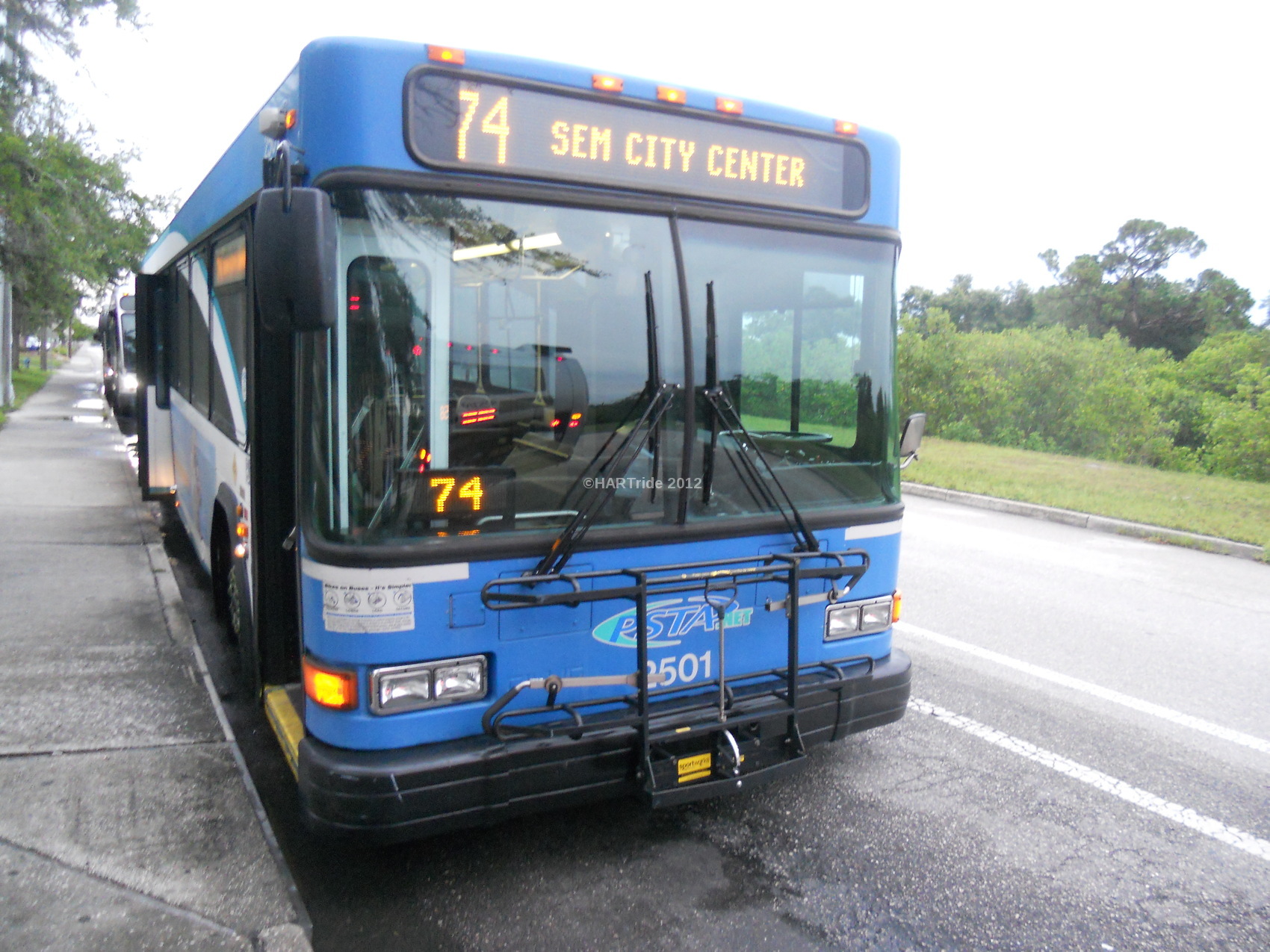
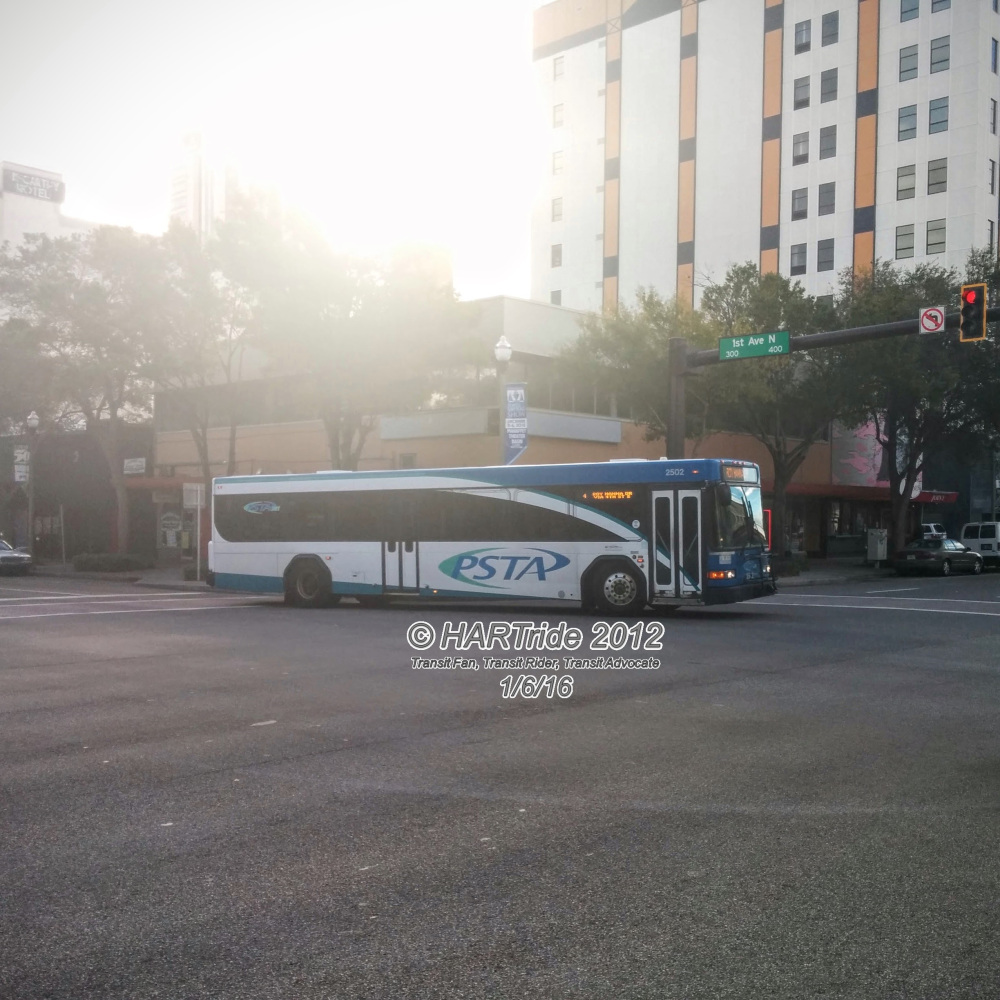
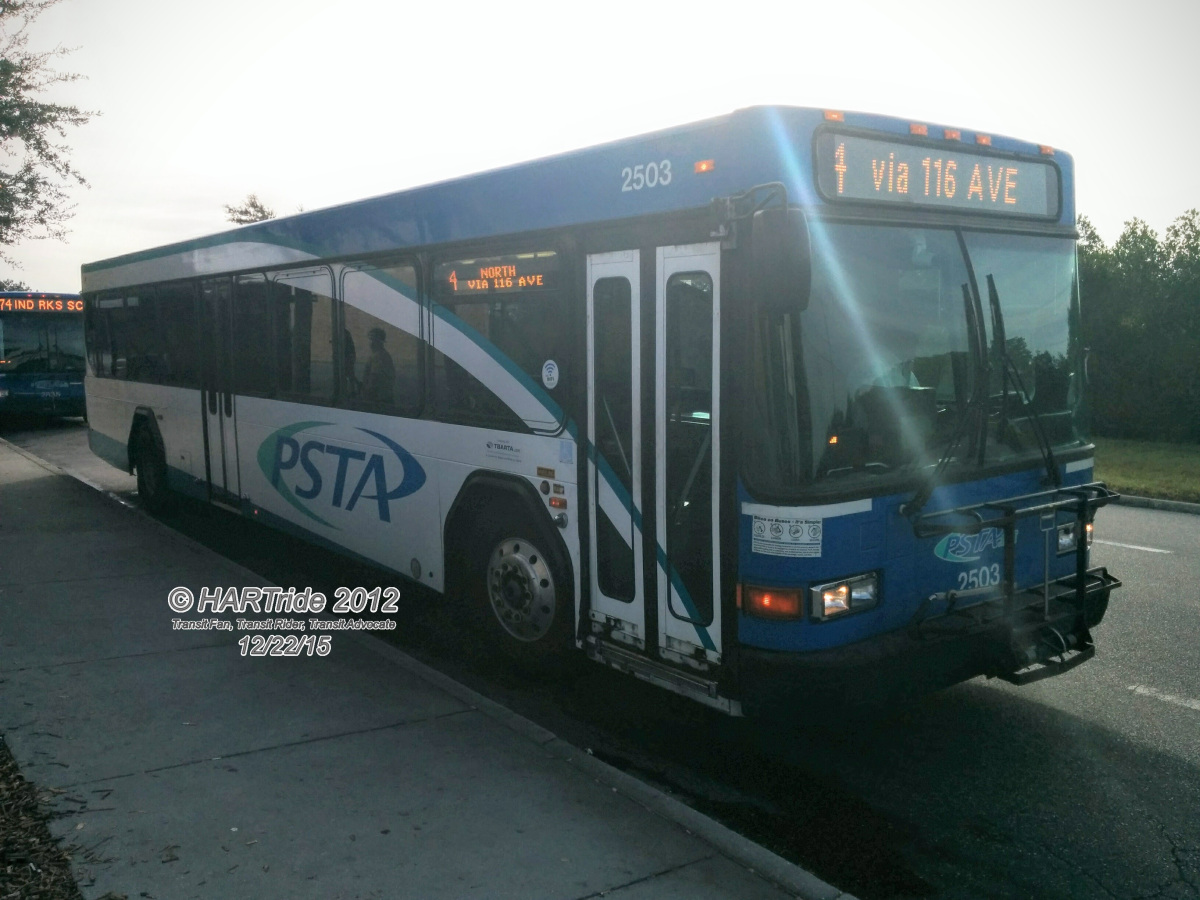
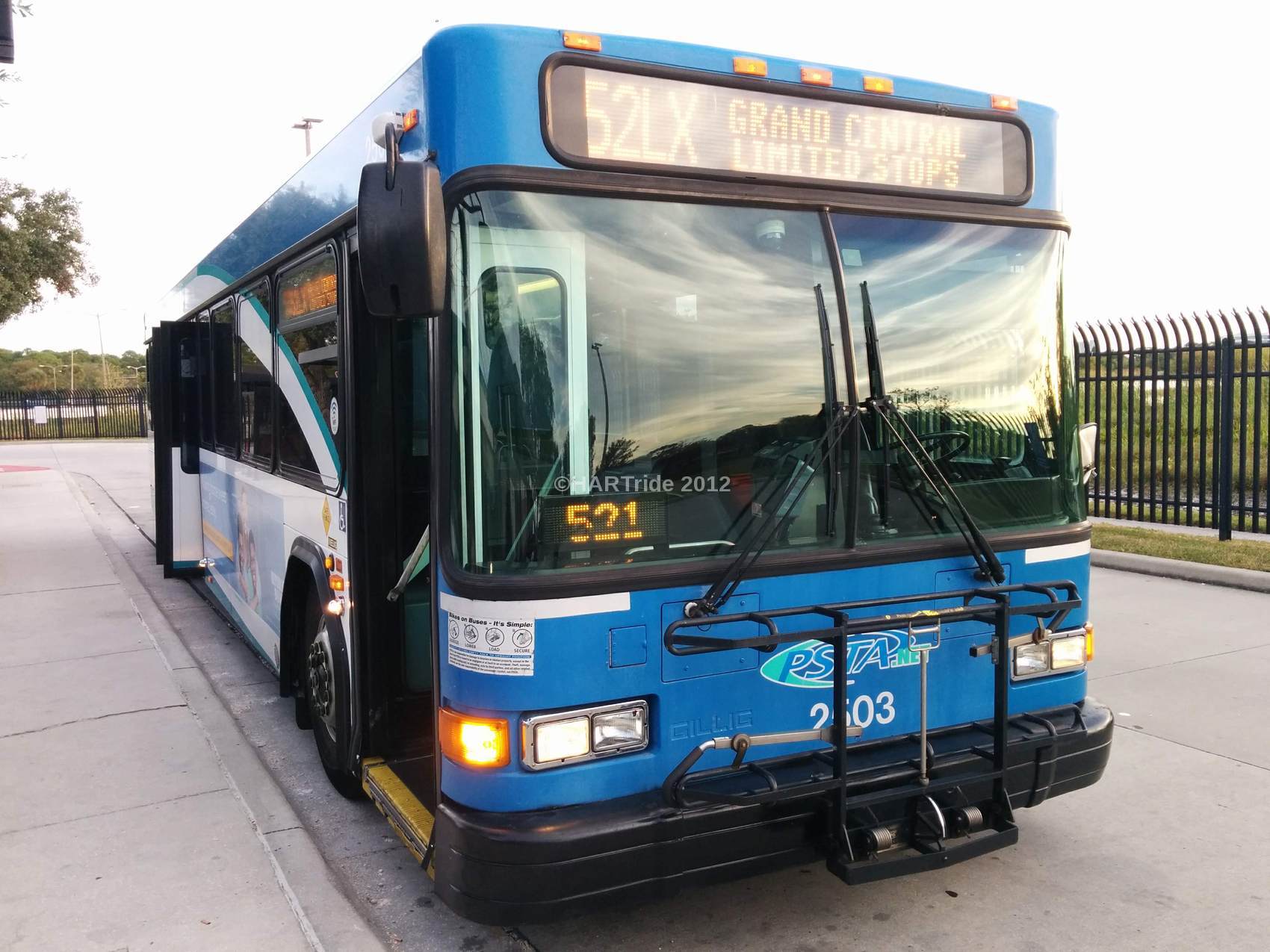
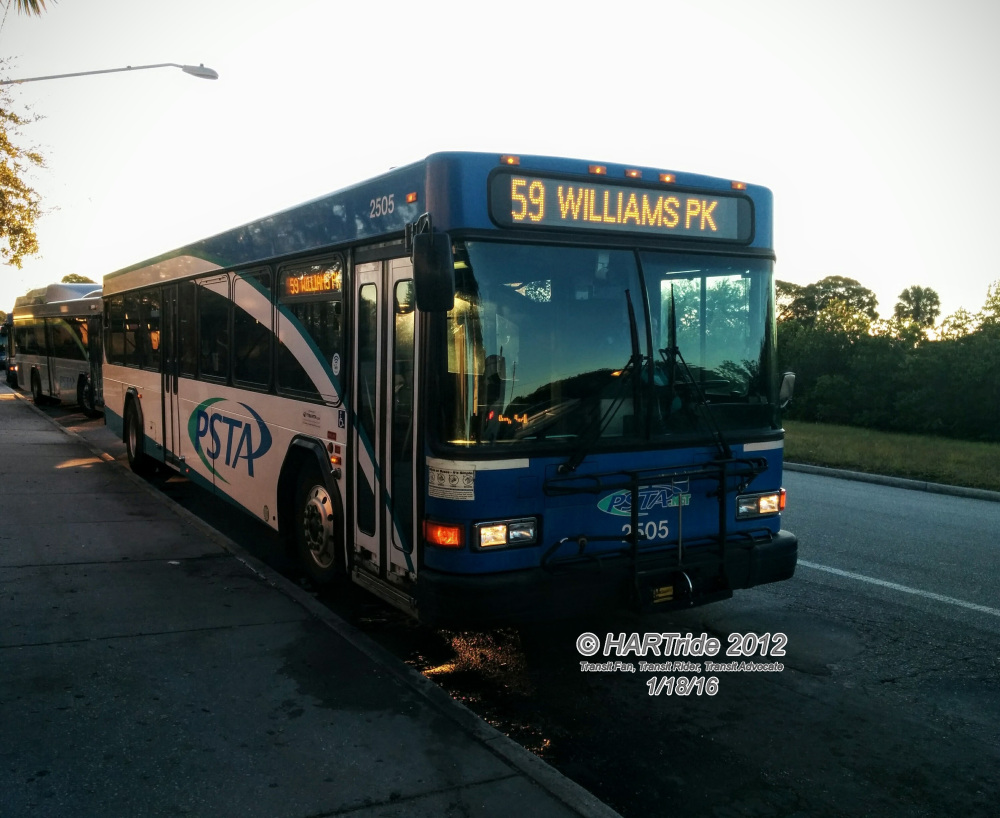
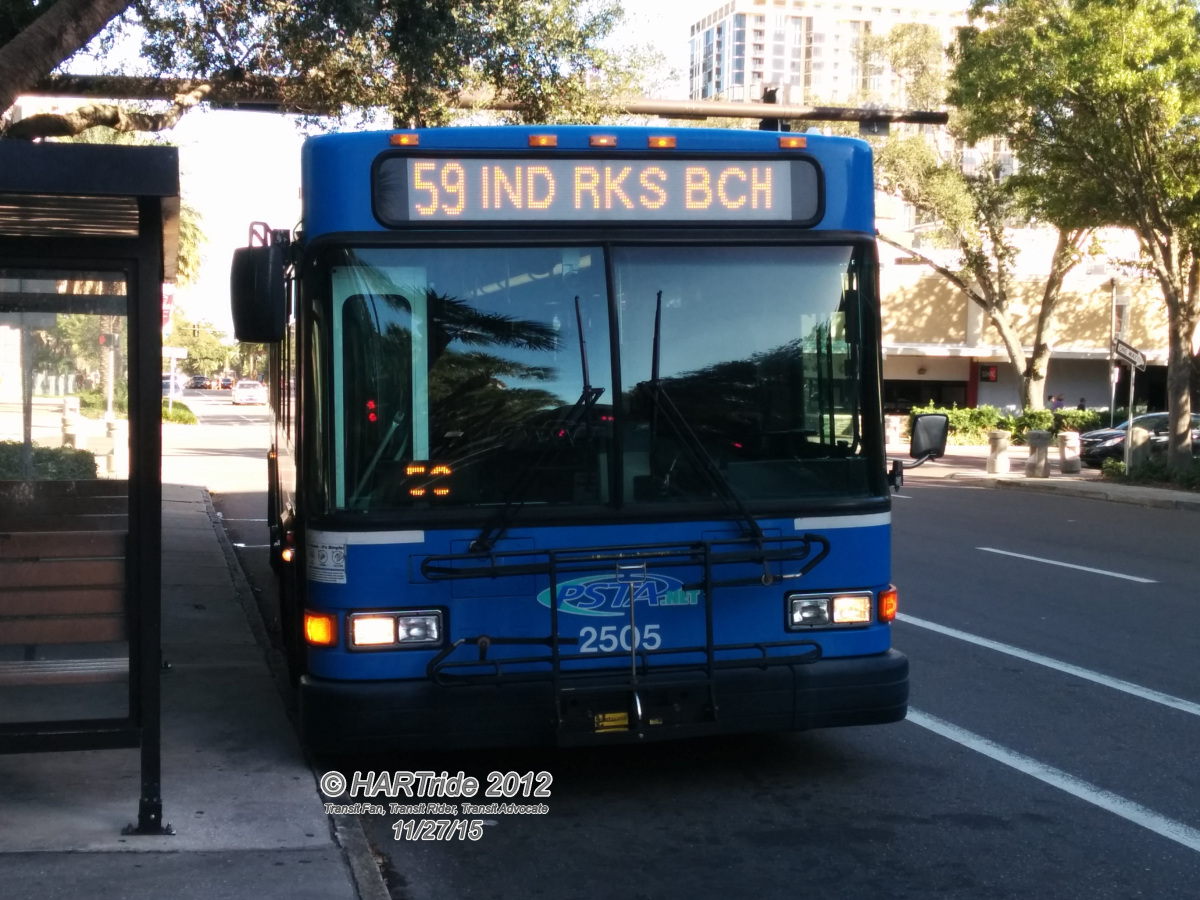
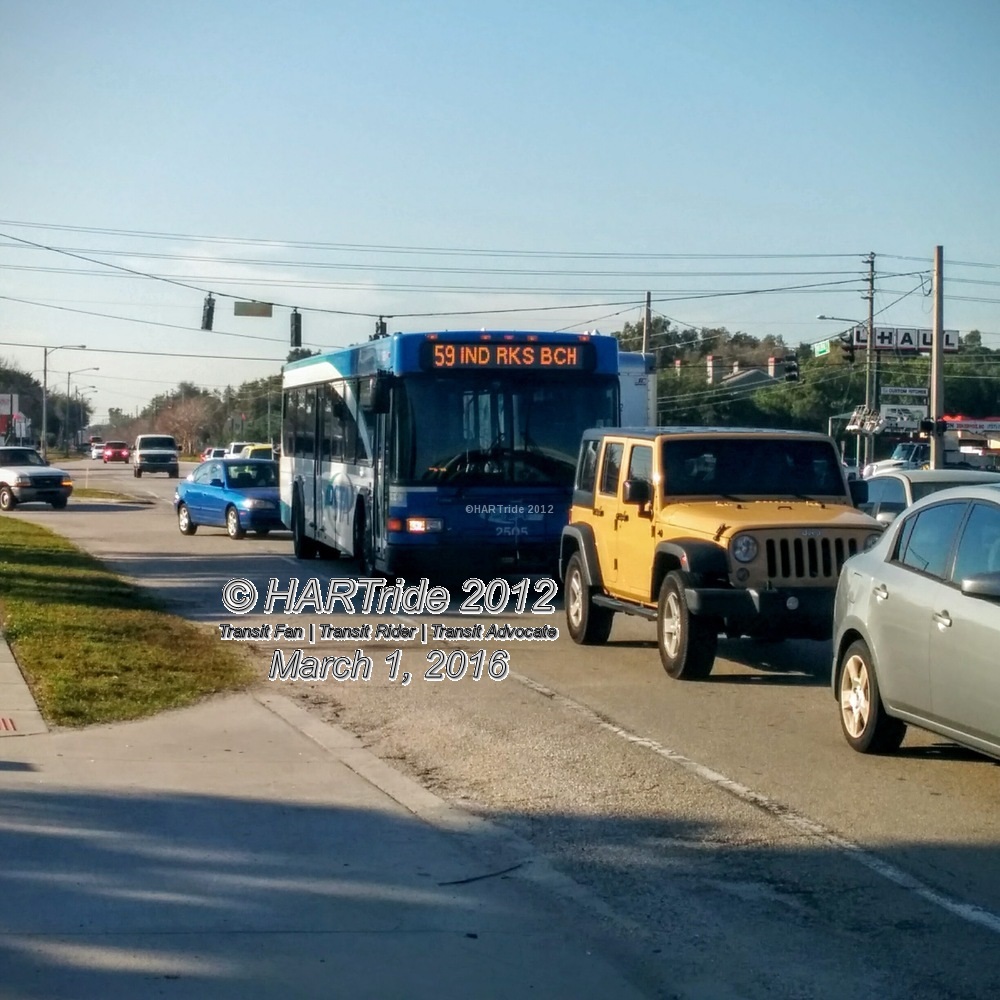
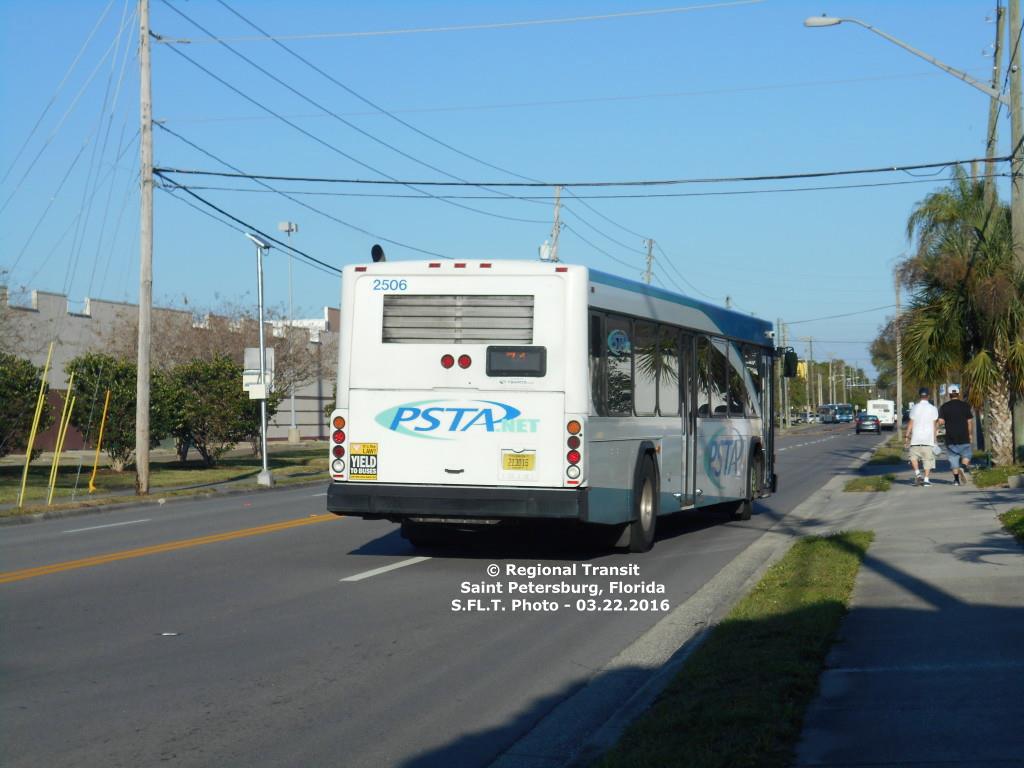
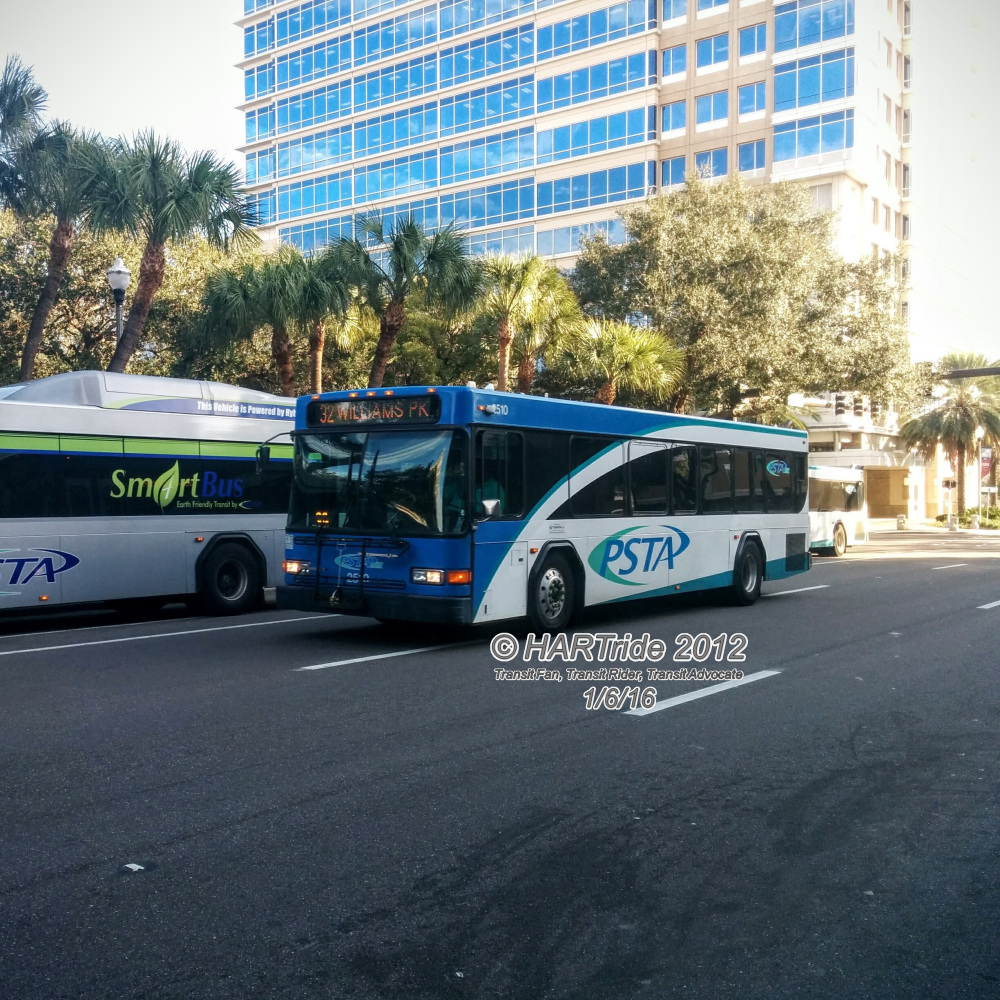
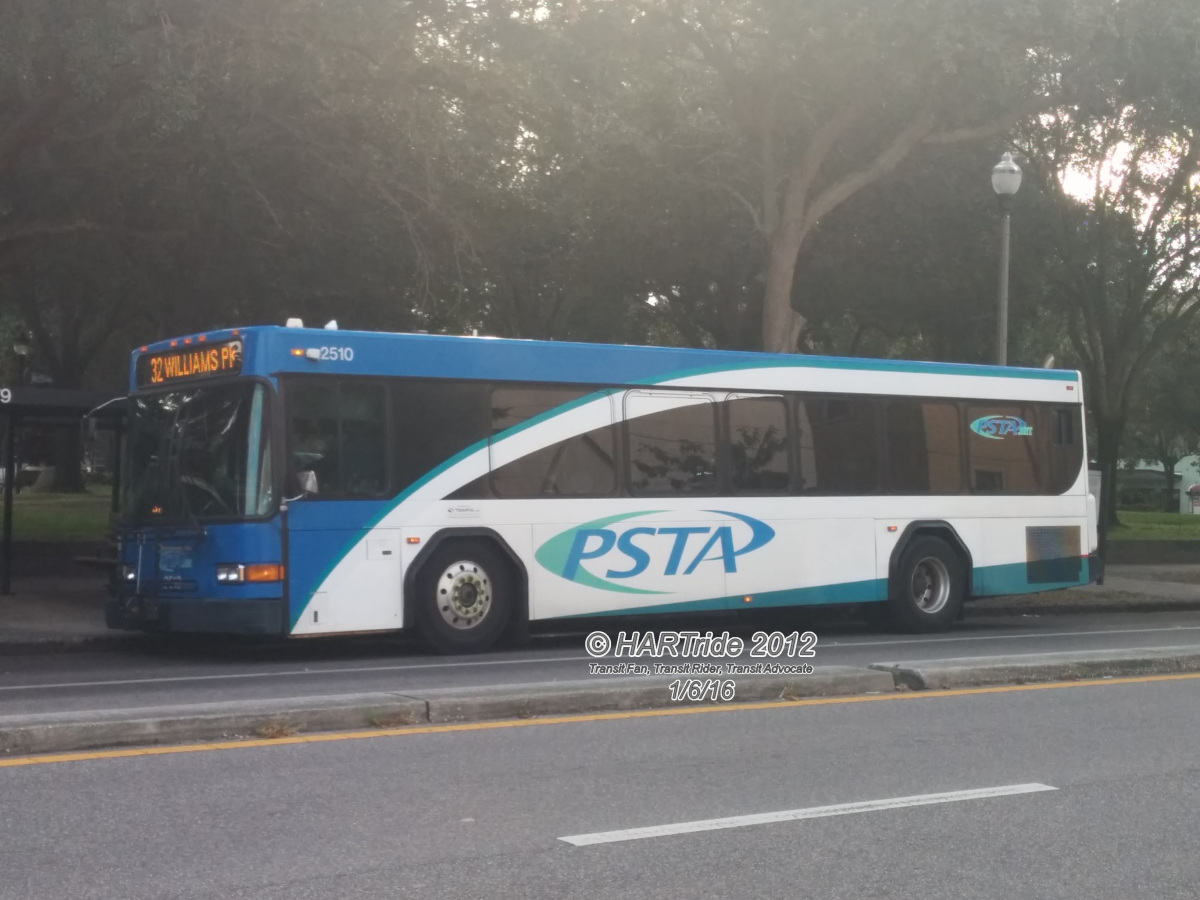
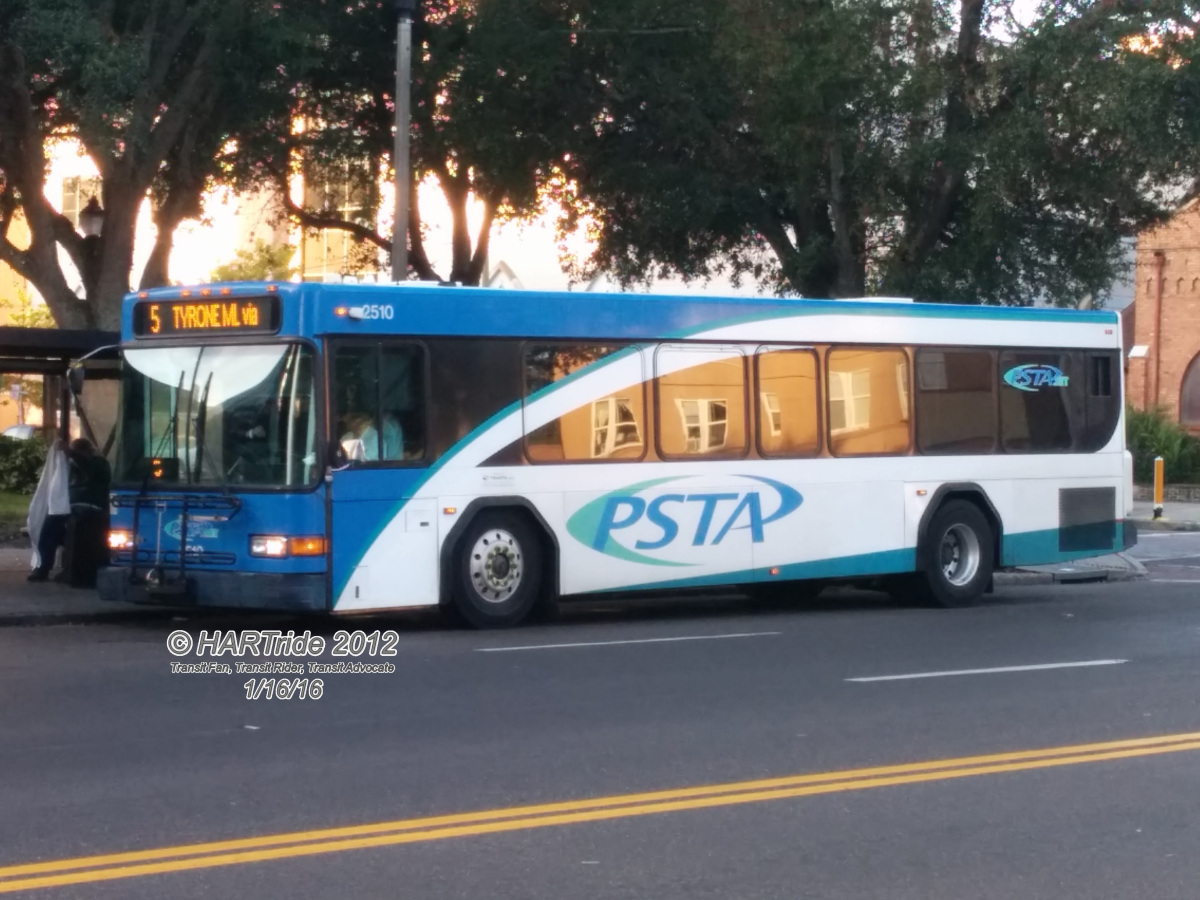
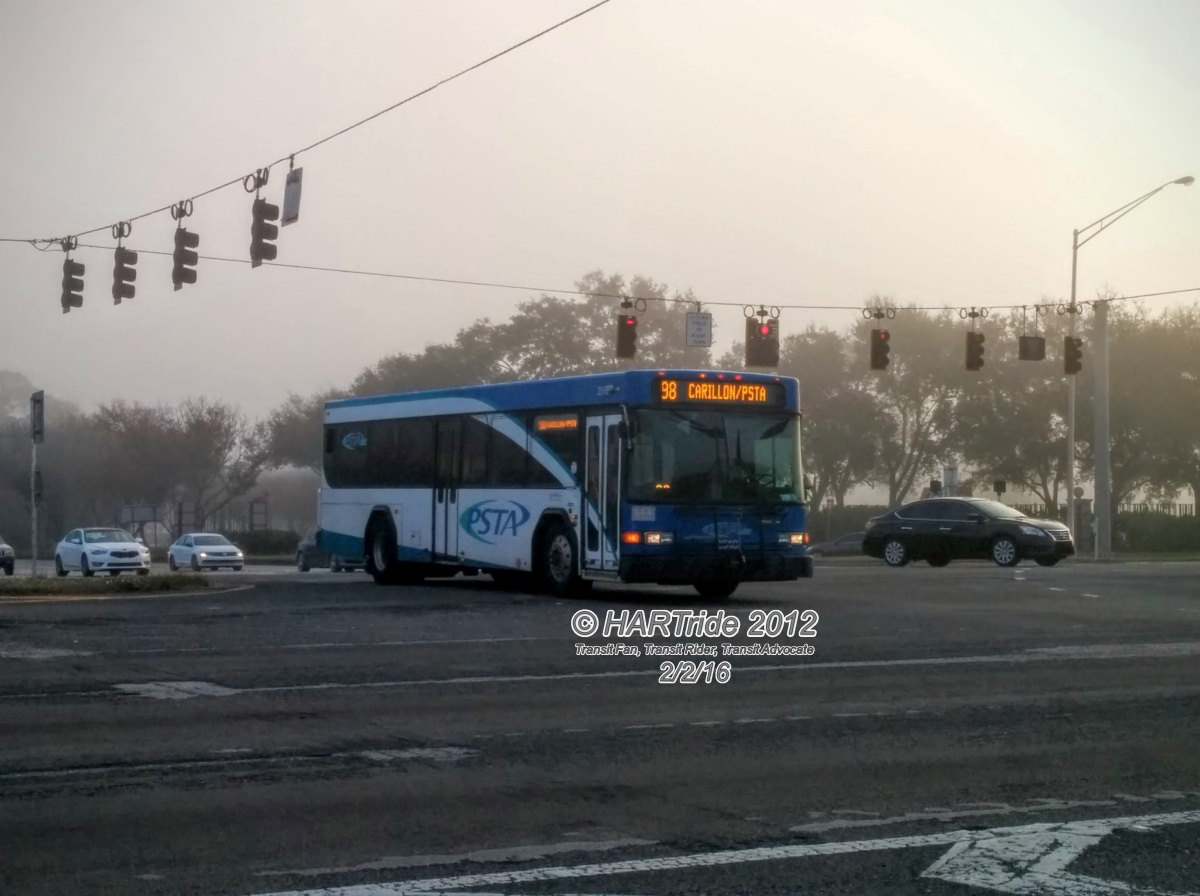
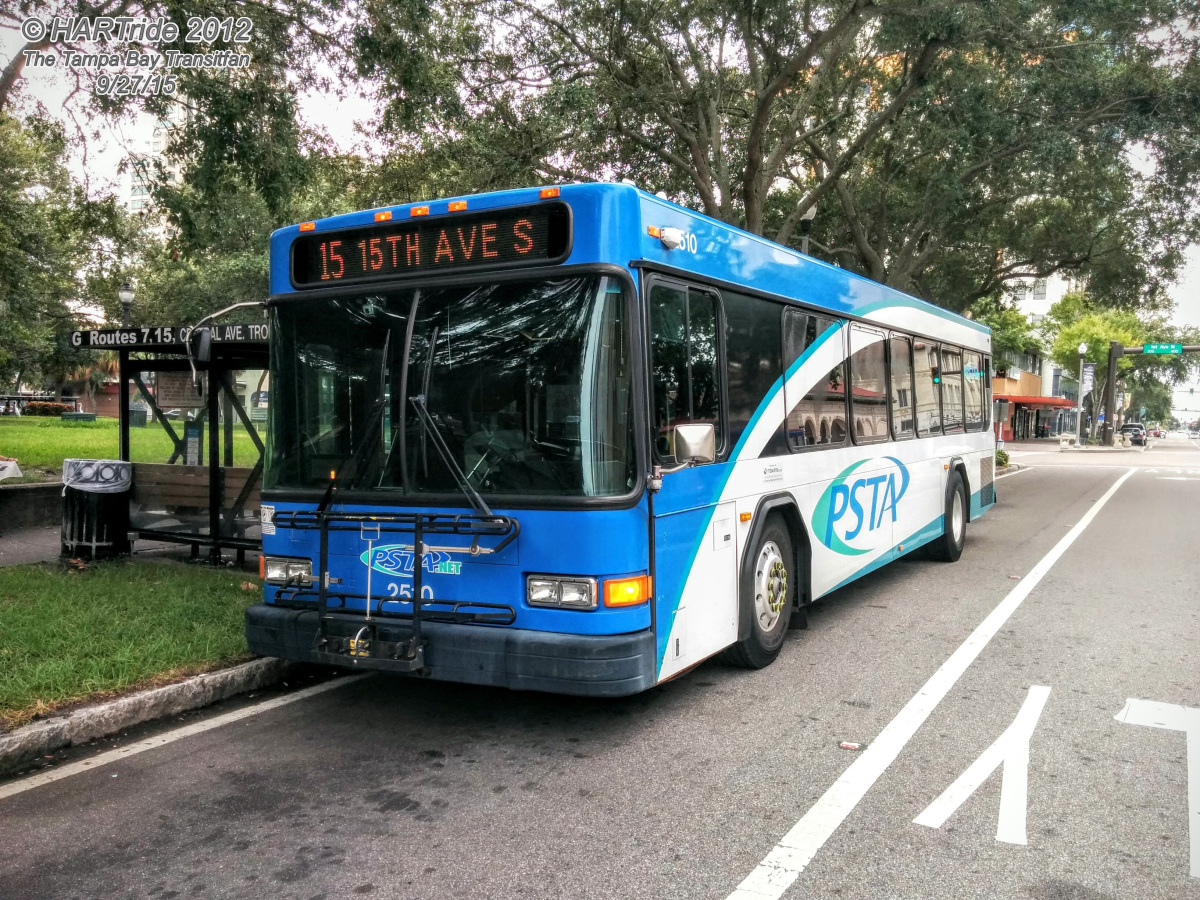
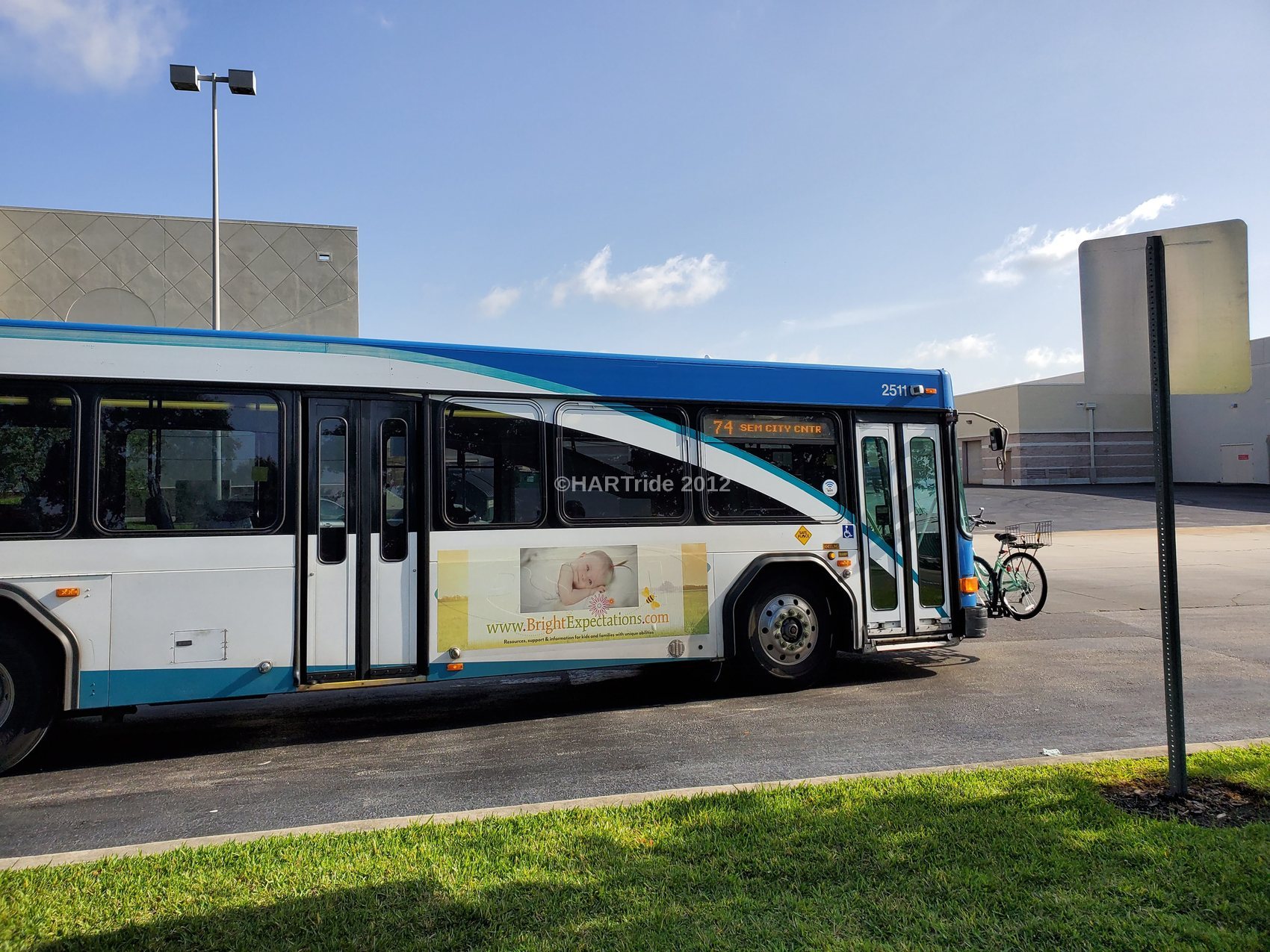
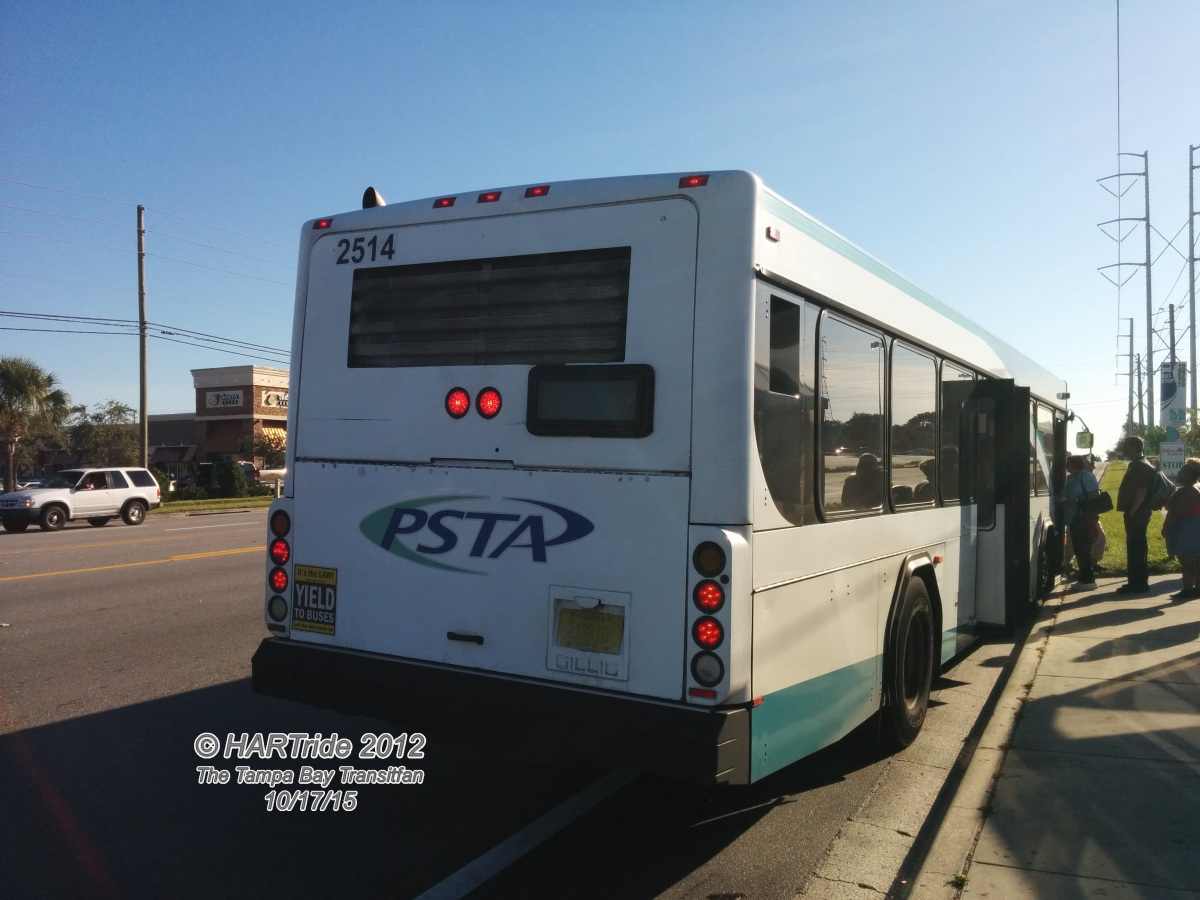
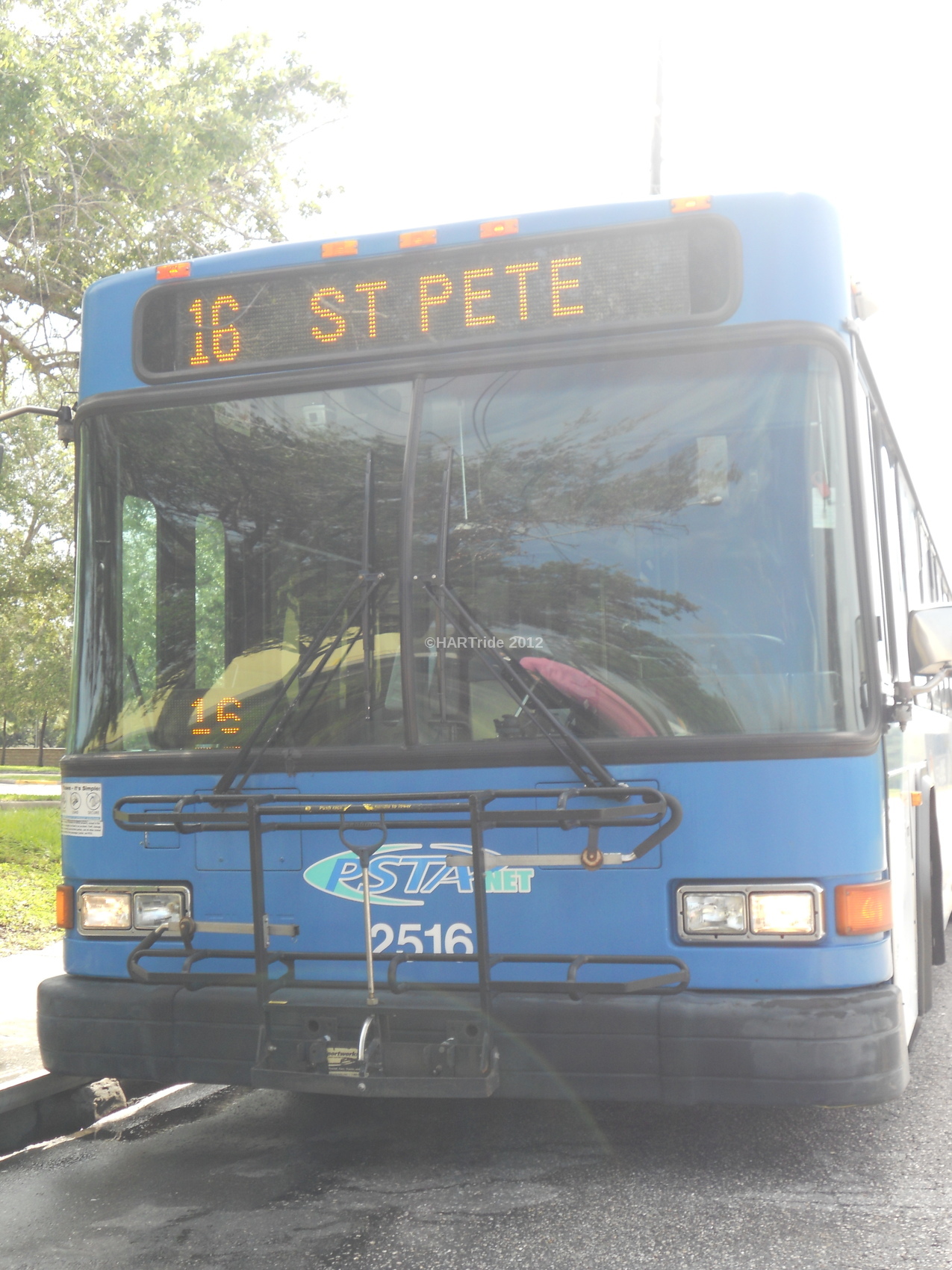
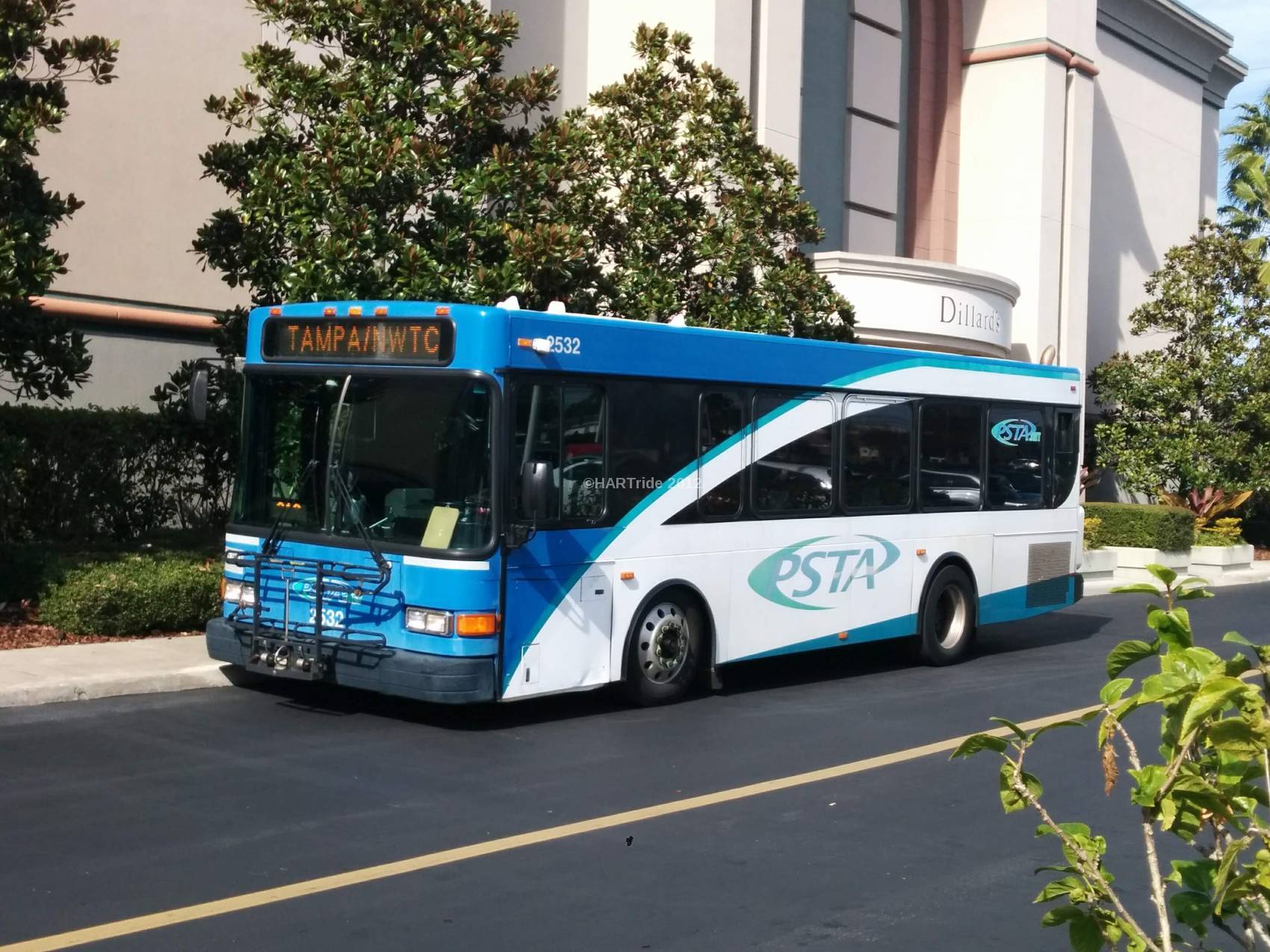
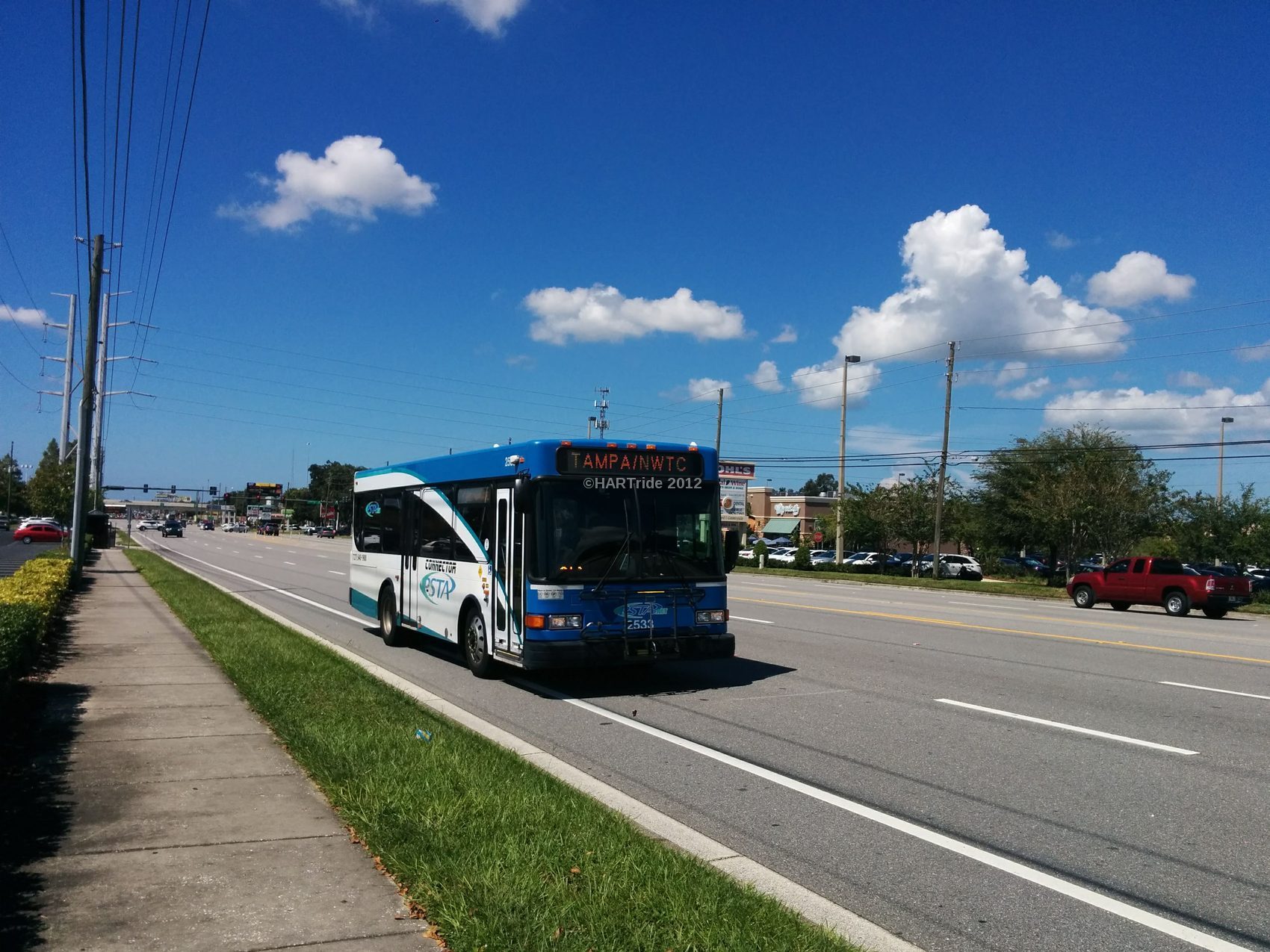
# 2501 at Gateway Mall – Route 74.# 2502 on layover at Williams Park – Route 4.Rear shot of # 2502. Note: PSTA no longer uses Williams Park as a bus hub. Instead, downtown St. Pete-bound buses use various street-side stops for layovers.And there she goes!And later, she springs up at Gateway Mall.# 2503 at Gateway Mall – Route 4. Route 9 has since taken over the 116th St N/Goodwill Industries loops, while the northern portion of the 4 now goes up MLK St N & Roosevelt Blvd – eventually ending at the PSTA Facility.And here she is at the 34th St N Transfer Center, Route 52LX.Same bus, different angle.# 2505 on the old Route 59. The 59 now only travels along Ulmerton Rd.Another shot of # 2505 on layover. This time in Williams Park.# 2505 approaches the MLK St N/94th Ave N stop in St. Pete.# 2506 pulling out of the Pinellas Park Transit Center at Shoppes at Park Place. Route 74 is another route that no longer travels to Downtown St. Pete and only traverses Park Blvd/Gandy Blvd for most of its length. Credit: Carlos A.And off she goes! Credit: Carlos A.# 2506 at night with current Route 74 eastbound signage.# 2507 on layover at Williams Park.# 2507 leaving Gateway Mall on Route 74, prior to the route being shortened.Here’s # 2507 on Route 4.And later, it winds up on Route 66L. Credit: Carlos A.# 2508 – the highest of the 2005-series 40-footers – at Gateway Mall, running the old 59. The MLK St N section is now covered by Routes 4 & 9.# 2508 on assignment to Route 34.And the next day, it goes to the 74.# 2510 on Route 32, which circulates through western portions of Downtown St. Pete.And here she is on layover.Later, she goes over to Route 5.AM commute on the old Route 98, which was replaced by the 52LX.On layover at Williams Park again. This time on Route 15.Another front angle of # 2510.Rear shot of # 2510.Filling in for one of the trolley buses on the Central Ave Trolley line (Route 35).And # 2510 traversing 16th St N – Route 16. This route took over the 16th St N portion of the 74.# 2511 at Grand Central Station – Route 5.And here she is at Pinellas Park Transit Center – Route 74.And she’s off!# 2513 at Park St Terminal. Credit: Joe C.# 2514 on Route 67, approaching the SR 580/Summerdale stop.Customers boarding # 2514 to travel to Oldsmar.Rear shot.# 2515 on Route 9.# 2516 on Route 16, what Carlos would call a “HOT POTATO” cause the route number and the last two digits of the bus fleet number match.# 2517 was a regular on the Safety Harbor Connector prior to the arrival of the 2018 cutways.Here’s # 2517 again on the connector.# 2530 (29-footer) on the Tampa-Oldsmar Connector. The 29-footers rarely go out now since the arrival of the 2018 cutaways. I’m not sure how much longer they’ll stick around.# 2531 makes a surprise appearance on Route 58.#2532 enters Westfield Countryside.#2533 leaving the SR 580/Summerdale stop.#2534 at Shoppes at Boot Ranch.
# 2610 at the SR 580/Summerdale stop in Clearwater – Route 19.
2006 Gillig Low Floor Diesel
40′ & 35′
#’s 2601 through 2636 (40′) & 2650 through 2661 (35′)
In revenue service from 2006 until 2025
The 2006 Gillig batch is the first for PSTA to have “frameless” windows, meaning that the exterior window frames are squared instead of curved. Many transit agencies go with this window style to add a sleek, modern look to their transit fleets.
It is to note that # 2601 is actually an early 2006 model that was built in late 2005 & was likely produced by itself to serve as a prototype unit. The other units were not built until later that year.
Throughout their lifespan, the 2600s could be seen across the PSTA network & many bus operators told me that these buses were very reliable. Several units were retired prior to 2022 due to severe accident damage – including #’s 2622 & 2626. I believe it was # 2626 that ended up crashing into a storefront near Grand Central Station after the operator lost control.
As the 2025-series Gillig Low Floor Plus Battery Electric units began entering service, the days of the remaining 2600s began to wind down – with #’s 2608 & 2627 being the final 40′ units in service during the week of July 7, 2025. With the 2025-series units continuing to enter service, it is highly suspected that the 35′ units have also now seen their final revenue runs.
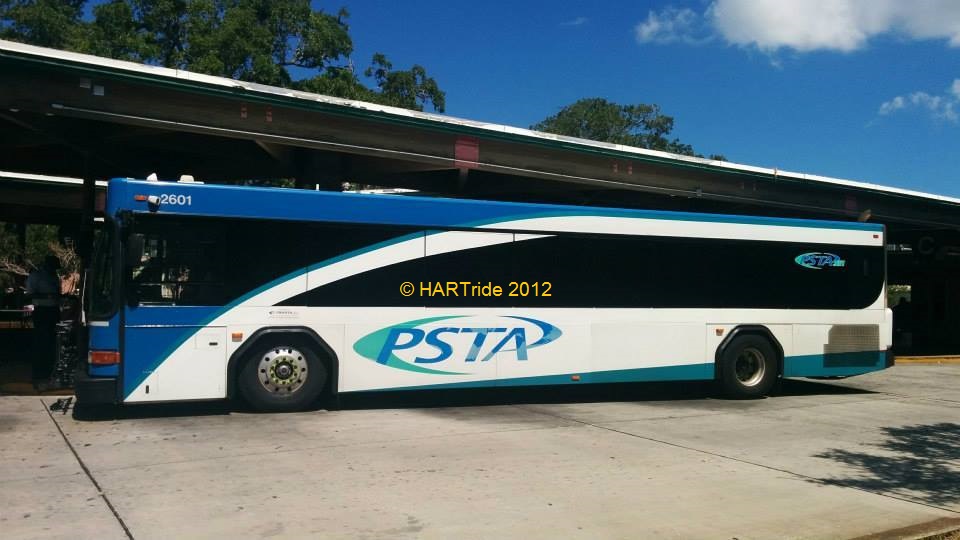
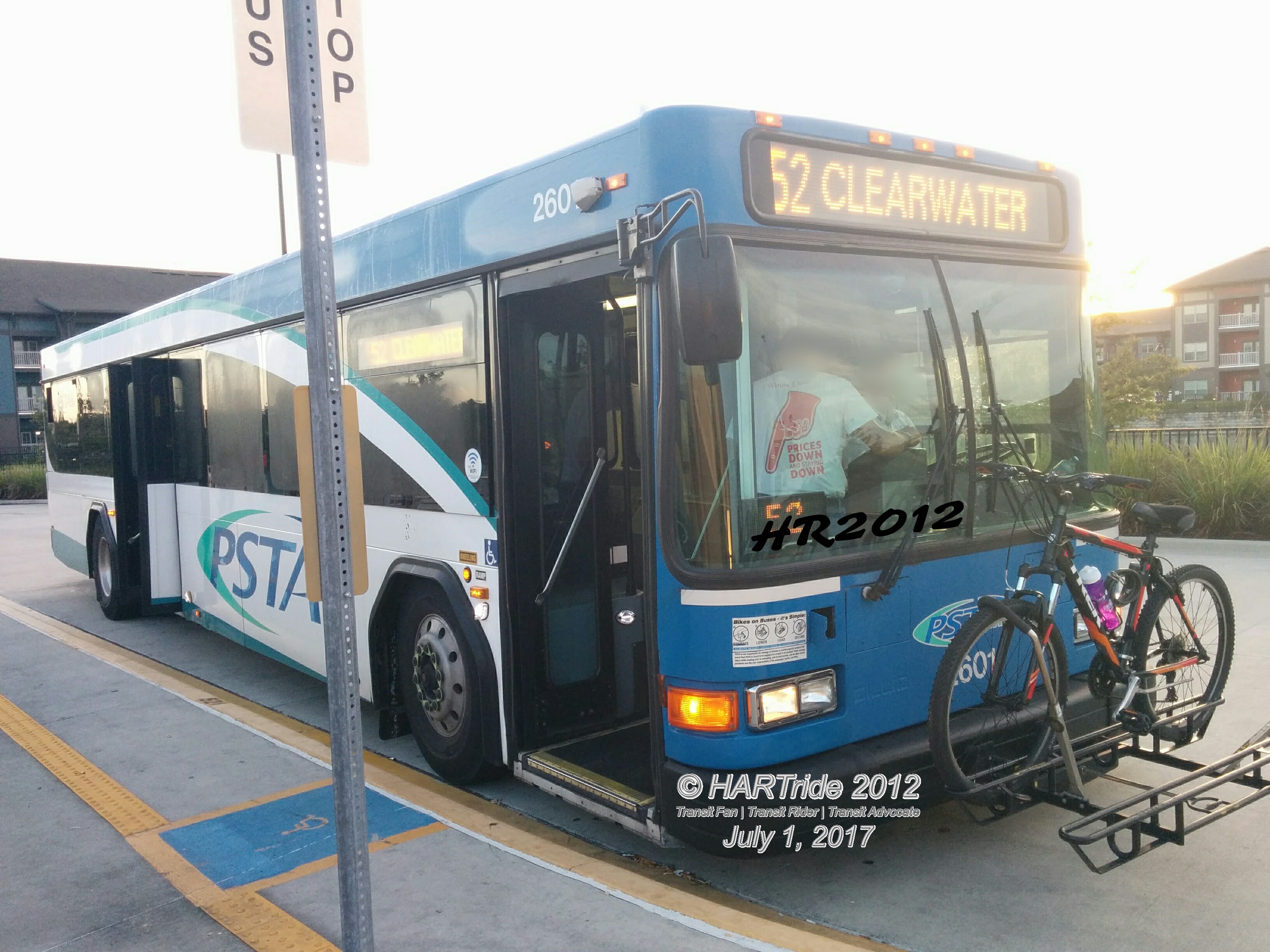
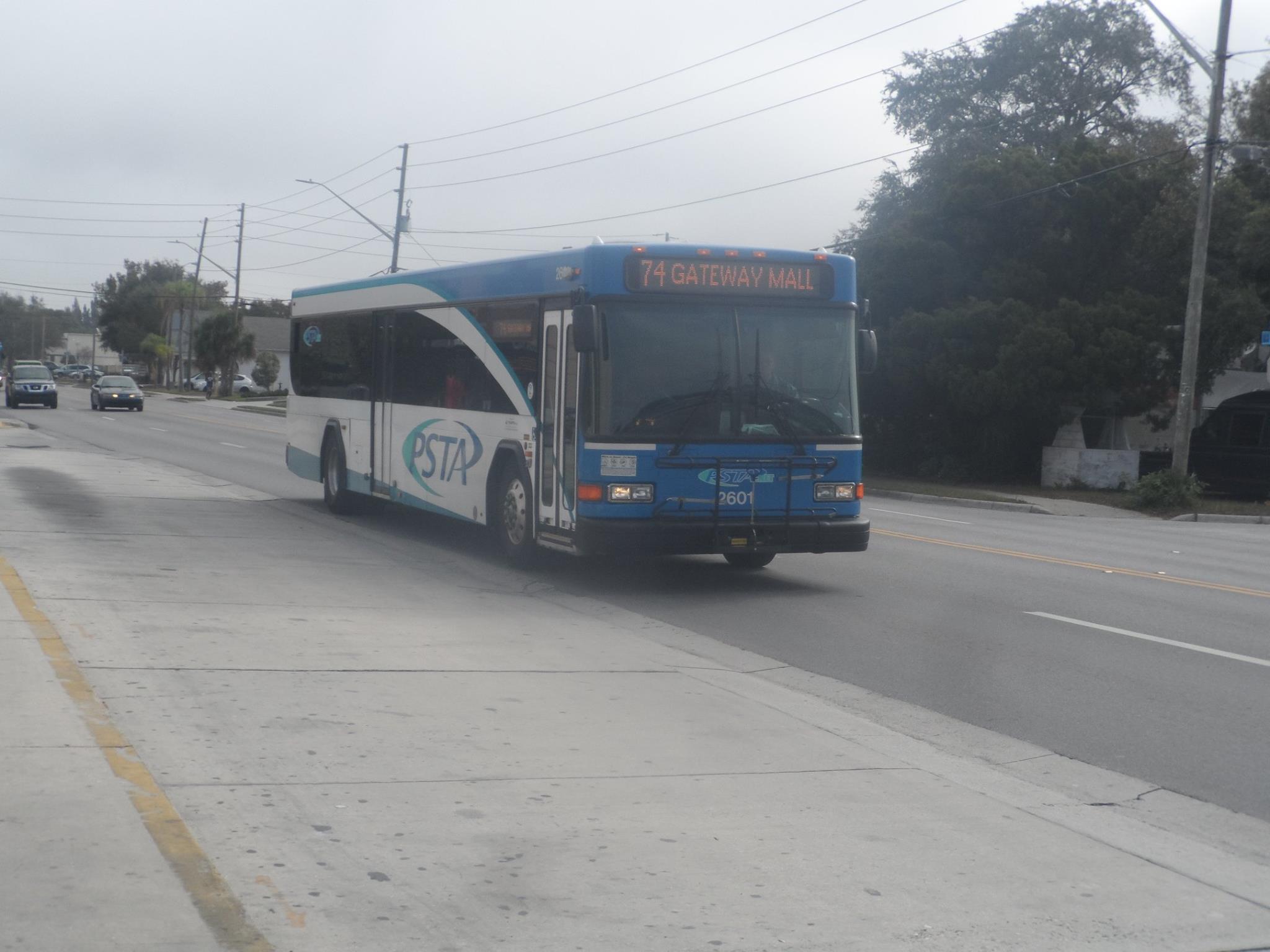
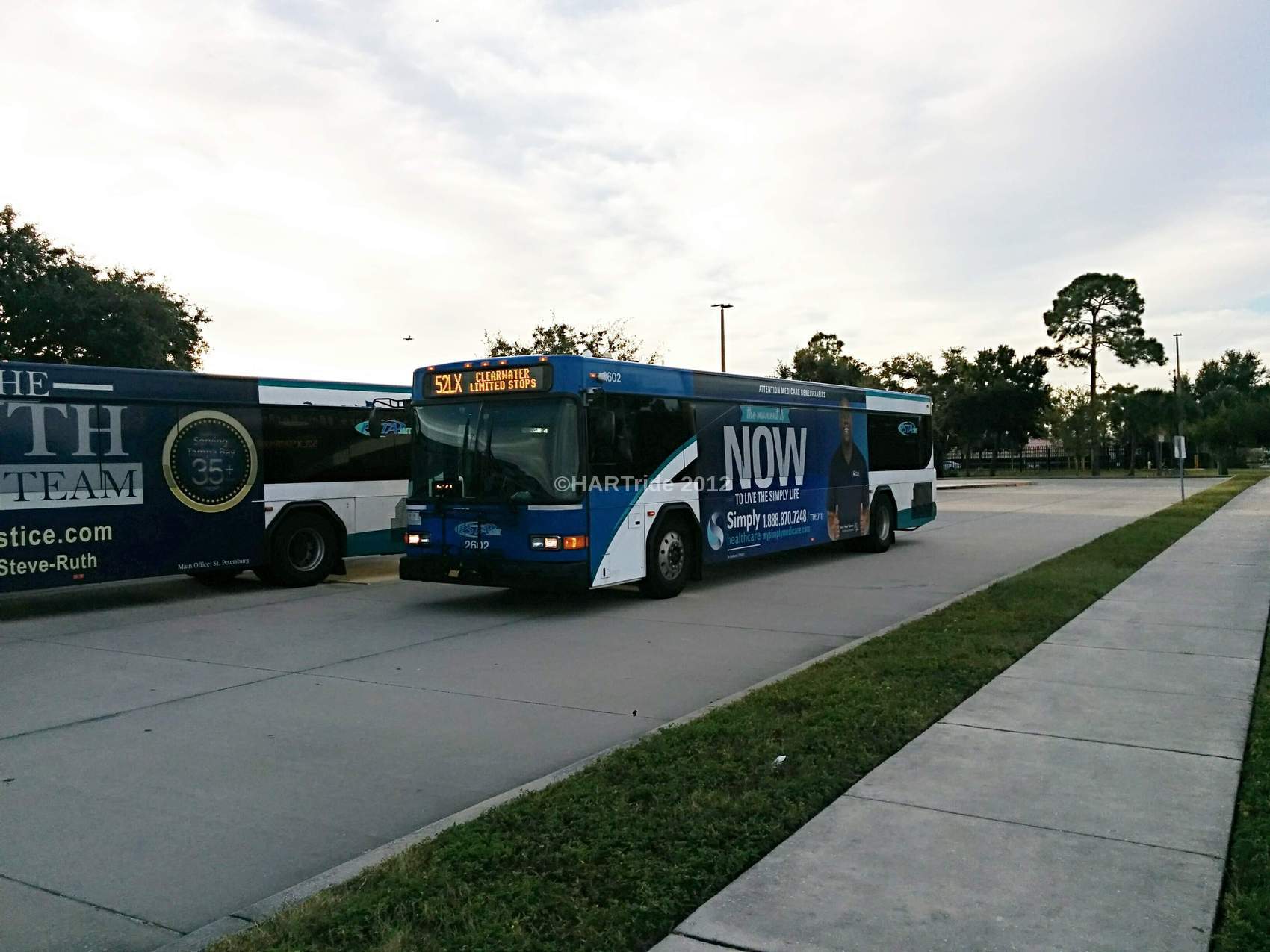
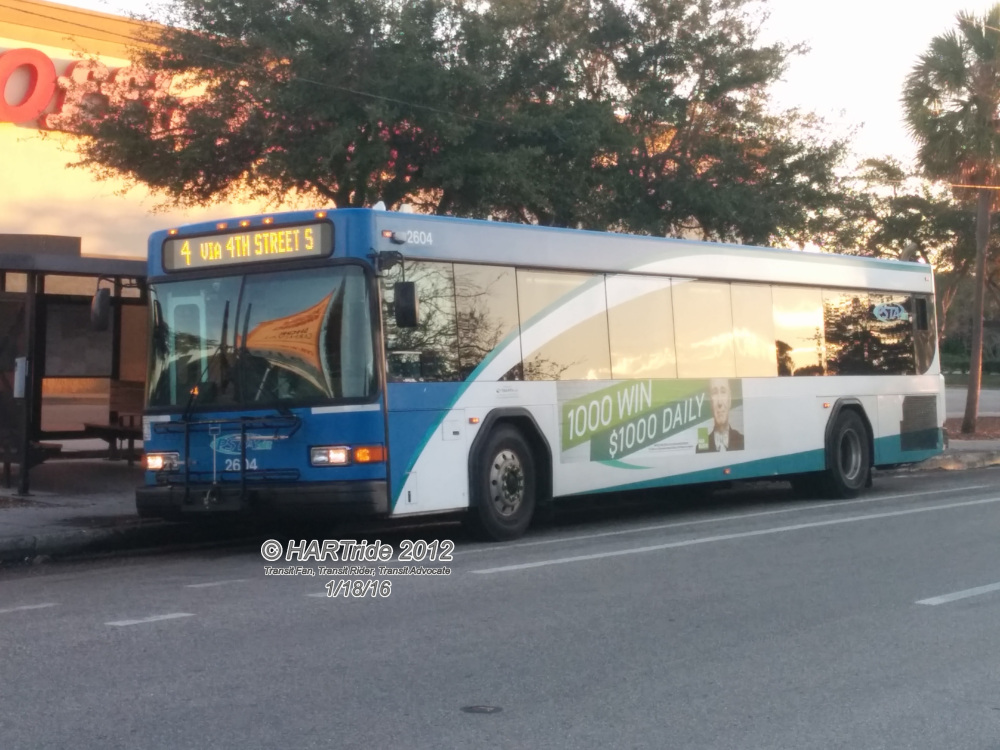
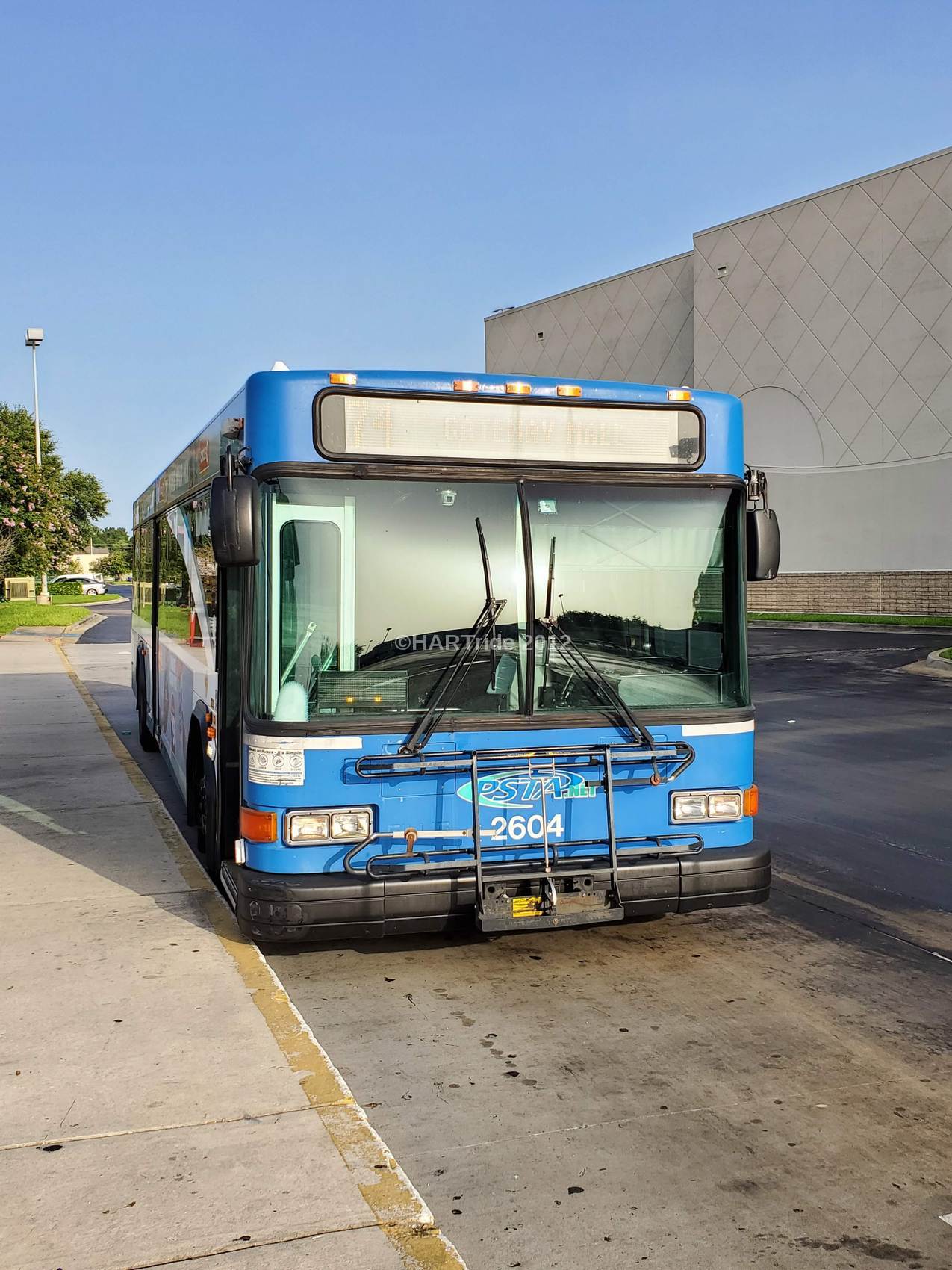
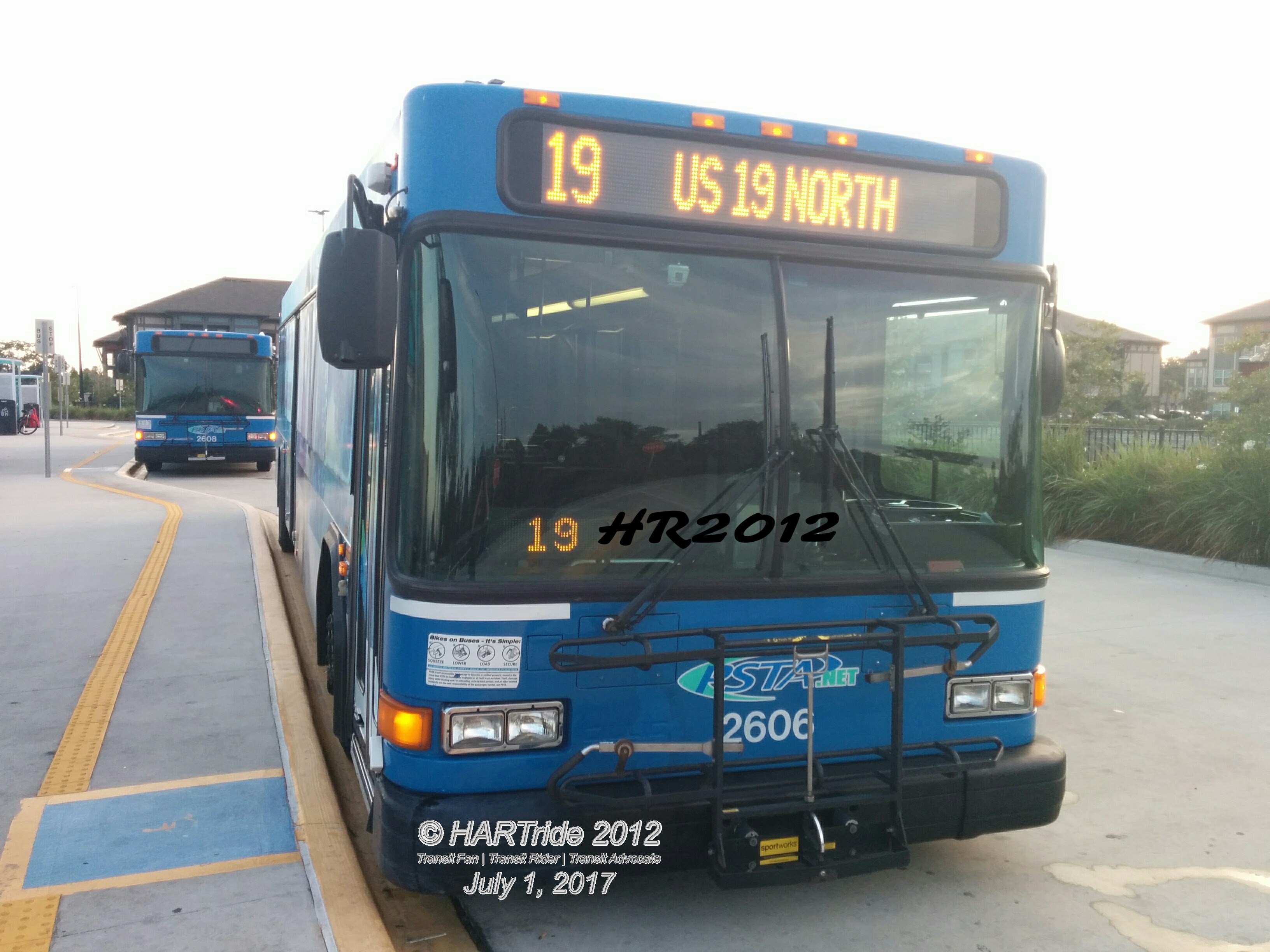
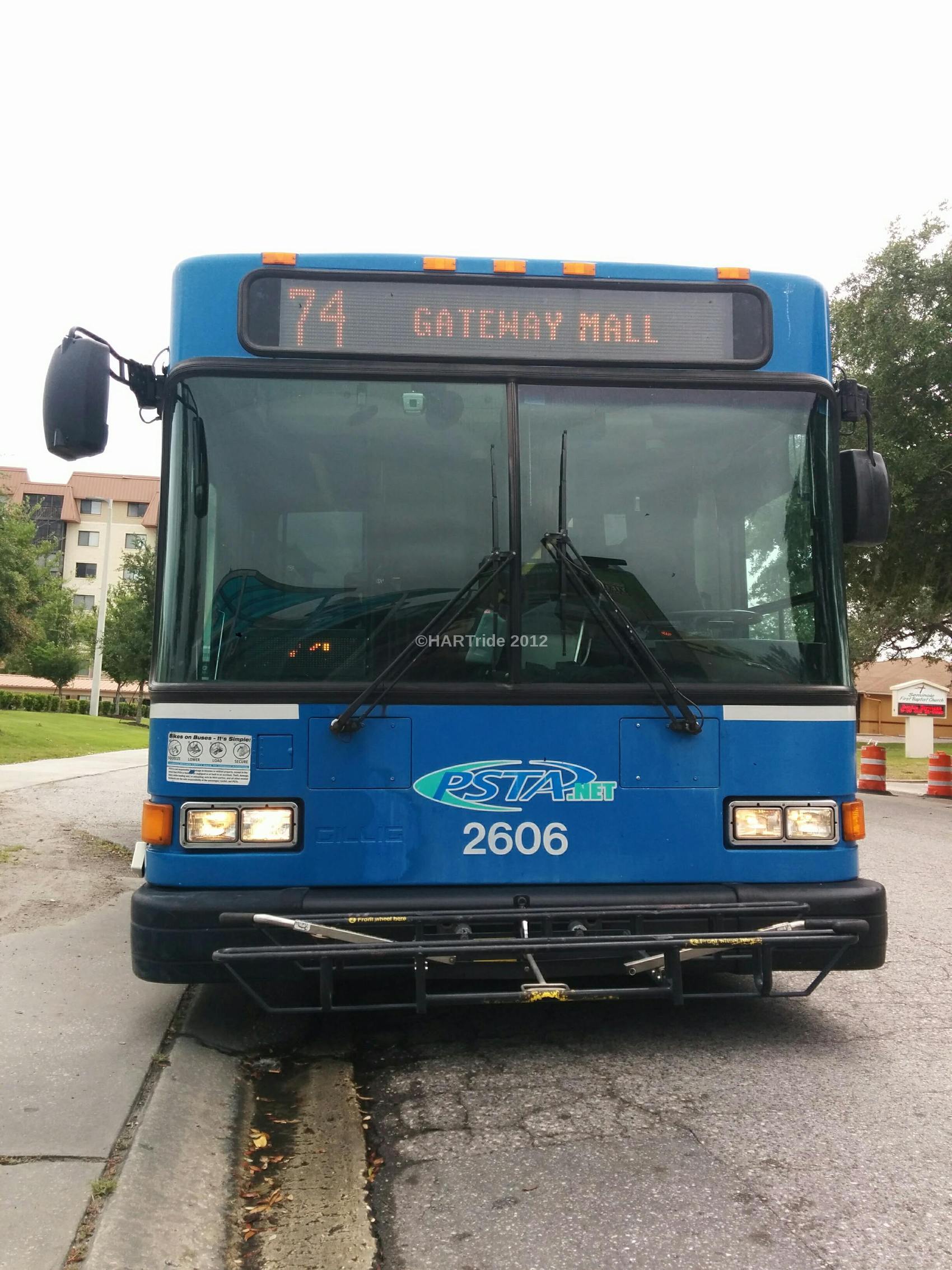
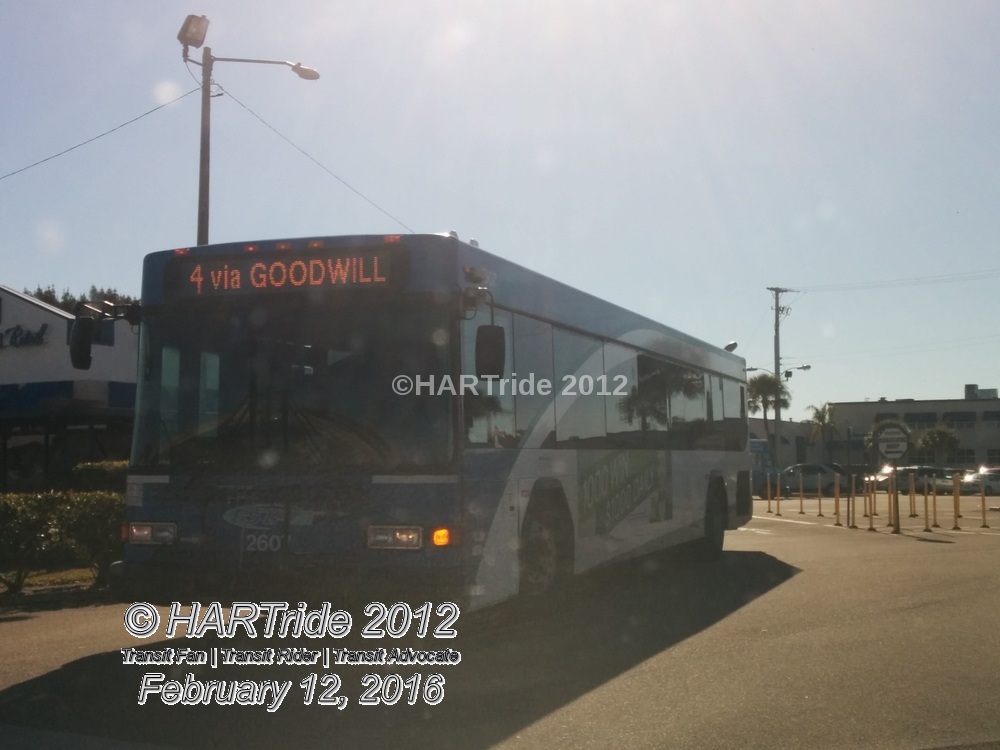
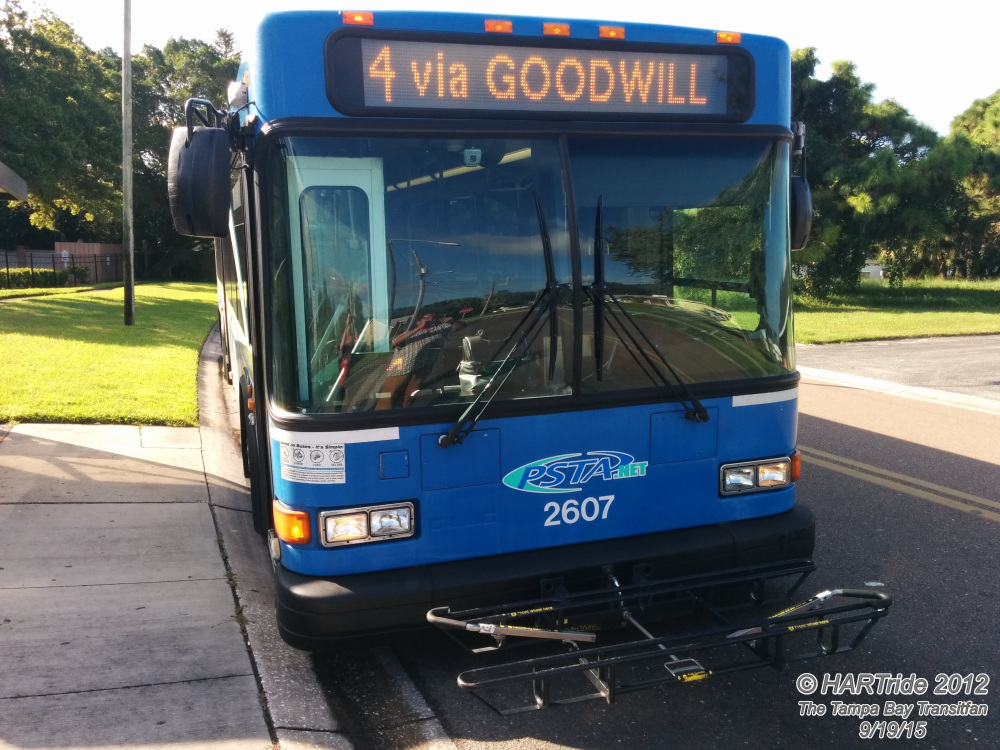
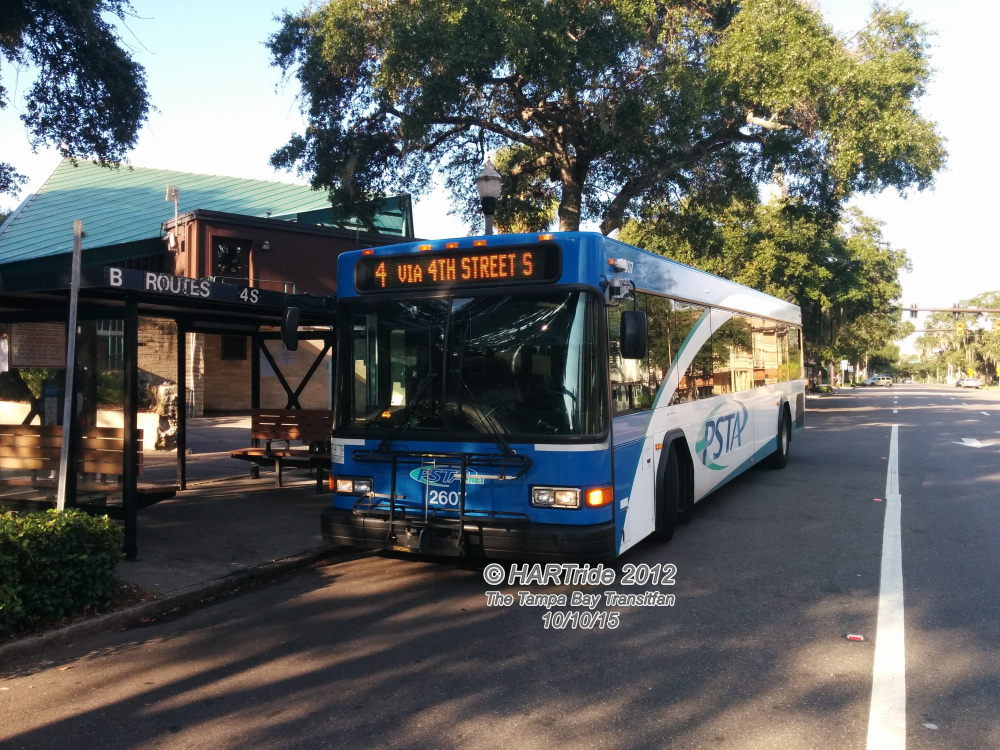
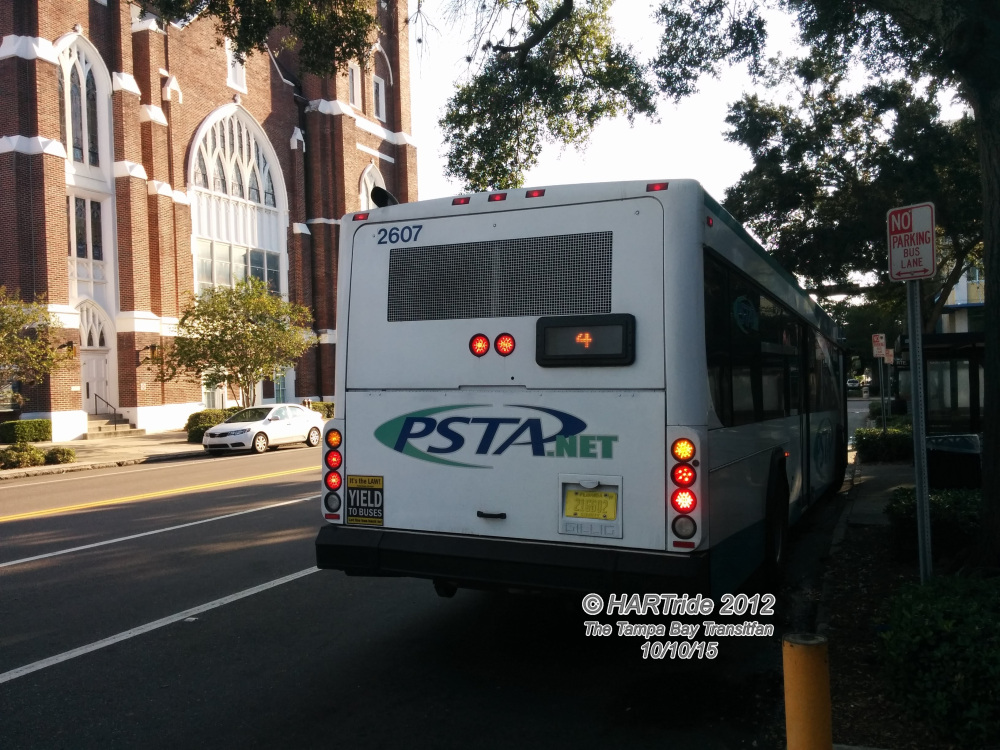
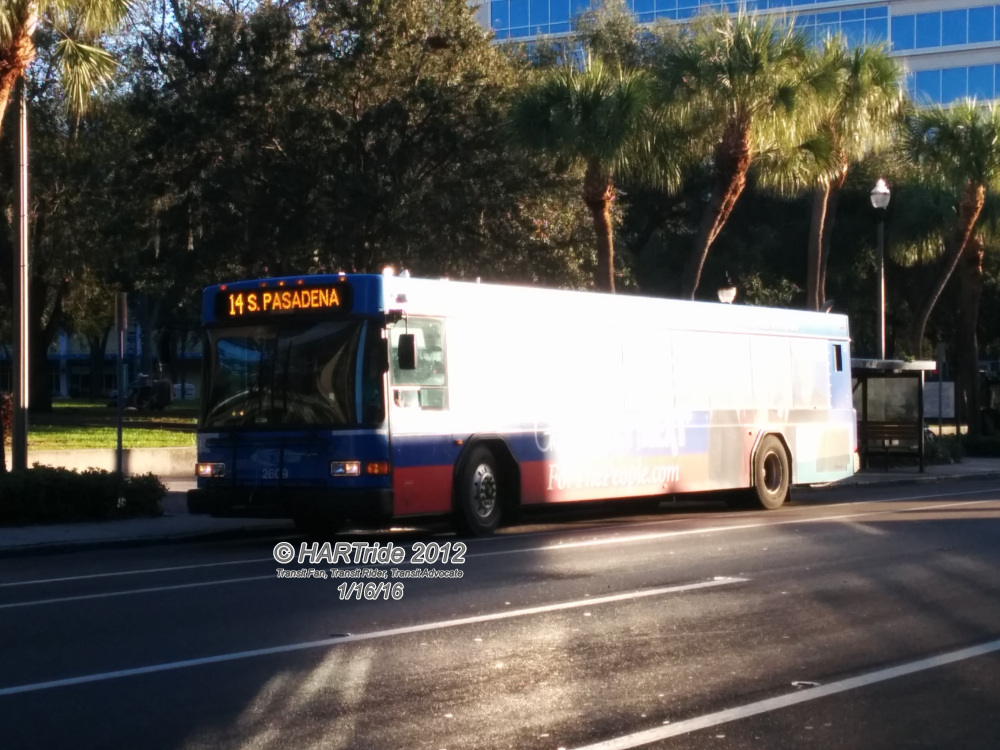
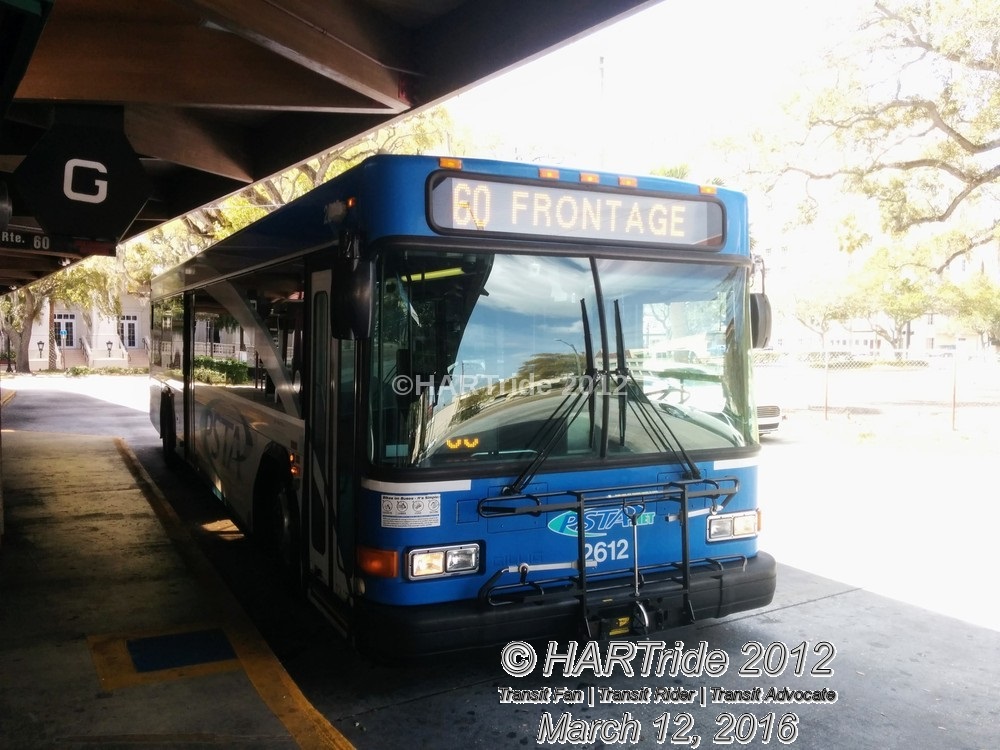
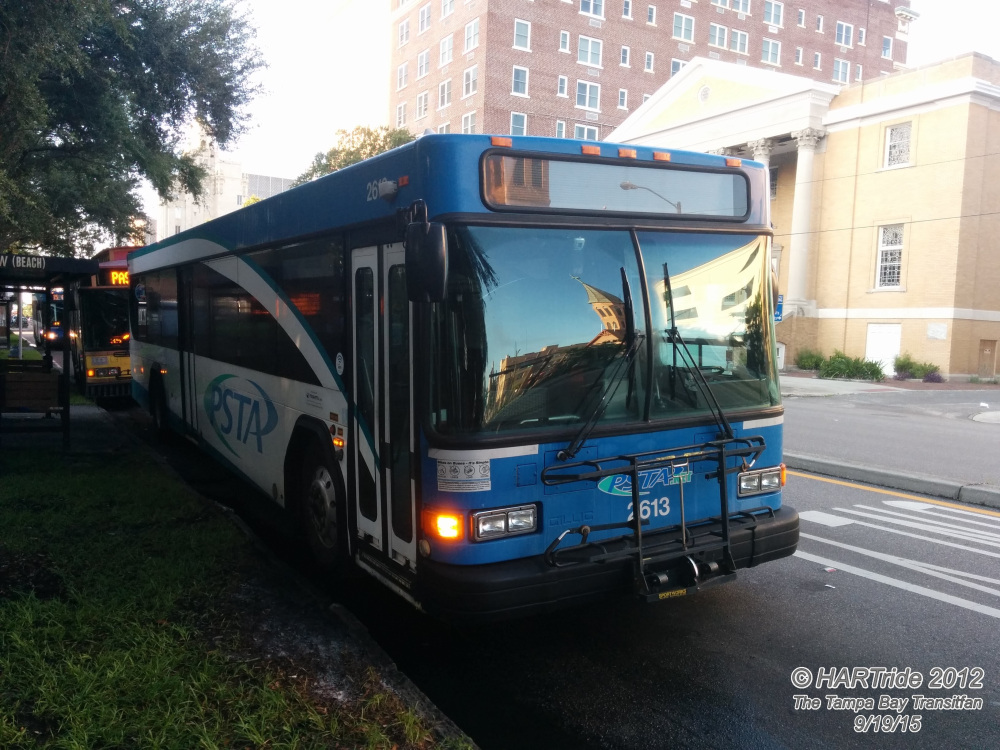
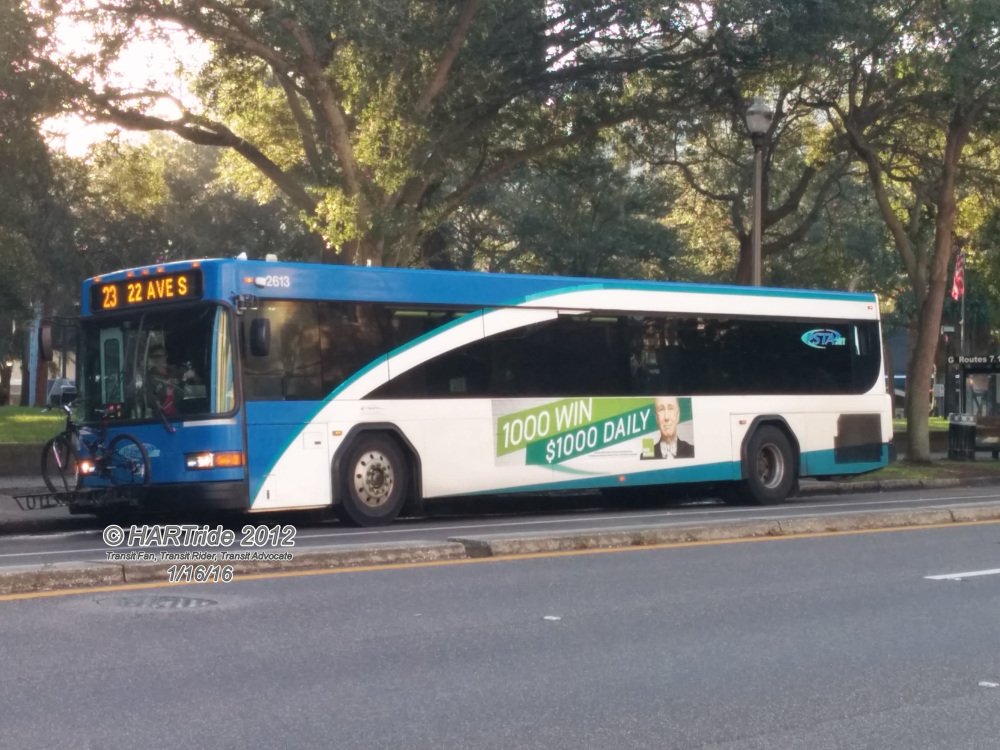
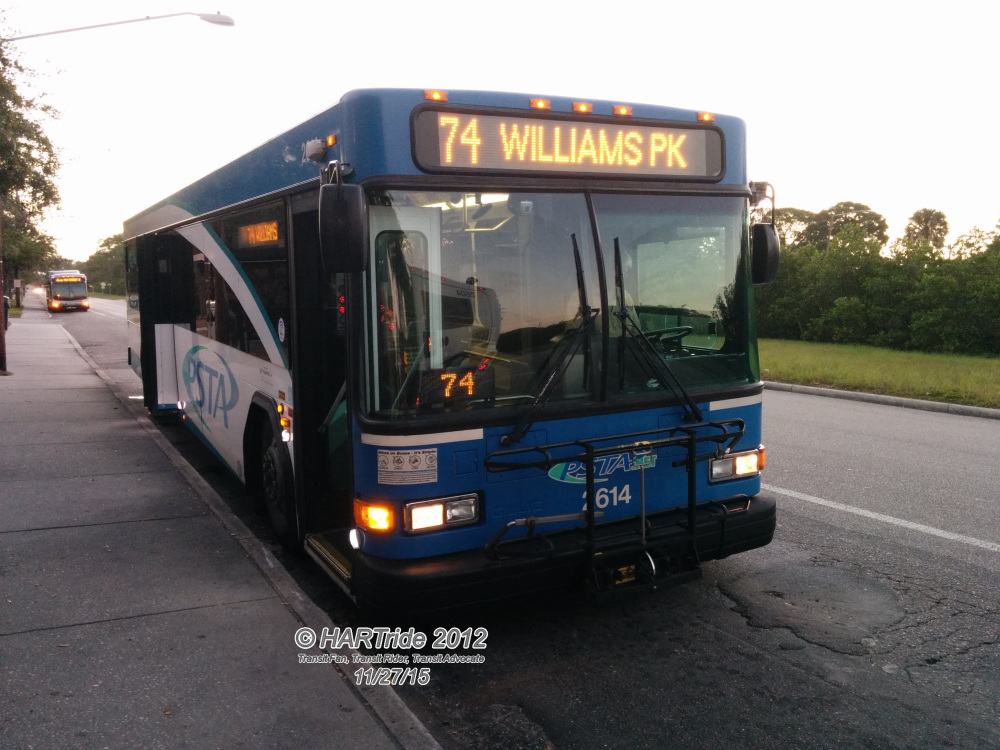
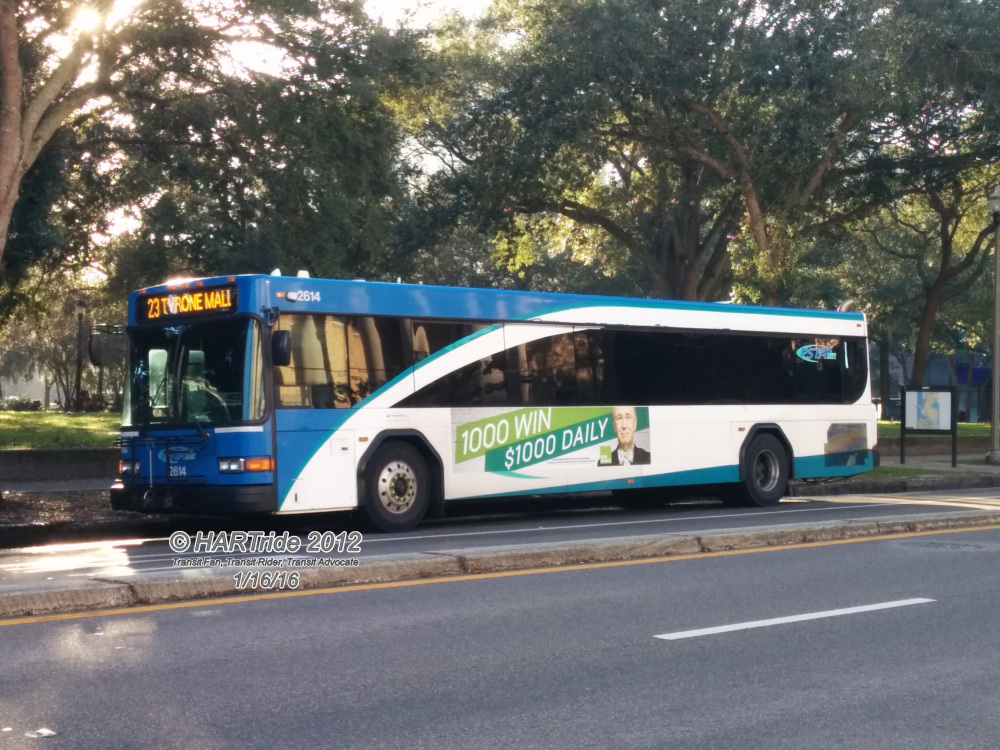
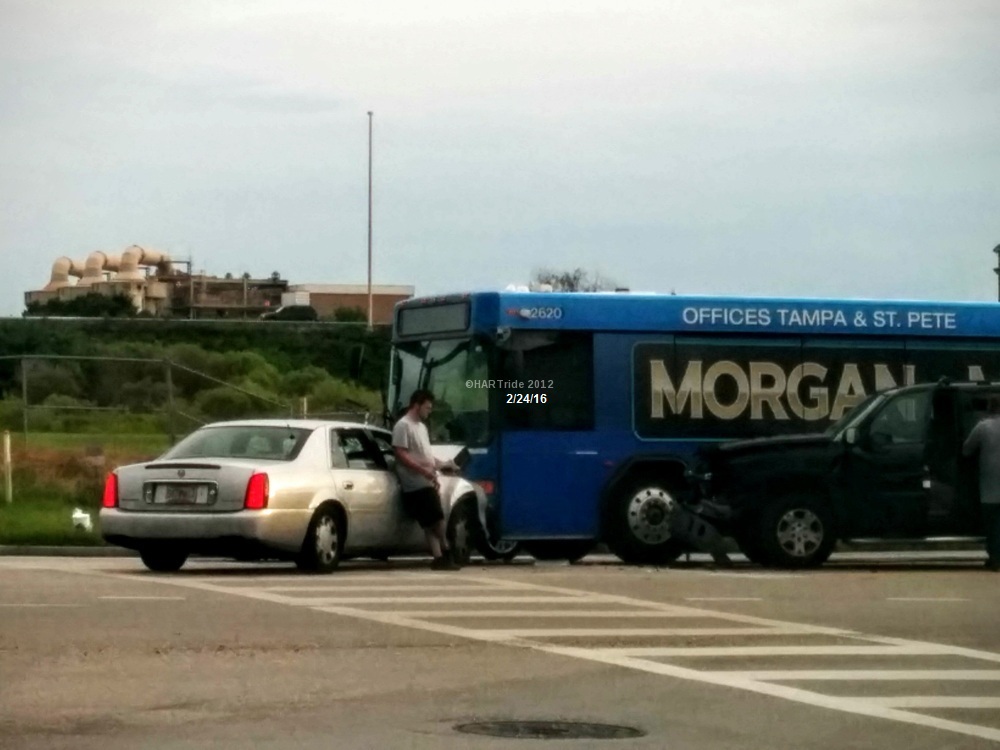
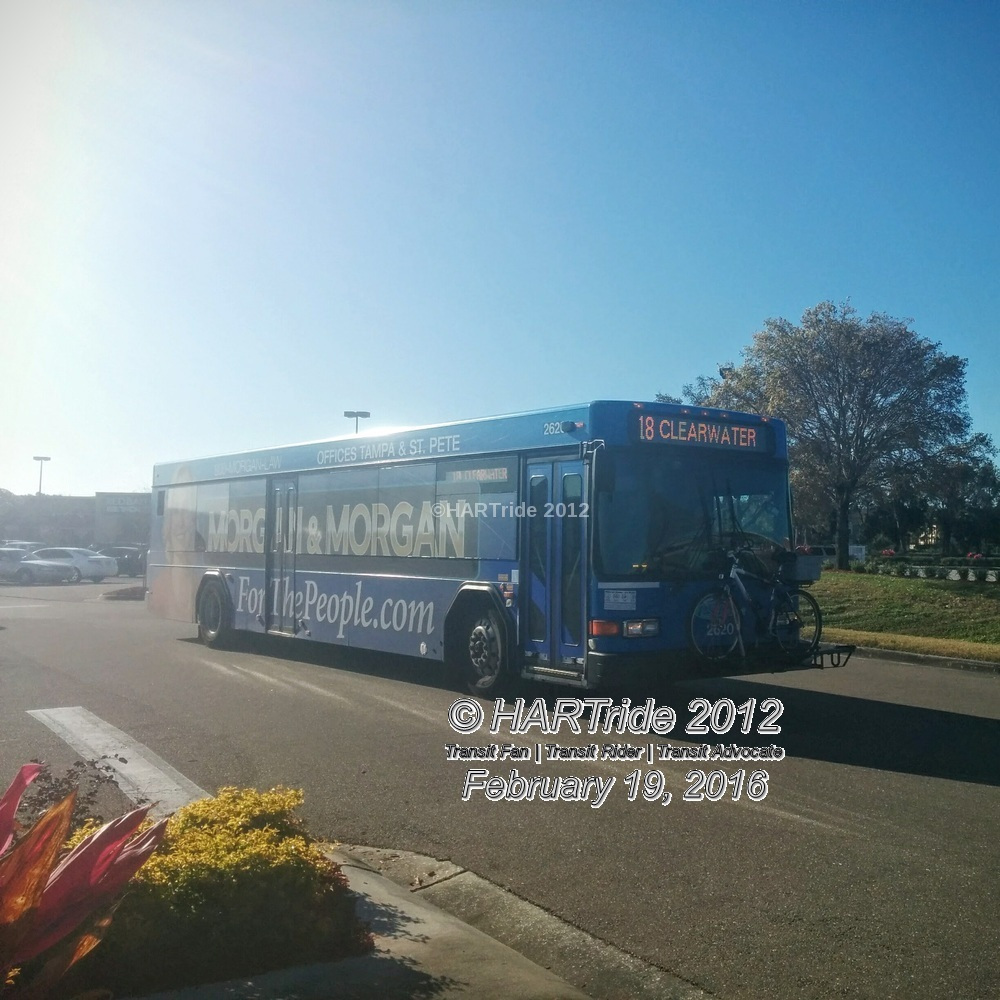
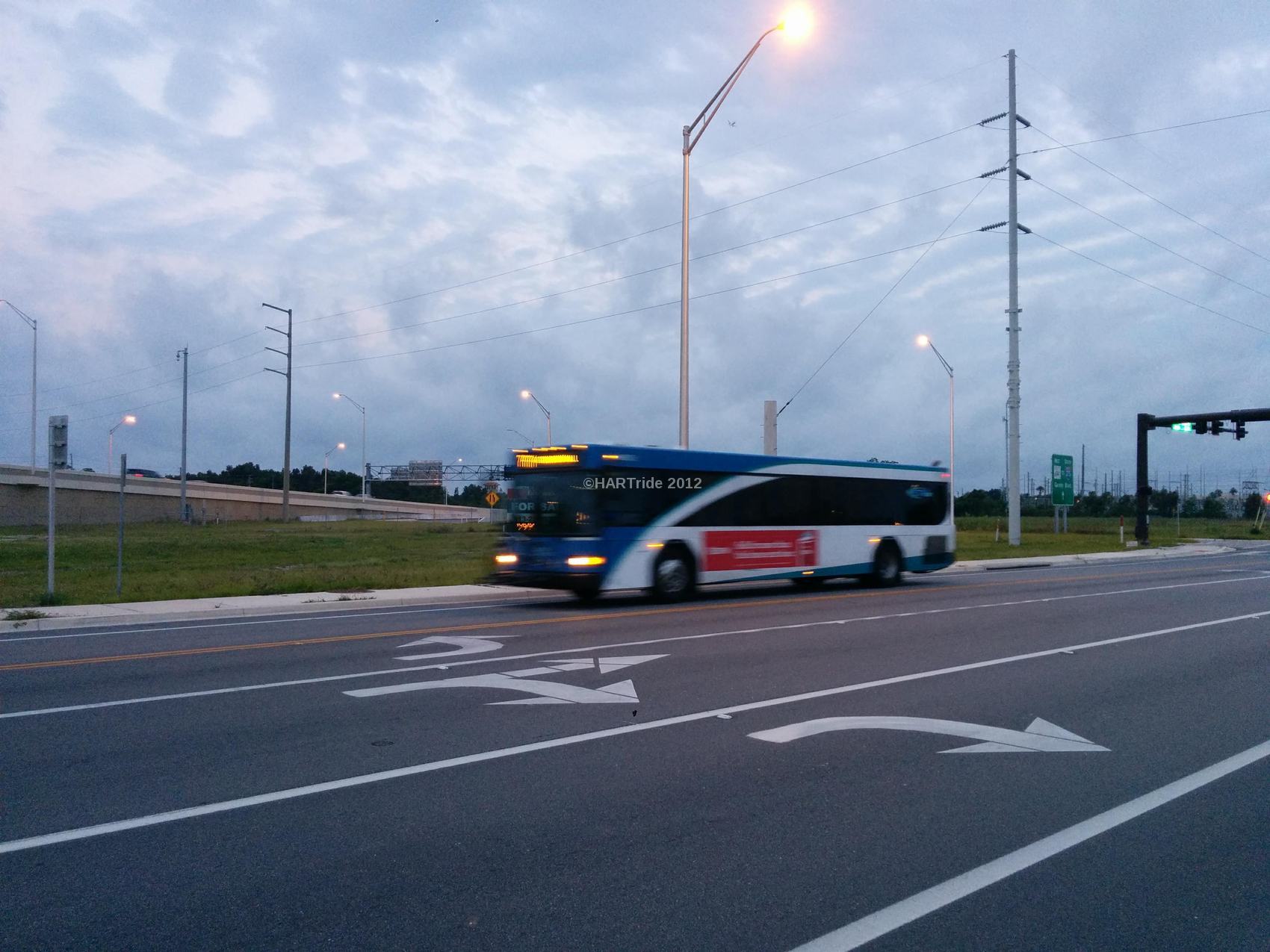
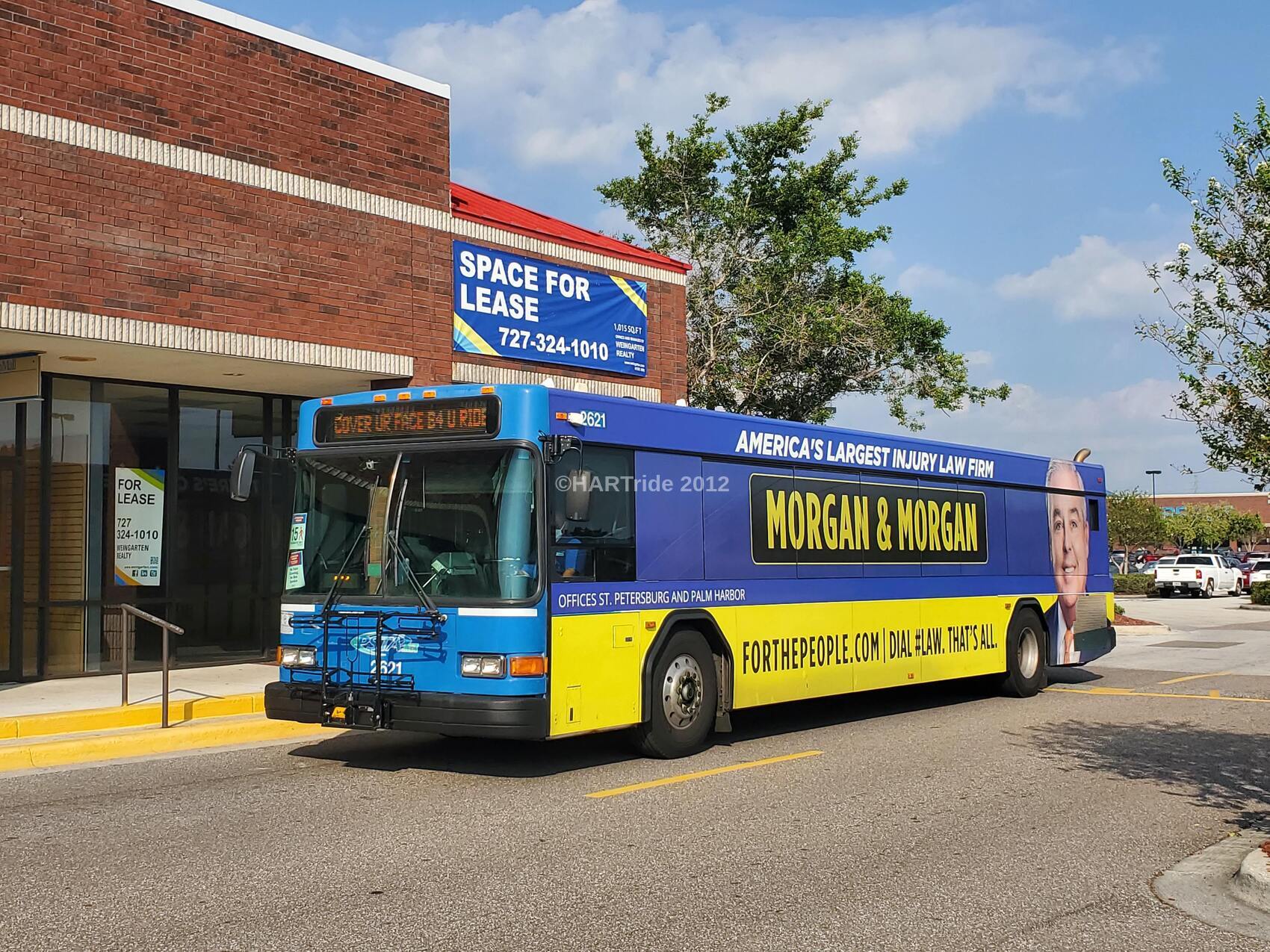
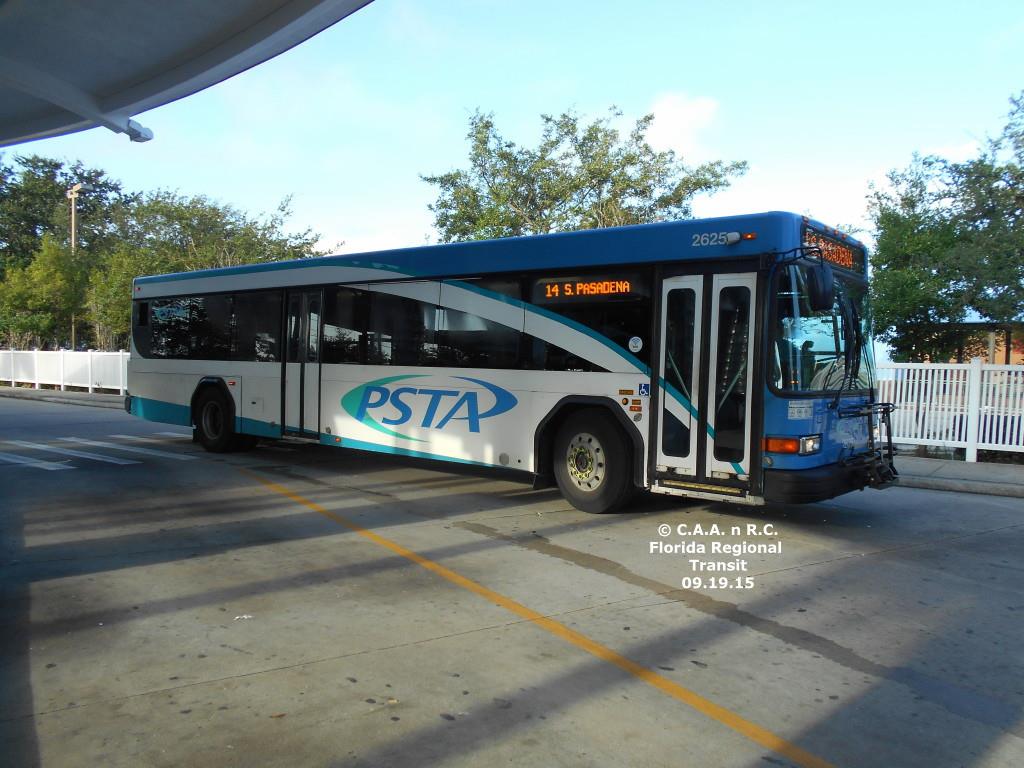
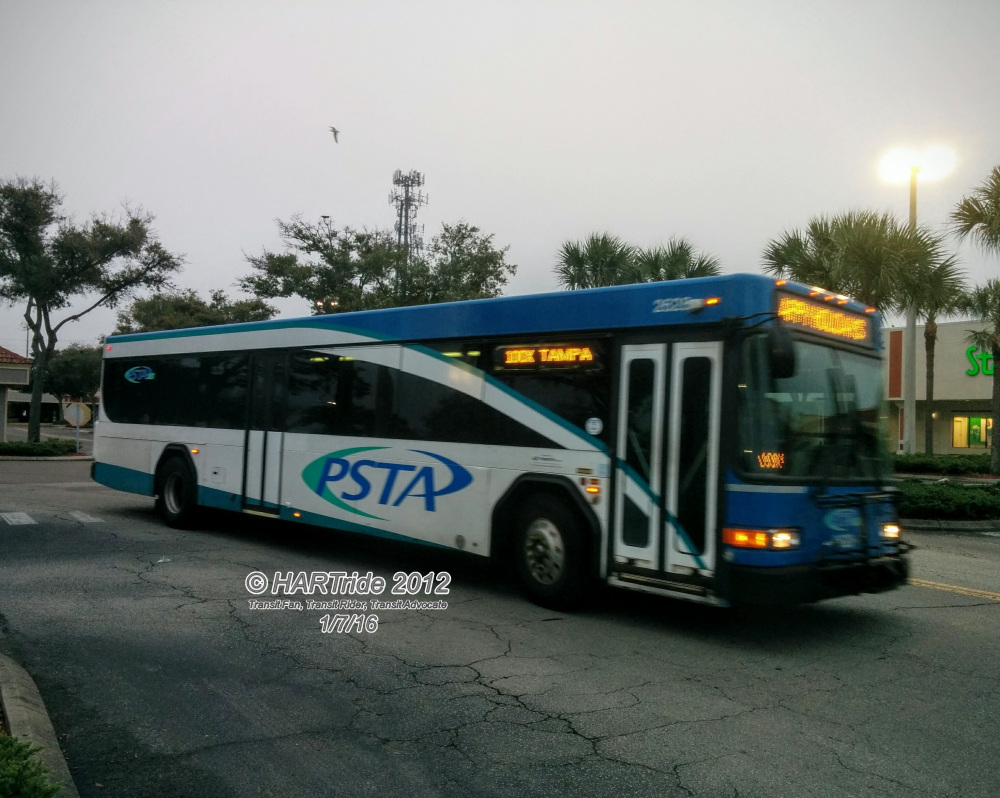
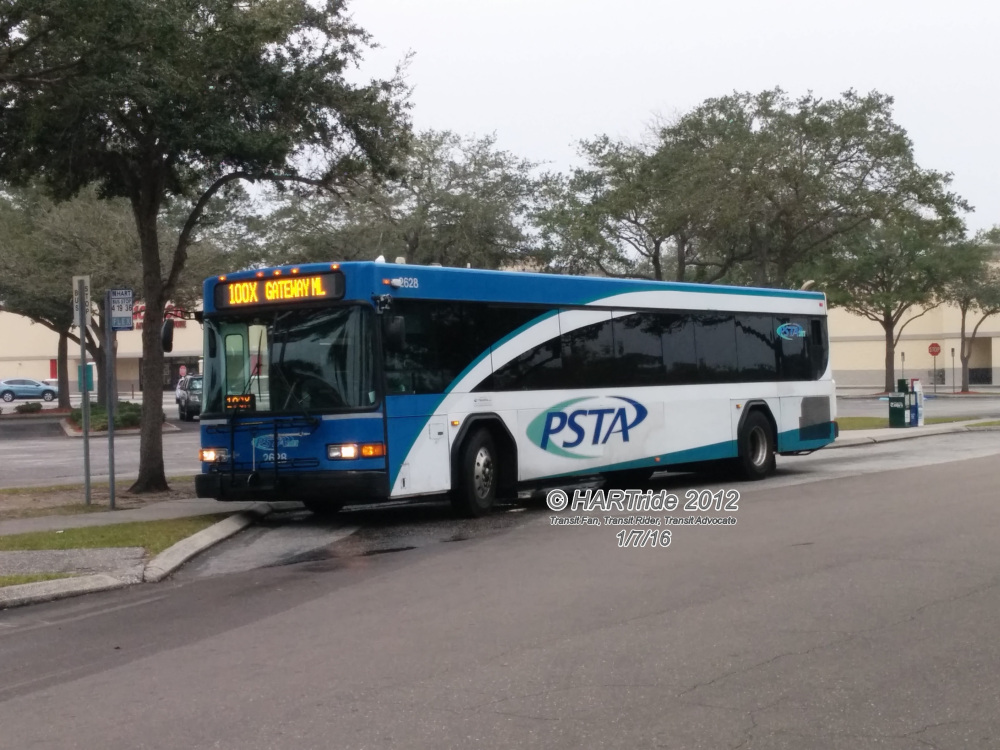
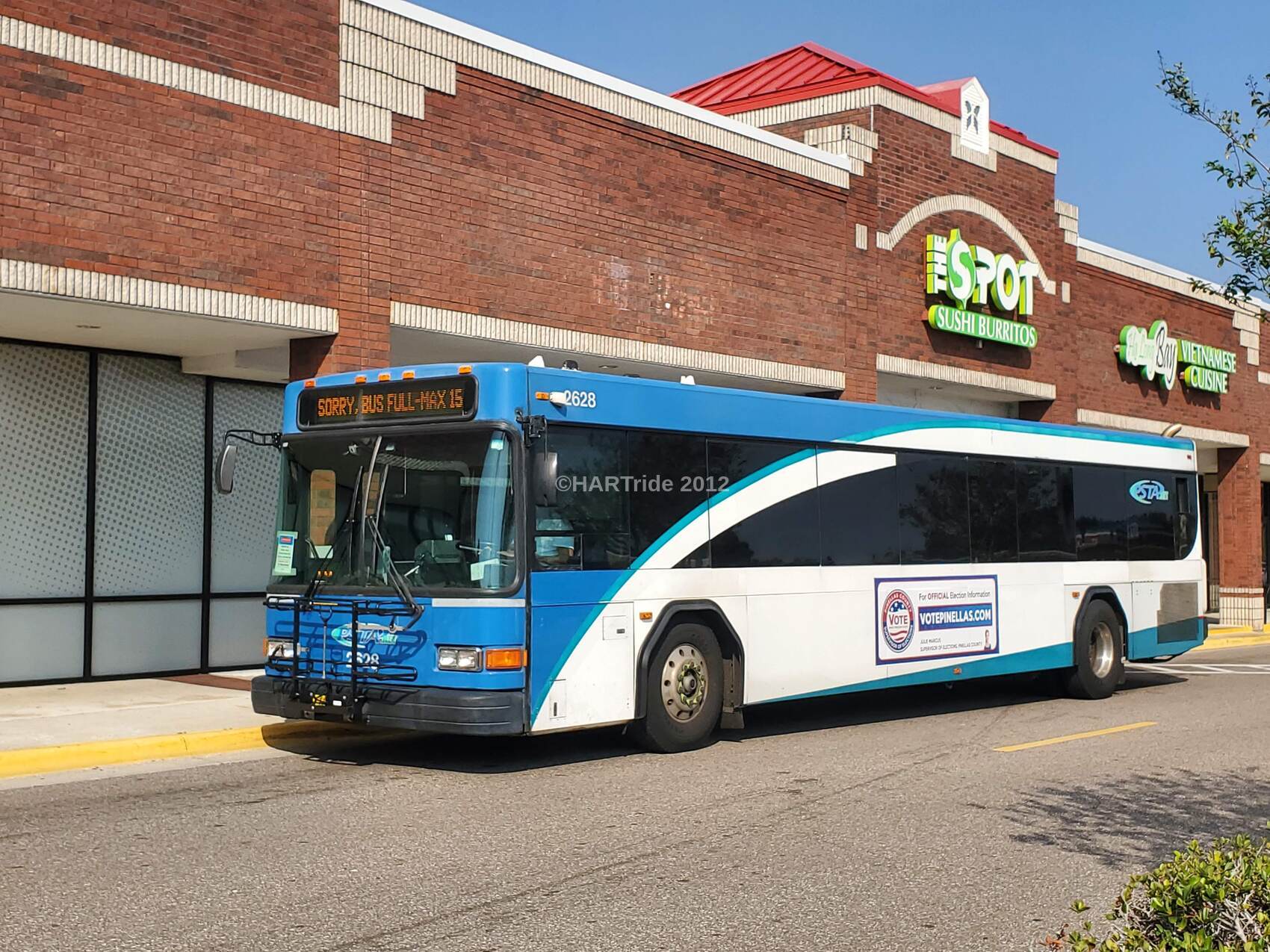
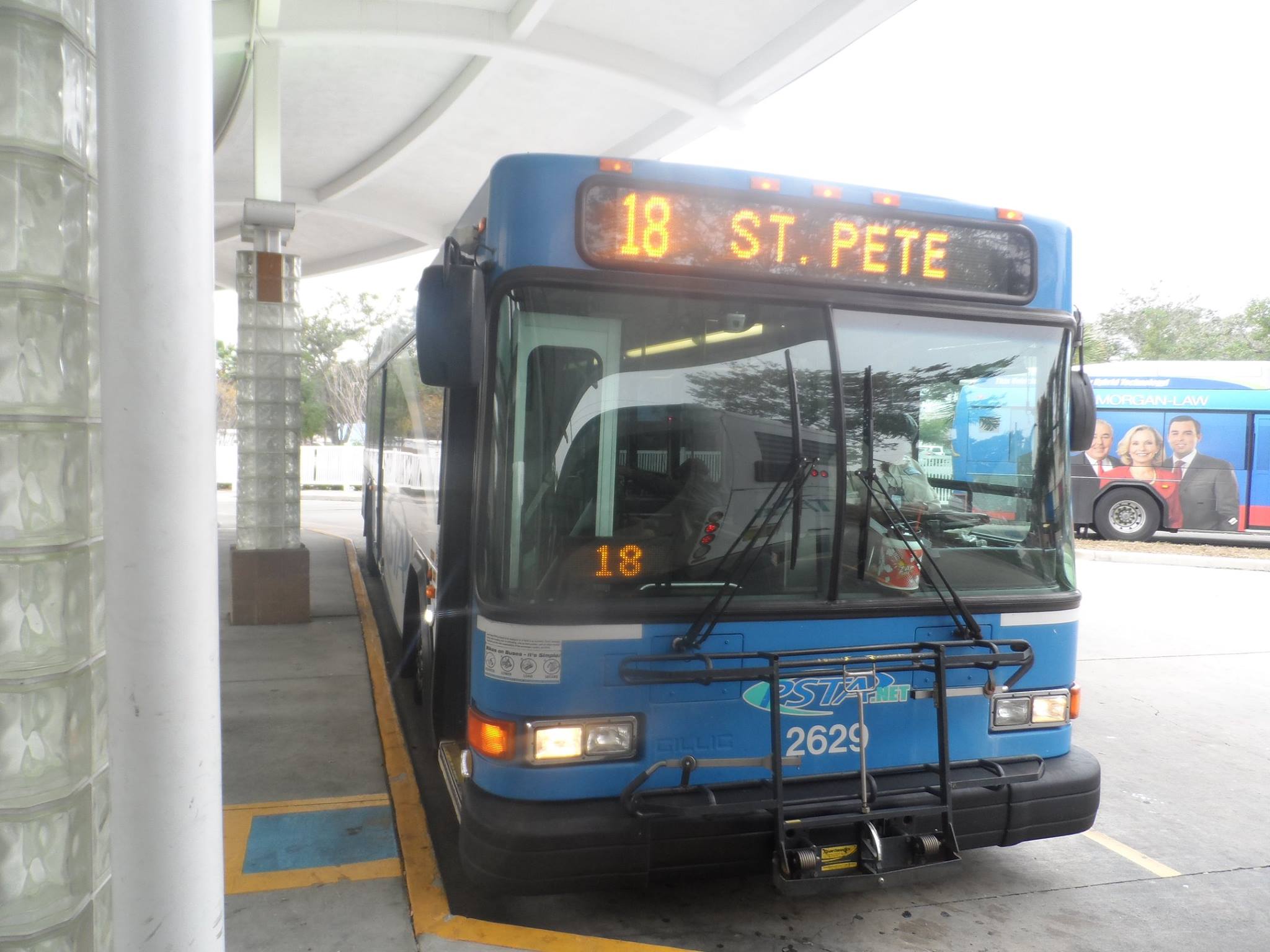
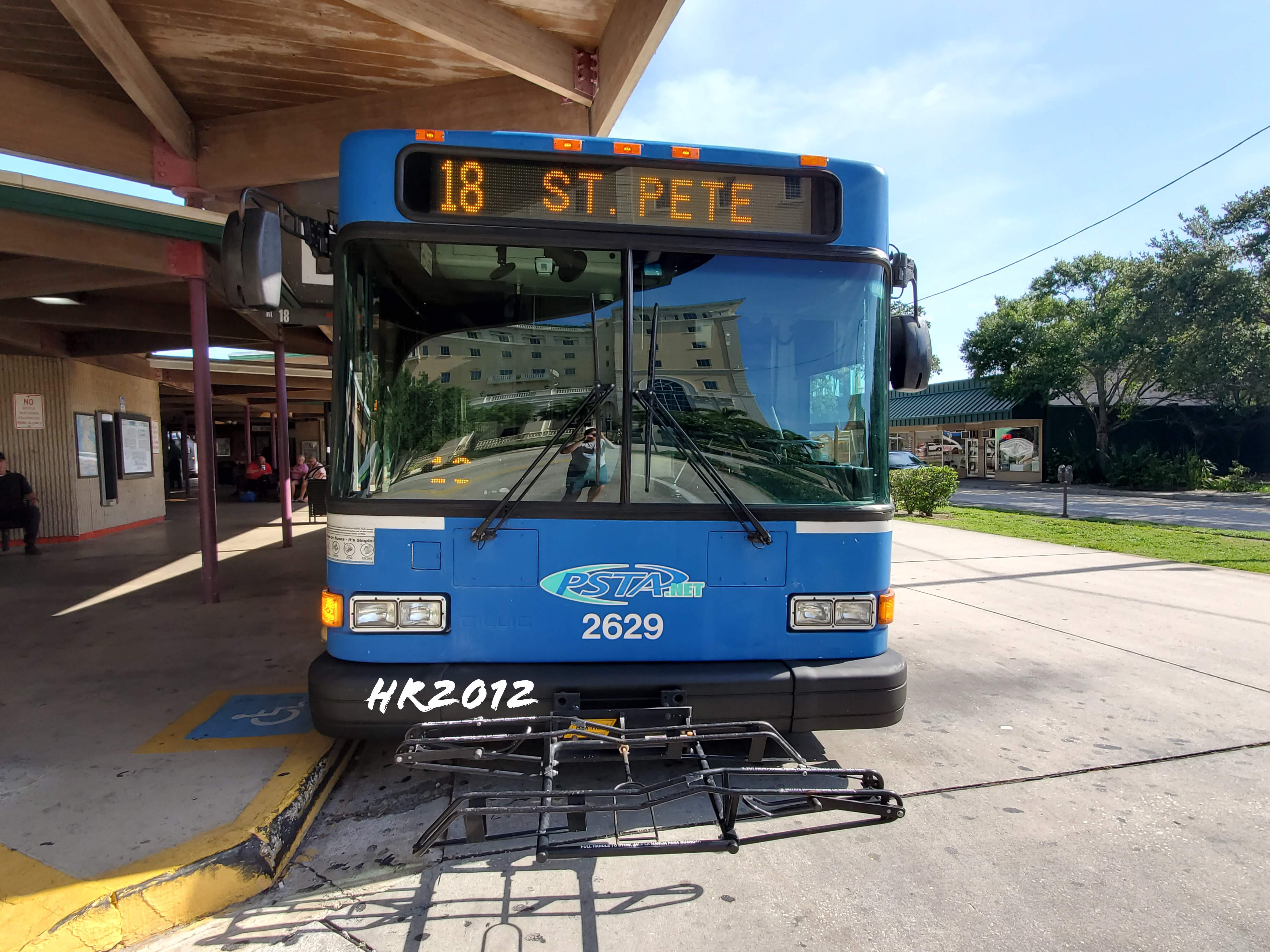
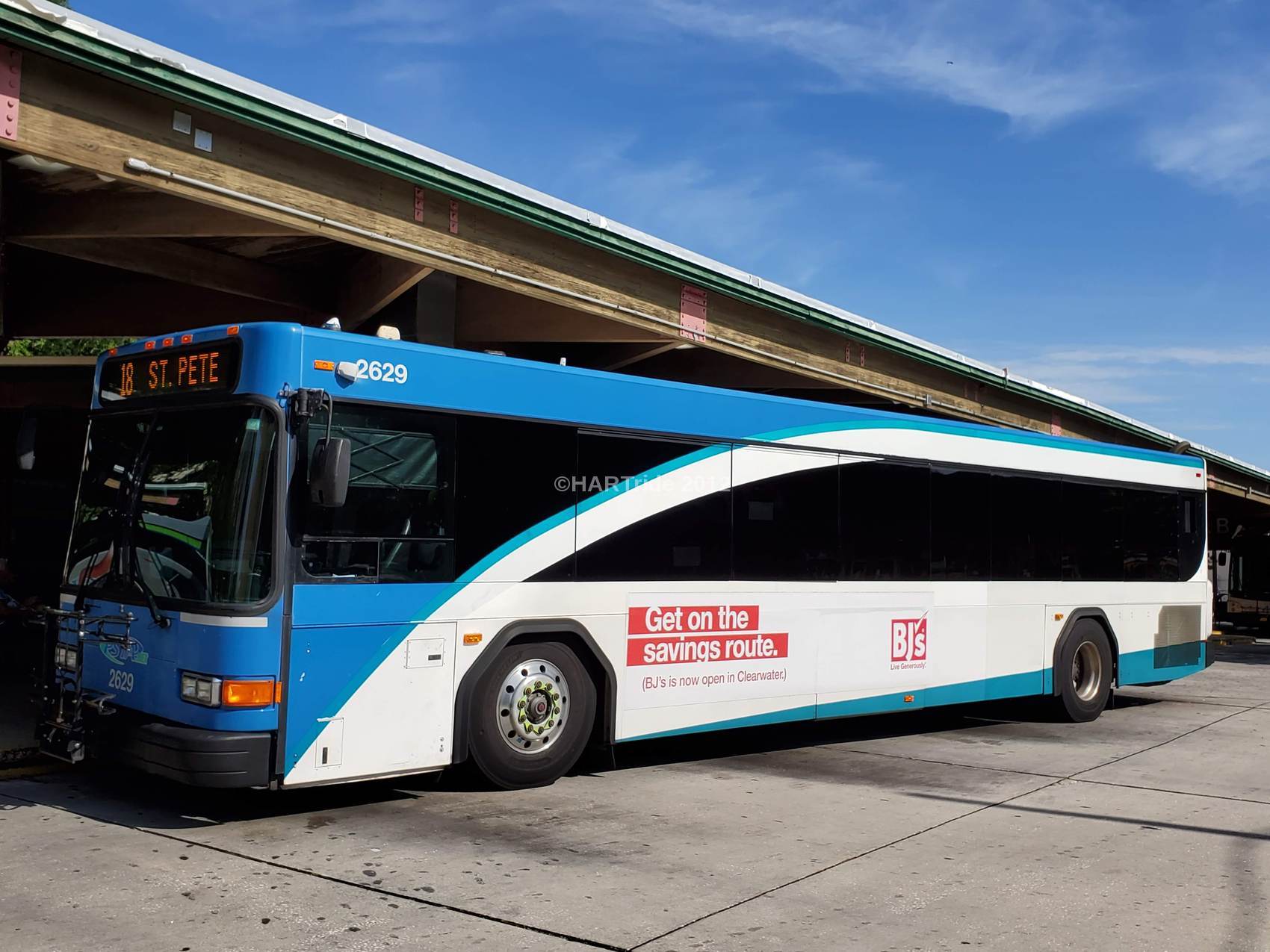
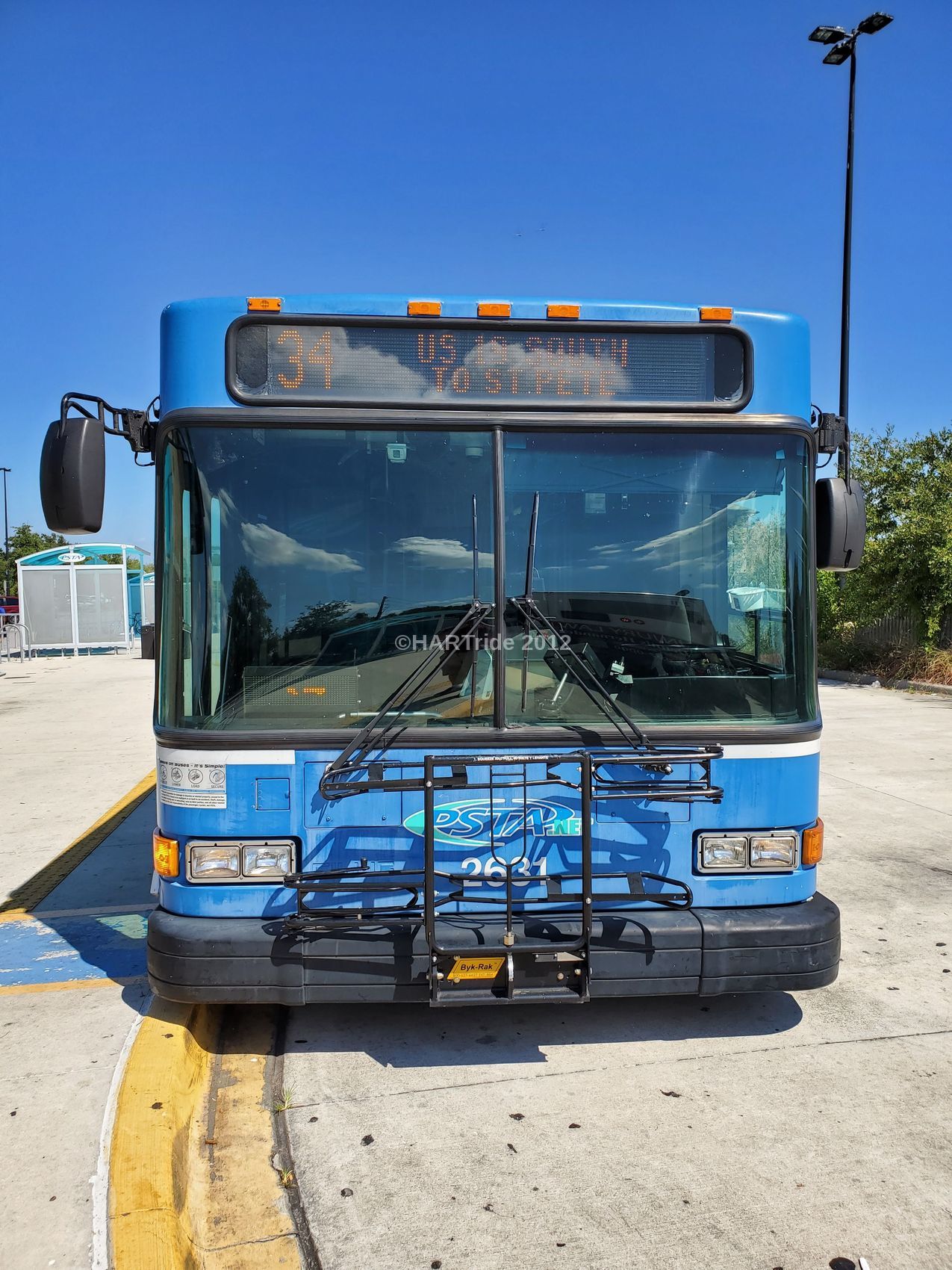
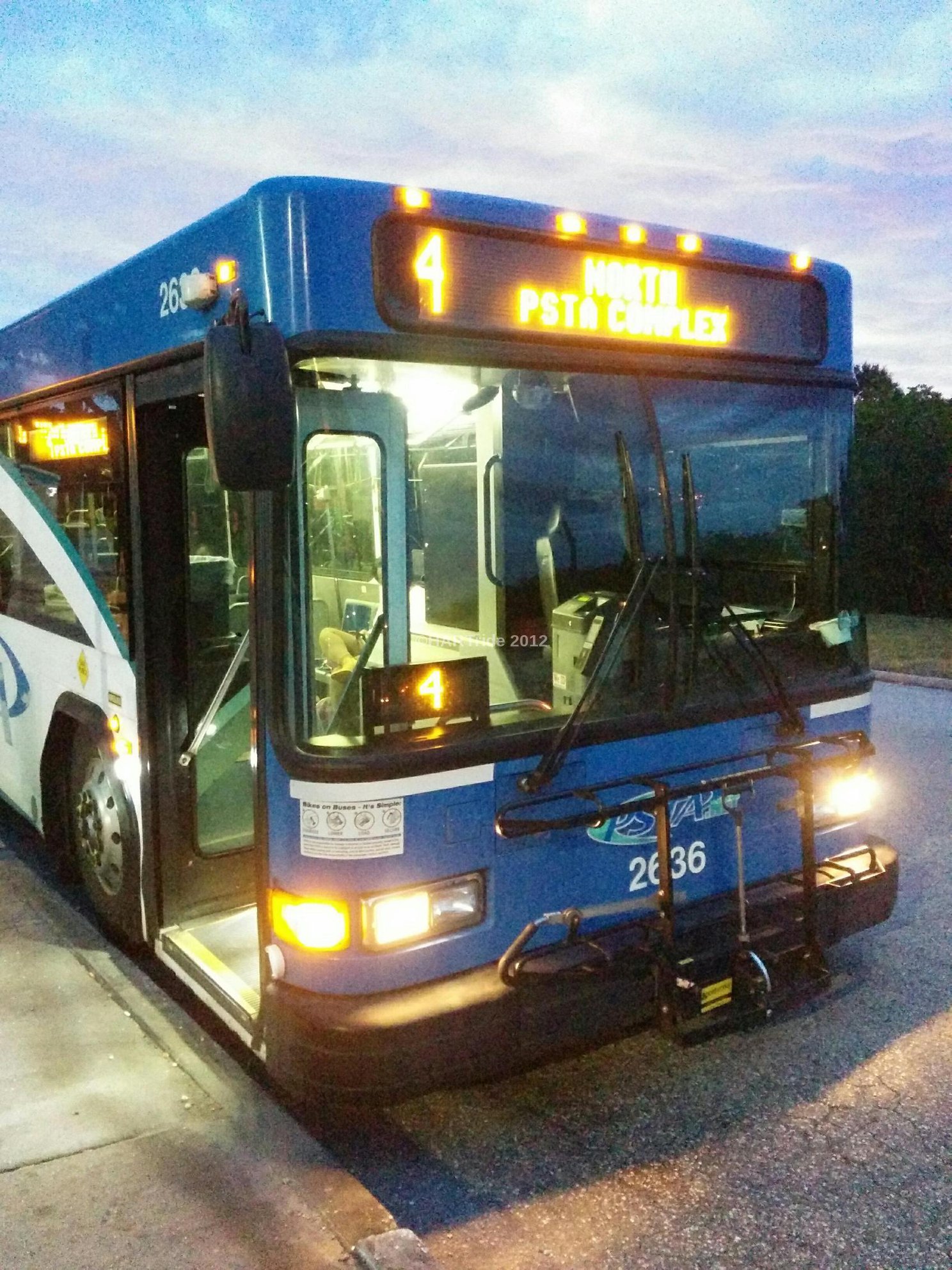
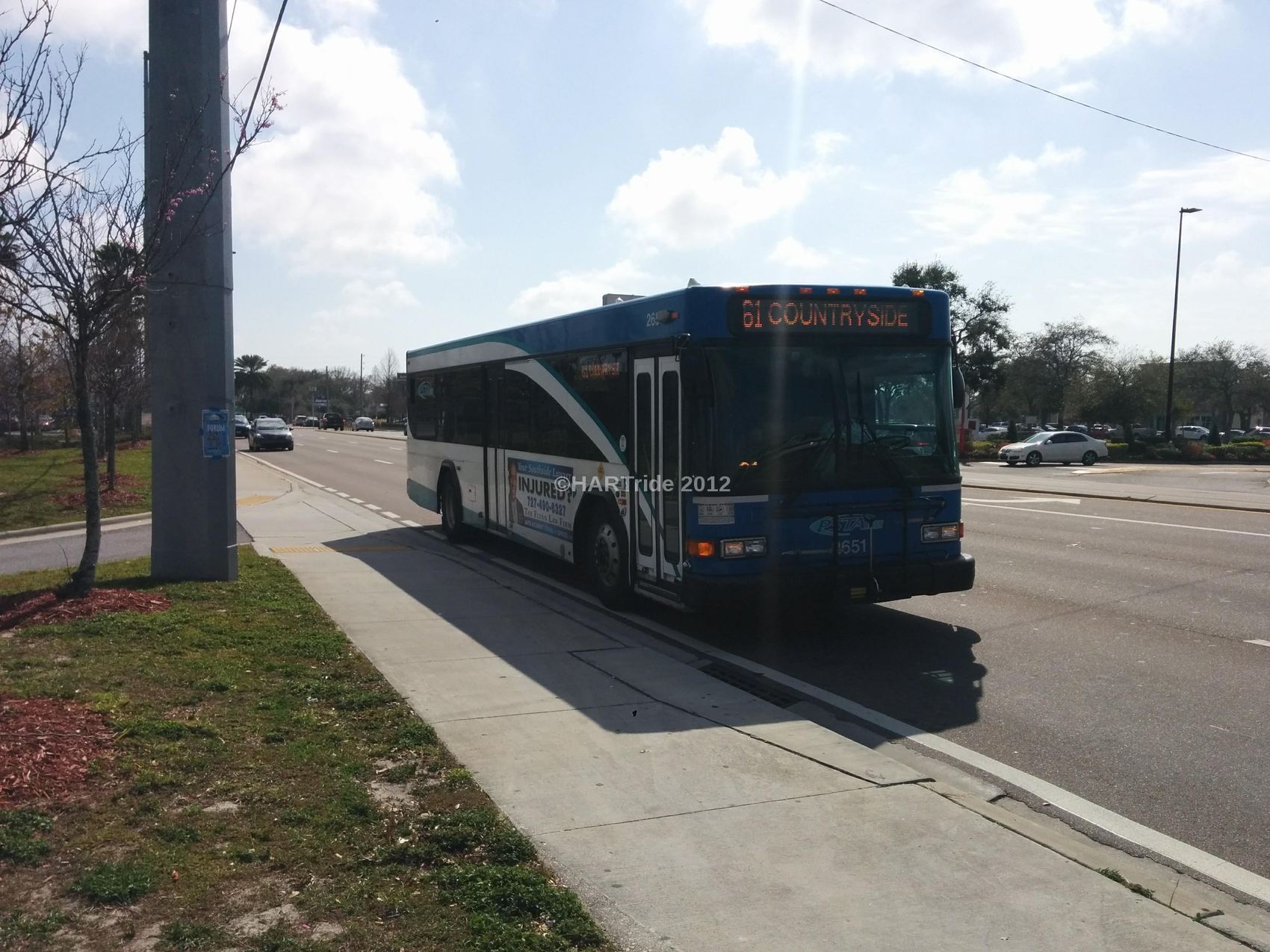
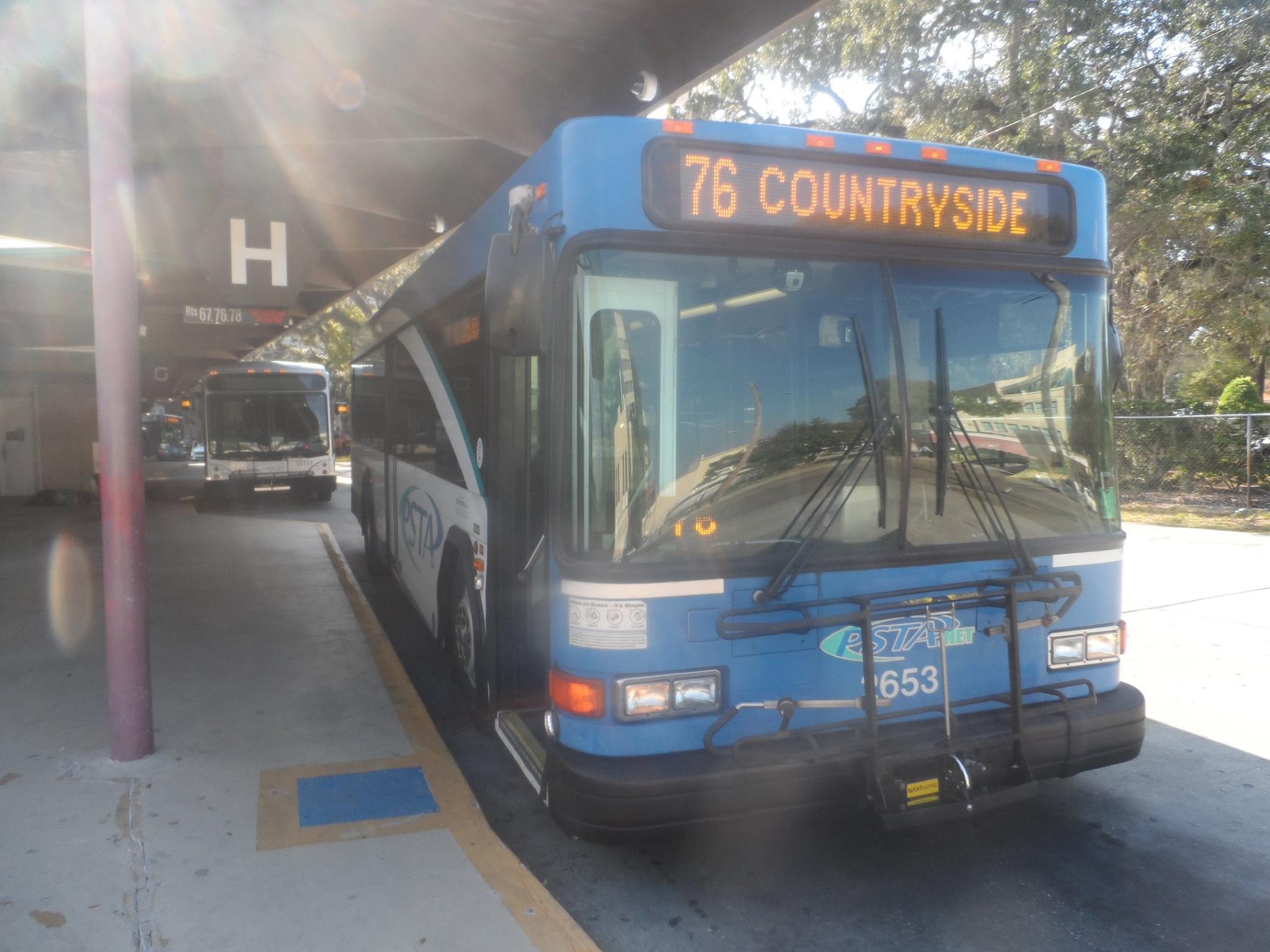
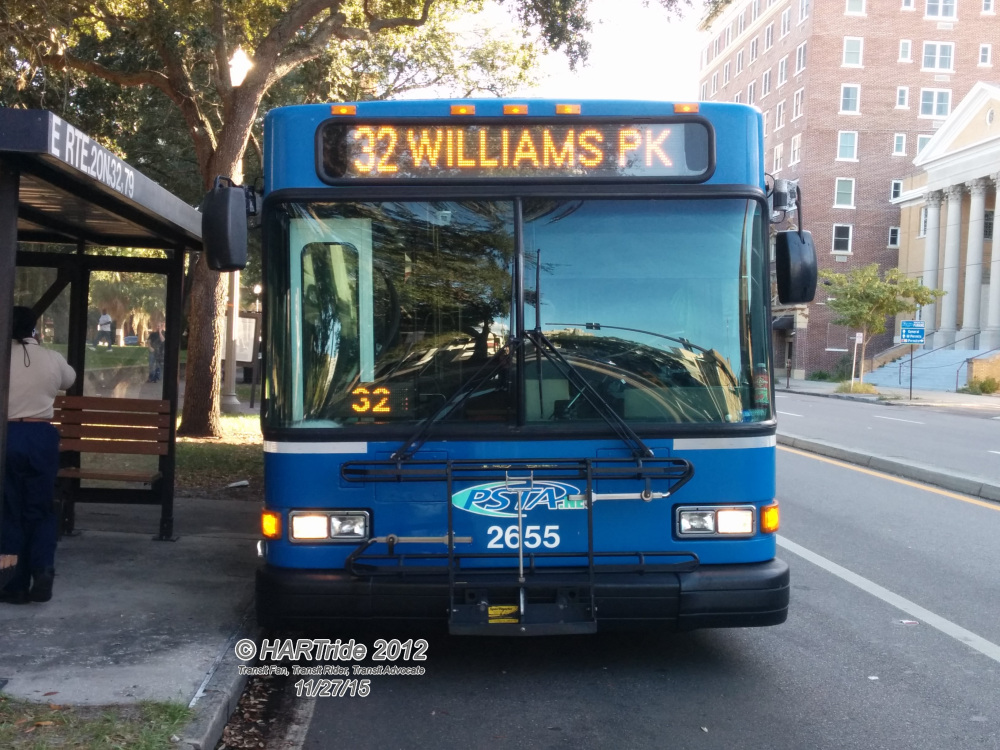
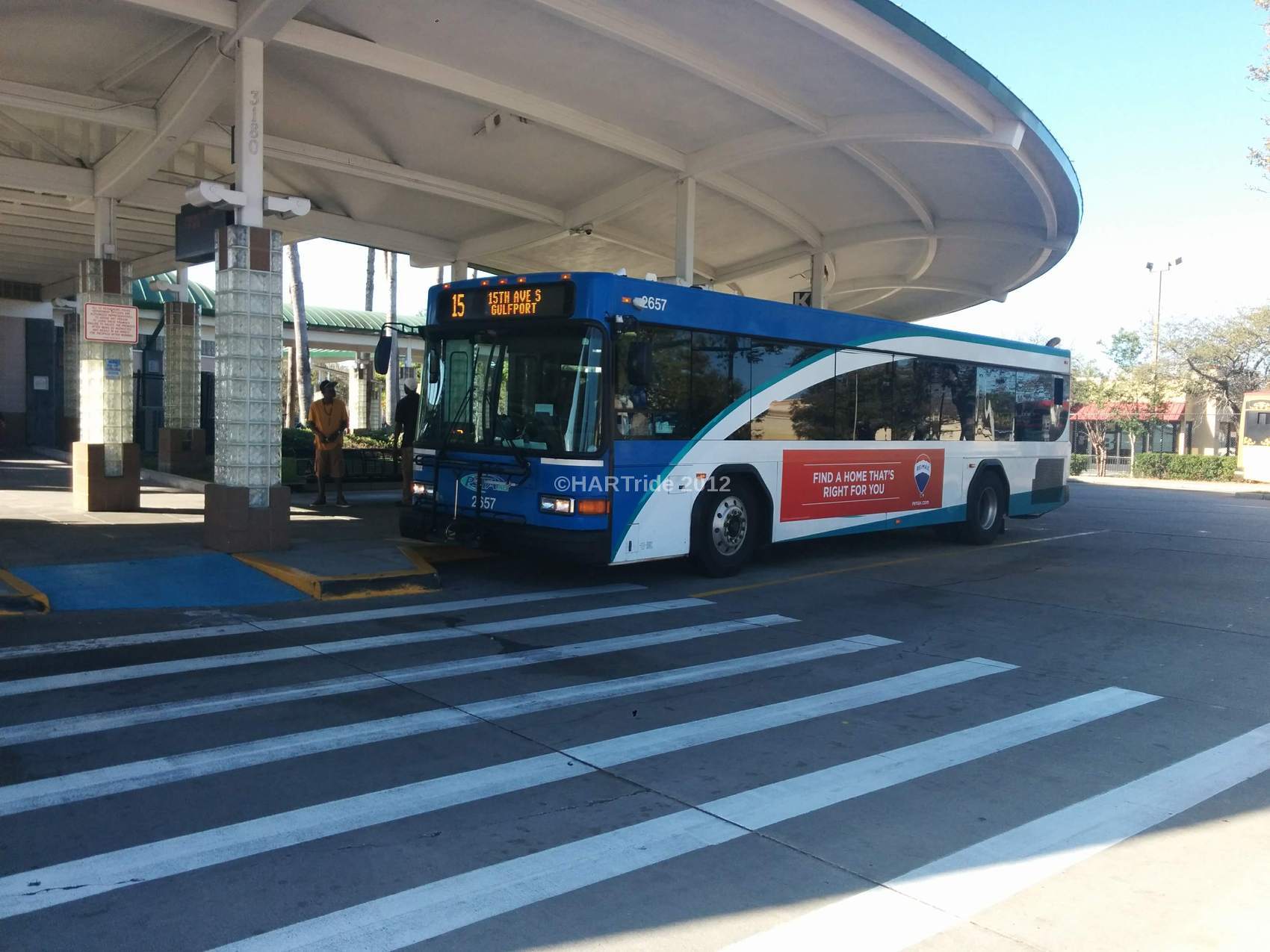
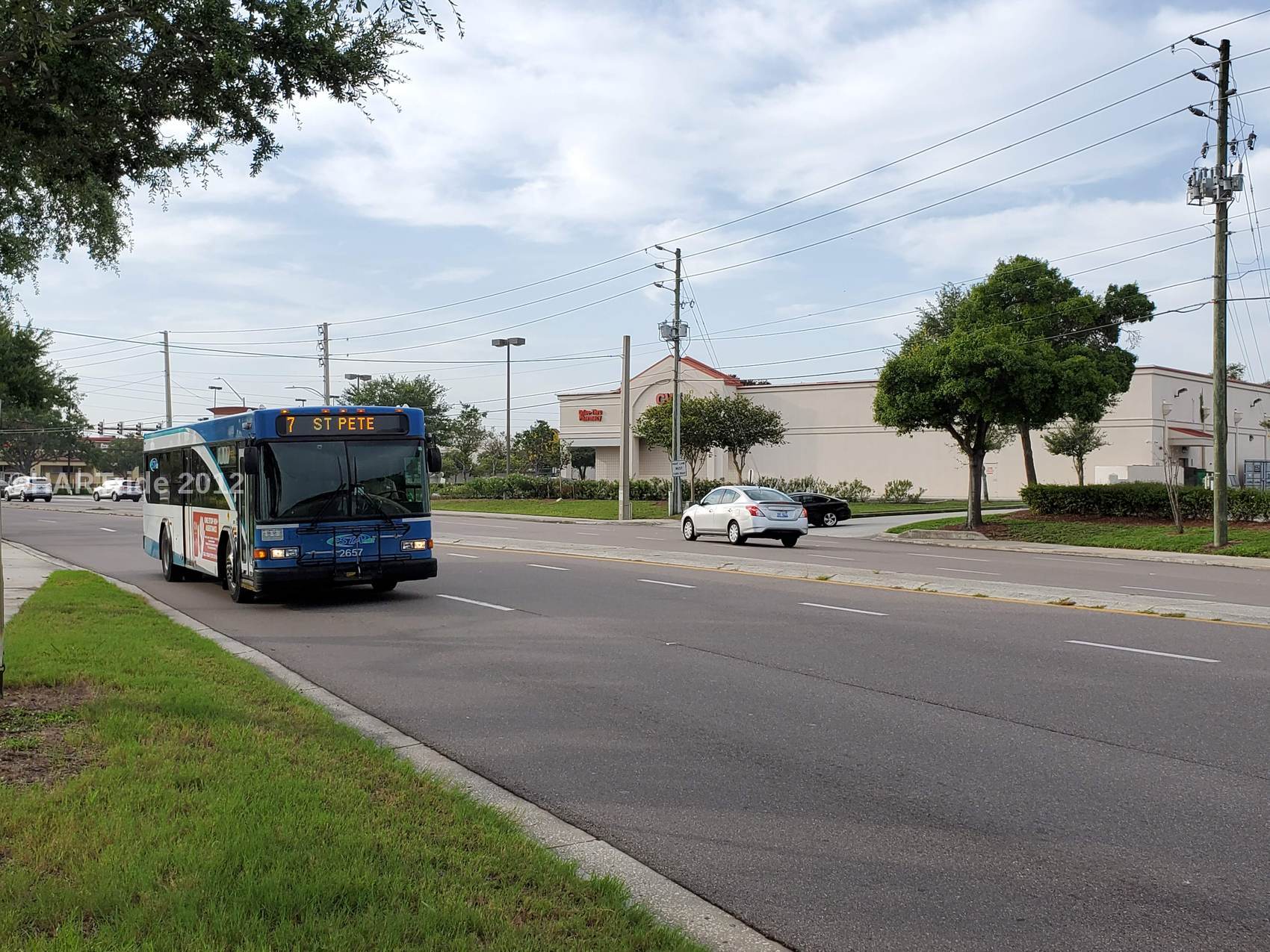
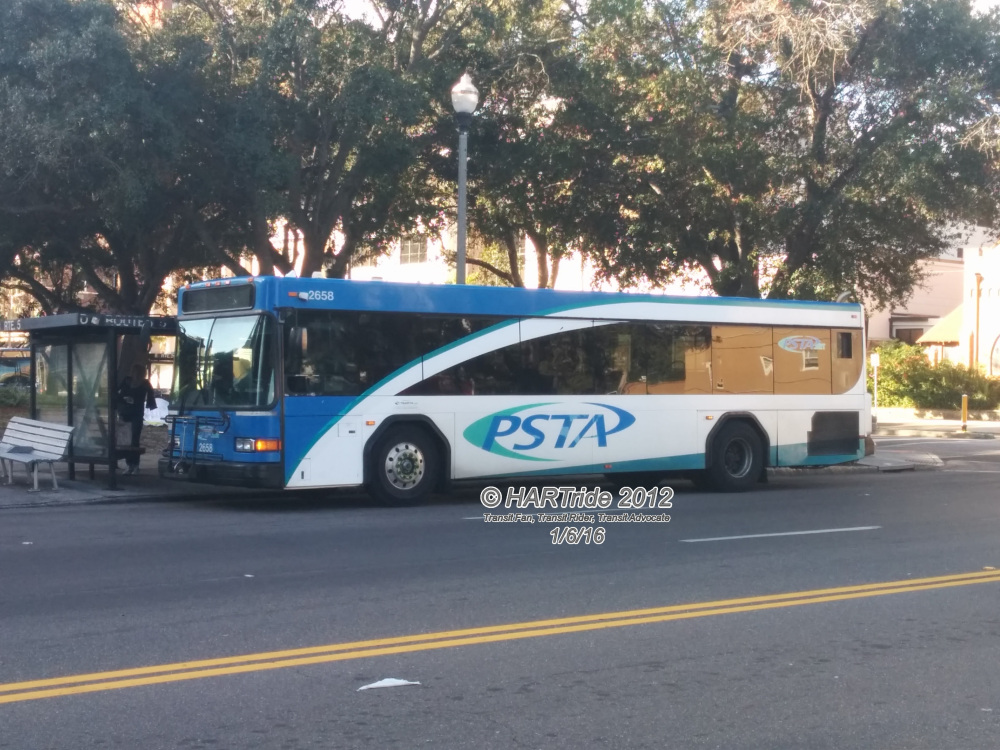
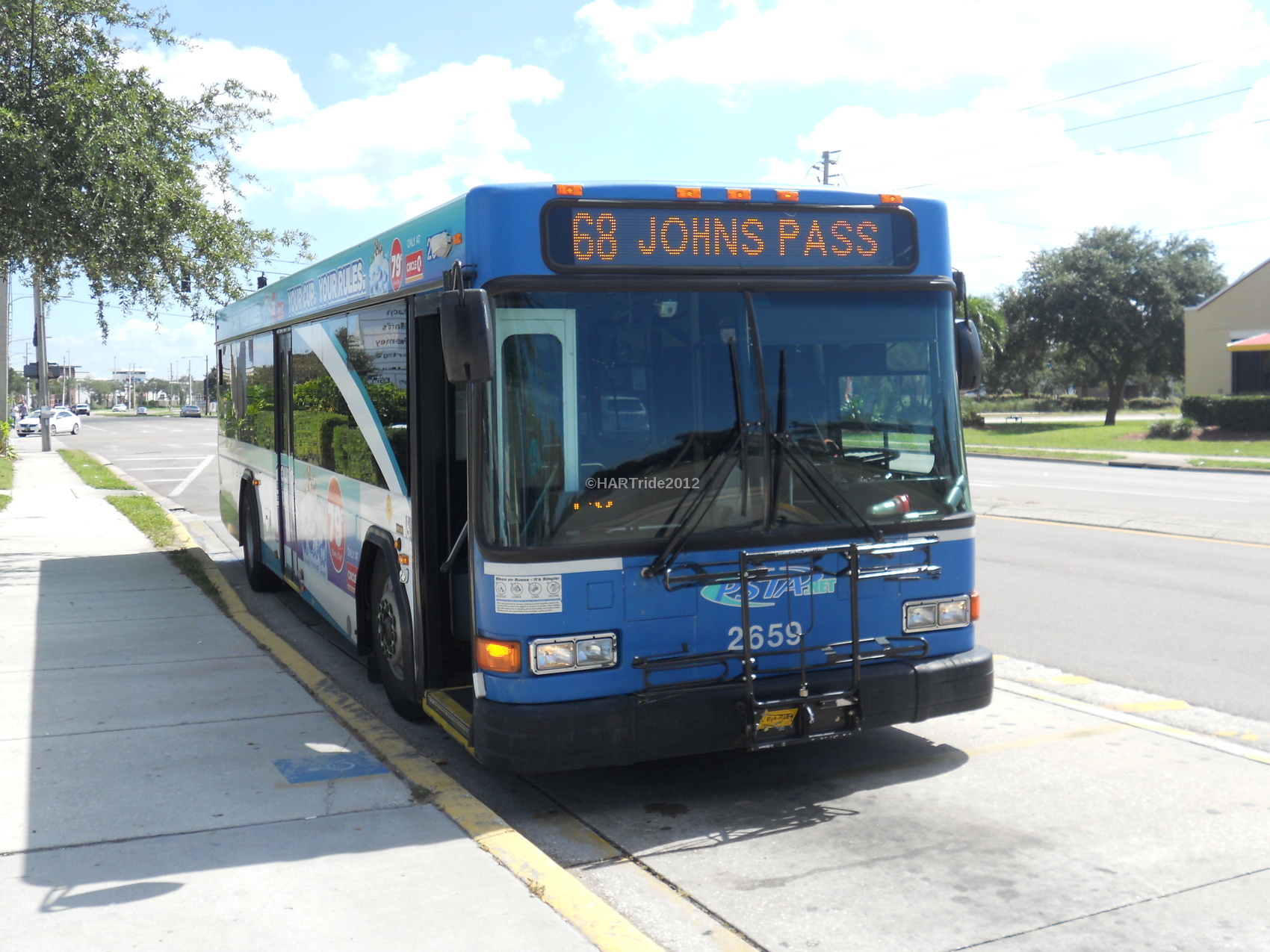
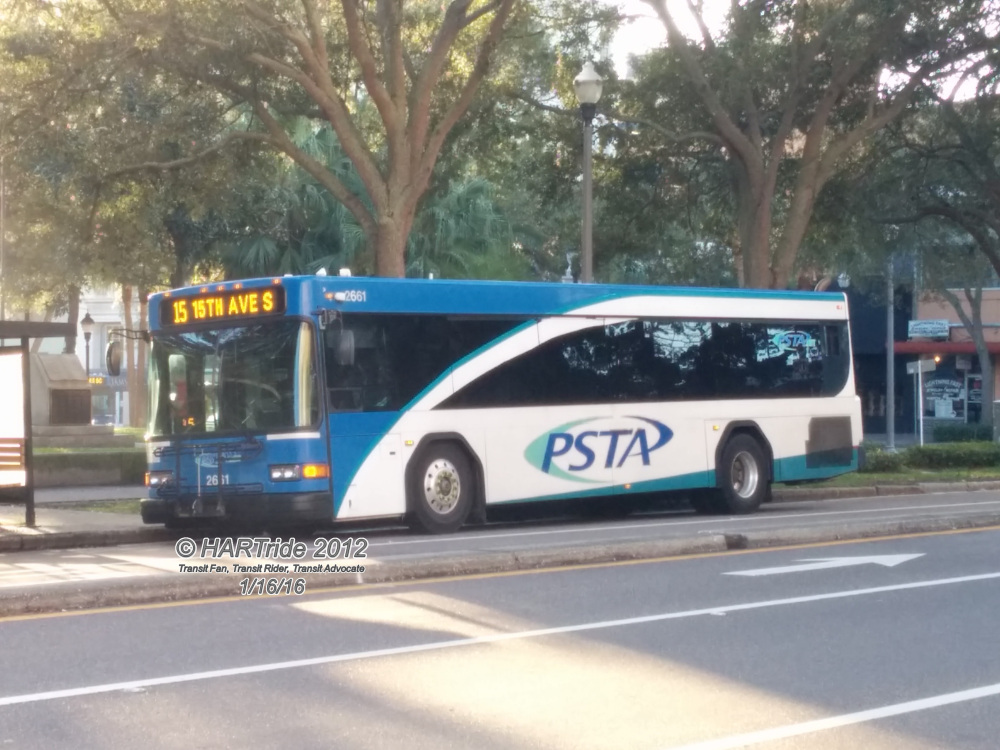
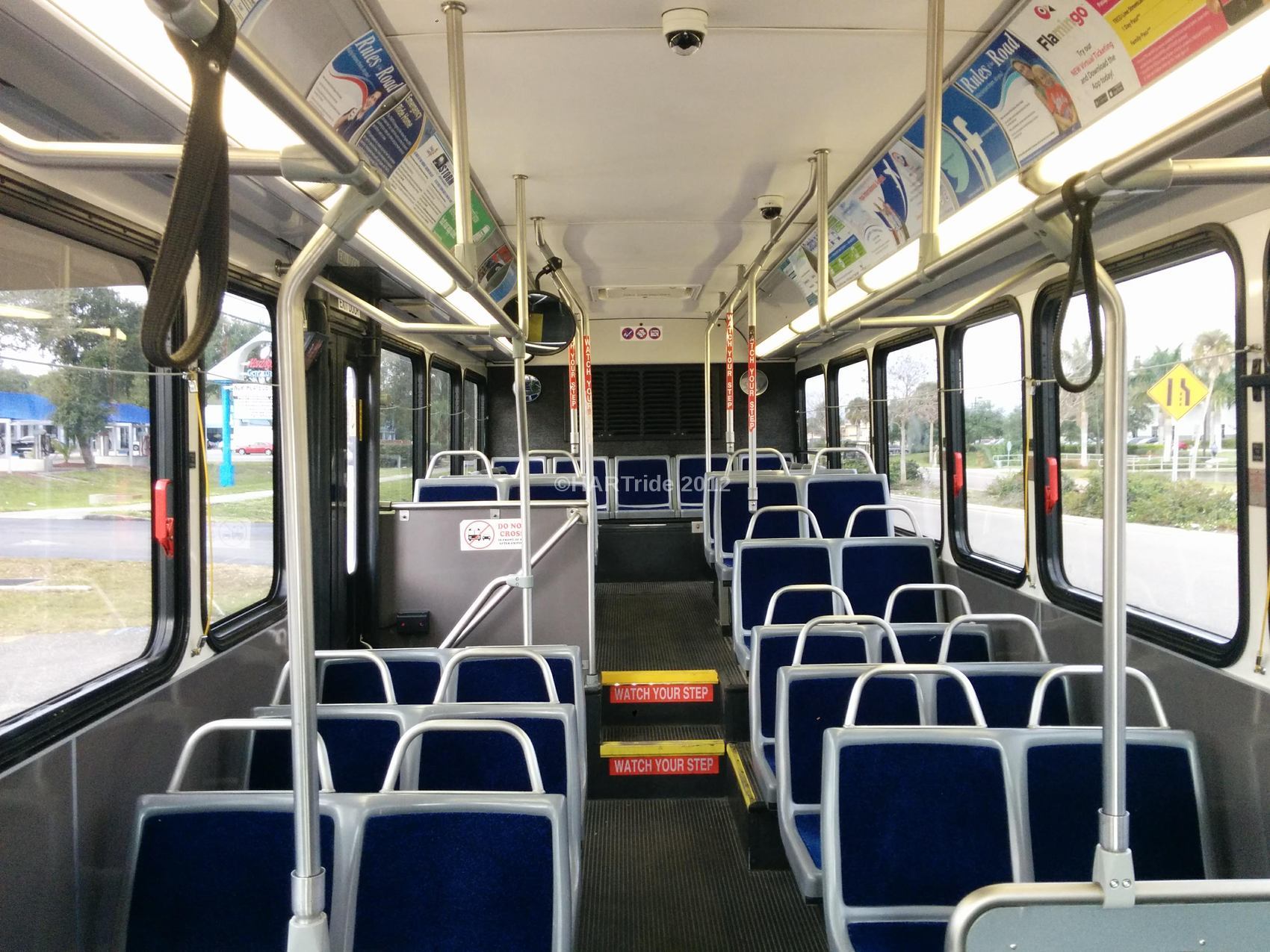
# 2601 on layover at the Park St Terminal.Later on, she passes through the old Gandy Blvd frontage road – Route 74.Here she is on Route 52 – Largo Transit Center.And, she heads back south to Grand Central Station.It’s substitution duty on Route 74. Credit: Joe C.# 2602 on layover at the Roy Hanna Dr/25th Way layover point – Route 4.Here she is at the 34th St N Transfer Center, running the 52LX.# 2603 on layover at Pinellas Park Transit Center, also on the 52LX.# 2604 on the old 59.And here she is on Route 4.Same bus, different angle.And here she is at Pinellas Park Transit Center.# 2605 at Grand Central. Credit: Carlos A.# And here she is on standby at Park St Terminal.# 2606 at Largo Transit Center – Route 19.# 2606 on layover at Seminole City Center – Route 74.Same bus, different angle.# 2607 at the Goodwill Facility on Gandy Blvd. This was back when Route 4 did the 116th Ave N/Goodwill loops. Now those loops are serviced by Route 9.And later, # 2607 winds up at the Roy Hanna Dr/25th Way S layover point.She loves her closeup!And finally, she winds up at the old Williams Park hub.Same bus, different angle.Same bus, different angle.# 2608 departs Williams Park on Route 18.And here’s # 2608 on layover at Largo Transit Center – Route 34.And here she is at the 34th St N Transfer Center.# 2609 on layover at Williams Park.Here she is at the 34th St N Transfer Center.Same bus, different angle and day.# 2610 at Williams Park.Side view of # 2610.And here she is on Route 4.# 2611 on layover at Williams Park.And off she goes! Route 79.Here she is leaving Grand Central. Credit: Carlos A.# 2612 on layover at the Park St Terminal – Route 60.And here she is on layover at Williams Park.# 2613 at Williams Park.And she’s prepped to go for another run on Route 23!# 2614 on the old 74 at Gateway Mall.And here she is on layover at Williams Park.# 2615 at Gateway Mall. Credit: Carlos A.And here she is on Route 52, Pinellas Park Transit Center. Credit: Joe C.# 2618 at Grand Central. Credit: Carlos A.# And here she is on the weekday PM Route 78.# 2619 arriving at Pinellas Park Transit Center. Credit: Joe C.# And here she is on Route 74 as a weekday regular.# 2620 on layover at Williams Park.# 2620 not having a good day here. A sedan collided with it while doing a run on Route 4.# 2620 leaving Largo Mall on Route 18.And then again on Route 75.And then passing by on 94th Ave N. It’s now a regular on Route 74 during weekdays.Going in the other direction on the 74, different day.# 2621 approaching the Target stop at Largo Mall.# 2623 leaving Grand Central. Credit: Carlos A.# 2624 on layover at Gateway Mall – Old Route 59.And here she is on the old Route 97, which was replaced by Route 52LX.And then she winds up at Park St Terminal. Credit: Joe C.# 2625 departing Grand Central. Credit: Carlos A.# 2628 on Route 100XComing back to Britton Plaza for the return trip to St. Pete.And off she goes!# 2628 on Route 18 at Largo Mall# 2629 at Grand Central. Credit: Joe C.And here she is at Park St Terminal.Side shot of # 2629.# 2631 at Largo Transit Center – Route 34.Same bus, different angle.# And here she is on layover at Park St Terminal.# 2632 on Route 18.And here she is at Park St Terminal. Credit: Joe C.# 2633 at Seminole City Center, Route 18.# 2634 on Route 74.# 2635 on the old 59.And then it springs up on the 18.And here it winds up at Park St Terminal.# 2636 on Route 4.Rear shot of # 2636.# 2650 pulls out of Grand Central Station.# 2651 on Route 61.And later on, she springs up on Route 75.# 2652 leaving Tyrone Square Mall.# 2653 on Route 38.And here she is on Route 20.And later, at Tyrone Square Mall – running the 75.And finally, on Route 76, at Park St Terminal. Credit: Joe C.# 2654 at Park St Terminal.# 2655 on layover at Williams Park.And later on, she departs from the Park St Terminal – Route 73.# 2657 on layover at Williams Park.And later, she is spotted at Grand Central Station, running Route 15.And here she is on the 7, which is interlined with the 15.Here she is returning to Tyrone.# 2658 on layover at Williams Park.# 2659 on layover at Tyrone Square Mall – Route 68.# 2660 on layover at Tyrone Square Mall.And here she is – freshly repainted in silver.# 2661 on layover at Williams Park.Typical interior of a 2600-series bus. The 2500-series buses (excluding the 29’s) have had their seating cushions replaced by these.
2008 Gillig Low Floor Diesel
40′ – #’s 2801 – 2815, 35′ – #’s 2830 – 2835
The 35′ units were in revenue service from 2008 through 2019, with the 40′ units being in service from 2008 through 2025.
The 2008-series Gilligs are nearly identical to their older siblings with one key difference – the exhaust system. These buses were the first of the clean diesels with a newer EPA approved exhaust system (known as EPA 2010 or simply EPA10) that features a particulate tailpipe. All Gillig buses from 2008 & onwards posses this type of tailpipe and related components – regardless of the fuel type (except battery electric – as those models have no tailpipe).
On 07/19/2019, I was heavily shocked to find four of the 35′ units had been dumped off at the Stepps Transportation Service lot on 118th Ave N near Pinellas Park, #’s 2830, 2833, 2834, & 2835 as scrap vehicles. While I knew that 2800s as a whole had some issues with acceleration & the newer exhaust system, I didn’t think the problems with the 35′ buses were this bad. PSTA decided to refurbish their 40′ counterparts – #’s 2801 through 2815 to keep them in service for a couple more years, but for these 35′ buses, it was clearly the end of the road. I have not seen #’s 2831 or 2832 since just prior to seeing the others in the scrapyard & am thus highly suspecting that they were auctioned off as operational vehicles.
With overall reliability continuing to decrease for the 40′ units, gradual retirement began in mid 2023, though # 2808 was retired in 2018 due to severe accident damage. Due to changing fleet composition needs after the Connected Community Bus Network system redesign takes effect in October, 2025, this entire fleet series is not being replaced.
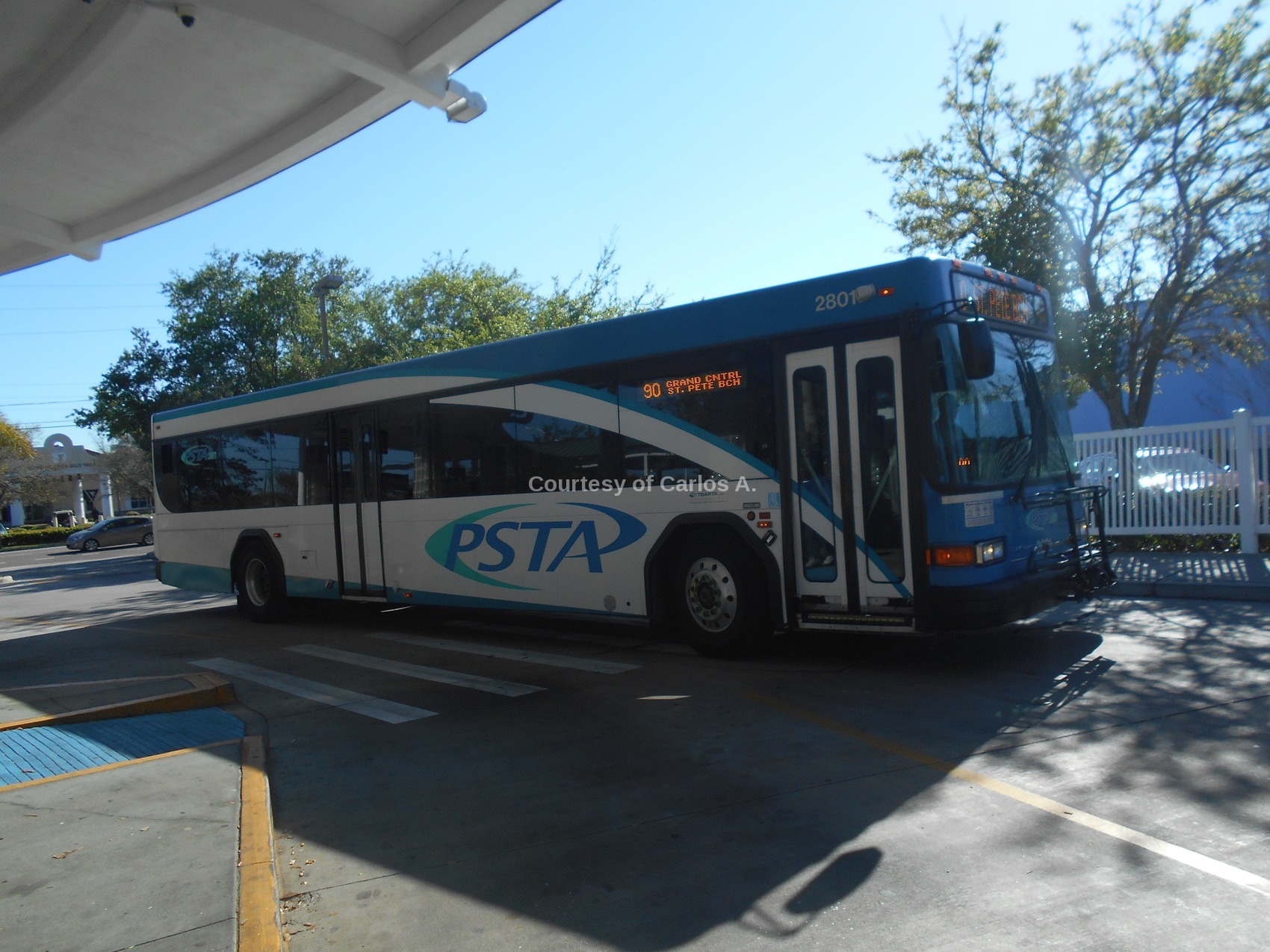
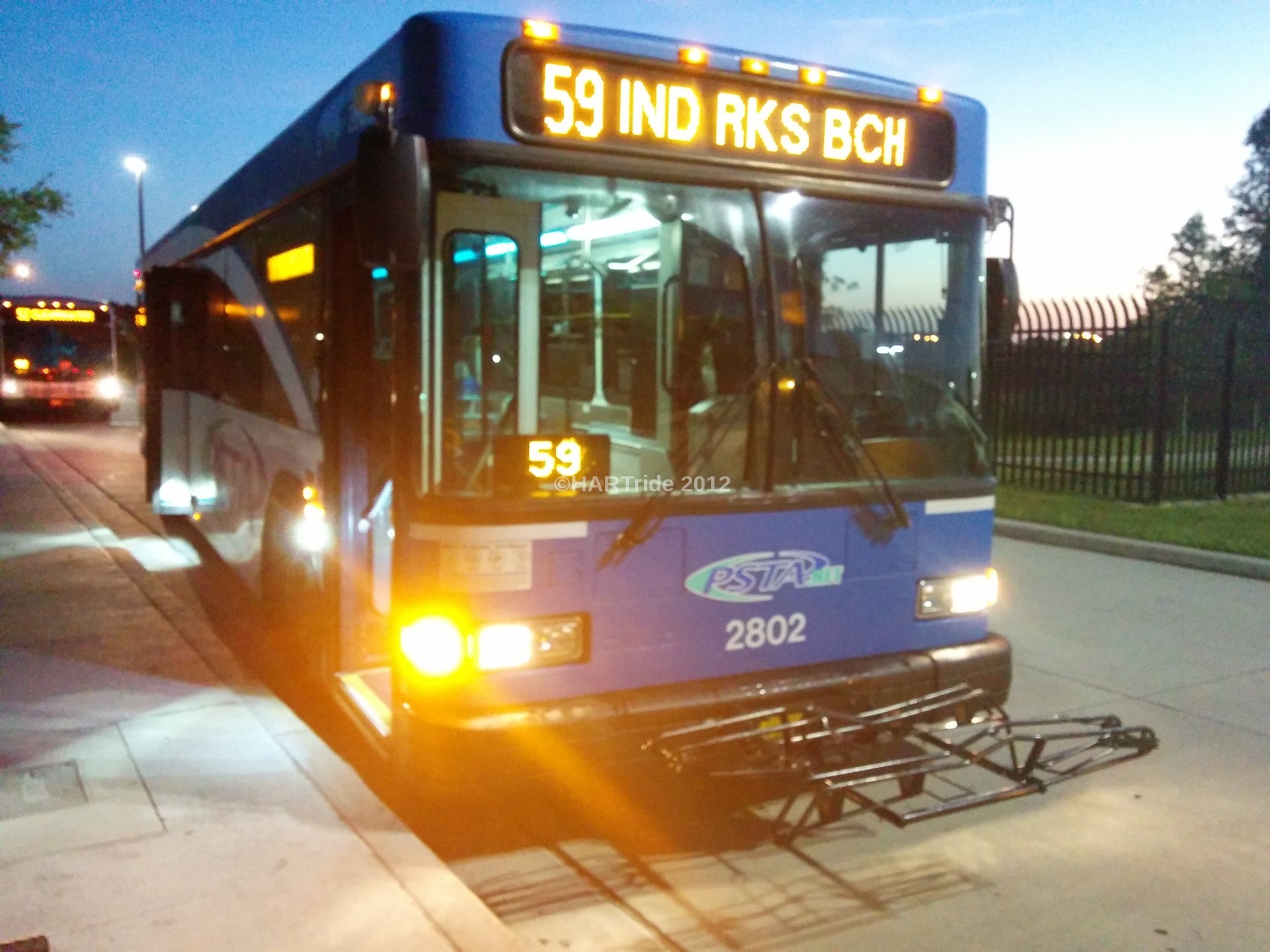
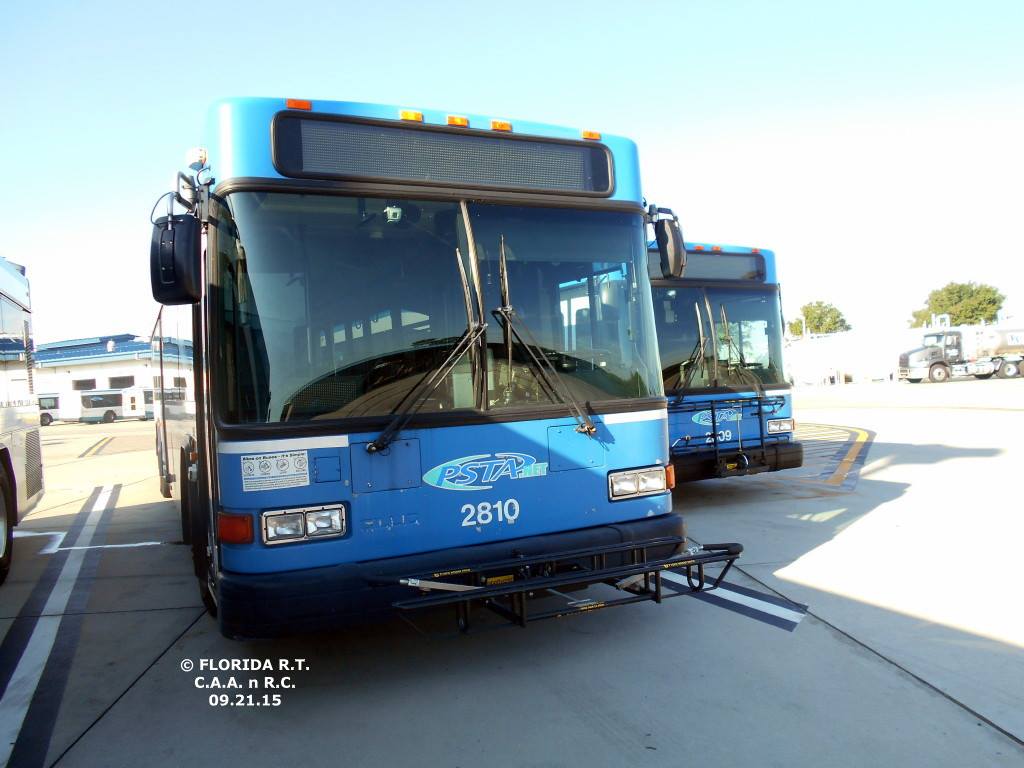
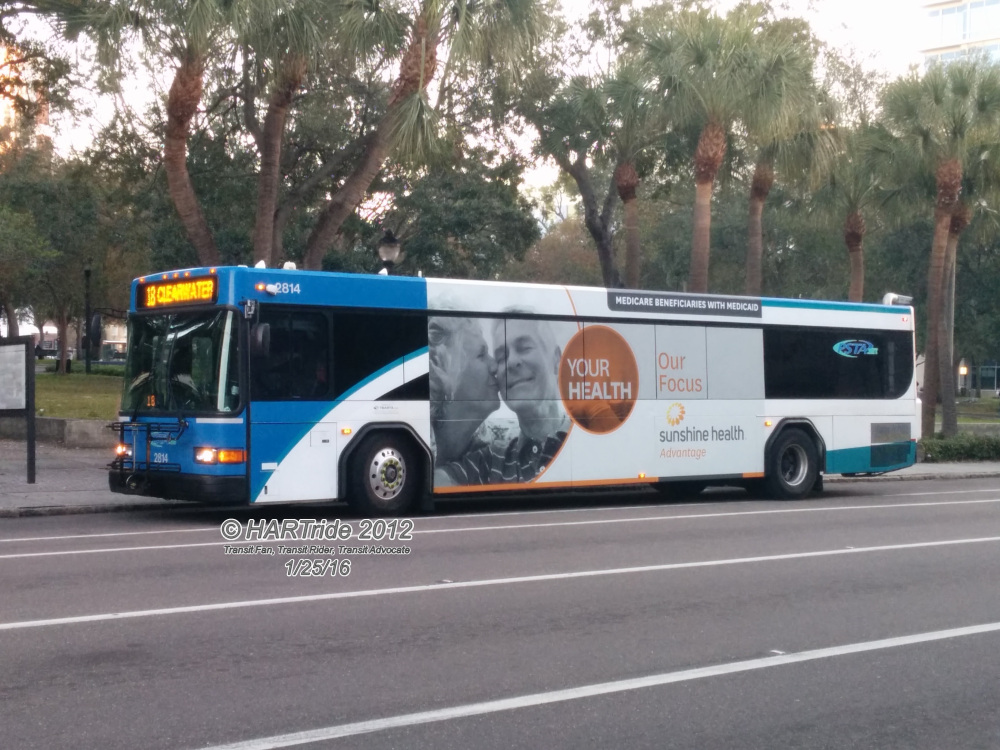
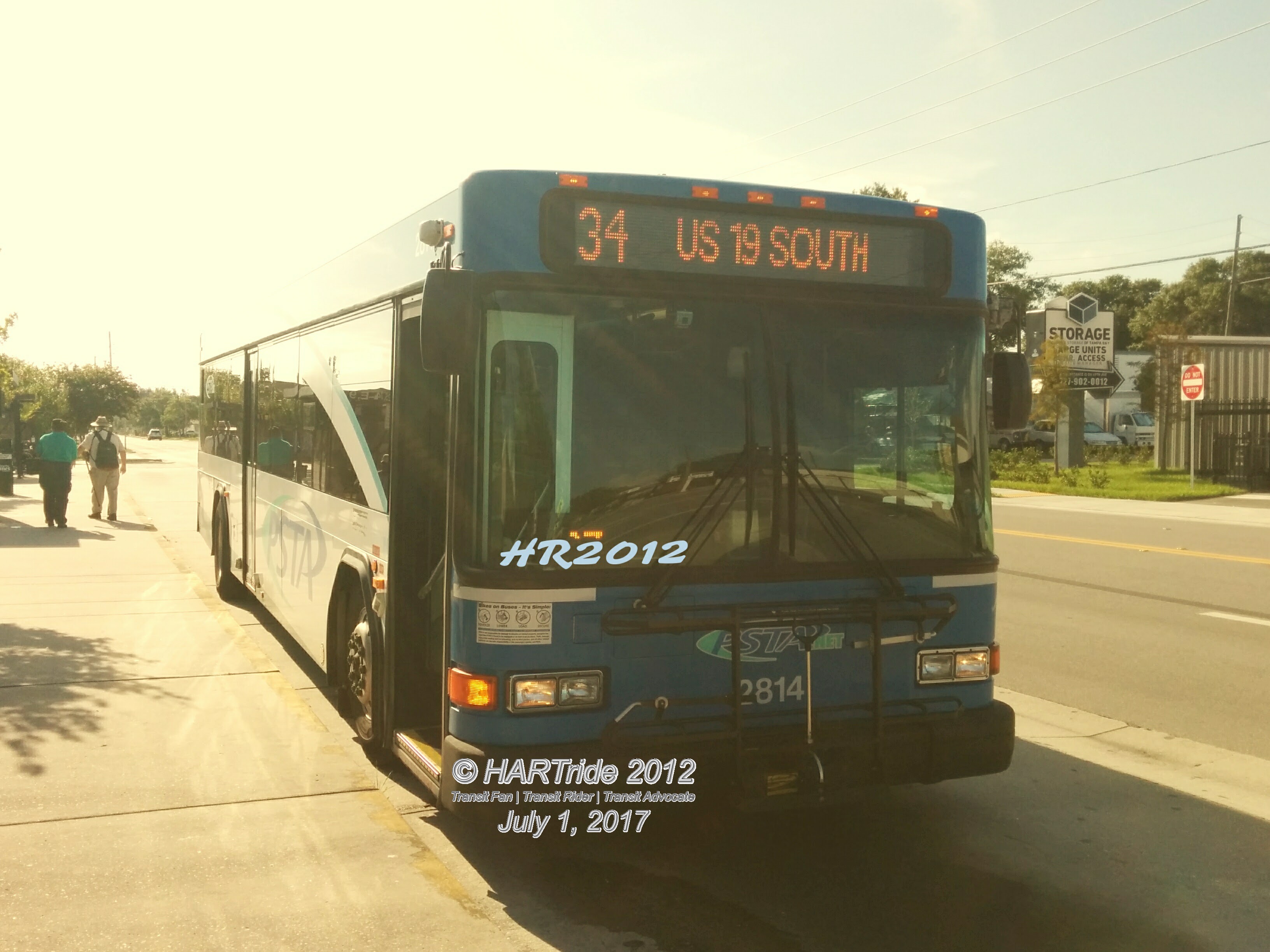
# 2801 leaving Grand Central on Route 90. Credit: Carlos A.And here she is on Route 74 at Seminole City Center just prior to sunrise.# 2802 on the old 59, leaving Gateway Mall.Here she is basking in the sunrise before her run.# 2803 at Grand Central.# 2804 on layover in Indian Rocks.# 2806 at Williams Park.And here she is at Pinellas Park Transit Center.# 2807 at Williams Park.# 2808 leaving Grand Central. Credit: Carlos A. This bus has since been retired due to an accident it was involved in back in 2018.# 2809 on Route 4, approaching Williams Park.# 2809 at the PSTA Facility. Credit: Carlos A. # 2810 at the PSTA Facility. Credit: Carlos A. # 2811 leaving Grand Central. Credit: Carlos A. # 2811 at the PSTA Facility. Credit: Carlos A. # 2812 on layover at Grand Central Station.# 2813 leaving Tyrone Square Mall.# 2814 at Williams Park.Another shot of # 2814.# 2814 on its Saturday morning run on Route 34.And here she is again on the 34.# 2815 at Williams Park.And here she is again, this time on Route 4.PSTA donated # 2802 to local non-profit St. Pete Reach, which has turned the bus into a mobile food pantry. Here’s PSTA staff members ceremonially “handing the keys over” to the organization. Photo credit: PSTA.
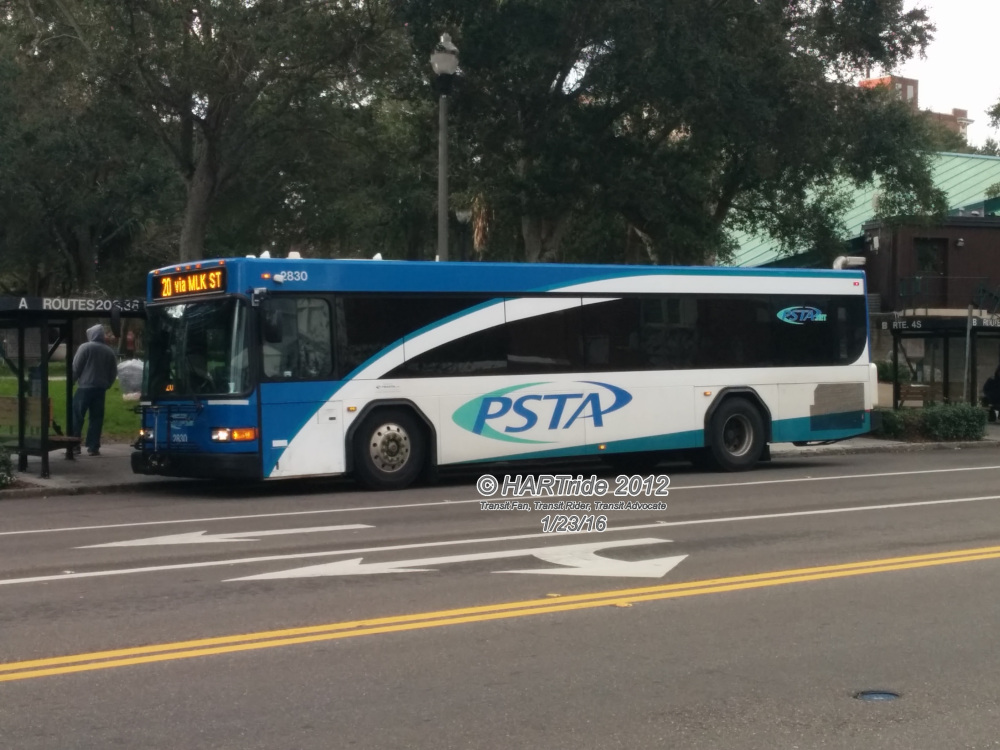
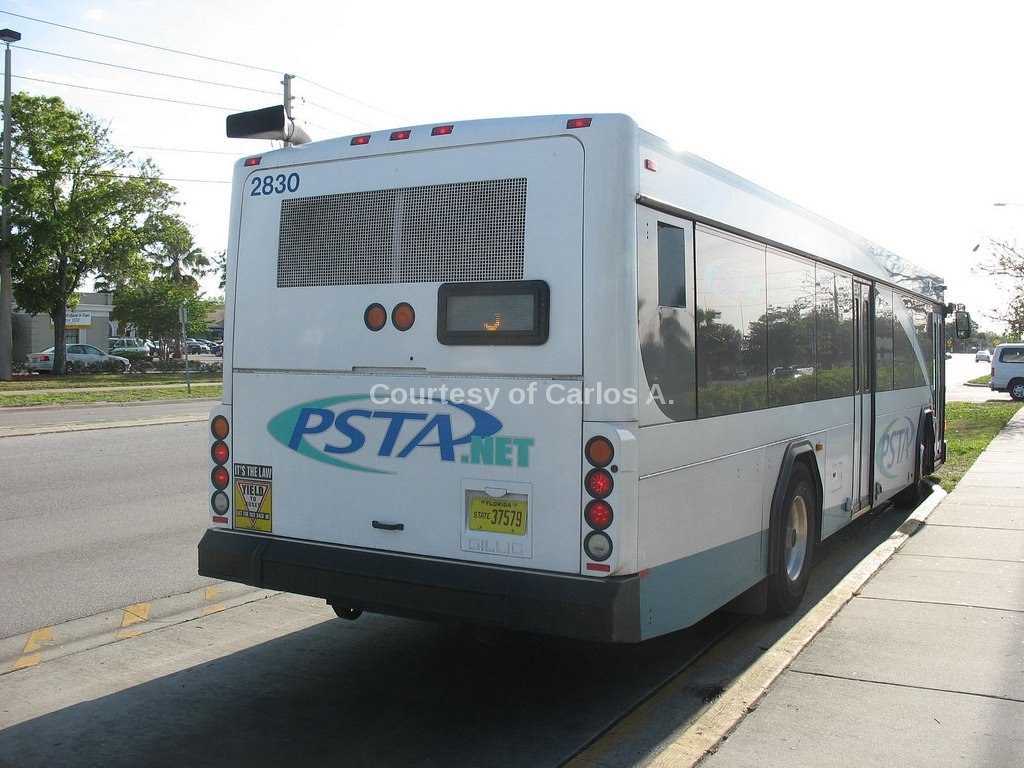
# 2830 on Route 74.
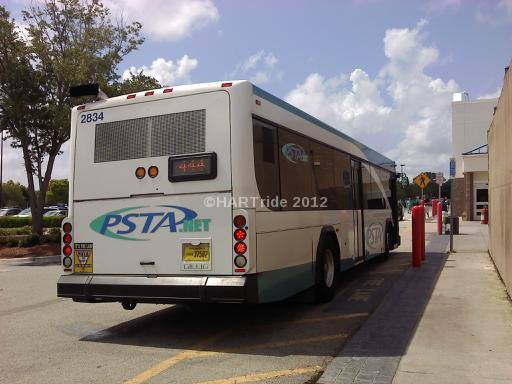
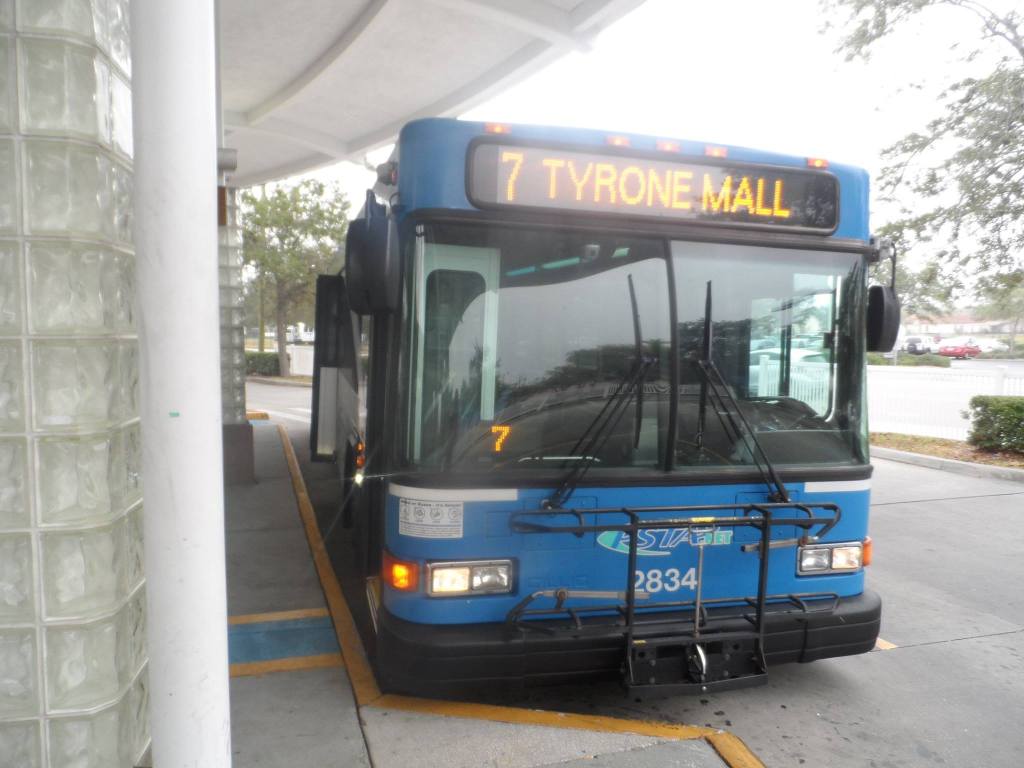
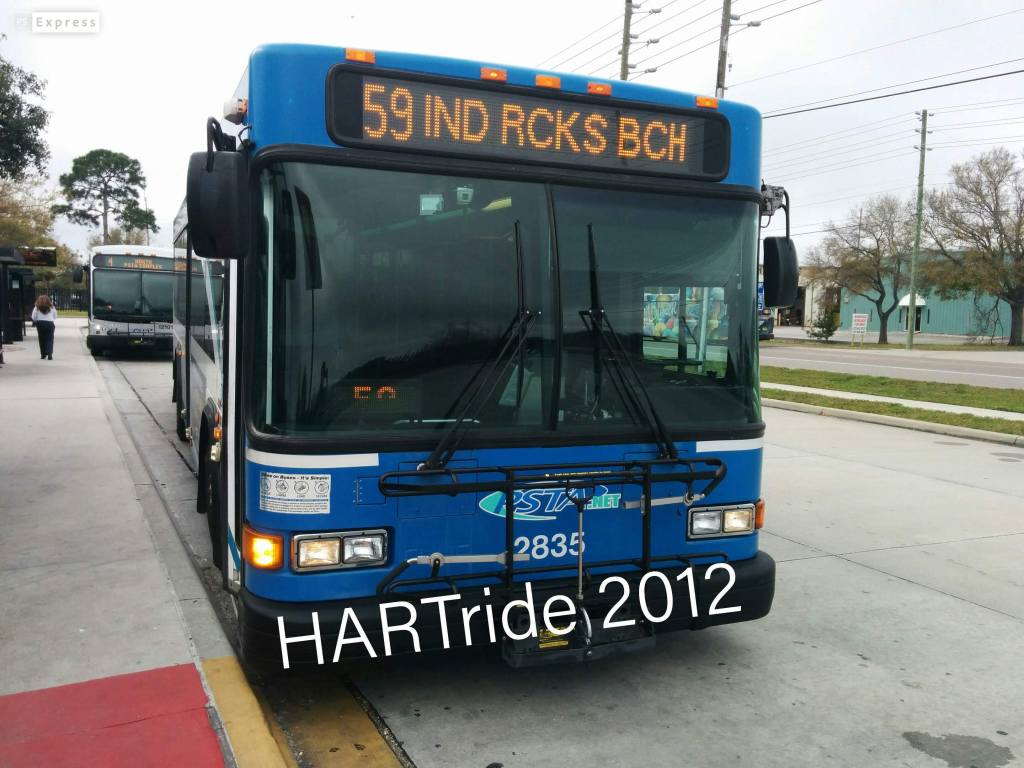
2830 at Williams Park.Here she is on Route 5 at Tyrone Square Mall. Credit: Carlos A.Rear shot. Credit: Carlos A.And here she is on Connector duty.2832 at Williams Park.And here she is at Largo Mall – Route 59.2833 on the old Route 66.Here she is at Williams Park.And here she is again, this time on Route 59.# 2834 on the old Route 444.Rear view of # 2834.2834 at Grand Central. Credit: Joe C.2835 on Route 74. Credit: Carlos A.Here she is on layover at Williams Park.Same bus, different angle.And another angle of # 2835.Here she is on layover at the 34th St N Transfer Center. She was a weekday regular on Route 59 up until retirement.Finally, here she is at Largo Mall.922 approaching Grand Central Station on the Central Ave Trolley.
All 35′ Units – #’s 720 – 722, 820 – 825, & 920 – 926
In revenue service from 2007, 2008, & 2009 through 2021
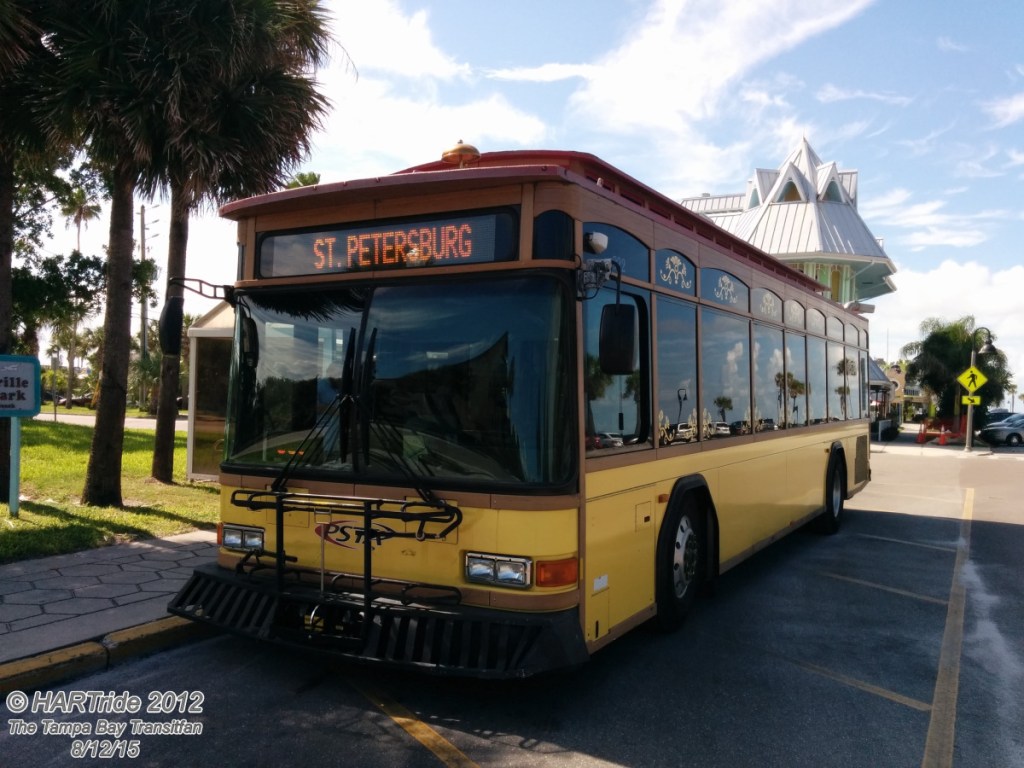
The Suncoast Beach Trolley and the earlier variant of the Central Ave Trolley both used to run replica trolleybuses that were manufactured by either Optima/Chance, Cable Car Concepts, Trolley Enterprises, or Supreme Corp. In 2007, PSTA began retiring those vehicles in favor of Gillig models.
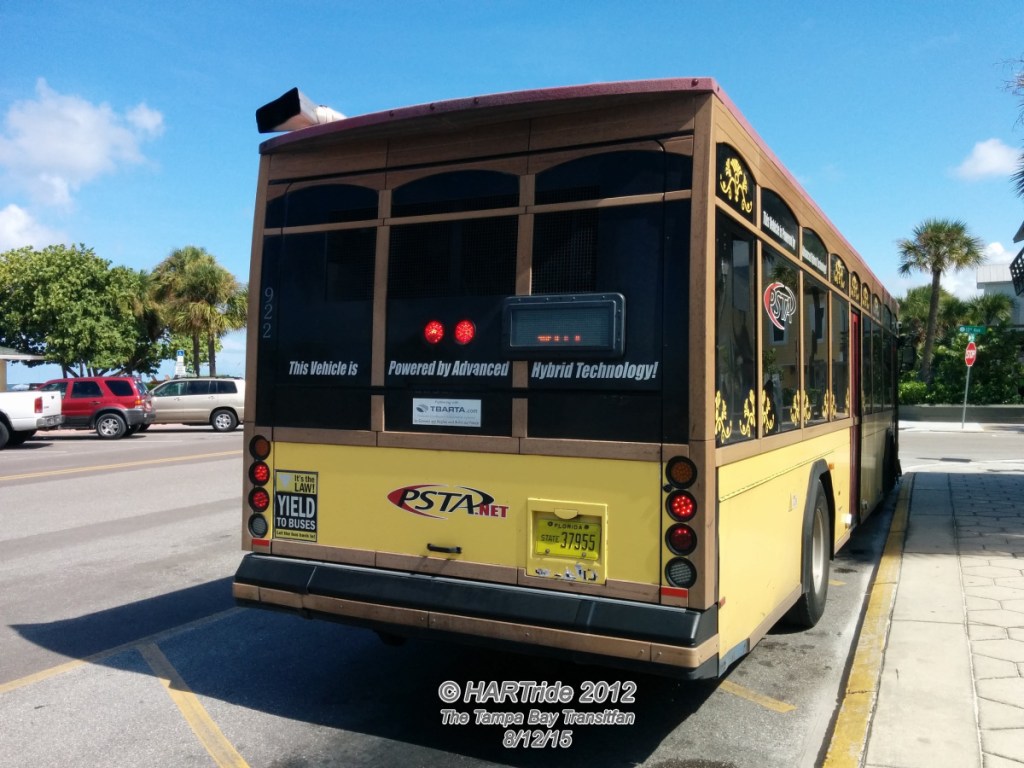
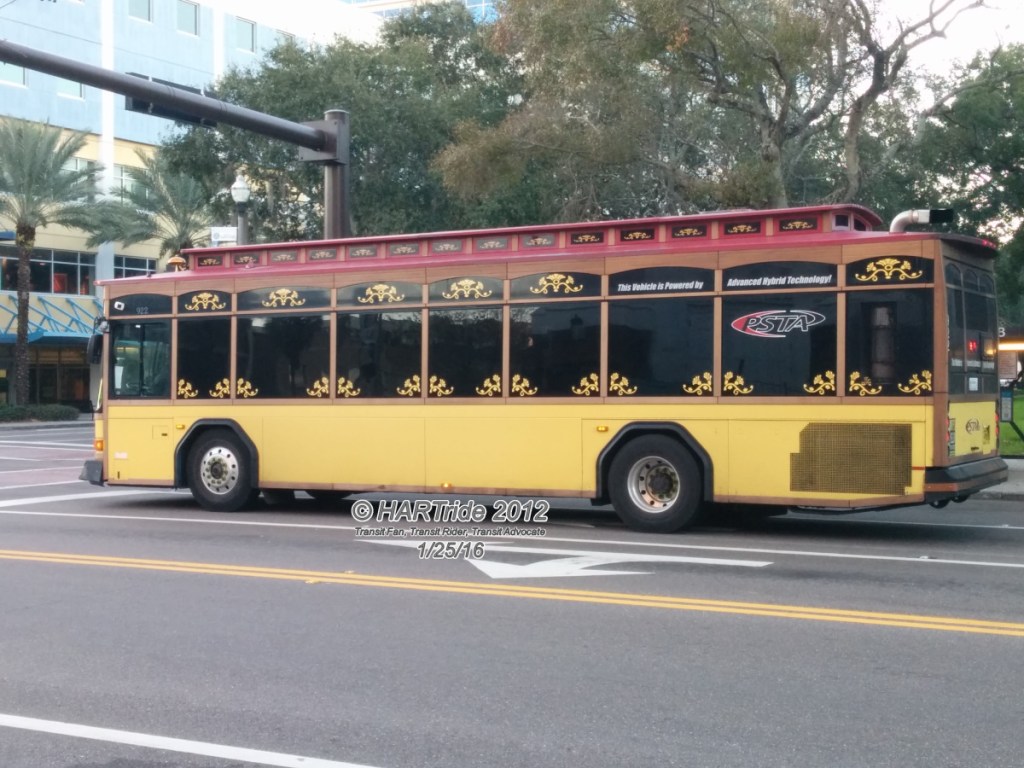
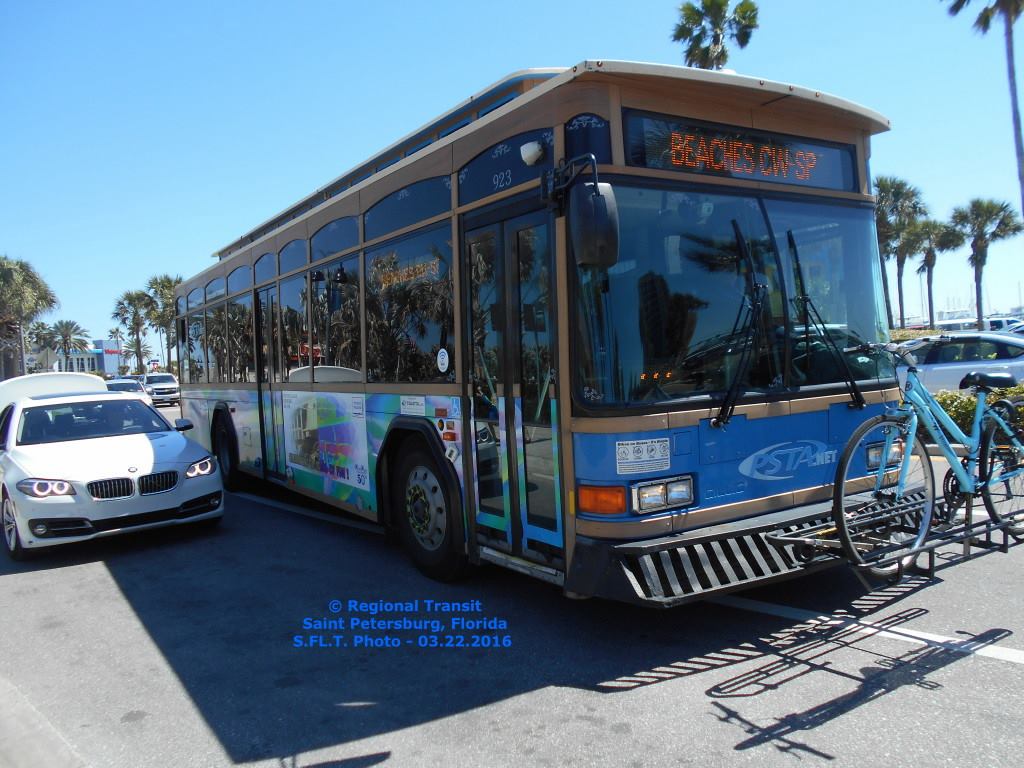
The Gillig Low Floor Replica Trolley is offered through a collaboration between Gillig Corporation and Cable Car Classics. It effectively blends in the standard Gillig Low Floor bus with add-on features to create the appearance of an old-fashioned trolley. Models are available in diesel & as of 2017, CNG. Hybrid models were produced between 2005 & 2020. As of 2021, the hybrid option no longer appears to be offered.
The exterior incorporates weatherproof, wood-looking trim and decals, along with a cosmetic cupola and a brass bell to convey the traditional trolley appearance. The interior includes solid oak seating, similar to a traditional streetcar. Yes, the bell even works!
The 2007 (with fleet numbers 7XX) & the 2008 fleets (with fleet numbers 8XX) were diesel powered, whereas the 2009 fleet (with fleet numbers 9XX) were diesel-electric hybrids (the hybrid components were stored within the decorative rooftop cover). To note, PSTA uses 3-digit fleet numbers to distinguish the trolleybuses from the rest of the bus fleet.
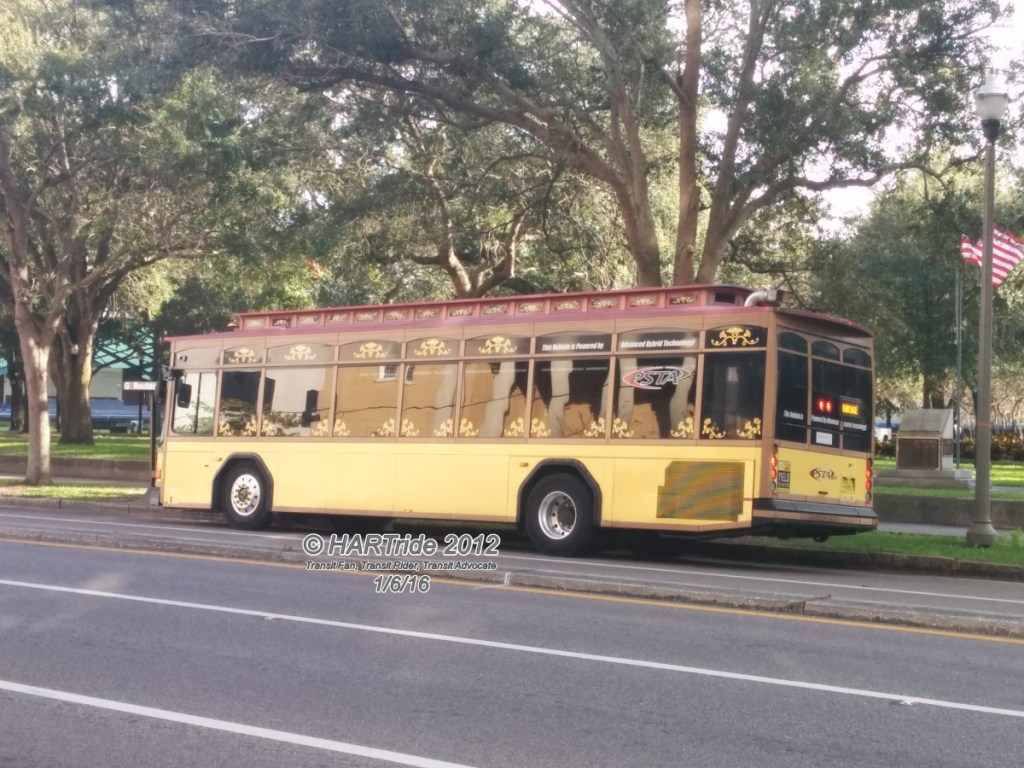
Buses were painted in two exterior color schemes, but were otherwise virtually identical to each other. Vehicles with blue schemes were typically assigned to the Suncoast Beach Trolley, while yellow buses were typically assigned to the Central Ave Trolley. However, either colored bus ran interchangeably on each other’s routes depending on vehicle availability each day. Between 2016 & their retirement in 2021, at least one hybrid bus was assigned to either route, with yellow vehicles on the SCBT being wrapped in a blue scheme.
Apparently, some of the fleet was originally adorned with the replica bench seating but later replaced by standard transit bus seats. Why PSTA did this, I do not know, but I do respect their decision.
All of the Gillig trolley replicas were retired from service in 2021 & served the Pinellas beach communities well. The heavy wear & tear on the vehicles caused by numerous road construction projects & high passenger loads over the years forced PSTA to mechanically overhaul them twice from what I’ve heard. The vehicles were all replaced by 2020/21 35′ Hometown Manufacturing Streetcar models, which are similar to the trolley replica vehicles that are used by the Downtown St. Pete Looper & the Clearwater Jolley Trolley. Because PSTA provides support to both the Looper Group & the Jolley Trolley, they likely wanted to harmonize the trolley fleet by ordering from only one manufacturer instead of two.
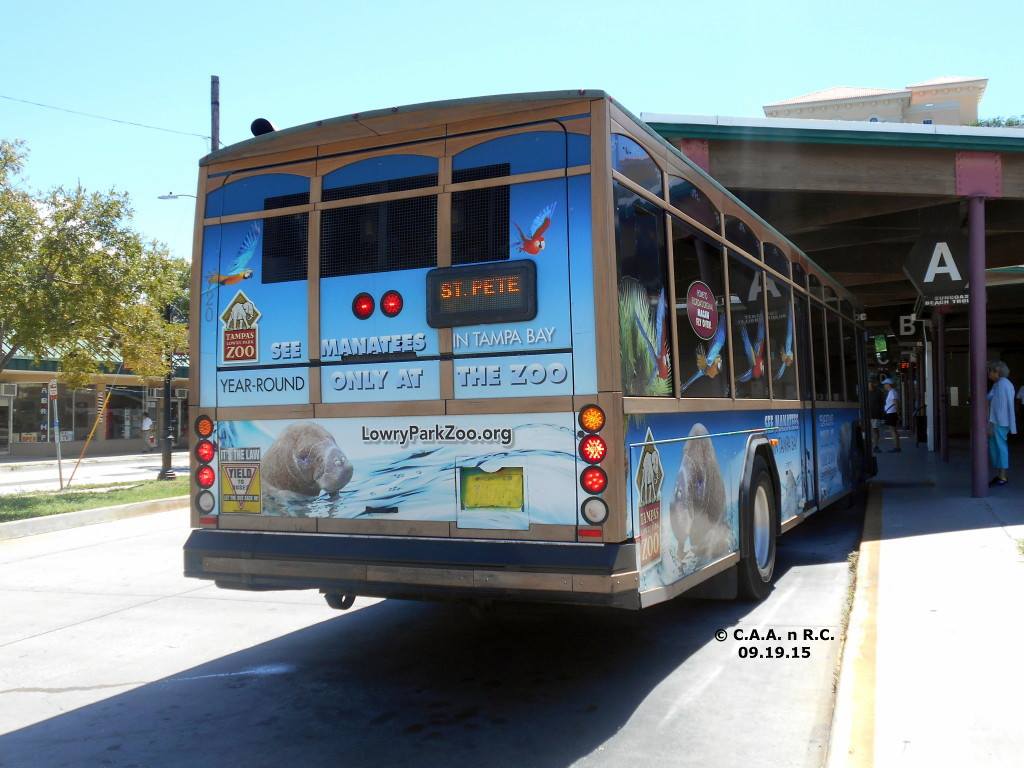
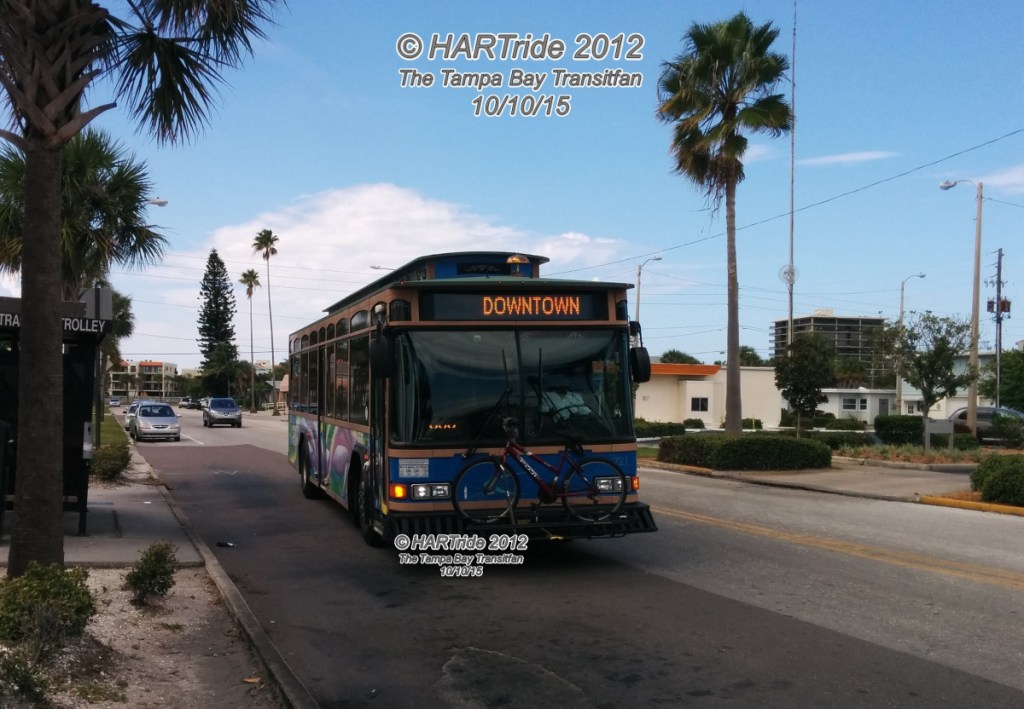
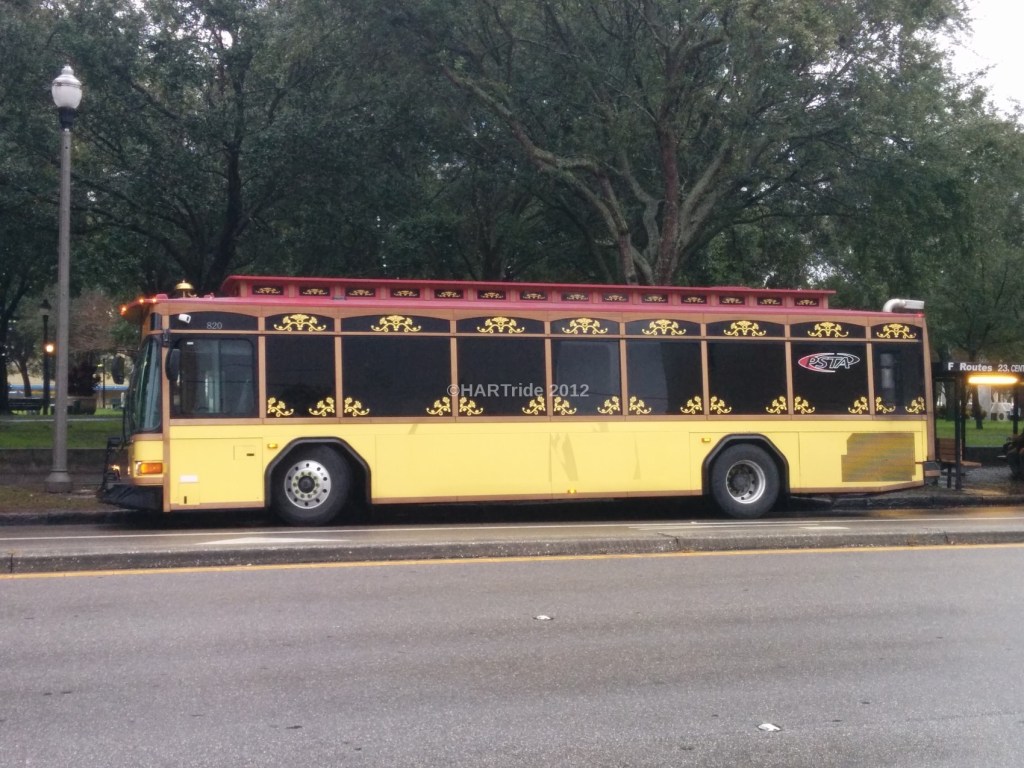
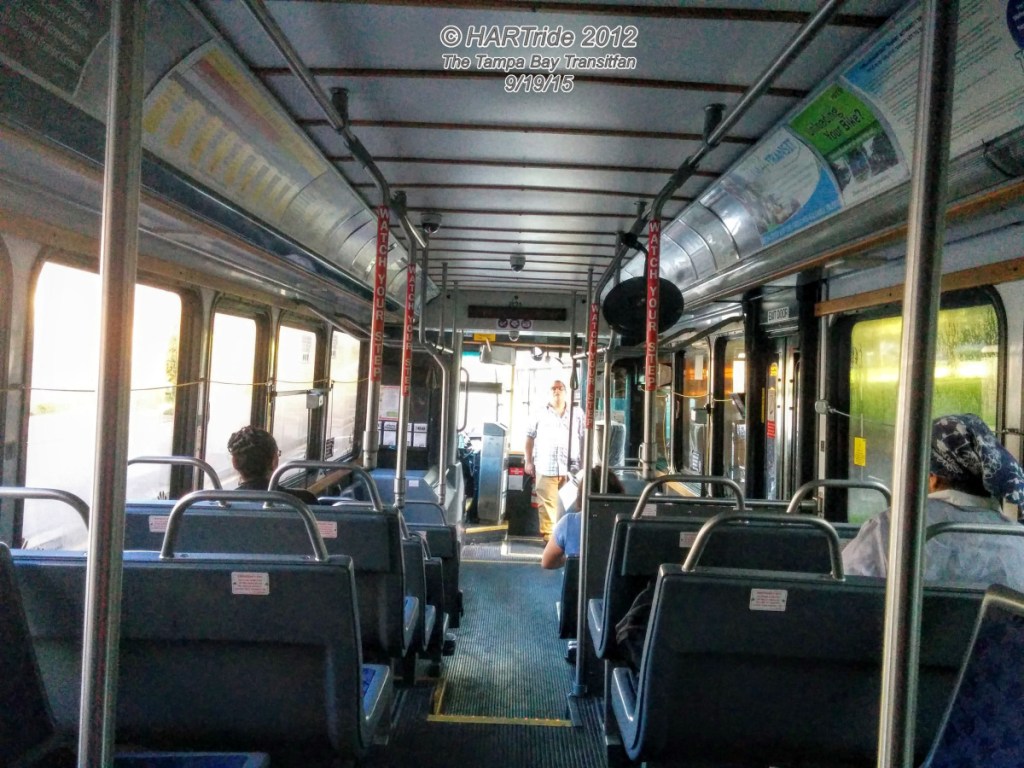
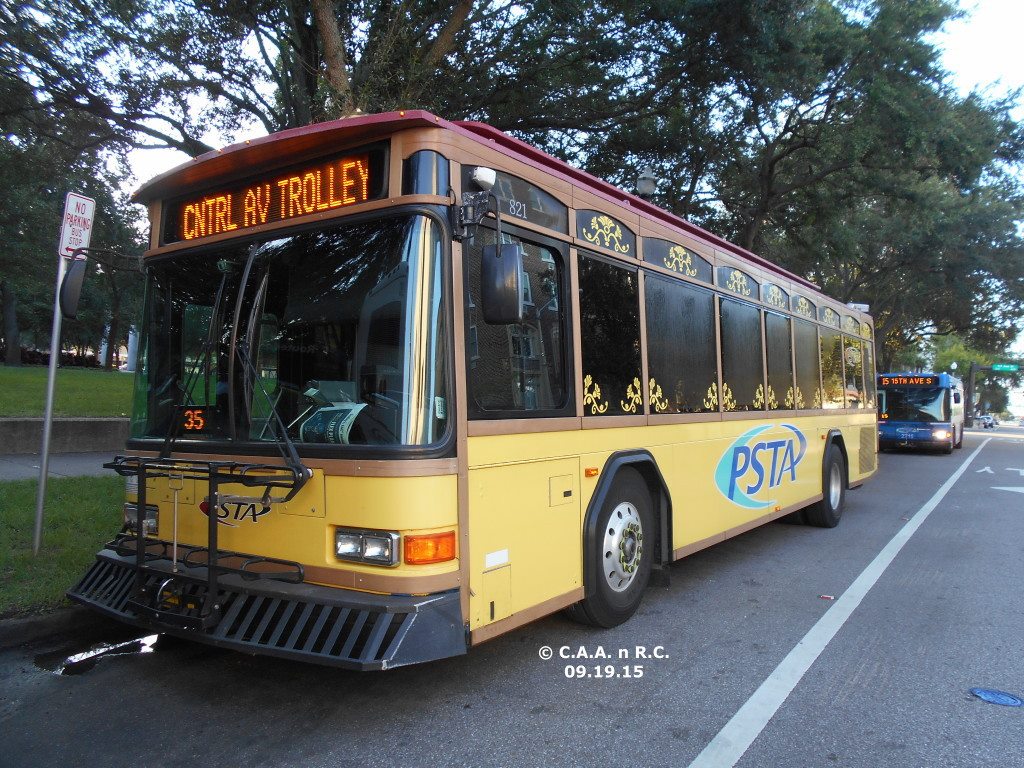
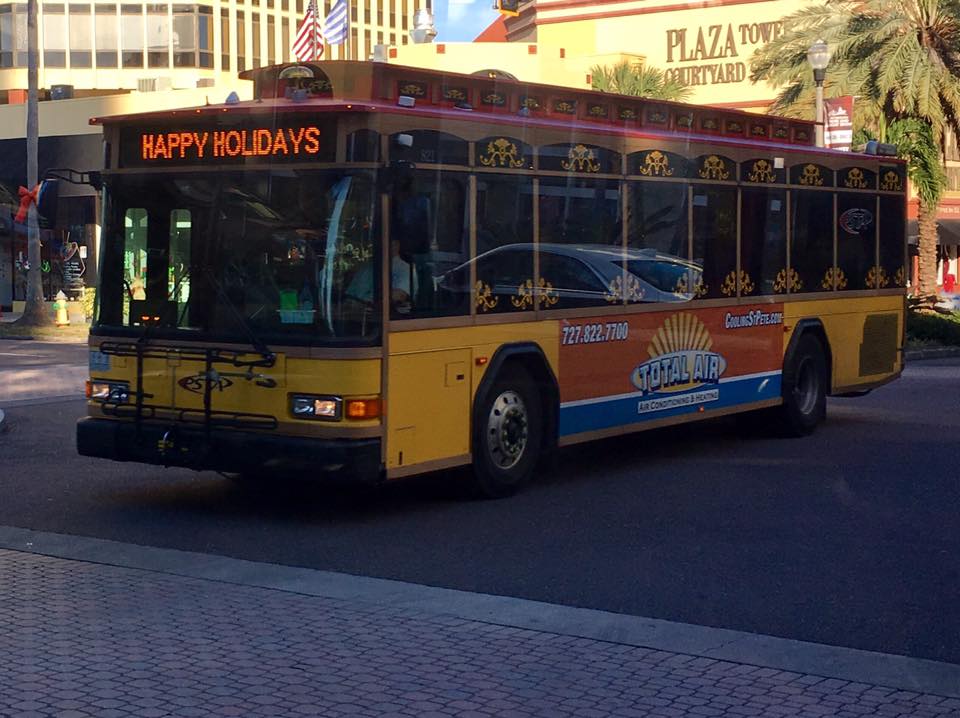
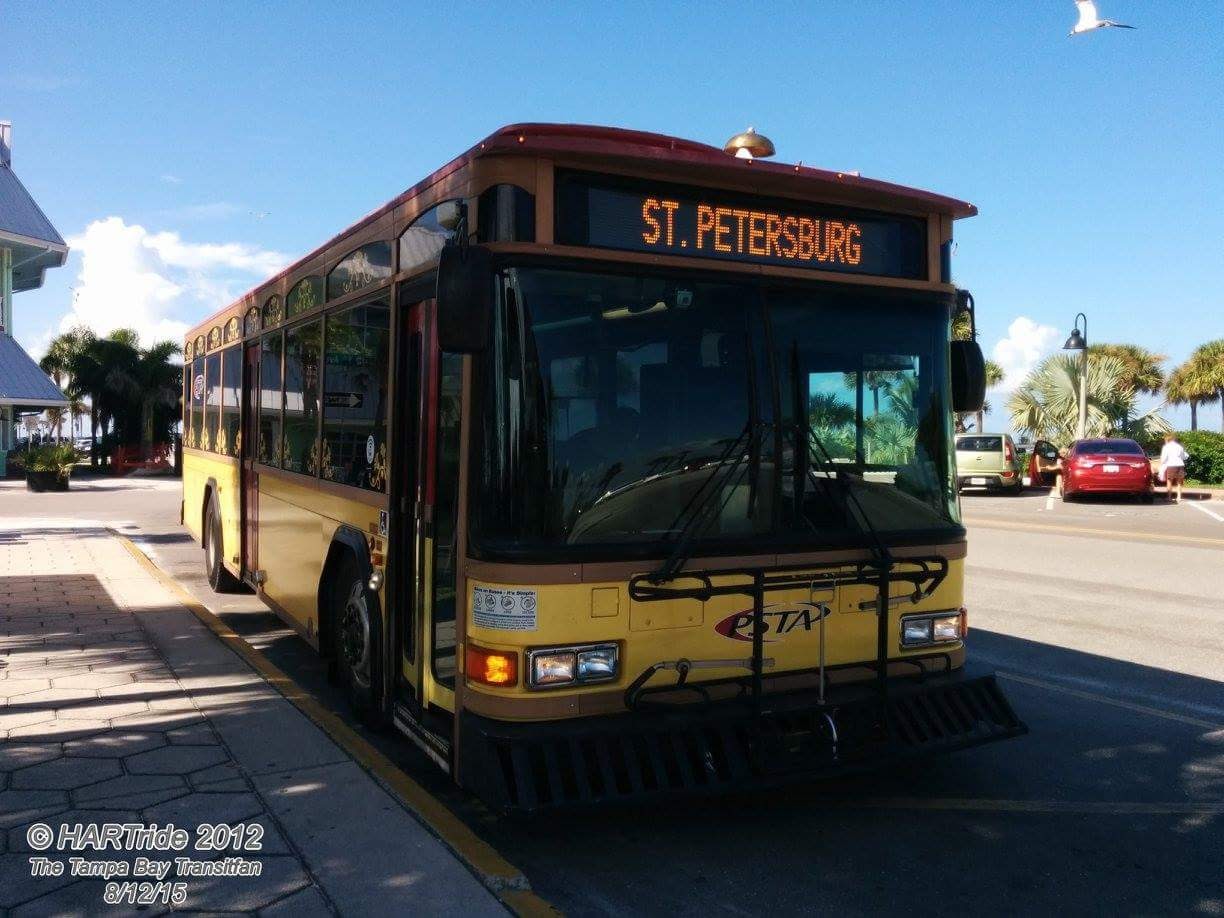
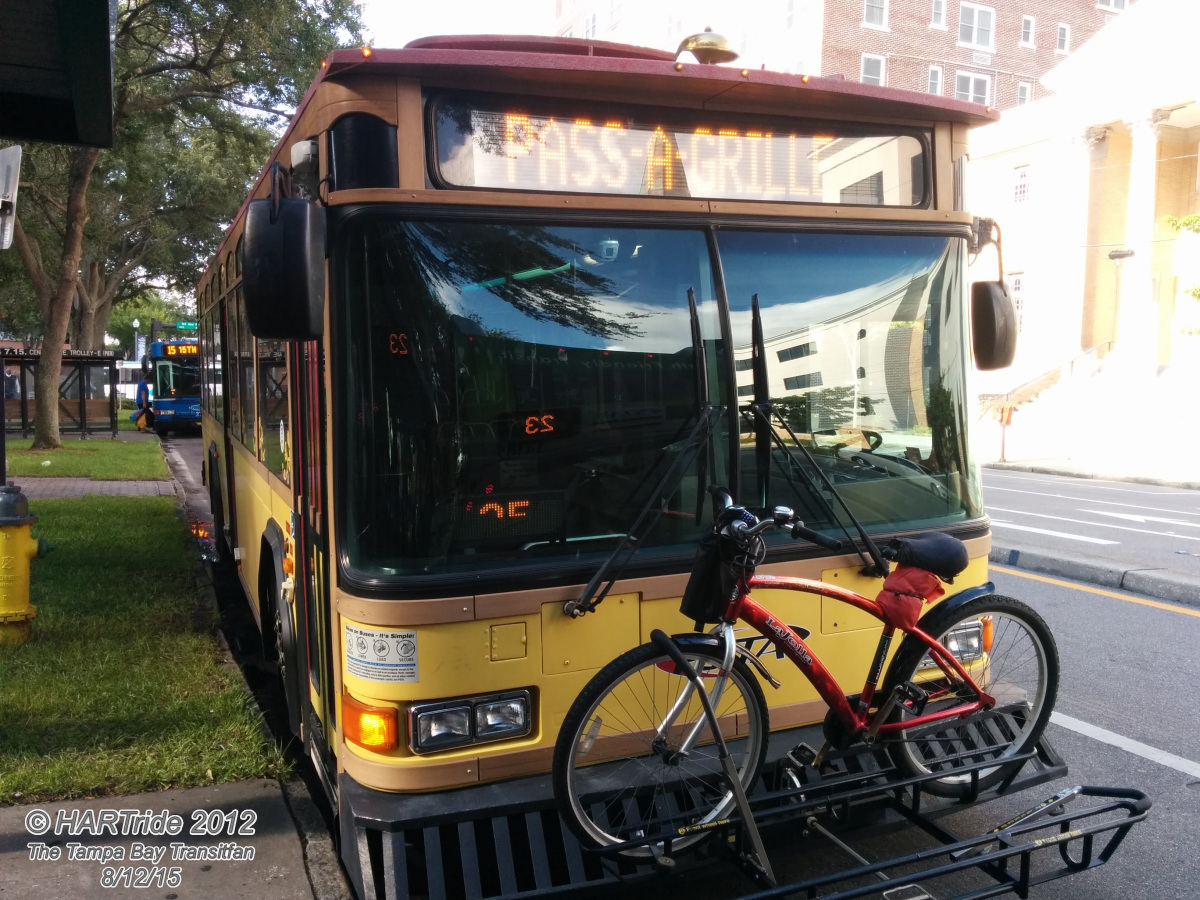
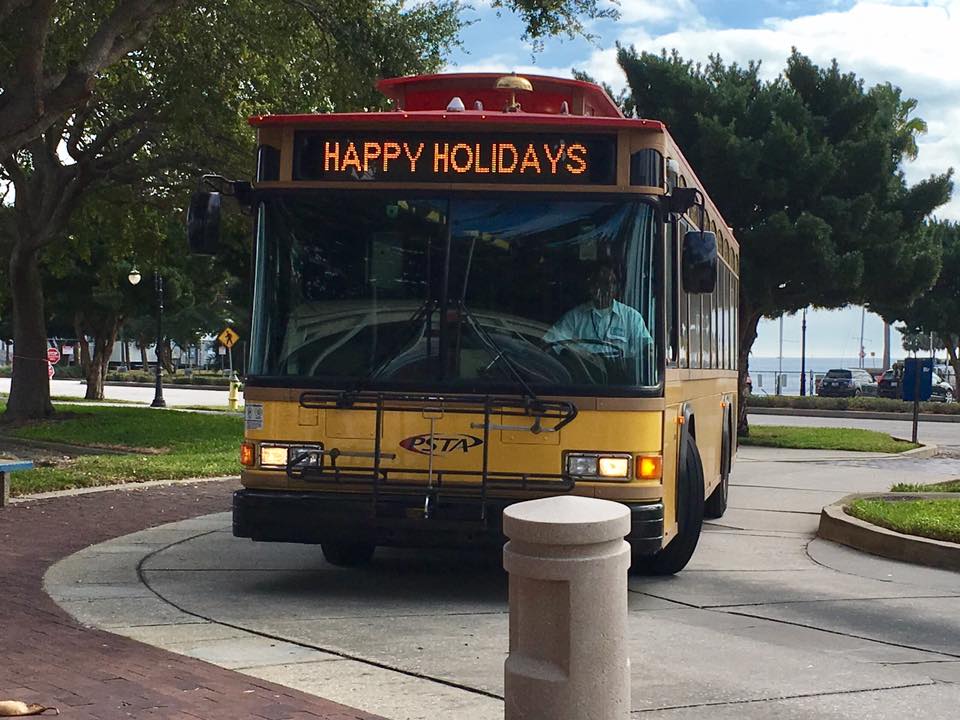
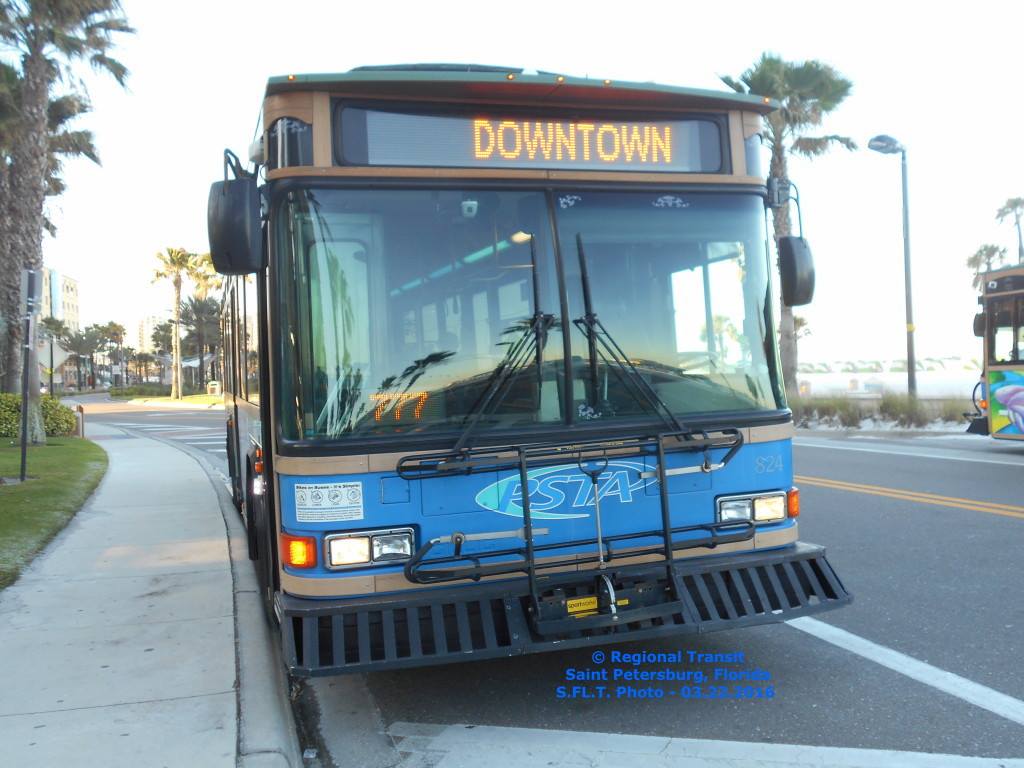
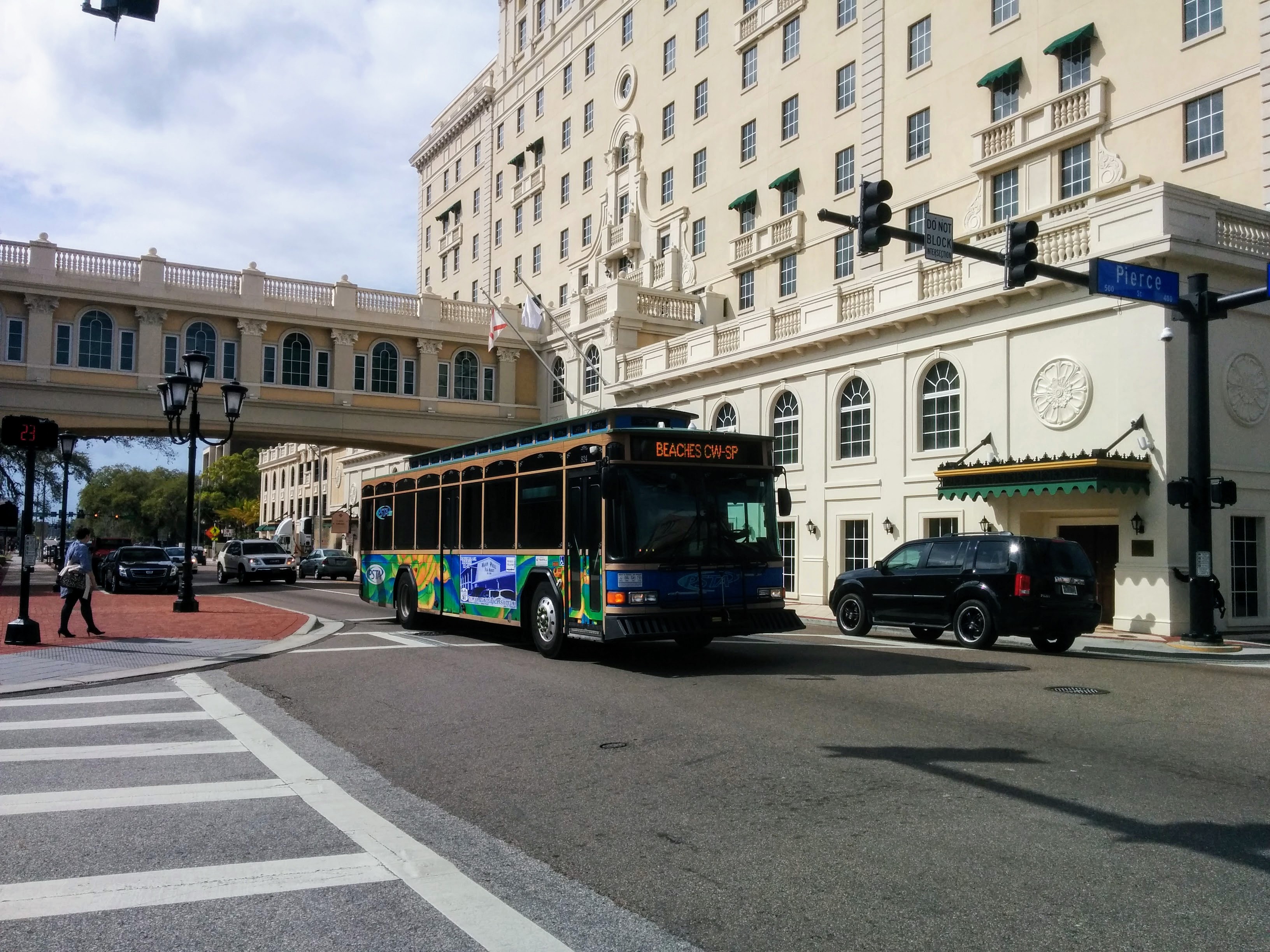
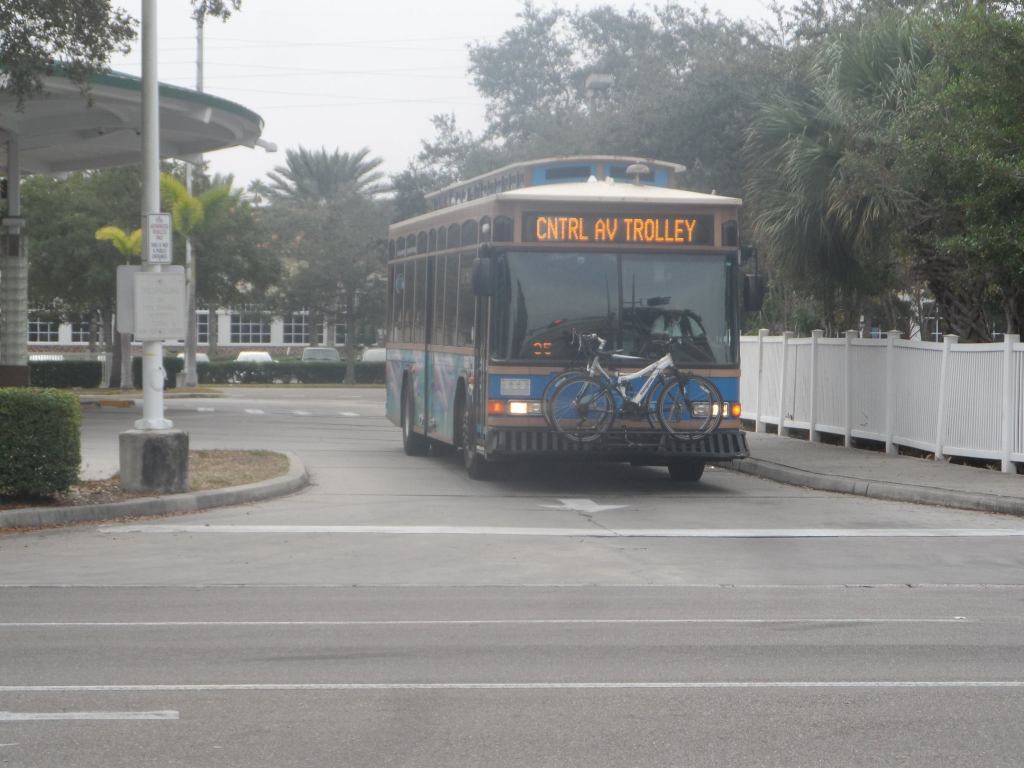
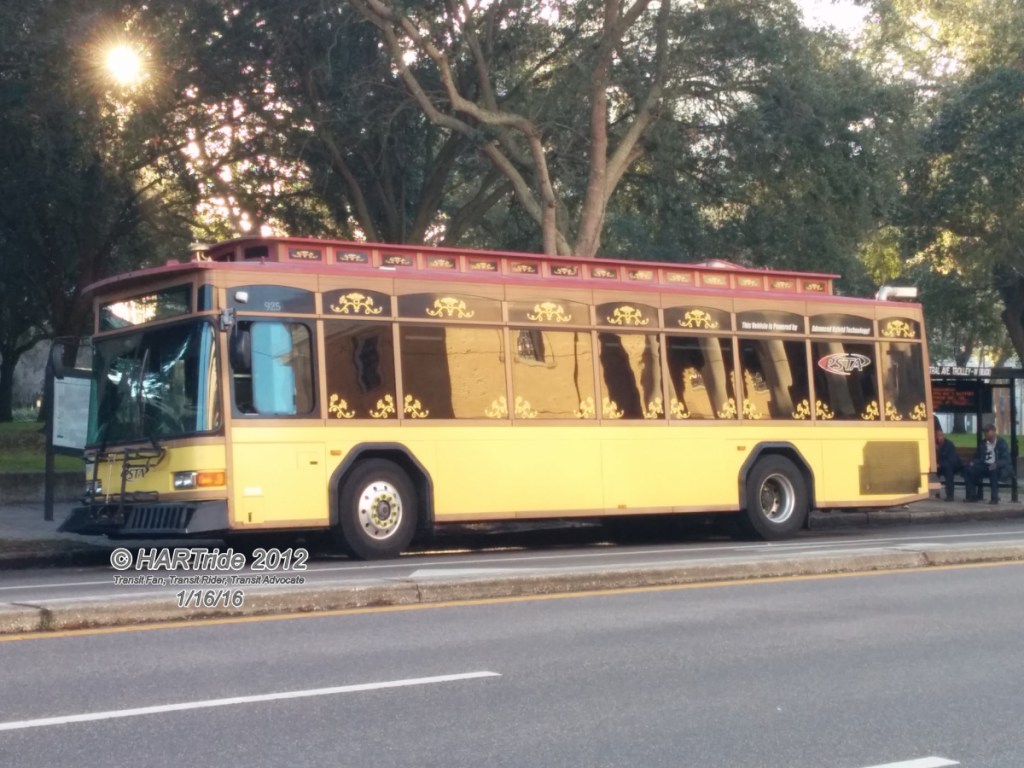
# 720 at Park St Terminal. Credit: Carlos A.Rear shot of # 720. Credit: Carlos A.# 721 leaves the 75th Ave/Gulf Blvd hub at St. Pete Beach.# 721 on the beach. Credit: Carlos A.# 722 at the Park St TerminalAnother front shot (this was taken on a different day).Rear shot.Unknown trolley (possibly # 721) heading to Park St Terminal.# 820 at Williams Park.# 821 at Williams Park.Inside # 821, ready to depart.For a long while, # 821 had regular PSTA logos on each side. I believe they’ve been removed.Another angle of # 821. Credit: Carlos A.Side shot. Credit: Carlos A.Rear shot. Credit: Carlos A.# 821 displaying the “Happy Holidays” signage. Credit: Jake L.# 822 on layover at Williams Park.Another shot of # 822.And here’s # 822 in Downtown St. Pete, heading to the Pier District.And here she is at Pass-A-Grille.Same bus, different angle.# 822 approaching Grand Central. Credit: Joe C.# 823 on layover in Pass-A-Grille.And here she is at Williams Park, finally getting her closeup!Here she is back at the beach.Closeup shot.Another angle of # 823.Rear shot.Holiday signage at The Pier. Credit: Jake L.# 824 at Clearwater Beach. Credit: Carlos A.824 at Clearwater Beach. Credit: Carlos A.# 824 approaching Park St Terminal.And here she is on layover.# 825 in Downtown St. Pete.# 825 running the Looper in Downtown St. Pete.# 920 turns the corner as it exits Williams Park.# 921 on layover at Williams Park.And here she is exiting Grand Central. Credit: Carlos A.# 922 in Pass-A-Grille.Another angle of # 922.Rear shot.And another…And here’s # 922 back at Williams Park.# 923 at Clearwater Beach. Credit: Carlos A.And a rear shot as she progresses down the gulf beaches. Credit: Carlos A.# 924 exiting Grand Central. Credit: Joe C.925 on layover at Williams Park.And here’s # 925 at the Park St Terminal.Another shot of # 925.# 926 at the Park St Terminal.
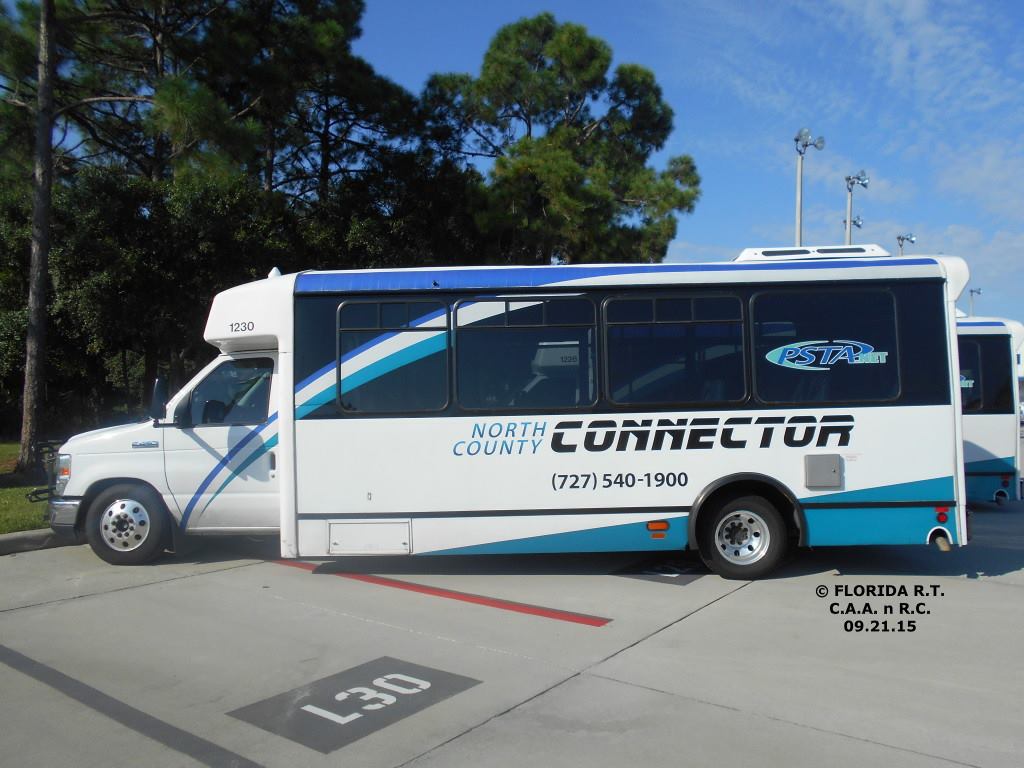
2012 Champion LF Transport
27′ Cutaway Van (Ford E-450 Chassis)
#’s 1225 through 1232
In revenue service from 2012 through 2015
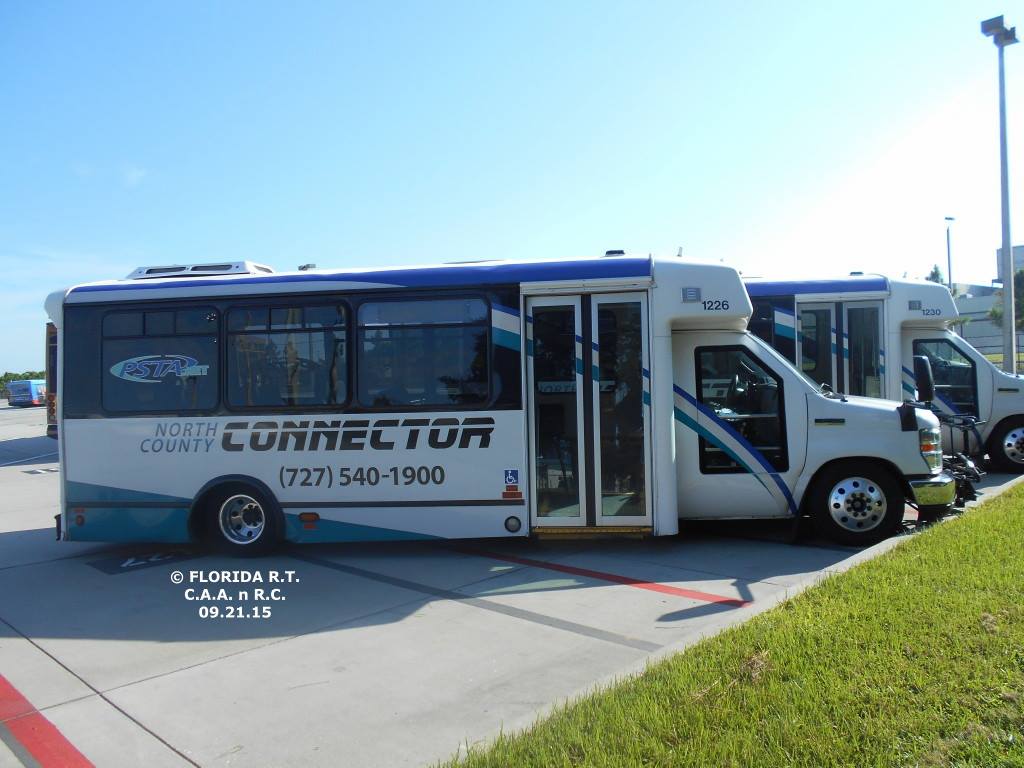
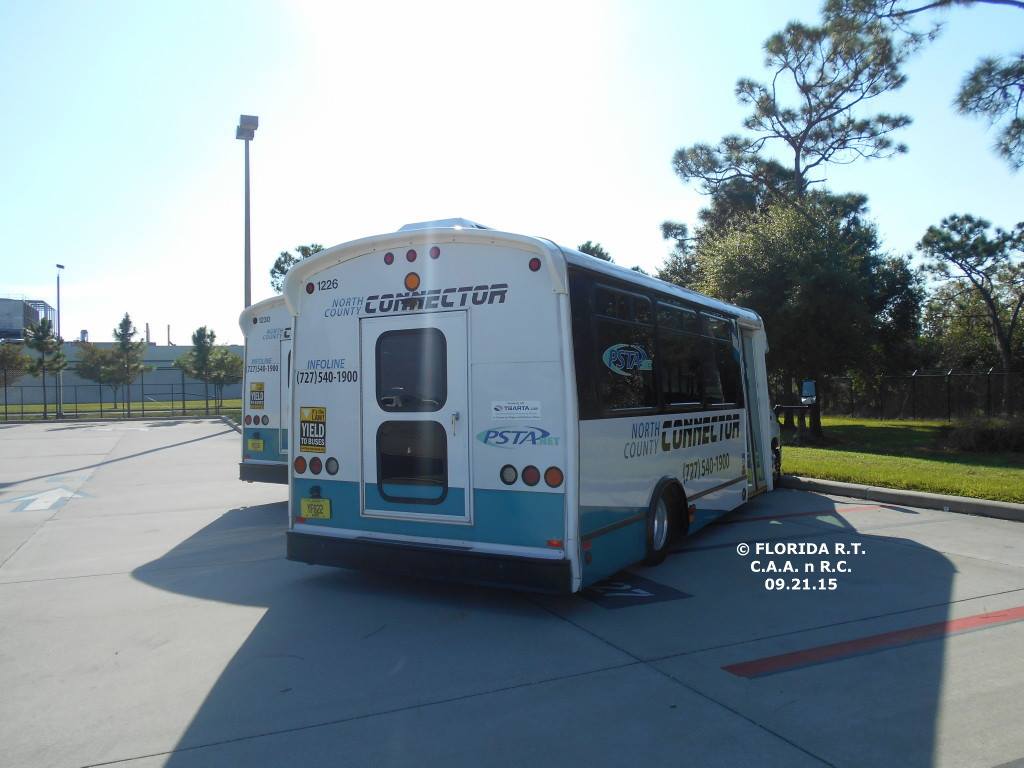
PSTA ordered eight cutaway vans in 2011 as the initial fleet for the North County Connector. While they were intended to last at least five to six years, they barely lasted three before being pulled off the road due to various mechanical defects. I’m not sure exactly as to what these defects were, nor was I ever able to get any info on what happened. Additionally, I was never able to ride on any of these vans before they were decommissioned. The following photos were all taken by Carlos A. during his tour of the PSTA Facility.
#1226.Same van, different angle.Same van, different angle.#1228.Same van, different angle.Same van, different angle.#1230.Same van, different angle.Same van, different angle.






























































































































 # 824 approaching Park St Terminal.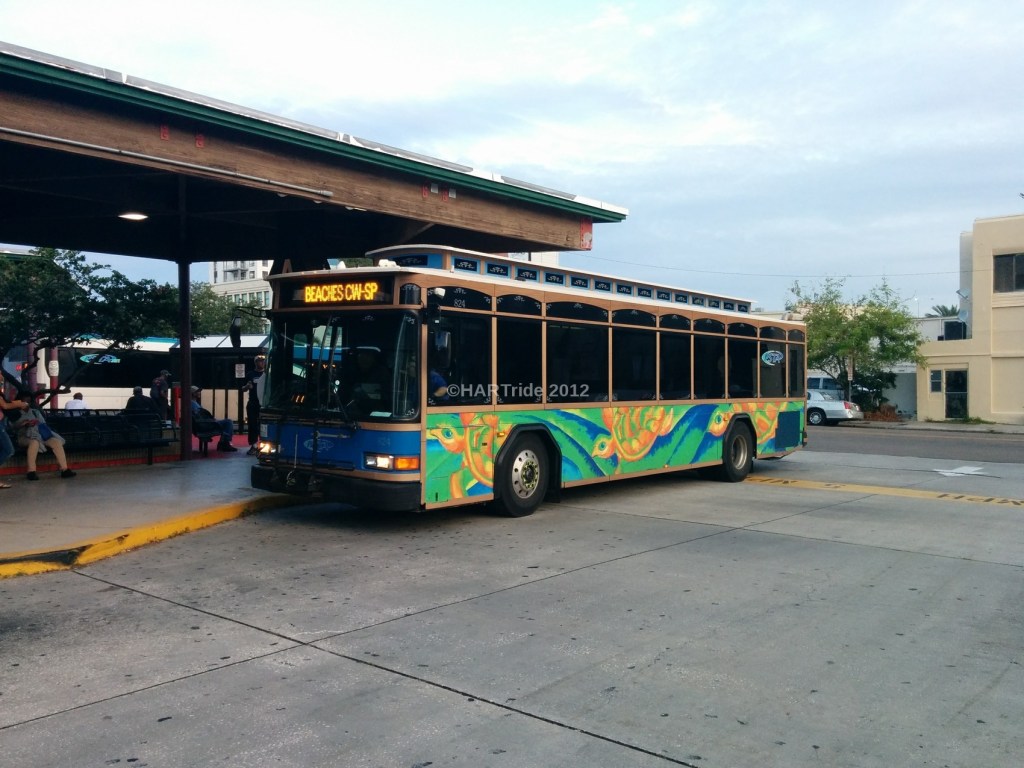










 The Global Transit Guidebook